
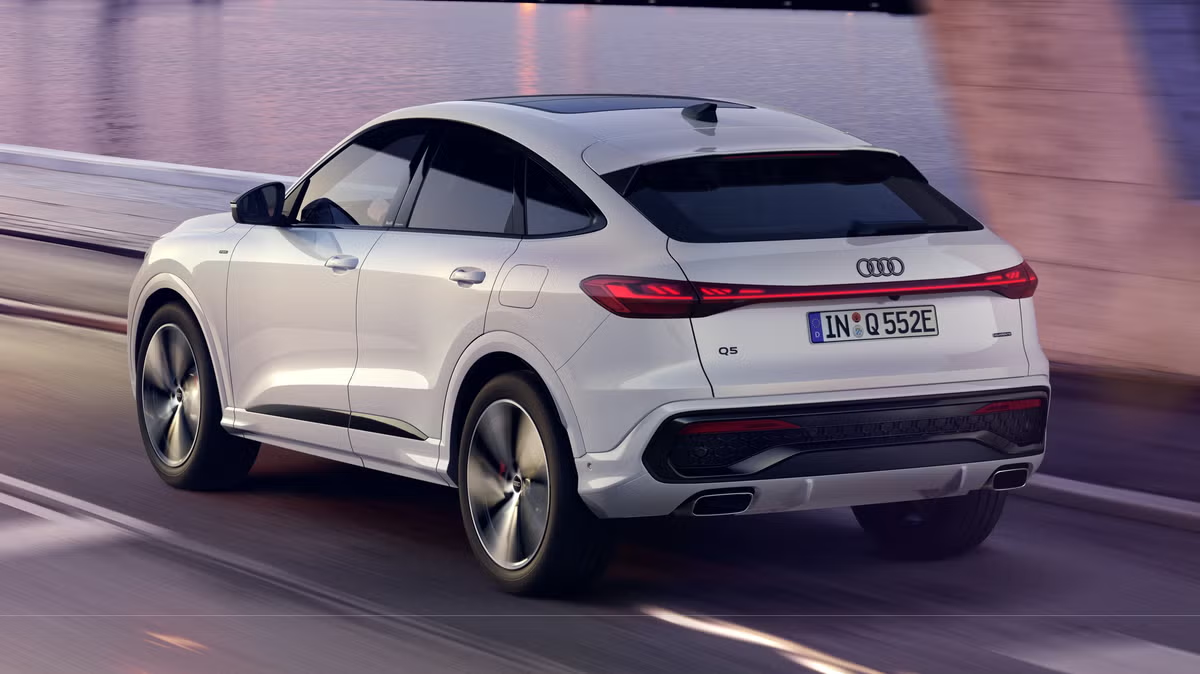
The Audi Q5 is one of the UK’s best-selling premium SUVs — and the current second-generation model, now in its seventh year with a 2023 facelift, remains a compelling choice. The question most buyers face is not which Q5 to buy, but how much to spend on trim and options. This guide answers it directly.
Audi Q5 2026 UK: Trim Levels and What Each Delivers
The Q5 launches in four UK trim levels: Sport, S line, S line Competition, and Vorsprung. Each adds meaningfully to the car’s specification — but the law of diminishing returns applies strongly from S line Competition upward.
| Trim | Starting Price | Key Additions Over Previous Trim |
|---|---|---|
| Sport | From £52,175 | 18″ alloys, MMI 10.1″ touchscreen, digital instruments, LED headlights, wireless CarPlay |
| S line | From £54,820 | 19″ alloys, sport suspension, S line exterior styling, privacy glass, ambient lighting |
| S line Competition | From £57,900 | 20″ alloys, Matrix LED headlights, black exterior pack, panoramic sunroof |
| Vorsprung | From £63,500 | Bang & Olufsen sound, massage seats, head-up display, adaptive air suspension, 21″ alloys |
The Base Sport: More Than Adequate for Most Buyers
The entry Sport specification is a more complete car than the £52,175 entry price might suggest. Standard equipment includes Audi’s 10.1-inch MMI Plus touchscreen, a 12.3-inch Virtual Cockpit digital instrument cluster, full LED headlights, three-zone climate control, and a comprehensive driver assistance package including adaptive cruise control and lane-keeping assistance.
From my point of view, the Sport is the rational choice for buyers who intend to use the Q5 primarily as a practical family transport rather than as a status statement. The 18-inch alloys provide a more comfortable ride on UK roads than the S line’s 19-inch wheels — a genuine daily benefit on the increasingly potholed surfaces of British urban and suburban roads.
The missing items from Sport versus S line — the sportier exterior styling, privacy glass, ambient lighting — are all desirable but none is functionally important for most buyers. If the budget allows S line, it is worth having; if it does not, Sport leaves very little to wish for.
S Line: The Sweet Spot of the Range
The S line is the most popular Q5 specification in the UK market and for good reason — it adds the visual identity and interior refinement that most buyers purchasing at this price point want, without the significant premium of S line Competition or Vorsprung.
The 19-inch alloys on S line do firm up the ride compared to Sport — perceptibly so on urban roads, though the Q5’s air suspension (optional on S line, standard on Vorsprung) transforms comfort considerably if budget allows. The sport suspension of the S line without air suspension is the Q5’s most compromised setup: it combines a firmer ride with no additional dynamic benefit over Sport, since the Q5 was never designed as a performance SUV.
The recommendation: S line with optional air suspension — approximately £3,500 additionalbut transformatively better in daily comfort terms — is the strongest all-round Q5 specification for UK buyers.
S Line Competition and Vorsprung: Who Actually Needs Them
S line Competition adds 20-inch alloys, Matrix LED headlights, and cosmetic upgrades at a meaningful price premium. The Matrix LED headlights are genuinely excellent — among the best in the segment for motorway driving at night — and justify some of the premium for drivers who regularly cover night-time motorway miles. The 20-inch alloys make the ride noticeably firmer still, which is hard to justify on UK roads.
Vorsprung is Audi’s fully-loaded specification — it adds Bang & Olufsen audio (exceptional), massage front seats (genuinely valued on long journeys), head-up display (useful), and adaptive air suspension as standard. At £63,500, it is £11,325 more than Sport. Buyers who want the absolute best Q5 and regularly use all these features will not regret it; buyers who want a premium SUV without paying the full luxury premium should stop at S line with air suspension.
Engine Choice: Which Q5 Powertrain in 2026
The Q5 is available with three powertrains in 2026: 45 TFSI petrol mild hybrid (265hp), 40 TDI diesel mild hybrid (204hp), and 55 TFSIe PHEV (367hp combined). Diesel was the historic Q5 default for high-mileage buyers, but the mild hybrid petrol and PHEV alternatives have narrowed the gap considerably.
| Powertrain | Power | 0–62mph | Real-World Economy | Best For |
|---|---|---|---|---|
| 45 TFSI MHEV petrol | 265hp | 5.9 sec | 33–38mpg | Mixed use; moderate mileage |
| 40 TDI MHEV diesel | 204hp | 7.3 sec | 42–48mpg | High mileage; motorway heavy |
| 55 TFSIe PHEV | 367hp | 5.3 sec | 130+mpg (official); 40–50mpg real-world | Company car; home charging available |
For company car drivers, the 55 TFSIe PHEV delivers a BiK rate of approximately 12% versus 33% for the diesel — a saving of approximately £200–£400 per month depending on income tax band. The PHEV’s electric range of 63 miles WLTP covers most daily commutes without using petrol at all. For those weighing this decision against competitor options, our best plug-in hybrid cars guide covers the full PHEV market including rival SUVs from BMW, Mercedes, and Volvo.
For buyers specifically comparing the Q5 to smaller Audi SUV options, our Audi Q3 reviewcovers the Q3’s significantly lower entry point and where it makes sense as an alternative. The official Q5 specifications and configurator are available at audi.co.uk.
Is the base Audi Q5 Sport worth buying?
Yes — Sport is more comprehensively equipped than its position in the range suggests. It lacks the visual sportiness of S line and the luxury features of Vorsprung, but its standard equipment is genuinely complete for everyday use. For buyers who prioritise ride comfort, Sport’s 18-inch alloys also provide the most comfortable daily experience in the range.
Is the Audi Q5 good for long motorway journeys?
Exceptionally so — the Q5 with adaptive air suspension (optional on S line, standard on Vorsprung) is one of the most refined long-distance SUVs in its price class. The combination of a quiet cabin, strong lane-keeping assistance, and adaptive cruise control makes sustained motorway driving genuinely restful. The diesel powertrain adds long-distance fuel economy that reduces stop frequency on longer runs.
What is the real-world fuel consumption of the Audi Q5 diesel?
The 40 TDI diesel returns approximately 42–48mpg in real-world mixed use, rising to 50–54mpg on sustained motorway routes. Urban fuel economy is lower — approximately 35–40mpg in stop-start conditions. These figures make it genuinely competitive for high-mileage drivers who cover predominantly motorway and A-road miles.
How does the Audi Q5 compare to the BMW X3?
The two cars are the closest rivals in the premium mid-size SUV segment. The BMW X3 drives more engagingly — its rear-wheel-drive base gives it a more natural steering feel and better body control; the Audi Q5 is marginally more refined at motorway cruise and has a slightly more consistently high-quality interior fit and finish. Both are excellent. The BMW X3 M40i is the performance choice; the Audi Q5 55 TFSIe is the PHEV choice. For buyers who cannot decide, a test drive of both back-to-back is the only reliable method of resolution.
Should I buy a new or used Audi Q5?
A three-year-old used Q5 in S line specification typically costs £35,000–£42,000 — approximately £12,000–£18,000 less than an equivalent new car. The 2023 facelift brought meaningful updates (revised exterior, updated MMI system) that make pre-facelift examples slightly less current but mechanically identical. A used Q5 with full Audi service history, under 40,000 miles, and in S line specification represents outstanding value against its new price.





