
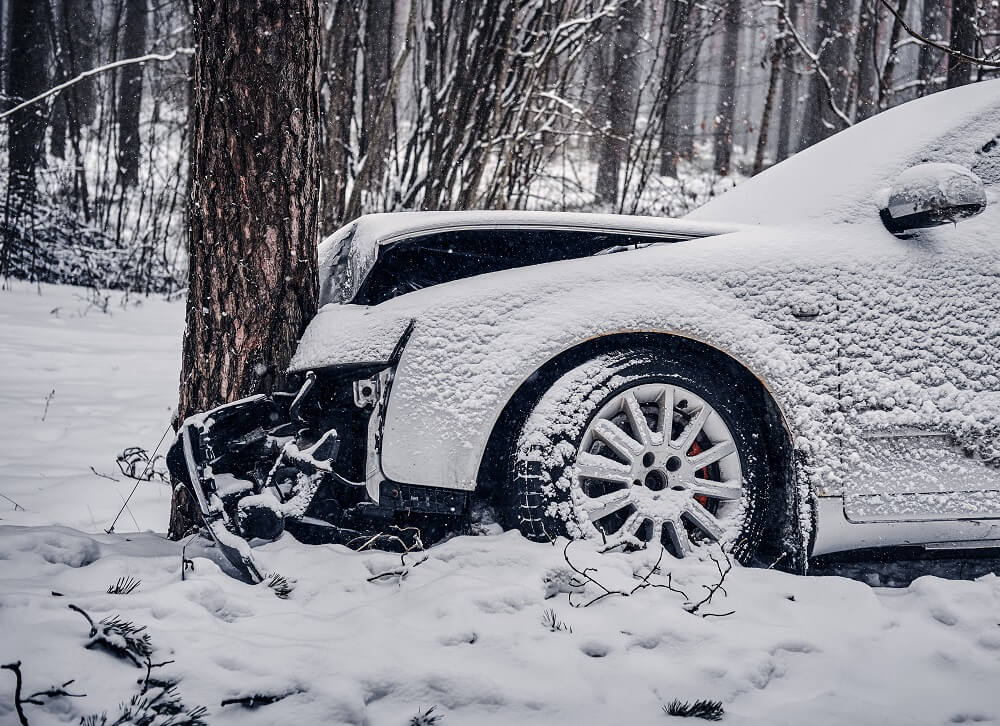
Being involved in an accident in wintry conditions raises questions that dry-weather collisions do not — about fault, about whether insurance covers weather-related incidents, and about whether your tyre choice affects your claim. This guide provides clear answers for UK drivers.
Winter Road Accidents in the UK: What You Need to Know Immediately
The immediate steps following a collision on snow or ice are the same as any other accident — but the risk environment is heightened and specific winter considerations affect both safety and insurance outcomes.
| Immediate Priority | Action | Winter-Specific Consideration |
|---|---|---|
| Safety | Move to safety; switch on hazard lights | Black ice may make moving the vehicle dangerous — assess before attempting |
| Injuries | Call 999 if anyone is injured | Emergency services response may be slower in severe weather |
| Exchange details | Names, addresses, insurance details, registration numbers | Photograph everything — icy conditions increase the likelihood of details being disputed |
| Police notification | Required if injury, road blockage, or driver fails to stop | Report within 24 hours to a police station if not reported at scene |
| Photographs | Document damage, road surface, tyre marks, road signs | Photograph the road surface specifically — evidence of ice is critical for fault assessment |
| DVLA notification | Not required unless vehicle is written off |
Is a Winter Accident Covered by Car Insurance?
Yes — a standard comprehensive car insurance policy covers accidents caused by or occurring in wintry conditions in the same way as any other accident. There is no weather exclusion in standard UK motor insurance policies that removes cover for accidents on snow or ice.
However, there are two important caveats that affect how a winter accident claim is handled:
Fault assessment: UK car insurance operates on a fault UK car insurance operates on a fault-based system. If you lose control on ice and collide with another vehicle or a fixed object, you will generally be considered at fault — the presence of ice on the road does not automatically transfer responsibility to the local authority, the weather, or any other party. Fault is determined by the standard of driving demonstrated, not by the conditions that contributed to the incident.
Contributory negligence: If the accident involved another party who was also driving without appropriate care for conditions — for example, driving too fast for an icy road — fault may be apportioned between both parties rather than attributed entirely to one driver. A solicitor or your insurer’s claims team can advise on contributory negligence arguments in specific circumstances.
How Tyre Choice Affects Your Insurance Claim
This is one of the most misunderstood aspects of UK winter accident insurance. The UK does not legally require winter tyres — unlike Germany, Austria, and several other European countries where winter or all-season tyres are mandatory during winter months. Using summer tyres in winter conditions is entirely legal in the UK.
However, being involved in an accident on worn or inappropriate tyres creates a significant complication:
Tyre condition: If your tyres were below the 1.6mm legal minimum tread depth at the time of the accident, your insurer may reduce or reject your claim on the grounds that the vehicle was in an unroadworthy condition. Bald or under-legal tyres on ice are an aggravating factor that insurers and courts consider in fault assessment.
Summer tyres in severe conditions: While not illegal, driving on summer tyres in conditions where all-season or winter tyres would have provided materially better traction may be raised as a factor in fault assessment — particularly if the accident involved a loss of control that winter tyres might have prevented. This argument has not been definitively tested in UK courts, but it is a risk that careful drivers should consider.
The practical recommendation: Ensure your tyres meet the legal minimum tread depth before winter. If you live in an area that regularly experiences snow or ice — Scotland, Northern England, Wales — all-season tyres provide a meaningful safety margin without the cost and inconvenience of maintaining two sets of tyres.
Local Authority Liability: Can You Claim Against the Council?
UK drivers who have accidents on un-gritted, hazardous roads sometimes consider whether the local authority bears responsibility for failing to grit the road in time. The legal position is nuanced:
Local authorities have a duty under the Highways Act 1980 to maintain roads in a safe condition — but this duty is qualified. Councils are required to have a gritting policy and to implement it reasonably — they are not required to grit every road immediately at the first sign of frost.
A claim against a local authority for failing to grit is possible but difficult — it requires demonstrating that:
- The authority knew or ought to have known of the hazardous conditions
- Their gritting policy was not followed, or was unreasonable
- The failure to grit caused the accident rather than being a background factor
In practice, successful claims against local authorities for winter road conditions are uncommon — courts apply a standard of reasonable public administration rather than perfection, and most local authority gritting policies satisfy this standard even when individual roads are not treated.
What to Do in the Days After a Winter Accident
Preserve evidence immediately:
- Download weather records for the location on the date — the Met Office provides historical weather data that can corroborate the presence of ice or snow
- Obtain dashcam footage from your own vehicle and request footage from any nearby vehicles you can identify
- Photograph your tyres — tread depth and condition documented promptly prevents later dispute
- Note and photograph any road signage (or absence of grit bin, salt marker, or warning signs) at the scene
Report to your insurer promptly:
Most policies require accident notification within a specified period — typically 24–48 hours for accidents involving other parties. Even if you do not intend to claim, notify your insurer as required by your policy terms; failure to do so can affect your right to claim later.
Consider motor legal protection:
If fault is disputed or if you were the not-at-fault party, motor legal protection insurance (if held) provides access to a solicitor to pursue uninsured losses — including the excess, loss of use, and personal injury claims. In complex winter accident cases where contributory negligence is argued, legal representation materially improves outcomes.
For a broader understanding of how driving licence points are affected by at-fault accidents and resulting endorsements, our UK driving licence points guide covers the full consequences of accumulating points on your licence.
For official guidance on the legal requirements following a road accident — including when police must be notified — the gov.uk road accidents and safety page provides the definitive reference.
Is a winter accident automatically my fault in the UK?
Not automatically — but losing control on ice or snow is generally treated as a fault incident unless another party’s negligence contributed to the collision. The presence of winter conditions does not remove the driver’s duty to adapt their speed and driving style to the conditions. A driver who was travelling at an appropriate speed for the conditions and skidded due to unavoidable black ice may be able to argue reduced or shared fault.
Yes — an at-fault accident will typically result in a premium increase at renewal, regardless of whether winter conditions contributed. Most insurers apply an at-fault accident loading for three to five years. Protected no-claims bonus cover, if held, protects the discount itself but does not prevent a base rate loading in high-claim areas.
Does comprehensive insurance cover a car that skids on ice and hits a wall?
Yes — a comprehensive policy covers accidental damage to your own vehicle including single-vehicle accidents where you leave the road, skid into a fixed object, or roll on snow. You will be liable for the policy excess, and the claim will affect your no-claims bonus unless you have protected it. Third-party-only policies do not cover damage to your own vehicle in this scenario.
Can I claim if another driver’s snow falls from their roof onto my windscreen?
Potentially yes — snow or ice falling from an inadequately cleared vehicle is covered by UK law under Rule 229 of the Highway Code. If identifiable, the driver of the vehicle that failed to clear their roof may be liable for resulting damage or accidents. In practice, the principal challenge is identifying the vehicle responsible; dashcam footage is the most effective means of establishing this.
What should I do if my car is written off after a winter accident?
The process is the same as for any total loss — your insurer will offer a settlement figure based on the car’s market value immediately before the accident. If you disagree with the valuation, provide evidence of comparable vehicles (AutoTrader listings for the same make, model, age, and mileage) to support a higher figure. If the accident was not your fault, the third party’s insurer should cover the full pre-accident market value of your vehicle.
In my experience, the most important single action after any winter accident is documenting the road surface within minutes of the incident — photographs of the ice or snow on the road, tyre marks, and the surrounding environment create a contemporaneous record that no subsequent recollection or dispute can undermine. A dashcam with a continuous recording function provides this documentation automatically and is one of the most valuable pieces of equipment any UK winter driver can carry.





