
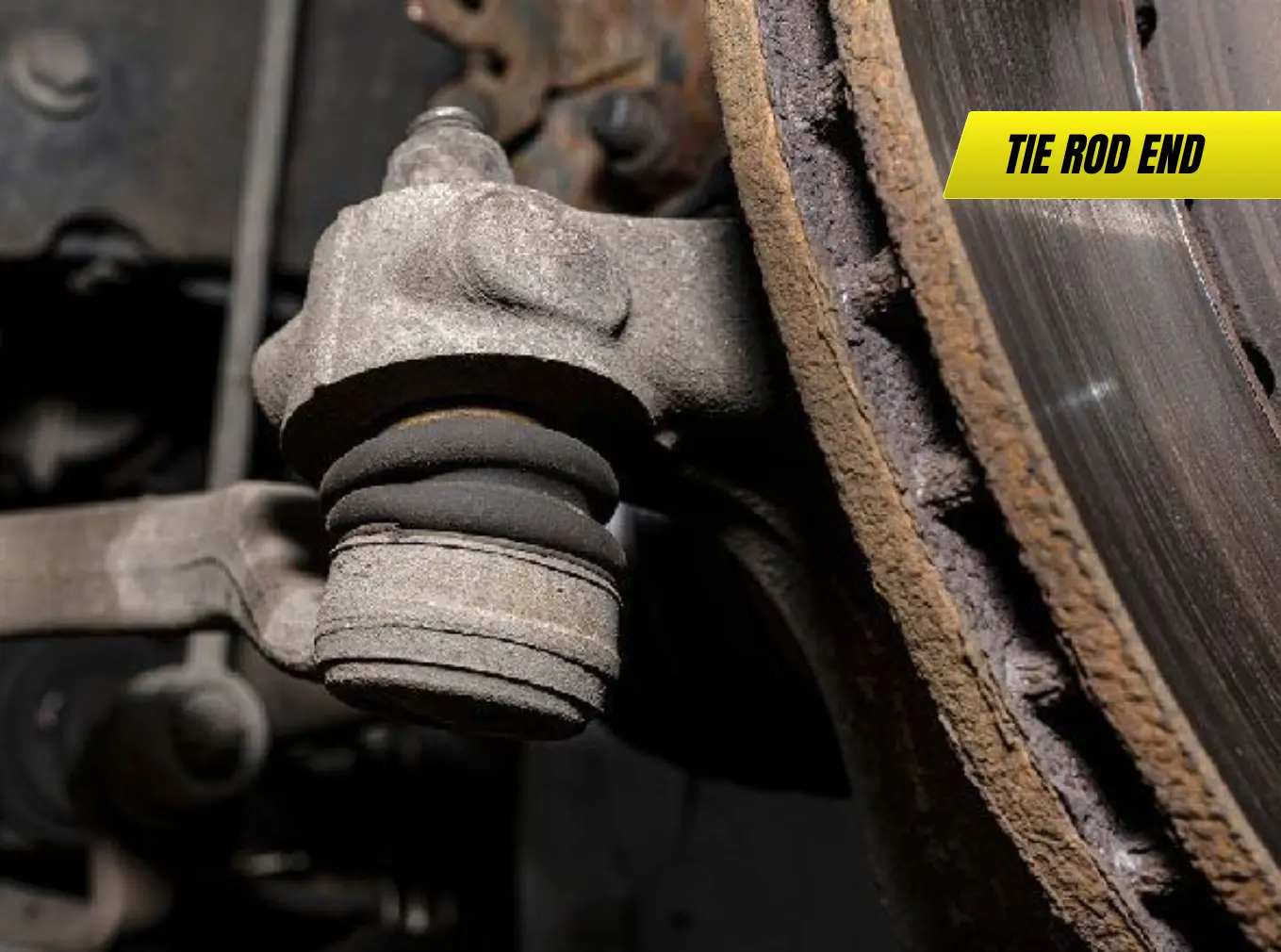
Learn how to replace a tie rod end (track rod end) on your car — covering symptoms, step-by-step instructions, costs and why wheel alignment is essential afterwards.
The tie rod end — known in the UK as the track rod end — is a small but critical steering component that connects your steering rack to the front wheels. When it wears out, your steering becomes vague, your tyres wear unevenly, and your car can become genuinely unsafe to drive. This guide covers everything a UK driver needs to know about spotting, replacing, and correctly setting up a track rod end replacement at home or at the garage.
Key Points
- Track rod ends connect your steering rack to the steering knuckle — wear causes imprecise, unsafe steering
- Warning signs include clunking when turning, a loose or vague steering feel, and uneven tyre wear
- Always have a four-wheel alignment carried out after replacement to prevent premature tyre wear
- UK replacement costs range from approximately £50 to £200 depending on vehicle and garage
- The job is intermediate DIY — manageable with the right tools, but a ball joint separator is essential
- A failed track rod end will result in an MOT failure and can cause tyre wear of hundreds of pounds if ignored
What Is a Track Rod End and How Does It Work?
The track rod end (also called a tie rod end) is a ball-and-socket joint at the outer end of the steering rack assembly. It transmits the lateral movement of the steering rack into angular rotation at the wheel hub, allowing your wheels to turn left and right in response to steering inputs. The inner end connects to the steering rack shaft via a threaded joint; the outer end connects to the steering knuckle via a tapered ball stud secured with a castellated nut and cotter pin.
Because the ball-and-socket design allows movement in multiple planes, the joint is protected by a rubber dust boot filled with grease. Over time — particularly on UK roads where potholes and kerb strikes are common — this boot cracks, the grease escapes, and the joint corrodes and develops play. Once free play appears in the joint, steering precision is compromised and tyre wear accelerates rapidly.
Symptoms of a Worn Track Rod End
A failing track rod end often makes itself known gradually before becoming critical. Look out for the following:
- Clunking or knocking noise when turning — particularly noticeable at low speed or when manoeuvring
- Vague, imprecise steering feel — the wheel may feel loose or disconnected from the road
- Uneven tyre wear — particularly wear concentrated on one edge of the tyre
- Car pulling to one side while driving on a straight, flat road
- Vibration through the steering wheel — especially at motorway speeds
- Visible play when the wheel is jacked up — rock the wheel at the 9 o’clock and 3 o’clock positions; any free movement indicates a failed joint
In my experience, uneven tyre wear is often the first and most costly consequence of neglecting a track rod end — by the time the driver notices the clunking, one or both front tyres may already be beyond legal limits. In the UK, an illegal tyre carries a fine of up to £2,500 and three penalty points per tyre. For more on licence points and thresholds, see our guide on UK driving licence points and what happens at 12 points.
Tools and Parts You Will Need
| Item | Notes |
|---|---|
| Replacement track rod end | Confirm inner or outer — most failures are at the outer end |
| Ball joint separator / pickle fork | Essential for releasing the tapered stud from the knuckle |
| Torque wrench and socket set | Castellated nut must be torqued to spec |
| Adjustable spanner or large open-ended spanner | For the threaded rod end body |
| New cotter pin | Never reuse the old one |
| WD-40 or penetrating spray | Corroded fasteners are common on UK cars |
| Anti-corrosion spray or copper grease | Treat threads before reassembly |
| Jack, axle stands, wheel brace | Essential for safe working at height |
Before removing the old track rod end, count the exact number of turns it takes to unscrew it from the tie rod shaft, or mark the thread position clearly. This preserves the approximate toe setting and makes post-replacement alignment quicker and cheaper.
Step-by-Step: How to Replace a Track Rod End
This guide covers the outer track rod end — the most commonly replaced unit. Inner tie rod replacement follows a similar principle but requires additional access to the steering rack gaiter.
- Loosen the front wheel nuts slightly, then jack the vehicle and place it securely on axle stands. Remove the wheel
- Spray penetrating fluid (WD-40 or equivalent) onto the castellated nut, the cotter pin, and the threaded lock nut on the tie rod shaft — leave for 10–15 minutes on older UK cars where corrosion is common
- Count or mark the thread position of the old track rod end before removal — this is your baseline for the toe setting
- Remove the cotter pin using pliers or a pin punch, then loosen and remove the castellated nut from the ball stud
- Separate the ball stud from the steering knuckle using a ball joint separator or pickle fork — position the tool between the knuckle and the track rod end body and apply firm pressure. The joint will release with a sharp pop
- Loosen the lock nut on the tie rod shaft, then unscrew the old track rod end — count the turns carefully as you remove it
- Thread the new track rod end onto the shaft by exactly the same number of turns. Do not tighten the lock nut yet — alignment must be confirmed first
- Insert the ball stud into the steering knuckle, fit the castellated nut and torque to the manufacturer’s specification (typically 30–50 Nm — always check your service manual). Fit a new cotter pin
- Refit the wheel, lower the vehicle and torque the wheel nuts to spec
- Take the car immediately for a four-wheel alignment — do not drive extended distances before this is done
Why Wheel Alignment Is Non-Negotiable
After any track rod end replacement, a four-wheel alignment (also called tracking) must be carried out. The track rod end determines the toe angle of the front wheel — the degree to which the wheel points inward or outward relative to the direction of travel. Even a small change in toe causes aggressive and asymmetric tyre wear.
A wheel alignment at a UK tyre centre or garage typically costs £30–£50 and takes around 30 minutes. This cost is modest compared to a new set of front tyres, which can run to £100–£200 per corner on a typical family car. From my point of view, skipping the alignment to save money is a false economy — you will spend far more on replacement tyres within a few months.
Inner vs Outer Track Rod End: What Is the Difference?
Most track rod end replacements involve the outer end — the visible ball joint where the rod meets the steering knuckle. The inner tie rod sits behind the steering rack gaiter and is less commonly replaced, but fails for the same reasons.
| Outer Track Rod End | Inner Tie Rod | |
|---|---|---|
| Location | Steering knuckle end | Steering rack end |
| Failure frequency | More common | Less common |
| DIY difficulty | Intermediate | Advanced |
| Typical UK parts cost | £10–£40 | £12–£40 |
| Typical UK garage cost | £70–£150 | £80–£180 |
| Alignment required after? | Yes | Yes |
If both inner and outer components show wear, it is more cost-effective to replace the entire tie rod assembly as a single unit, reducing labour time and ensuring balanced steering response on both sides.
Track Rod End Replacement Costs in the UK
| Vehicle Type | Average Cost (Parts + Labour) | Parts Only |
|---|---|---|
| Small hatchback (e.g. Ford Fiesta) | £50–£90 | £8–£20 |
| Family saloon (e.g. Vauxhall Astra) | £70–£120 | £12–£30 |
| Premium brands (BMW, Audi, Mercedes) | £90–£180 | £20–£50 |
| SUV or 4×4 | £80–£150 | £15–£35 |
| Performance vehicle | £120–£200+ | £30–£70 |
Prices are approximate 2026 UK market estimates. A wheel alignment charge of £30–£50 should be added to all figures above.
If your car is also showing signs of wider suspension wear, it is worth combining this job with an inspection of your wheel bearings and strut top bearings to reduce labour costs overall.
DIY or Professional Replacement?
Track rod end replacement is achievable for a competent home mechanic with the right tools — particularly the ball joint separator, which is essential and cannot be substituted. The main risks in DIY replacement are: failing to count the thread turns before removal (leading to severely incorrect toe and rapid tyre wear), reusing the cotter pin, and overtorquing the castellated nut.
I would recommend attempting this yourself if you have previous experience with front suspension work and access to a torque wrench. However, if the vehicle is driven on a public road, professional wheel alignment is mandatory regardless of whether the replacement is done DIY or in a garage. For official guidance on vehicle roadworthiness standards, the UK government’s MOT testing guide provides clear detail on what inspectors assess on steering components.
How do I know if my track rod end needs replacing?
Jack up the front of the car and grip the wheel at the 9 and 3 o’clock positions. Shake it side to side firmly — any free play or clunking indicates a worn track rod end or inner tie rod. A garage can confirm the exact component during a visual suspension inspection.
Will a worn track rod end cause an MOT failure?
Yes. Excessive play in any steering joint is an automatic MOT failure under UK testing standards. The inspector will check for free movement in the track rod ends as part of the standard steering and suspension assessment.
Do I need to replace track rod ends in pairs?
It is strongly recommended. Track rod ends on the same axle wear at similar rates, and replacing only one can create a steering imbalance. If one has failed, the other is usually not far behind. Replacing both at the same time saves on repeat labour and alignment costs.
Is wheel alignment always needed after track rod end replacement?
Yes, without exception. The track rod end determines the toe angle of the front wheel. Even if you carefully count the threads during removal and reinstallation, professional alignment on a laser or computer system is the only way to confirm correct settings.
Can I drive with a worn track rod end?
Not safely. Excessive play in the steering joint means your wheels are not precisely controlled by your steering inputs. At motorway speeds or during emergency manoeuvres, this can be extremely dangerous. The vehicle should be inspected and repaired before further use.
How long does a track rod end last?
There is no fixed service interval. On UK roads — particularly in areas with poor road surfaces — track rod ends can wear from 50,000 miles onwards. The rubber dust boot deteriorating due to age, kerb strikes, or pothole impacts can accelerate this significantly.
What is the difference between a track rod end and a ball joint?
Both are ball-and-socket joints in the front suspension and steering system, but they perform different functions. The track rod end links the steering rack to the wheel hub to control steering. The ball joint connects the suspension wishbone to the wheel hub to control vertical movement. Both should be inspected together when one is found to be worn.
Conclusion
The track rod end is a relatively inexpensive component that plays a disproportionately important role in your car’s steering precision and tyre longevity. Catching wear early — before tyre damage occurs — saves significant money and keeps your vehicle legal and safe on UK roads. The replacement itself is well within DIY reach for an experienced home mechanic, but the wheel alignment that must follow is non-negotiable and always requires professional equipment. In my experience, drivers who combine track rod end replacement with a full front suspension inspection — covering wheel bearings, brake callipers and strut top mounts — get far better value and peace of mind than those who address components one at a time. For context on how your braking system interacts with steering health, our guide on how to replace brake callipers is worth reading alongside this one.





