
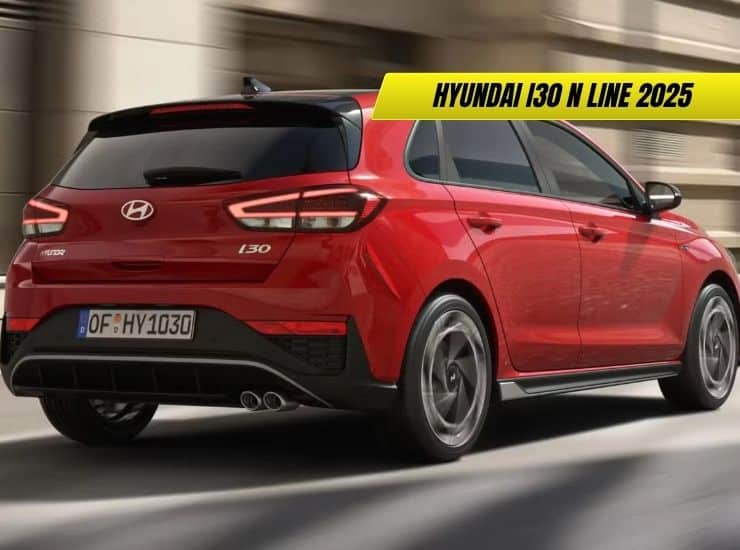
The Hyundai i30 remains one of the most rational and underrated choices in the UK family hatchback market. While rivals like the Volkswagen Golf and Toyota Corolla usually get more attention, the 2026 i30 offers a compelling mix of value, equipment and practicality, backed by a strong warranty and a straightforward engine line-up. It is not the flashiest car in the class, but it quietly does almost everything a British family or commuter needs, at a price that often undercuts the more obvious names.
Key points (summary)
- Offered in the UK as hatchback and Tourer estate, with a 1.5 T‑GDi 140 PS mild‑hybrid petrol as the core engine.
- Trim levels such as Advance, Premium, N Line and N Line S provide generous standard equipment.
- Boot space around 395 litres (hatchback) makes it one of the most practical cars in its class.
- Pricing starts in the mid‑£20,000s, undercutting many equivalent rivals at similar spec.
- Strong warranty and solid reputation for dependability make it a smart long‑term buy.
Hyundai i30 2026 in the UK: range and positioning
For UK buyers, the i30 is the “sensible all‑rounder” of the C‑segment. It competes directly with the Golf, Astra, Corolla and Mazda 3 but focuses on value, dependability and generous kit rather than brand image. The UK line-up typically includes:
- i30 Hatchback – the main family and commuter choice.
- i30 Tourer – estate version aimed at buyers who need more luggage capacity.
Trim levels announced for the latest UK range include Advance, Premium, N Line and N Line S for the hatchback, with Advance and Premium for the Tourer. Even the lower trims are relatively well equipped, while N Line and N Line S add a sportier look and feel.
In practice, that means British buyers can choose anything from a simple, rational commuter hatch to a more aggressive-looking N Line S with big wheels, sportier styling and extra toys, all on the same proven platform.
Engine, performance and efficiency
The modern UK i30 range has been simplified around a single core engine for the hatchback:
- 1.5 T‑GDi 140 PS 48V mild‑hybrid petrol
- Power: around 140 PS.
- Transmission: 6‑speed manual or 7‑speed dual‑clutch automatic (DCT).
- Mild‑hybrid system helps with low‑speed smoothness and small efficiency gains.
Official specs place the i30’s performance broadly in line with rivals: 0–62 mph times in the 9–10 second region and combined fuel consumption in the mid‑40s to around 50 mpg equivalent when driven sensibly. The mild‑hybrid element won’t turn it into a hybrid in the Toyota Corolla sense, but it supports the engine under acceleration and smooths stop‑start transitions.
In my experience, this type of drivetrain works especially well for UK drivers who do a mixture of town and motorway, but who don’t want the complexity or driving character of a full hybrid or plug‑in. It feels like a conventional petrol engine with a bit of extra polish and efficiency.
For a visual addition, a simple performance and efficiency table comparing the i30 1.5 T‑GDi 140 with a Golf 1.5 TSI and an Astra 1.2 turbo would be very helpful for readers comparing on-paper figures.
Prices, trims and equipment
One of the i30’s key selling points is the way Hyundai structures spec and value. As an example, typical UK pricing (before discounts) sits roughly:
- From around £24,500–£25,000 for an Advance hatch with manual gearbox.
- Closer to £28,000–£29,000 for a well-equipped N Line S with additional features and visual upgrades.
Trim highlights generally look like this:
- Advance
- 16″ alloy wheels, LED lights, air conditioning or climate control.
- Touchscreen with smartphone connectivity.
- A good suite of safety and driver-assistance features.
- Premium
- Larger wheels, upgraded headlights and more comfort features.
- Enhanced audio, climate and convenience tech.
- N Line / N Line S
- Sportier bodykit, 18″ N Line alloys, black mirrors.
- Sports seats, metal pedals, unique interior trim.
- N Line S often adds a panoramic sunroof and part‑leather upholstery.
From my point of view, the sweet spot for UK buyers is usually a mid‑range Premium or N Line: you get a lot of kit, a smart look and the same robust mechanicals, without pushing too close to the £30,000 mark where more prestigious badges start to appear.
Interior, comfort and technology
Inside, the i30 focuses on clarity and usability rather than headline‑grabbing design. The dashboard layout is clean, with:
- A central touchscreen for navigation, media and smartphone mirroring.
- Physical buttons and knobs for climate control and key functions.
- An instrument cluster that combines clear dials with digital information.
The quality of materials is good for the class, especially in mid‑ and high‑spec versions. It may not match the absolute premium feel of a Mazda 3 or high‑end Golf, but it avoids feeling cheap, and it is designed to withstand family use and daily commuting.
Seats are comfortable and supportive, with higher trims offering lumbar adjustment, heated functions and in N Line versions, sportier side bolstering. On rough British roads, the i30’s suspension tuning leans towards comfort: it deals well with bumps, potholes and speed humps without becoming wallowy.
This section is a natural place to connect to internal maintenance guides, such as articles explaining the meaning of common dashboard warning lights (spanner, handbrake, AdBlue) and how to respond safely when they appear.
Space and practicality
The i30 is one of the more practical hatchbacks in its class, particularly in terms of boot space:
- Hatchback boot capacity: around 395 litres with the rear seats up.
- With the seats folded, this increases to just over 1,300 litres.
Those numbers place it slightly ahead of many mainstream rivals (for example, Golf and some others sit around 380 litres) and make it genuinely useful for:
- Weekly supermarket runs.
- Family holidays with luggage.
- Carrying sports kit, pushchairs or bulky shopping.
Rear-seat space is decent rather than huge: two adults will be comfortable, three across the back is possible but tight for long journeys. For many UK families, the i30 hatchback will feel entirely adequate as a main car; buyers who need more luggage flexibility can step up to the i30 Tourer estate, which provides a significantly larger load bay.
A practical comparison table could show:
| Model | Boot (seats up) | Notes |
|---|---|---|
| Hyundai i30 | ~395 litres | Well-shaped, very usable |
| VW Golf | ~380 litres | Slightly smaller |
| Mazda 3 | Lower 300s | Noticeably smaller |
| Corolla hatch | Low–mid 300s | Compact but fine for most |
Driving experience on UK roads
The i30 feels exactly how many British drivers like their family hatchbacks: stable, predictable and comfortable. It is not tuned to be a performance hero (that role is taken by the separate i30 N hot hatch), but it provides:
- Light but accurate steering for easy manoeuvres and parking.
- A compliant ride that deals well with broken surfaces and speed bumps.
- Secure front‑wheel‑drive handling that inspires confidence in bad weather.
In N Line and N Line S forms, suspension tuning and tyre choice make the car feel a little sportier and more responsive without becoming harsh. It’s a subtle shift rather than a full transformation into a hot hatch, but for many UK buyers that is ideal: a bit more fun without sacrificing comfort.
From my point of view, the i30’s driving character suits the everyday reality of Britain’s roads: it’s not the most exciting, but it is one of the least frustrating cars to live with, whether you’re in heavy traffic or pounding up and down the motorway.
Running costs, tax and ownership
Running an i30 in the UK is generally straightforward and cost‑effective:
- The 1.5 T‑GDi mild-hybrid petrol delivers competitive fuel economy, especially on longer runs.
- CO₂ emissions in the mid‑130s to low‑140s g/km place it in reasonable road tax bands.
- Insurance groups are middle-of-the-road, appropriate for a family hatchback.
Hyundai’s warranty (often up to five years/unlimited mileage on UK cars) is a major advantage for private buyers planning to keep the car for a long time. Combined with relatively simple petrol technology compared with some complex hybrids or plug‑ins, the i30 promises predictable ownership and fewer surprises.
This section works well alongside internal links to UK‑specific pieces on toll roads and charges, speed camera regulations and driving licence points, since i30 owners are often high‑mileage commuters who care about both costs and compliance.
Hyundai i30 vs main rivals
| Model | Key strengths | Main compromises |
|---|---|---|
| Hyundai i30 | Value, equipment, boot space, warranty | Less brand prestige, less exciting styling |
| VW Golf | Refinement, image, broad powertrain range | Higher price at equivalent spec |
| Toyota Corolla | Hybrid efficiency, reliability | Smaller boot, less engaging drive |
| Vauxhall Astra | Tech and electrified options (PHEV/EV) | Interior feels less premium in some trims |
| Mazda 3 | Driving fun, premium-feel interior | Smaller boot, fewer engine options |
In essence, the i30 is ideal if you want a sensible, well-equipped, no‑nonsense hatchback that offers strong practicality and warranty-backed peace of mind, and you are less concerned about badge prestige.
FAQs
Is the Hyundai i30 a good family car for UK roads?
Yes. It offers a big boot for its class, decent rear space, comfortable suspension and good standard safety equipment, making it very suitable as a family workhorse.
How economical is the 1.5 T‑GDi mild‑hybrid engine?
In mixed UK driving it can achieve respectable fuel economy, especially on longer journeys, and the mild‑hybrid system helps reduce consumption slightly in stop‑start traffic.
Which trim level offers the best value?
Mid-range trims like Premium or N Line typically deliver the best mix of price, comfort features and equipment, while N Line S adds more luxury and style if your budget stretches.
Is the Hyundai i30 reliable?
The i30 has a strong reputation for reliability, and Hyundai’s long UK warranty provides additional confidence for long-term owners.
Should I choose the i30 over a Golf or Corolla?
If you value equipment, practicality, warranty and value for money more than brand image or full-hybrid technology, the i30 is a very strong alternative to both Golf and Corolla.
Conclusion
The 2026 Hyundai i30 may not be the headline-grabber of the UK hatchback market, but it quietly delivers one of the most convincing all‑round packages. With a roomy boot, comfortable ride, solid kit levels, a proven mild‑hybrid petrol engine and a long warranty, it makes a brilliant case as a rational, long‑term family or commuter car. For British drivers who want dependable practicality and strong value more than a prestigious badge or extreme performance, the i30 is exactly the kind of sensible choice that pays off over years of ownership.





