
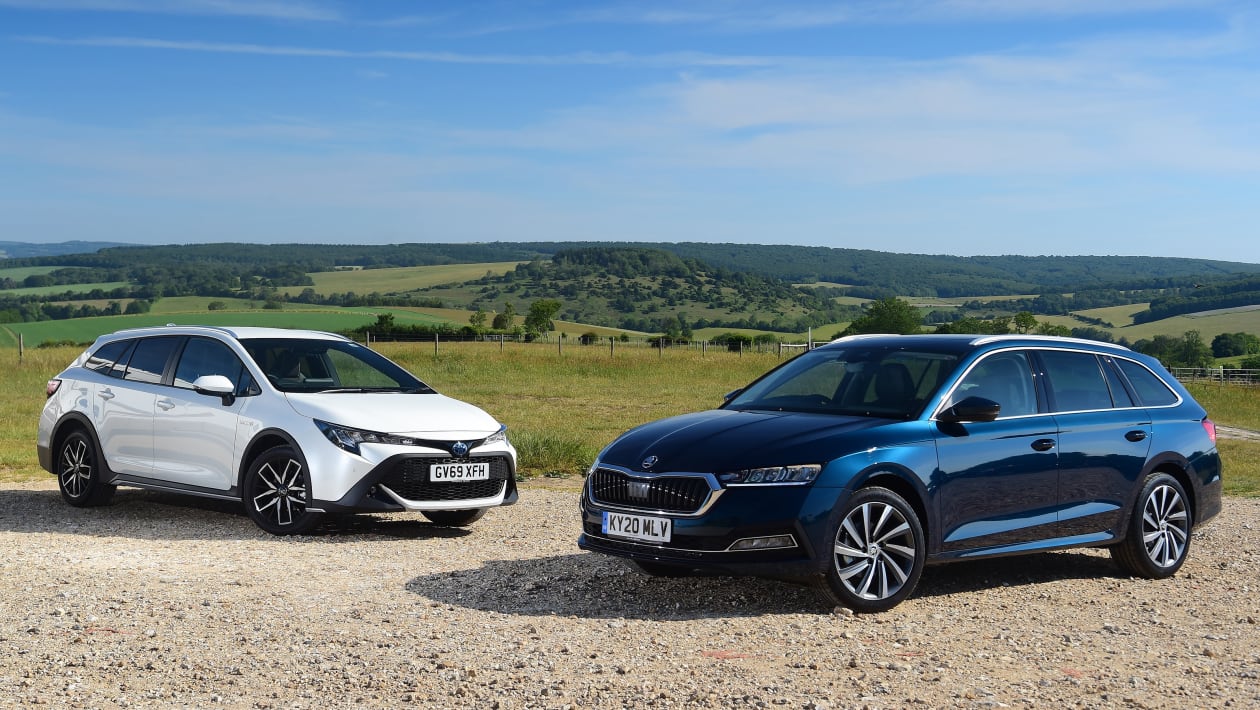
Skoda Octavia Combi and Toyota Corolla Touring Sports (TS) are two of the most sensible estate choices in the UK and Europe. Both offer big boots, family‑friendly cabins and efficient engines, but they take very different approaches. The Octavia is all about sheer space, comfort and engine variety. The Corolla TS majors on hybrid efficiency, simplicity and Toyota’s legendary reliability. If you are choosing your next estate, this comparison shows where each one wins – and for whom.
Key points (summary)
- Skoda Octavia Combi offers more boot space and rear room, plus petrol, diesel and plug‑in options.
- Corolla TS provides hybrid‑only powertrains, excellent fuel economy and strong long‑term durability.
- Octavia feels like a larger, more relaxed cruiser; Corolla TS is lighter‑feeling, smoother in town and brilliant in mixed driving.
- For pure space and flexibility, Octavia leads; for fuel efficiency and “set‑and‑forget” ownership, Corolla TS leads.
- Pricing and equipment vary, but Octavia often undercuts similarly specced Corolla TS on purchase price.
Space and practicality
Both cars are fundamentally practical estates, but the Skoda is simply bigger.
Skoda Octavia Combi
- Boot around 640 litres with the rear seats up.
- Over 1,700 litres with seats folded.
- Wide opening, low load lip and long load floor.
- Huge rear legroom – feels like a half‑class‑up car inside.
Toyota Corolla Touring Sports
- Boot typically around 580–600 litres seats up (varies slightly by engine/battery).
- About 1,600 litres with seats folded.
- Wide opening and sensible loading height.
- Rear space good, but not as cavernous as the Octavia.
Verdict on practicality:
- If you want the maximum possible boot and cabin space, the Octavia Combi wins clearly.
- If you’re happy with a slightly smaller (but still very useful) estate boot and value a slightly more compact footprint, the Corolla TS is still an excellent choice.
Powertrains and efficiency
This is where the philosophies really diverge.
Skoda Octavia Combi
- Petrol: 1.5 TSI around 150 PS (often mild‑hybrid).
- Diesel: 2.0 TDI around 150 PS for high‑mileage drivers.
- Plug‑in hybrid (iV) in some markets, combining petrol and electric power with usable electric range.
Pros:
- Plenty of power options, including stronger engines and performance‑oriented variants.
- Diesel and PHEV versions great for motorway or mixed use with good mpg and strong torque.
Cons:
- Fuel economy depends heavily on engine choice and driving style.
- More mechanical complexity if you go for PHEV or high‑spec diesels.
Toyota Corolla Touring Sports
- Full‑hybrid only: typically 1.8 or 2.0 petrol hybrid.
- Self‑charging – no plugging‑in required.
Pros:
- Consistently excellent real‑world fuel economy, especially in town and on mixed routes.
- Very simple everyday operation – no need to think about charging routines.
Cons:
- Fewer powertrain choices – no diesel, no pure petrol.
- Less outright power than the most powerful Octavia engines.
Verdict on engines and efficiency:
- Choose Octavia if you want maximum choice (petrol, diesel, PHEV), stronger engines or tow regularly.
- Choose Corolla TS if you want hybrid simplicity and excellent economy without worrying about charging.
Driving experience on UK roads
Octavia Combi
- Feels like a more substantial, “big‑car” estate.
- Very comfortable ride, especially with moderate wheel sizes.
- Stable, calm and quiet on motorways, ideal for long UK journeys.
- Steering is light and consistent, but not especially sporty.
Corolla Touring Sports
- Hybrid system gives smooth, quiet running in town and slow traffic.
- Ride comfort is good, and it feels composed on British A‑roads and motorways.
- Not as powerful in most trims as the strongest Octavias, but adequate for daily use.
- More relaxed than exciting – it rewards a measured, efficient driving style.
Verdict on driving feel:
- If you want a long‑distance cruiser that feels like a larger car and you often travel with a full load, the Octavia Combi suits you better.
- If your life is mixed town and A‑road use and you value quiet hybrid running and effortless smoothness, the Corolla TS is excellent.
Interior, tech and comfort
Skoda Octavia Combi
- Modern interior with digital instruments and a large central touchscreen.
- Materials are much improved; high trims feel close to premium.
- “Simply Clever” touches (hooks, nets, storage solutions) make everyday use easier.
- Seats are comfortable and supportive for long journeys.
Toyota Corolla TS
- Cabin design is simpler and less flashy.
- Good build quality and ergonomics, with straightforward controls.
- Infotainment is competent and has improved over time but is less showy than some rivals.
- Seats are comfortable, especially in higher trims, and the driving position is easy to live with.
Verdict on cabins:
- Octavia feels slightly more luxurious and spacious; better if you want a near‑premium ambience.
- Corolla TS feels honest, simple and durable, with fewer distractions and excellent long‑term usability.
Running costs and ownership
Octavia Combi
- Fuel consumption: very good with TSI and TDI, excellent if you use PHEV correctly (charging often).
- Insurance and servicing: in line with other VW‑group cars in the class.
- Depreciation: moderate, but purchase price is usually competitive.
Corolla TS
- Fuel consumption: among the best in its class thanks to the full‑hybrid system.
- Servicing is straightforward, and hybrids generally have very strong longevity.
- Depreciation: tempered by Toyota’s reputation for reliability and the desirability of hybrids.
Verdict on ownership:
- Octavia is strong value up front and offers good running costs if you choose the right engine.
- Corolla TS is designed to keep life simple: excellent mpg, fewer powertrain choices, and a very strong reliability reputation.
Head‑to‑head summary table
| Aspect | Skoda Octavia Combi | Toyota Corolla Touring Sports |
|---|---|---|
| Boot space | Larger (~640 L) | Slightly smaller (~580–600 L) |
| Rear passenger space | More generous, very roomy | Good but not as cavernous |
| Engine options | Petrol, diesel, PHEV (market‑dependent) | Full‑hybrid only |
| Fuel economy | Very good (best with TDI/PHEV) | Excellent across the board |
| Driving character | Big‑car, relaxed cruiser | Smooth, efficient, calm hybrid |
| Interior feel | More upmarket and spacious | Simple, robust, less “premium” |
| Best for | Space, versatility, long‑distance comfort | Efficiency, reliability, easy ownership |
FAQs
Which is better for a family of four in the UK?
Both work very well, but if you often carry lots of luggage, pushchairs or sports gear, the Octavia Combi’s bigger boot and extra rear space make it slightly better. If you do more city and mixed driving and value low fuel bills, the Corolla TS is hard to beat.
Which car is cheaper to run?
In most everyday situations, the Corolla TS will use less fuel thanks to its full‑hybrid system. The Octavia can get close with its most efficient diesel or PHEV variants, but that depends more on how and where you drive.
Which is more comfortable on long motorway journeys?
The Octavia Combi usually feels more like a big‑car cruiser, with a very relaxed ride and lots of space, making it marginally better for long, loaded trips.
Which holds its value better?
The Corolla TS benefits from Toyota’s reputation for reliability and the desirability of hybrids, which tends to support strong residuals. The Octavia also holds value reasonably well, especially estates, but starts from a lower purchase price.
Which should I choose: Octavia Combi or Corolla TS?
Choose the Skoda Octavia Combi if your top priority is space, versatility and long‑distance comfort. Choose the Toyota Corolla Touring Sports if you want minimal fuel costs, hybrid simplicity and long‑term reliability in a still‑very‑practical estate.





