
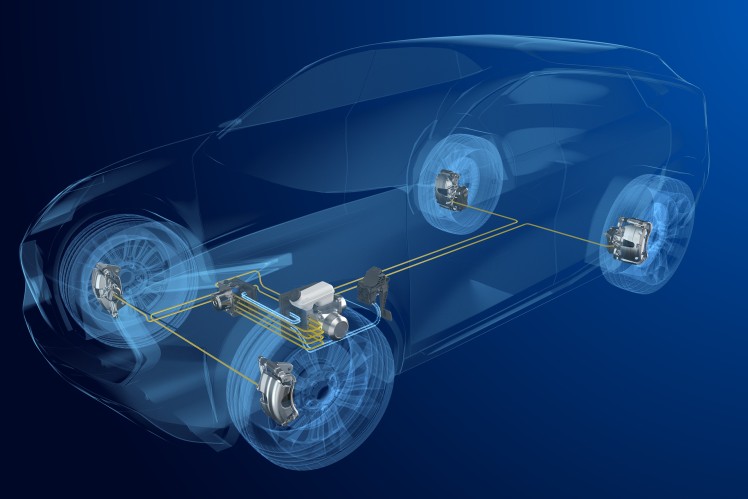
Wet roads change how a car slows down, turns and responds to input, so braking has to become smoother, earlier and more deliberate. The main goal is to avoid unsettling the car while still leaving enough room to stop safely if traffic ahead brakes sharply.
Key Points
- Wet roads lengthen stopping distances, so braking should begin earlier than usual.
- Smooth pedal pressure is better than sudden, hard braking in rain.
- Tyres need proper tread depth and inflation to maintain grip on wet surfaces.
- Standing water can cause aquaplaning, which reduces braking and steering control.
- If the car starts to slide, reduce input rather than adding more force.
- Test the brakes gently after driving through deep water to dry them out.
Why Braking Changes in Rain
When roads are wet, the tyre has less direct contact with the surface, so the car needs more distance to stop. That is why a braking point that feels normal in dry weather can be too late in rain, especially if the surface also has oil, leaves or standing water on it.
Wet-weather braking is also less forgiving because abrupt inputs can unsettle the chassis. A hard jab at the pedal may trigger ABS, but even with ABS working properly, the car still needs extra space to come to a halt.
How to Brake More Safely
The safest approach is to lift off the accelerator earlier and begin braking with gentle, progressive pressure. That gives the tyres time to transfer weight forward without locking or unsettling the car.
In city traffic, it helps to look further ahead and react earlier to brake lights and junctions. On faster roads, especially dual carriageways, leaving a bigger gap gives you the margin to brake smoothly instead of reacting late.
After Driving Through Water
If you drive through a deep puddle or splash across standing water, brake performance can be temporarily reduced because the discs and pads are wet. A light, straight-line brake application after the puddle can help dry the brakes and restore normal response.
That should be done carefully and only when the road ahead is clear. The aim is not to test the limits of grip, but to make sure the brakes are ready for the next stop.
What to Watch For
A car that feels reluctant to slow, pulls to one side, or makes a grinding or squealing sound after wet driving deserves attention. In some cases the issue is only water on the brakes, but worn pads, contaminated discs or weak tyres can make wet braking much less predictable.
From a practical point of view, tyres do most of the work in rain, but the brake system still has to be in good condition. If braking in the wet feels consistently worse than it should, it is worth checking the tyres, pads and fluid condition together.
Should I brake harder in the rain to compensate?
No. Braking harder usually makes the car less stable and can increase stopping distance if the tyres are already close to losing grip. Smooth, early braking is the safer approach.
Is ABS more important in wet weather?
ABS helps prevent wheel lock, but it does not remove the need for extra stopping distance. It is a safety aid, not a substitute for careful speed and spacing.
Why does the car pull after driving through water?
The brake on one side may have dried unevenly, or one caliper or pad may be more worn than the other. If the pull continues after a short drive, the brakes should be checked.
Can wet brakes make a squealing noise?
Yes. Water can cause temporary noise until the pads and discs dry. If the noise continues, there may be a wear or contamination issue.
Does tyre tread really matter that much in the rain?
Yes. Tread helps move water away from the contact patch, which improves grip and reduces aquaplaning risk. Worn tyres make wet braking much worse.
Should I test my brakes after heavy rain?
Yes, gently and in a straight line when it is safe to do so. This helps dry the brakes and confirms that they are responding normally.
What is the biggest mistake drivers make when braking in wet weather?
Braking too late and too sharply. The best wet-weather braking is calm, early and progressive.
Conclusion
Wet-road braking is mainly about anticipation, smoothness and leaving enough space for the car to stop without drama. Drivers who reduce speed earlier and brake more progressively usually stay in control more easily and avoid the sudden panic inputs that cause most wet-weather mistakes.





