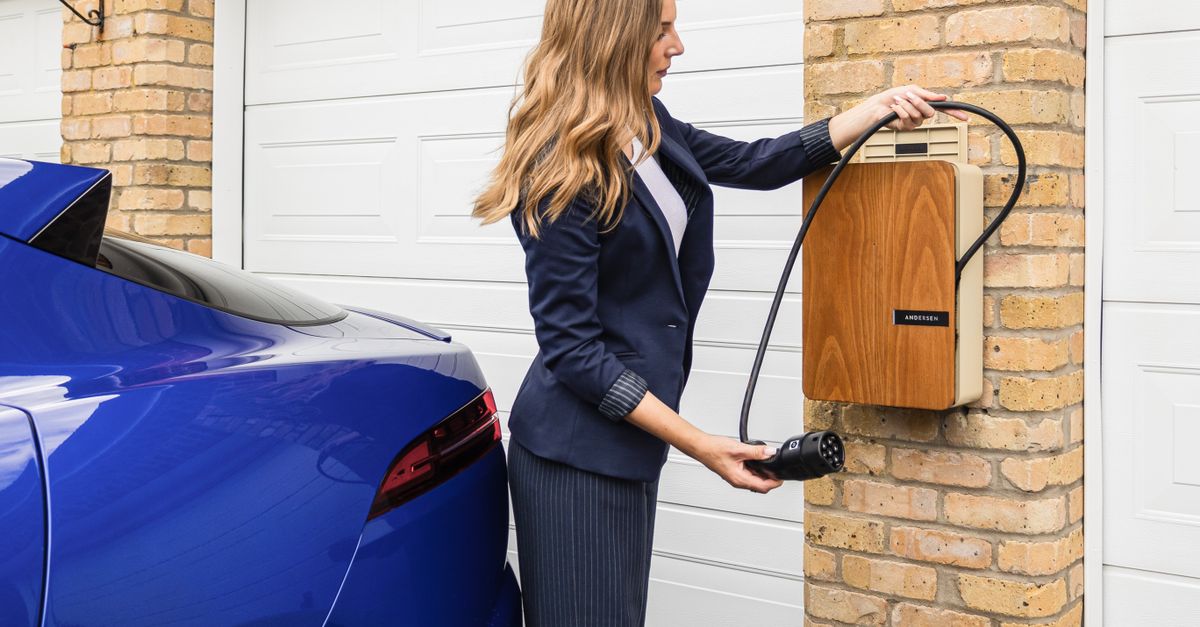
For UK drivers, home charging should be convenient — but it is also a high-load electrical installation. For regular use, a dedicated wallbox is generally safer and more suitable than relying on a standard domestic socket. Electrical Safety First warns that prolonged use of a 13A socket can place a sustained load on ordinary sockets and wiring beyond what they were designed to handle.
Before booking an installation or plugging in an EV at home, check the charger, the property, the electricity supply and the cable route.
Choose a dedicated charge point for regular charging
A dedicated home charge point is designed for the demands of regular EV charging. A standard socket should not be treated as an equivalent long-term alternative simply because the plug fits.
Most UK homes with a single-phase electricity supply are typically limited to around 7kW from a domestic wallbox, according to the RAC’s guide to home charging. That is not a guarantee of the charging rate the car will receive: the vehicle, the installation and the available electricity supply all affect the actual result.
A charger’s headline power rating, therefore, should not be the only consideration. The installation must be suitable for both the vehicle and the property.
Use a competent, properly qualified installer
The installation should be carried out by an electrician who is registered, competent and trained and qualified to fit EV charge points. A proper site assessment should consider:
- the condition and capacity of the property’s wiring;
- earthing arrangements and protective devices;
- the electricity supply and the home’s existing demand; and
- where the charge point can be mounted safely.
These checks are recommended by Electrical Safety First, TrustMark and the Renewable Energy Consumer Code’s consumer guidance.
The Distribution Network Operator, or DNO, must also be informed when an EV charge point is connected to the network. The installer will often handle that notification, but ask who is responsible and whether it has been completed. If the property’s existing demand or supply capacity is not sufficient, a load assessment may be needed before the installation can go ahead.
Check the mounting position and cable route
The charge point should be mounted securely, and the cable should reach the vehicle without creating a trip hazard. Think about the route before the installer arrives rather than discovering afterwards that the cable has to cross a walkway.
Do not use an extension lead to solve a reach problem. Extension leads and cables routed across pavements introduce additional safety risks, so a public or shared route needs particular care. If the proposed position cannot serve the vehicle without obstructing a path, ask the installer to reassess the layout.
Permission may also be needed. Before work begins, check whether you need approval from a landlord, property owner or local authority. Requirements can vary according to the property and its location, as TrustMark’s EV charger guidance and EVA England’s home-charging advice explain.
Buy suitable equipment and keep the paperwork
Choose equipment from a reputable manufacturer or retailer and check that the charge point conforms to the relevant UK safety standards. Register the product so that you can receive recall information if necessary.
Once the work is complete, retain the electrical certificate showing that the installation complies with the applicable wiring requirements. It is sensible to ask the installer what certificate will be provided before the job starts, rather than assuming the paperwork will arrive later. Electrical Safety First and TrustMark both highlight the importance of suitable equipment and installation records.
Inspect the charging cable regularly
Charging cables should be inspected regularly for damage. If a cable is damaged, stop using it and arrange a replacement or have it inspected by a registered and competent electrician. Do not continue charging simply because the car still appears to work normally.
Keep cables away from routes where people could trip, and do not run them across a pavement. The Electrical Safety First EV advice and RECC guidance both identify damaged cables, extension leads and poorly routed cables as avoidable safety concerns.
Questions to ask before installation
A reputable installer should be able to answer these questions clearly:
- Has the property’s wiring, earthing, protective equipment and available supply capacity been assessed?
- Is the proposed charge point suitable for the car and the home’s electricity supply?
- Who will notify the DNO, and when will that happen?
- Can the unit be mounted securely with a cable route that avoids trip hazards and pavements?
- Do I need permission from a landlord, property owner or local authority?
- What electrical certificate and installation records will I receive?
If any answer is unclear, pause the installation and obtain advice from a competent professional. A safe home-charging setup is not just the wallbox itself; it is the combination of suitable equipment, a sound electrical supply, a safe cable route and properly recorded installation work.
Source 1 · Source 2 · Source 3 · Source 4 · Source 5 · Source 6 · Source 7