
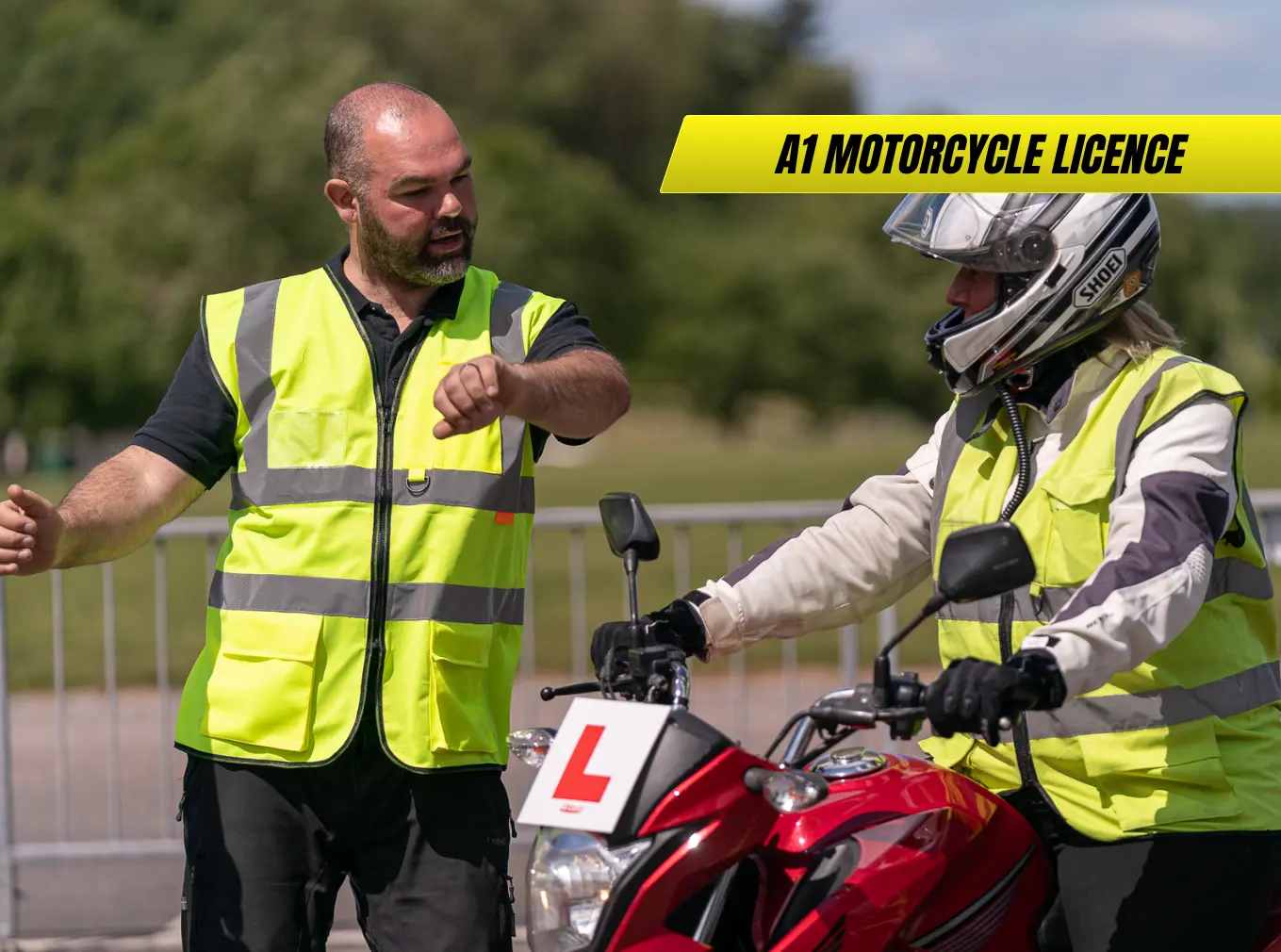
Complete A1 motorcycle licence guide UK 2025. Learn about 125cc bike restrictions, test requirements, costs, age limits and how to get your A1 licence for light motorcycles.
The A1 motorcycle licence represents the gateway to powered two-wheel transport for younger riders and those seeking economical urban mobility in the UK. This licence category allows riders to operate 125cc motorcycles and scooters, providing an excellent introduction to motorcycling while offering practical transport solutions for commuting and leisure riding. Understanding the A1 licence requirements, limitations, and testing procedures is essential for anyone considering this popular entry point into the motorcycle world.
Key Points Summary
• Minimum age: 17 years old in UK (16 in Northern Ireland) with valid theory test certificate • Vehicle restrictions: 125cc maximum, 11kW (14.8bhp) power limit, power-to-weight ratio max 0.1kW/kg • L-plate requirements: Must display L-plates, no motorway riding, no pillion passengers initially • Test structure: Theory test plus two-part practical test (off-road manoeuvres and road riding) • Training costs: £400-800 total including CBT, theory test, lessons, and practical tests • Insurance considerations: Typically cheaper than larger bikes but varies significantly by age and location
Understanding A1 Licence Categories and Vehicle Restrictions
The A1 motorcycle licence permits riders to operate light motorcycles with specific technical limitations designed to provide safe introduction to powered two-wheel transport. These restrictions ensure appropriate progression through motorcycle categories while maintaining road safety standards.
Vehicle specifications under A1 category include:
- Maximum engine capacity: 125cc (cubic centimetres)
- Power limit: 11kW (equivalent to 14.8 brake horsepower)
- Power-to-weight ratio: Maximum 0.1kW per kilogram of vehicle weight
- Minimum weight: 110kg to prevent excessively light, high-performance machines
Practical implications of these restrictions mean A1-legal motorcycles typically achieve top speeds of 60-70mph, making them suitable for most UK roads except motorways (which remain prohibited for A1 licence holders regardless of machine capability).
From my experience, these limitations provide sensible progression for new riders while offering genuine transport utility. Modern 125cc motorcycles achieve excellent fuel economy (often 80-100mpg) and provide adequate performance for urban commuting and rural A-road riding.
Legal compliance requires understanding that exceeding these specifications, even temporarily through modifications, invalidates A1 authority and potentially insurance coverage. Regular MOT testing ensures continued compliance with technical standards.
Age Requirements and Eligibility Criteria
Minimum age for A1 licence applications is 17 years throughout England, Scotland, and Wales, with Northern Ireland permitting applications from age 16. All applicants must already hold valid theory test certificates before attempting practical testing.
Provisional licence requirements include holding category A provisional entitlement, obtained through standard DVLA applications. This provisional authority permits supervised practice and Compulsory Basic Training (CBT)participation necessary for independent road riding.
Medical standards follow DVLA Group 1 requirements, though younger applicants rarely encounter complications. However, any medical conditions affecting balance, coordination, or reaction times require honest disclosure and potential medical review.
Legal residency in the UK is required for new licence applications, with specific requirements varying for recent immigrants or temporary residents. EU licence holders may need to exchange existing qualifications depending on their circumstances and current regulations.
In my view, the 17-year minimum age represents appropriate balance between transport independence and safety considerations. The requirement for prior theory test success ensures basic road knowledge before practical motorcycle training begins.
Educational considerations often see students planning A1 licences around school or college schedules, as the testing process typically requires several weeks and multiple appointments for different stages.
CBT and Pre-Test Training Requirements
Compulsory Basic Training (CBT) represents the mandatory first step for all new motorcycle riders, regardless of eventual licence category. This one-day course covers essential safety knowledge and basic riding skills required for independent road use under L-plate restrictions.
CBT structure includes five elements:
- Element A: Introduction covering legal requirements, safety equipment, and motorcycle types
- Element B: Practical motorcycle familiarisation including controls, starting procedures, and basic handling
- Element C: Off-road riding practice developing balance, control, and confidence
- Element D: On-road briefing covering road positioning, hazard awareness, and traffic interaction
- Element E: On-road riding under instructor supervision demonstrating safe riding competency
CBT certification permits independent riding on public roads under L-plate conditions for two years, during which time riders can practice and prepare for full licence testing. However, restrictions include no motorway access, no pillion passengers, and mandatory L-plate display.
Training costs typically range from £120-180 for CBT completion, varying by location and training provider. Quality varies significantly between providers, making research into instructor qualifications and pass rates worthwhile investment.
From my experience advising new riders, comprehensive CBT training provides crucial foundation skills that significantly improve subsequent test performance and long-term riding safety. Rushing through budget providers often proves false economy when additional training becomes necessary.
For those transitioning from cars, our guide to best cars under £25,000 provides alternatives for those uncertain about motorcycle commitment.
Theory Test Structure and Preparation
A1 theory testing follows identical structure to car theory tests, comprising 50 multiple-choice questions and hazard perception assessment. Pass marks require 43 correct answers from 50 questions plus 44 points from 75 possible in hazard perception.
Question topics include:
- Road traffic signs and markings specific to motorcycle use
- Rules of the road including speed limits, priority systems, and traffic law
- Motorcycle-specific regulations covering equipment requirements and operational restrictions
- Safety considerations including protective equipment, weather effects, and vulnerability factors
- Environmental awareness covering fuel efficiency and emission considerations
Hazard perception testing uses identical video clips to car tests but requires motorcycle-specific awareness of situations like road surface conditions, weather effects, and visibility challenges that particularly affect two-wheel vehicles.
Preparation resources include official DVSA theory test app (£4.99), online practice platforms, and comprehensive study guides covering motorcycle-specific content. Regular practice with official materials significantly improves pass rates compared to generic study approaches.
Test booking requires valid provisional licence and typically offers appointments within 2-3 weeks in most UK locations. Cost remains £23, identical to car theory testing, with results valid for two years from pass date.
The theory pass certificate becomes essential for practical test booking, making early completion advisable given potential multiple attempt requirements and two-year validity period.
Practical Test Components and Assessment
A1 practical testing comprises two distinct phases designed to evaluate fundamental motorcycle control and real-world riding competency. Both phases must be passed on the same day, though separate attempts are permitted if initial failure occurs.
Module 1: Off-road manoeuvres (approximately 20 minutes)
- Wheeling the motorcycle demonstrating control without engine power
- Slalom exercise weaving through cones at walking pace showing low-speed balance
- Figure-of-eight within marked area displaying tight control and coordination
- Slow riding maintaining balance at minimum speed over extended distance
- U-turn within marked boundary showing control in confined spaces
- Controlled stop demonstrating progressive braking technique
- Emergency stop from 32km/h (20mph) showing crisis braking skills
Module 2: On-road assessment (approximately 40 minutes) Independent riding following directions or sat-nav guidance while demonstrating:
- Speed management appropriate to conditions and legal requirements
- Observation skills including effective mirror use and hazard recognition
- Positioning maintaining safe road position relative to other traffic
- Priority decisions at junctions, roundabouts, and complex road situations
- Communication through appropriate signalling and road positioning
| Test Element | Duration | Key Skills Assessed |
|---|---|---|
| Module 1 | 20 mins | Control, balance, emergency procedures |
| Module 2 | 40 mins | Traffic interaction, hazard awareness, legal compliance |
Pass requirements demand competent performance across all assessed areas with only minor faults permitted. Major faults or dangerous actions result in immediate test failure requiring rebooking and additional fees.
In my experience, thorough preparation through professional instruction significantly improves first-time pass rates and develops safer long-term riding habits compared to minimal preparation approaches.
Training Costs and Professional Instruction
Total training costs typically range from £400-800 depending on location, training provider choice, and individual learning requirements. London and South East England generally command highest prices while Northern regions often offer better value.
Cost breakdown includes:
- CBT certification: £120-180
- Theory test: £23
- Professional lessons: £25-40 per hour (typically 6-12 hours required)
- Practical test fees: £15.50 (Module 1) + £75 (Module 2) for weekday tests
- Motorcycle hire (if required): £50-80 per test attempt
Training provider options range from large motorcycle schools offering structured courses to independent instructors providing flexible individual tuition. Research instructor qualifications, local pass rates, and customer feedback before committing to training programmes.
Lesson requirements vary dramatically between individuals, with previous cycling experience, natural balance, and confidence levels affecting learning speed. Most candidates require 6-12 hours professional instruction beyond CBT, though some need significantly more support.
Quality indicators for training providers include:
- DVSA-approved instructors with current certifications
- Modern training motorcycles maintained to high standards
- Comprehensive insurance covering training activities
- Positive customer reviews and realistic pass rate claims
From my point of view, investing in quality professional instruction proves more cost-effective than attempting tests with minimal preparation, as repeat test fees and extended learning periods quickly exceed initial training investments.
For those considering alternatives, our best family SUVs guide explores four-wheel options that might suit different transport needs.
Insurance Requirements and Considerations
Motorcycle insurance for A1 licence holders typically costs less than larger bike categories but varies enormously based on age, location, motorcycle value, and riding experience. Young riders often face substantial premiums despite riding lower-powered machines.
Factors affecting premiums include:
- Rider age and experience with significant reductions after age 25 and two years riding
- Postcode risk assessment reflecting local theft rates and accident statistics
- Motorcycle security including locks, alarms, and secure storage arrangements
- Annual mileage with lower distances generally attracting reduced premiums
- Voluntary excess levels allowing premium reduction through increased personal liability
Cover types range from basic third-party insurance meeting legal minimums to comprehensive policies covering theft, damage, and additional benefits like recovery services and riding gear replacement.
Legal requirements mandate minimum third-party coverage before any road use, including practice sessions with L-plates. Many insurers offer short-term cover for test purposes, though annual policies typically provide better value for regular riding.
Shopping strategies include comparison websites, specialist motorcycle insurers, and direct company applications. Young rider specialists often provide more competitive quotes than general insurers unfamiliar with motorcycle risk profiles.
Additional considerations include understanding policy exclusions, particularly regarding modifications, track day use, or commercial applications that might invalidate coverage unexpectedly.
Real-World Applications and Popular Motorcycles
Commuting represents the primary application for many A1 licence holders, with 125cc motorcycles offering excellent fuel economy, parking convenience, and urban mobility advantages over cars in congested areas.
Popular A1-compliant motorcycles include:
- Honda CB125R: Modern styling with reliable engineering and good build quality
- Yamaha YZF-R125: Sport bike styling appealing to younger riders with performance focus
- KTM Duke 125: Premium features and distinctive design commanding higher prices
- Suzuki GSX-125: Balanced specification offering good value and practicality
- Piaggio Liberty 125: Scooter format providing weather protection and storage space
Rural applications include leisure riding on A-roads and country lanes, though motorway restrictions limit longer-distance touring opportunities. Many riders use A1 licences as stepping stones to larger categories after gaining experience.
Economic advantages of 125cc motorcycles include exceptional fuel economy (often exceeding 100mpg), low insurance costs compared to cars, reduced parking fees, and minimal maintenance requirements with proper servicing.
Limitations become apparent on faster roads where performance restrictions affect overtaking capability and passenger carrying restrictions limit utility for some users. Understanding these compromises helps set realistic expectations for A1 motorcycle ownership.
For families exploring transport options, our guides to best SUVs under £30,000 and diesel SUVs provide alternative four-wheel solutions.
Progression to Higher Licence Categories
A1 licence progression typically leads to A2 category (restricted to 35kW/47bhp) accessible from age 19, or direct access to full category A from age 24. Previous A1 experience counts toward progressive access requirements.
A2 upgrade pathway requires additional practical testing but no theory retest, provided existing theory certificate remains valid. The A2 category permits significantly more powerful motorcycles while maintaining some restrictions for safety progression.
Direct Access to unrestricted category A becomes available at age 24 (or 21 with two years A2 experience), requiring practical testing on large motorcycles but offering access to any road-legal motorcycle regardless of power or capacity.
Strategic considerations for licence progression include timing upgrades to coincide with insurance renewal dates, understanding that some training providers offer progression packages covering multiple categories at reduced combined costs.
Experience benefits from A1 riding significantly improve progression test performance and general riding competency, making the stepped approach more successful than attempting direct access without prior motorcycle experience.
From my experience, riders who complete A1 training thoroughly develop better fundamental skills than those rushing toward higher categories, resulting in safer long-term riding and better test pass rates at subsequent levels.
Understanding timing chain longevity and spanner warning lights becomes relevant for motorcycle maintenance as riders progress to more complex machines.
Frequently Asked Questions
What motorcycles can I ride with an A1 licence?
A1 licence permits motorcycles up to 125cc, maximum 11kW (14.8bhp), with power-to-weight ratio not exceeding 0.1kW/kg. Popular options include Honda CB125R, Yamaha YZF-R125, and various 125cc scooters meeting these specifications.
Do I need L-plates forever with an A1 licence?
No, L-plates are only required during provisional licence period before passing your full A1 test. Once you pass both theory and practical tests, you receive full A1 licence without L-plate requirements.
Can I carry passengers on my A1 motorcycle?
Yes, but only after passing your full A1 test and ensuring your motorcycle is designed and insured for two people. During L-plate period, pillion passengers are prohibited regardless of motorcycle specification.
How much does A1 motorcycle insurance cost?
Insurance costs vary enormously based on age, location, and motorcycle choice. Young riders might pay £200-800 annually, while older riders often achieve £100-300. Urban areas typically cost more than rural locations due to theft and accident risks.
Can I ride on motorways with an A1 licence?
No, A1 licence holders cannot use motorways regardless of motorcycle capability. This restriction applies to all learner and restricted licence categories, limiting longer-distance travel options until progression to higher categories.
How long does A1 licence training take?
Most riders complete A1 training within 4-8 weeks, including CBT, theory preparation, practical lessons, and test appointments. Individual learning speed and lesson frequency affect overall timescales significantly.
Is A1 licence worth getting if I plan to upgrade later?
Yes, A1 provides valuable experience and skills development that significantly improves performance in higher category tests. The practical riding experience proves invaluable for understanding motorcycle dynamics and developing safety awareness.
Conclusion
The A1 motorcycle licence provides an excellent introduction to powered two-wheel transport, offering practical mobility solutions while developing fundamental riding skills essential for progression to higher categories. The combination of reasonable costs, manageable power restrictions, and comprehensive training ensures new riders develop safe habits while enjoying the benefits of motorcycle ownership.
In my experience, A1 licences represent outstanding value for urban commuters, young riders seeking transport independence, and anyone exploring motorcycle ownership without committing to larger, more expensive machines immediately. The stepped progression system provides logical advancement opportunities as experience and confidence develop.
Current UK regulations provide clear pathways from A1 through A2 to full category A licences, ensuring riders can progress naturally as their skills and requirements evolve. The foundation skills developed during A1 training prove invaluable throughout motorcycling careers, making thorough initial preparation a worthwhile long-term investment.
For those considering motorcycle ownership, the A1 category offers genuine transport utility combined with excellent fuel economy and reduced environmental impact compared to car alternatives. Understanding the limitations and embracing the progression system provides the safest and most enjoyable introduction to the motorcycling community.
Looking ahead, increasing urban congestion and environmental awareness make 125cc motorcycles increasingly attractive for practical transport, while electric alternatives begin appearing that may eventually change the traditional progression pathway through combustion engine categories. For now, the A1 licence remains the ideal starting point for UK motorcycle ownership.





