
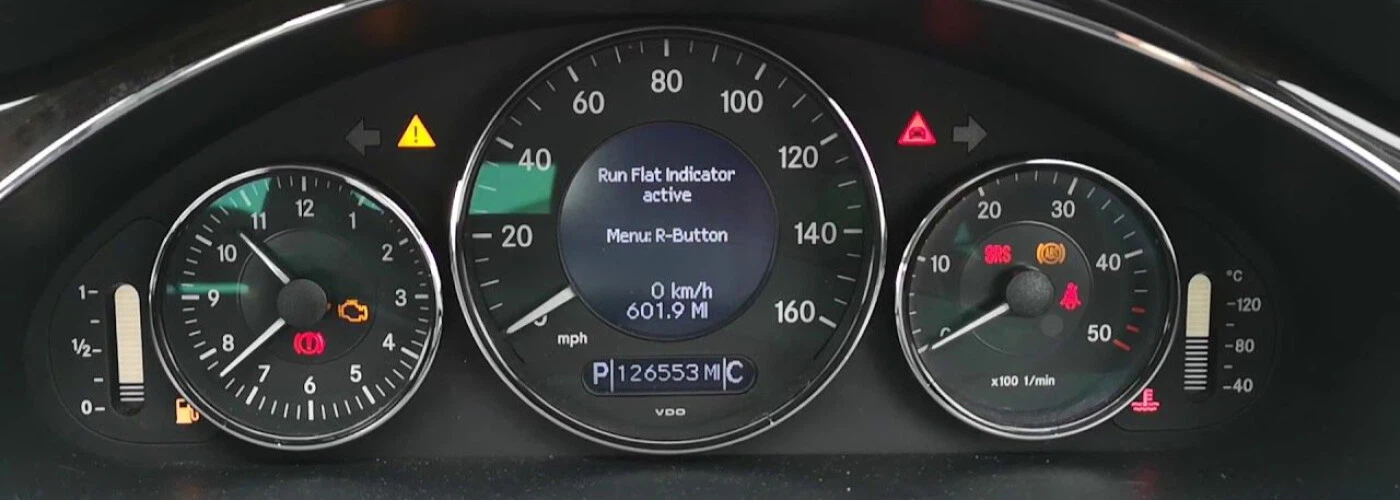
Few things are more alarming on a cold winter morning than a cluster of warning lights appearing on the dashboard that were not there the day before. The ABS and ESP lights are among the most common winter triggers — and understanding whether they indicate a genuine fault or a cold-weather sensor issue is the difference between an urgent garage visit and a light that clears itself within minutes.
ABS and ESP Warning Lights in Cold Weather: What UK Drivers Need to Know
When an ABS or ESP warning light appears in cold or icy conditions, the most likely cause is not a mechanical failure — it is a wheel speed sensor temporarily blocked or affected by snow, ice, road salt, or low battery voltage. However, because ABS and ESP are active safety systems whose failure has direct consequences in emergency braking and stability situations, any light that persists after the vehicle has warmed and the conditions have improved requires investigation.
| Warning Light | Most Common Winter Cause | Action |
|---|---|---|
| ABS light only | Frozen or salt-corroded wheel speed sensor | Drive gently; check if light clears once warm |
| ESP/traction control light | Ice-related wheel spin triggering the system normally | Normal in slippery conditions; not a fault |
| ABS + brake light together | Low brake fluid or ABS module fault | Stop and investigate — do not ignore |
| ABS + ESP + battery light | Low battery voltage affecting electrical systems | Check battery; do not dismiss |
| Any light that persists | Potential genuine fault | Have the car diagnosed with an OBD reader |
Why Cold Weather Triggers ABS and ESP Lights
Frozen or Contaminated Wheel Speed Sensors
The ABS system relies on wheel speed sensors at each corner of the vehicle — small electromagnetic sensors that read the rotation speed of a toothed ring on the wheel hub or driveshaft. When all four sensors agree on speed, the system is satisfied. When one sensor reads differently from the others — because it is blocked by compacted snow, coated with ice, or corrupted by road salt on its wiring connector — the ABS module registers a discrepancy and illuminates the warning light.
This is the most common cause of winter ABS lights in UK conditions and explains why the light often appears on a cold start or after overnight snowfall and clears itself after a few miles of driving — the heat generated by braking and the airflow from movement clear the sensor blockage.
Road salt — applied extensively to UK roads from October to March — is particularly corrosive to the thin wiring and connectors that serve wheel speed sensors. Salt and moisture combine to corrode the connector pins over time, increasing electrical resistance and producing intermittent false readings that may only manifest in cold, damp winter conditions when corrosion effects are most pronounced.
Low Battery Voltage
Cold temperatures reduce battery output capacity by up to 50%, as discussed in our winter driving safety guide. A battery that is borderline in terms of health may provide sufficient voltage for normal operation in summer but drop below the threshold required for all vehicle electronic systems on a cold winter morning.
When system voltage drops below the threshold required by the ABS module — typically around 10.5–11V during cranking — the module may register a system fault and illuminate the warning light. Multiple warning lights appearing simultaneously on a cold start (ABS, ESP, traction control, and possibly the battery warning light together) is a strong indicator of a voltage-related cause rather than individual sensor failures.
The diagnostic test: If multiple lights appeared simultaneously on a cold start and the car started sluggishly, have the battery tested. Any battery over three years old that is borderline on a cold start should be replaced before the next winter rather than after the next failure.
The ESP Light During Active Use: Not a Fault
A specific clarification that many UK drivers are not aware of: the ESP/traction control light flashing during driving in icy or snowy conditions is not a warning of a fault — it is the system actively working. The flashing light indicates that the stability or traction control system is intervening to maintain control, which is precisely what it is designed to do.
A steady illuminated ESP light (not flashing) indicates the system has been switched off or has detected a fault. A flashing ESP light during movement in slippery conditions is a normal and expected system behaviour.
What to Do When the Light Appears
If the light appears on cold start and the car drives normally:
Drive gently for the first two to three miles and monitor whether the light extinguishes as the car warms. If it clears, a frozen or temporarily affected sensor was almost certainly the cause. No immediate action is required, but the sensor and its wiring should be inspected during the next service.
If the light persists after the car has fully warmed:
A genuine sensor, wiring, or ABS module fault is likely. The car remains driveable — the ABS system failing does not mean the brakes fail, it means the anti-lock function is unavailable — but braking distances will be longer in an emergency stop, and the car is not fully safe for winter road conditions. Have the fault read with an OBD diagnostic reader at the earliest opportunity.
If the ABS light appears alongside the red brake warning light:
Stop as soon as safely possible and check the brake fluid level. A low brake fluid level triggers both lights simultaneously and indicates either worn brake pads (normal) or a fluid leak (serious). If the fluid level is correct and the light persists, have the braking system inspected before driving further. For full guidance on brake warning lights, our handbrake warning light guide covers the full range of brake-related dashboard alerts.
If multiple warning lights appeared at once on cold start:
Test the battery voltage before any other diagnosis — a failing battery generates multiple false fault codes and replacing it often clears all warning lights simultaneously.
Preventing Winter Sensor Issues
The best prevention for winter ABS and ESP issues is regular wheel arch and underbody cleaning throughout the winter months to remove salt accumulation before it causes corrosion. A high-pressure rinse of the wheel arches — paying particular attention to the area around each wheel hub where the speed sensor is located — removes road salt before it can penetrate sensor connectors and wiring.
Anti-corrosion spray applied to sensor connectors and underbody wiring during the annual service provides a moisture barrier that significantly reduces salt-induced corrosion. This is a standard part of a winter preparation service at most UK independent garages and costs very little in parts.
For drivers concerned about the relationship between warning lights and the spanner warning light and service reminders, our dedicated guide explains what each dashboard indicator means and which require urgent attention.
You can also check the official guidance on vehicle safety systems and their maintenance requirements at the DVSA vehicle safety and maintenance guidance page.
Can I drive safely with the ABS light on?
Yes — the standard brakes continue to function normally. However, without ABS, the wheels may lock during hard braking, extending stopping distances and removing steering control during an emergency stop. In winter conditions where emergency stops are more likely, driving with the ABS light on is a meaningful additional risk. Have the fault diagnosed promptly.
Will the ABS light go off by itself?
If the cause is a frozen sensor, yes — the light typically clears within a few miles of normal driving as the sensor warms and any ice or snow clears. If the light persists after the vehicle has fully warmed to operating temperature, the fault is unlikely to clear without intervention and requires diagnosis.
Does road salt damage ABS sensors?
Yes — this is one of the most common causes of progressive ABS sensor degradation on UK vehicles. Salt and moisture corrode the sensor connector and wiring over successive winters, causing intermittent faults that initially only manifest in cold, damp conditions before becoming permanent. Regular underbody washing and anti-corrosion protection significantly extends sensor life.
Is it expensive to replace a wheel speed sensor?
A wheel speed sensor itself typically costs £20–£60 for a quality part. Labour for replacement is usually one to two hours — a total repair cost of £80–£200 at an independent garage. It is one of the more accessible electrical repairs and does not require specialist equipment beyond an OBD reader for fault code confirmation.
Why do multiple warning lights come on in cold weather?
Multiple lights appearing simultaneously on a cold start most commonly indicate low battery voltage — the battery cannot supply sufficient electrical power to all vehicle systems during the cold start process, causing multiple modules to register faults simultaneously. A single failing component rarely causes multiple simultaneous warnings. Test the battery first before investigating individual systems.
From my point of view, the most useful single piece of advice for any UK driver who sees the ABS light illuminate on a cold morning is: drive gently for the first few miles and see whether it clears. In the majority of cases it will — and the driver will have saved themselves an unnecessary and expensive panic. When it does not clear, prompt diagnosis is the correct response.





