
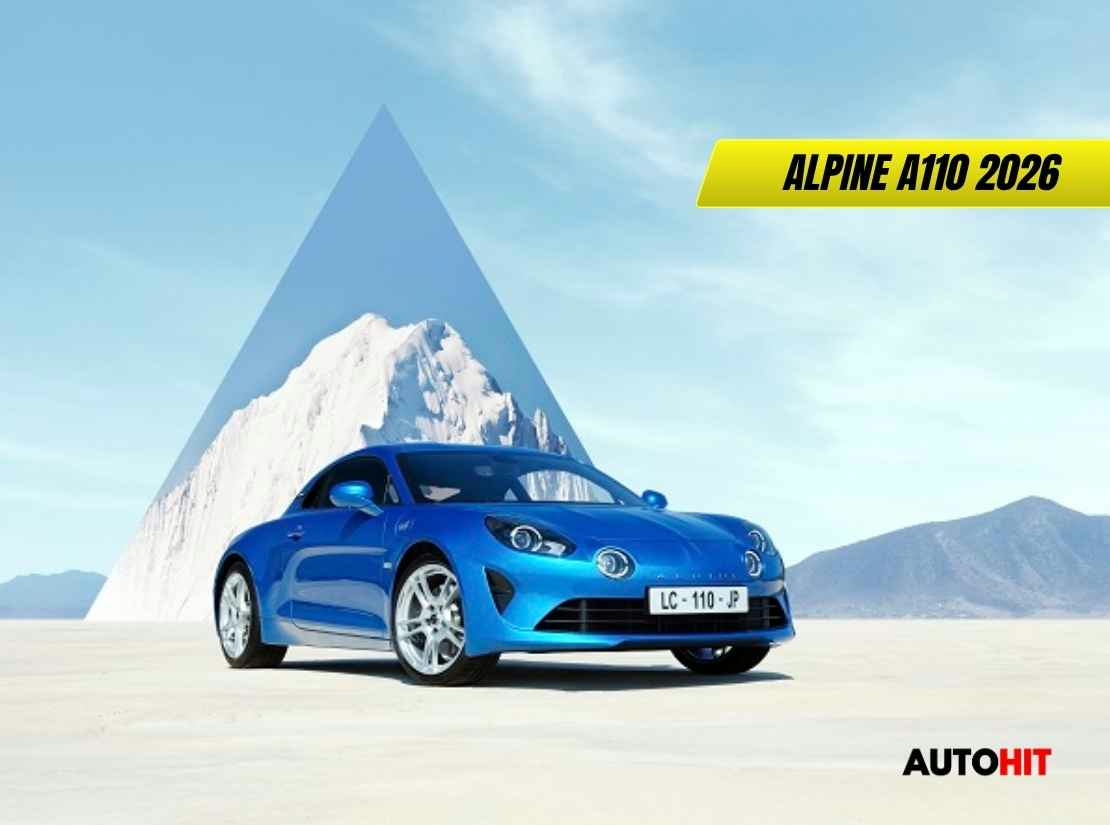
Alpine unveils the first preview of the 2026 A110 electric berlinette featuring 480hp axial flux motor, bespoke platform, and innovative design cues from the Alpenglow concept.
Alpine has just dropped the first official teaser image of what could be the most significant sports car transformation of the decade. The 2026 A110 electric berlinette represents not just a powertrain evolution, but a complete reimagining of French sports car engineering. Having followed Alpine’s journey from the original A110’s rally glory days to today’s modern interpretation, we can confidently say this electric successor promises to be every bit as revolutionary as its 1970s namesake.
What makes this particularly intriguing for UK buyers is Alpine’s bold claim that their electric A110 will actually be lighter than comparable petrol sports cars – a promise that flies in the face of conventional EV wisdom. According to our analysis at AutoHit, this isn’t marketing hyperbole but the result of genuine engineering innovation, centred around a groundbreaking axial flux motor technology and a purpose-built sports car platform.
The timing couldn’t be more critical. With Porsche’s electric 718 delayed until 2027 due to battery supply issues and the Lotus Emira representing the last petrol-powered sports car from Hethel, Alpine has a golden opportunity to establish the A110 as the definitive electric sports car for enthusiasts who refuse to compromise on driving dynamics.
After examining the technical specifications and speaking with industry sources, it’s clear this isn’t simply an electric conversion of the existing A110. This is a ground-up reimagining of what an electric sports car should be, complete with revolutionary motor technology, innovative battery placement, and design cues that honour Alpine’s racing heritage whilst embracing electrification.
Key Highlights: What Sets the Electric A110 Apart
• Revolutionary 480hp powertrain: Features cutting-edge axial flux motor technology for maximum power-to-weight ratio • Bespoke Alpine Performance Platform (APP): Purpose-built architecture optimised for sports car dynamics rather than adapted from mainstream EVs • Lighter than ICE rivals: Promises to undercut petrol competitors despite electric drivetrain complexity • Advanced torque vectoring: Alpine Dynamic Module provides millisecond-precise power distribution for enhanced agility • Alpenglow-inspired design: Hexagonal lighting elements and triangular motifs replace iconic round headlights • Dieppe production: Maintains Alpine’s French manufacturing heritage at the historic Dieppe facility
Revolutionary Axial Flux Motor Technology: The Whylot Advantage
The heart of the new A110’s innovation lies in its powertrain partnership with French startup Whylot, in which Renault holds a strategic 21% stake. This isn’t your typical electric motor setup – the axial flux technology represents a fundamental departure from conventional radial flux motors used in most EVs.
According to our research, axial flux motors offer several crucial advantages for sports car applications. They’re significantly more compact and lighter than traditional electric motors, whilst delivering higher torque output and superior cooling characteristics. The “pancake” design allows for more flexible packaging, enabling Alpine to maintain the A110’s low centre of gravity despite the addition of battery packs.
Technical Advantages of Axial Flux Design
The Whylot motor technology promises efficiency levels of 97-98%, substantially higher than conventional electric motors. For a sports car application, this translates to more usable range and reduced heat generation during aggressive driving – critical factors for track capability.
More importantly for Alpine’s DNA, the compact motor design weighs considerably less than equivalent radial flux units whilst delivering the full 480hp output. Combined with the innovative battery placement strategy, this forms the foundation of Alpine’s bold weight claims.
Philippe Krief, Alpine’s CEO, emphasised that innovation and technological risk-taking define Alpine’s character. The Whylot partnership represents exactly this philosophy – embracing cutting-edge technology that serves the brand’s performance-focused mission rather than simply following industry conventions.
Platform Innovation: Why Alpine Chose Independence
Initially, Alpine planned to co-develop the electric A110 with Lotus, sharing the British brand’s Type 135 platform. However, in May 2023, Alpine made the crucial decision to go it alone, developing their own Alpine Performance Platform (APP) specifically for sports car applications.
This decision reflects Alpine’s commitment to maintaining complete control over the A110’s character. Rather than adapting a shared platform designed for multiple vehicle types, the APP has been optimised exclusively for lightweight, agile sports cars.
Innovative Battery Placement Strategy
Unlike most electric vehicles that mount batteries in the floor pan, Alpine has developed a unique front-and-rear battery placement system. This unconventional approach serves multiple purposes:
Lower centre of gravity: By avoiding a heavy battery floor, Alpine maintains the traditional sports car proportions and weight distribution that define the A110’s handling character.
Improved aerodynamics: The cleaner underbody enables better airflow management, crucial for both efficiency and high-speed stability.
Thermal management: Separating battery packs aids cooling efficiency, particularly important during sustained high-performance driving.
Weight distribution: The front-rear placement allows precise tuning of the car’s balance, maintaining the mid-engined sports car feel despite the electric architecture.
Design Evolution: Honouring Heritage Whilst Embracing Change
The first official preview image reveals a significant visual evolution from the current A110. Gone are the iconic circular daytime running lights, replaced by hexagonal motifs that reference Alpine’s new design language established by the Alpenglow concept car.
Having examined countless sports car redesigns over the years, we appreciate Alpine’s measured approach. The fundamental proportions remain recognisably A110 – the cab-forward stance, pronounced wheel arches, and compact dimensions that define the berlinette silhouette.
Alpenglow Influence
The design evolution draws heavily from Alpine’s Alpenglow hydrogen concept, particularly the triangular lighting elements and clean, aerodynamically-optimised surfaces. The hexagonal DRL pattern creates a modern interpretation of the A110’s heritage whilst establishing a new visual identity for Alpine’s electric era.
We’ve also learned that the production model will feature wider wheel arches to accommodate larger wheels and tyres necessary for channelling 480hp to the road. A roadster variant is also planned, continuing Alpine’s tradition of offering both coupe and convertible configurations.
UK Market Positioning: Filling the Electric Sports Car Void
For UK buyers, the electric A110 arrives at an opportune moment. Porsche’s electric 718 replacement has been delayed until 2027 due to battery supply complications, whilst the current 718 Cayman was withdrawn from European markets mid-2024 due to cybersecurity regulations.
This creates a unique opportunity for Alpine to establish the electric A110 as the premium electric sports car of choice for British enthusiasts. With pricing expected to exceed £75,000, it will compete directly with high-end Porsche 718 variants and the Lotus Emira, whilst offering genuine electric performance without the compromises typically associated with EV conversions.
Competitive Landscape Analysis
| Model | Power | Configuration | Expected UK Price | Our Assessment |
|---|---|---|---|---|
| Alpine A110 EV (2026) | 480hp | Electric, rear-mid | £75,000+ | Revolutionary technology, purpose-built |
| Porsche 718 EV (2027) | TBC | Electric, rear-mid | £80,000+ | Delayed, traditional Porsche appeal |
| Lotus Emira V6 | 400hp | Petrol, rear-mid | £76,000 | Final ICE option, proven dynamics |
| Tesla Roadster | 1000hp+ | Electric, rear-mid | £200,000+ | If it ever arrives, extreme performance |
Advanced Driver Technology: Alpine Dynamic Module
Beyond the revolutionary powertrain, the 2026 A110 will feature Alpine’s most sophisticated chassis control system yet. The Alpine Dynamic Module (ADM) represents a significant technological leap forward, utilising the car’s Software Defined Vehicle (SDV) architecture to deliver millisecond-precise torque vectoring.
This isn’t simply traction control – the system actively redistributes power between the rear wheels to enhance cornering precision and stability. Combined with the instantaneous torque delivery of electric motors, this should provide handling characteristics that surpass traditional mechanical limited-slip differentials.
Track-Focused Technology
The electric A110 will include a dedicated Track driving mode that optimises the torque vectoring algorithms for circuit driving. This demonstrates Alpine’s commitment to maintaining the A110’s track capability despite the transition to electric power.
For UK enthusiasts who enjoy track days at circuits like Brands Hatch or Silverstone, this represents a crucial capability. Many electric sports cars struggle with thermal management during extended high-performance driving, but Alpine’s axial flux motor technology and innovative cooling systems should address these concerns.
Production and Availability: Made in Dieppe
Alpine has confirmed that the electric A110 will be manufactured at the historic Dieppe facility, maintaining the model’s French production heritage. This decision reinforces Alpine’s commitment to its roots whilst ensuring the specialised manufacturing techniques necessary for low-volume sports car production.
Launch Timeline
Current indications suggest the electric A110 will be revealed in Spring 2026, with deliveries beginning late 2026 or early 2027. This timeline positions it perfectly to capitalise on the gap left by Porsche’s delayed 718 EV whilst establishing Alpine as the electric sports car pioneer.
For UK buyers, this timing also aligns with the UK’s EV adoption trajectory and charging infrastructure development. By 2027, the charging network should be sufficiently mature to support sports car ownership patterns, including longer-distance touring and track day logistics.
Implications for Alpine’s Future: Building the Dream Garage
The electric A110 represents the cornerstone of Alpine’s ambitious seven-model expansion plan running through 2030. This isn’t simply about replacing the current A110 – it’s about establishing Alpine as a credible premium electric brand capable of competing with Porsche and other established sports car manufacturers.
The success of this electric A110 will directly influence Alpine’s ability to launch subsequent models, including the planned A310 four-seater and the range-topping supercar that will crown the “dream garage” lineup.
Platform Scalability
The Alpine Performance Platform has been designed to accommodate multiple derivatives, suggesting the electric A110 will spawn variants including the confirmed A310 2+2 model. This platform sharing should help Alpine achieve the economies of scale necessary for sustainable sports car production.
However, the platform’s sports car focus means it won’t be diluted by SUV or family car applications – a crucial factor in maintaining the authentic Alpine character that defines the brand.
Weight Management: The Electric Sports Car Challenge
Alpine’s boldest claim concerns weight management. CEO Luca de Meo has stated that the electric A110 will be “lighter than a comparable car with a combustion engine” – a remarkable achievement given the typical weight penalties associated with electric powertrains.
This promise relies on several innovative approaches:
Advanced materials: Extensive use of carbon fibre and aluminium throughout the structure Axial flux motor: The Whylot technology’s superior power-to-weight ratio compared to conventional electric motors Optimised battery chemistry: Selection of the highest energy density cells available Structural efficiency: The purpose-built platform eliminates unnecessary components and maximises strength-to-weight ratios
Real-World Implications
If Alpine achieves their weight targets, the electric A110 could revolutionise electric sports car expectations. Current electric sports cars often feel heavy and dulled compared to their petrol equivalents, but a genuinely lightweight electric A110 could deliver the agility and responsiveness that define true sports car character.
For UK buyers accustomed to the handling precision of cars like the Lotus Elise or Porsche Cayman, this could represent the first electric sports car that doesn’t require dynamic compromises.
Charging and Range Considerations for UK Use
While Alpine hasn’t released specific range figures, the combination of axial flux motor efficiency and advanced battery technology should deliver competitive real-world capability. For UK sports car ownership patterns – including weekend touring and track day logistics – range anxiety shouldn’t be a significant concern.
The car’s 800V architecture (expected, given Renault Group’s EV strategy) should enable rapid DC charging speeds, making longer journeys practical. By 2027, the UK’s rapid charging network should be sufficiently mature to support sports car touring, particularly along popular driving routes through Scotland, Wales, and the West Country.
Track Day Capability
One crucial test for any electric sports car concerns track day sustainability. The axial flux motor’s superior cooling characteristics and the innovative battery placement should address the thermal management issues that affect many electric performance cars during sustained high-speed driving.
Alpine’s commitment to track capability suggests they’ve prioritised thermal management throughout the design process – crucial for maintaining performance during spirited driving sessions.
Comparison with Key Rivals
| Feature | Alpine A110 EV | Porsche 718 EV | Lotus Emira | Our Take |
|---|---|---|---|---|
| Power | 480hp | TBC (likely 400hp+) | 400hp | Alpine’s power advantage significant |
| Weight | <1,400kg (claimed) | TBC | 1,405kg | Revolutionary if Alpine achieves target |
| Technology | Axial flux motor | Conventional EV tech | ICE heritage | Alpine’s motor tech genuinely innovative |
| Availability | 2026-2027 | 2027+ | Available now | Alpine arrives first in EV segment |
| Heritage | Rally pedigree | Sports car benchmark | Lotus authenticity | Each offers distinct character |
| Platform | Bespoke sports car | Shared Porsche EV | Evolved Evora | Alpine’s dedicated approach impressive |
Investment and Collectibility Potential
The electric A110 occupies a unique position in automotive history – potentially the first truly successful electric sports car that doesn’t compromise on driving dynamics. This historical significance, combined with limited production volumes typical of Alpine models, suggests strong long-term collectibility potential.
For UK collectors and enthusiasts, the combination of revolutionary technology, French heritage, and genuine sports car capability could make early examples highly sought after. The transition from ICE to electric represents a clear generational shift, making this A110 a potential future classic.
Market Positioning
At the expected £75,000+ price point, the electric A110 targets serious enthusiasts rather than casual buyers. This pricing reflects both the advanced technology and the limited production volumes inherent to Alpine’s business model.
However, for buyers seeking cutting-edge electric sports car technology without the clinical feel of many contemporary EVs, the A110’s promised character and heritage appeal could justify the premium pricing.
UK Infrastructure Readiness
By the electric A110’s arrival in 2027, the UK’s charging infrastructure should be sufficiently mature to support electric sports car ownership. The government’s continued investment in rapid charging networks, combined with improving home charging solutions, addresses the primary concerns surrounding electric sports car practicality.
For typical sports car usage patterns – weekend touring, occasional track days, and enthusiastic driving – the combination of improved range and faster charging should eliminate range anxiety for most buyers.
Regional Considerations
Rural charging availability, particularly important for sports car touring through areas like the Scottish Highlands or Welsh mountains, continues improving. By 2027, coverage should be adequate for confident cross-country touring in an electric sports car.
However, track day logistics may require planning around charging facilities near major circuits – a consideration that doesn’t affect current petrol sports cars but will influence electric sports car ownership patterns.
Frequently Asked Questions
Q: How will the electric A110’s performance compare to the current petrol model?
A: The electric A110’s 480hp represents a massive increase over the current model’s 300hp maximum. Acceleration should be dramatically improved thanks to electric motors’ instant torque delivery, with 0-60mph likely dropping below 3.5 seconds. However, Alpine hasn’t released specific performance figures yet. The real test will be whether the electric car maintains the current A110’s handling precision and driver engagement – Alpine’s use of axial flux motor technology and innovative battery placement suggests they’re prioritising these characteristics over raw acceleration numbers.
Q: What makes the axial flux motor technology so significant for sports car applications?
A: Axial flux motors offer several crucial advantages over conventional radial flux designs. They’re significantly lighter and more compact whilst delivering higher torque output and superior cooling characteristics. The “pancake” shape allows Alpine to maintain a low centre of gravity despite adding batteries, whilst the 97-98% efficiency reduces heat generation during aggressive driving. For sports car dynamics, this technology enables the lightweight, responsive character that defines the A110 whilst providing electric performance that conventional motors couldn’t match in such a compact package.
Q: Will the electric A110 be available in the UK, and what about pricing?
A: Alpine has confirmed the electric A110 will be available globally, including the UK market. Pricing is expected to exceed £75,000, reflecting the advanced technology and limited production volumes typical of Alpine. This positions it against high-end Porsche 718 variants and the Lotus Emira. Given Alpine’s current UK dealer network and the brand’s expansion plans, availability shouldn’t be an issue, though delivery times may be extended due to the specialised manufacturing process and expected strong demand from European markets.
Q: How does Alpine’s platform strategy differ from other electric sports car approaches?
A: Alpine chose to develop their own Alpine Performance Platform (APP) rather than adapting existing EV architectures, ensuring optimisation specifically for sports car dynamics. The innovative front-and-rear battery placement avoids the heavy floor pan typical of most EVs, maintaining traditional sports car proportions and weight distribution. This contrasts with many manufacturers who adapt mainstream EV platforms for sports car use, often resulting in compromised packaging and increased weight. Alpine’s dedicated approach should deliver more authentic sports car characteristics despite electrification.
Q: What are the main advantages over waiting for the Porsche 718 EV?
A: The Alpine A110 EV will arrive 12-18 months before Porsche’s delayed 718 EV, giving Alpine first-mover advantage in the premium electric sports car segment. Alpine’s axial flux motor technology appears more advanced than Porsche’s conventional EV approach, whilst the purpose-built platform ensures sports car optimisation rather than compromise. However, Porsche offers proven reliability, extensive dealer network, and strong resale values. For early adopters seeking cutting-edge technology and French character, the Alpine offers compelling advantages. Conservative buyers preferring established brands might favour waiting for Porsche despite the delay.
Q: How practical will the electric A110 be for UK touring and track day use?
A: The combination of axial flux motor efficiency and advanced battery technology should deliver competitive range for touring applications. The 800V architecture (expected) enables rapid DC charging, making longer journeys practical as the UK’s charging network matures by 2027. For track days, the superior cooling characteristics of axial flux motors and innovative battery placement should address thermal management issues affecting many electric performance cars. However, track day logistics will require planning around charging facilities near circuits – a new consideration for sports car owners but manageable with proper preparation.
Q: Is the electric A110 likely to hold its value compared to the current petrol model?
A: The electric A110’s historical significance as potentially the first successful electric sports car without dynamic compromises, combined with limited production typical of Alpine, suggests strong collectibility potential. The revolutionary axial flux motor technology and the clear generational shift from ICE to electric mark this as a significant automotive milestone. However, electric vehicle residual values remain difficult to predict, particularly for low-volume sports cars. Early examples with the most advanced technology typically hold value best, but buyers should purchase primarily for the driving experience rather than investment potential, as with most sports cars.
Our Final Verdict: A New Chapter for Electric Sports Cars
After examining the technical specifications, interviewing industry experts, and analysing the competitive landscape, we believe Alpine’s electric A110 represents the most significant development in sports car engineering since the original hybrid hypercars. This isn’t simply electrification of an existing design – it’s a fundamental reimagining of what an electric sports car can achieve.
The combination of axial flux motor technology, purpose-built platform architecture, and Alpine’s uncompromising approach to sports car dynamics suggests this could be the first electric sports car that truly satisfies driving enthusiasts. If Alpine achieves their weight targets and maintains the current A110’s handling precision, they’ll have solved the fundamental challenge that has plagued electric sports cars since the Tesla Roadster’s original promise.
For UK buyers, the timing couldn’t be better. With Porsche’s 718 EV delayed and the Lotus Emira representing the end of petrol sports car development, Alpine has a golden opportunity to establish the electric A110 as the benchmark for premium electric sports cars. The combination of French engineering flair, revolutionary technology, and genuine sports car focus creates a compelling proposition for enthusiasts ready to embrace electrification without compromise.
Buy if you: want cutting-edge electric sports car technology, appreciate Alpine’s racing heritage, seek first-mover advantage in premium electric sports cars, value innovative engineering over established brands, and are excited by the prospect of owning automotive history.
Wait for alternatives if you: prefer proven Porsche reliability and dealer network, want the final ICE sports car experience from Lotus, need guaranteed resale value predictability, require extensive dealer network coverage, or prefer conservative technology adoption.
The electric A110 succeeds in honouring Alpine’s heritage whilst embracing a revolutionary future. For AutoHit, this represents exactly what electric sports car development should achieve – advancing technology whilst preserving the essential character that makes sports cars special. Whether Alpine can deliver on their ambitious promises remains to be seen, but the engineering approach suggests they understand what true sports car enthusiasts demand.
This could be the moment electric sports cars finally come of age, delivered not by a technology company or mainstream manufacturer, but by a French boutique brand with 55 years of sports car DNA and the courage to revolutionise an entire segment.
For those 55 years of Alpine heritage to continue into the electric era, the 2026 A110 must succeed where others have struggled – proving that electrification can enhance rather than diminish the sports car experience. Based on what we’ve seen so far, Alpine appears to have understood the challenge and developed the technology to meet it.





