
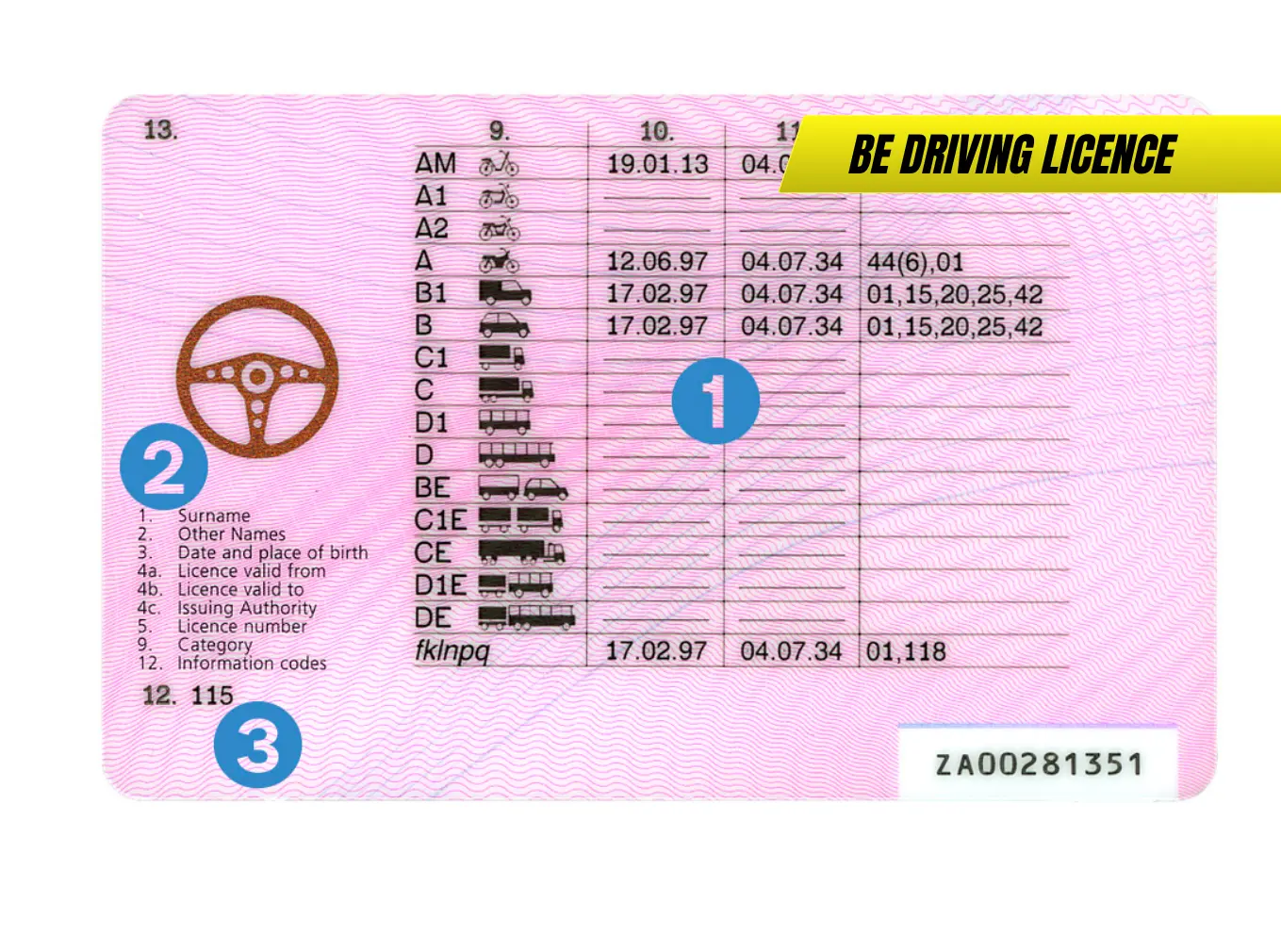
Complete guide to BE driving licence in UK 2025. Learn what you can tow, test requirements, costs, and how to get your BE licence for heavy trailers and large caravans.
Obtaining a BE driving licence opens up new possibilities for UK drivers who need to tow heavy trailers, large caravans, or commercial equipment that exceeds standard car licence limits. Whether you’re planning to upgrade your family holidays with a larger touring caravan, need to transport horses, or require heavy-duty towing for business purposes, understanding the BE licence requirements is essential. This comprehensive guide covers everything UK drivers need to know about the BE category licence, from eligibility and testing to costs and practical applications.
Key Points Summary
• Enhanced towing capacity: BE licence allows combinations up to 7,000kg total weight vs 3,500kg with standard car licence • Age requirement: Must be 18+ with valid full UK driving licence (category B) already held • Mandatory testing: Both theory and practical tests required, with professional training recommended
• Cost considerations: Expect £800-1,500 total including lessons, tests, and licence fees • Popular applications: Large caravans, horse trailers, plant equipment, and commercial towing • Insurance implications: Specialist cover required with potential premium increases
Understanding BE Licence Categories and Legal Requirements
The BE driving licence category represents a significant step up from the standard category B (car) licence that most UK drivers hold. This licence specifically authorises the driving of motor vehicles in category B (cars, small vans up to 3,500kg) combined with trailers exceeding 750kg, provided the total combination weight doesn’t exceed 7,000kg.
Legal framework governing BE licences falls under DVLA regulations and EU-derived legislation that remains applicable in the UK post-Brexit. The licence ensures drivers have demonstrated competency in handling significantly larger and heavier vehicle combinations that require different skills compared to standard car driving.
From my experience advising drivers on licence upgrades, the BE category fills a crucial gap for those who find standard car towing limits restrictive but don’t require the full commercial vehicle categories. It’s particularly relevant for UK drivers given our strong caravan and motorhome culture.
Key legal requirements include maintaining valid insurance for the increased vehicle weights, ensuring trailers meet construction and use regulations, and understanding specific speed limits that apply to vehicles with trailers on different road types.
What Vehicles and Trailers Can You Drive with BE Licence
With a BE driving licence, you can legally drive combinations that would otherwise require commercial vehicle categories. The licence authorises category B vehicles (cars, small vans up to 3,500kg) coupled with trailers exceeding 750kg, up to a combined weight of 7,000kg.
Practical applications include:
- Large touring caravans weighing 1,500-2,500kg when coupled with SUVs or large cars
- Horse trailers and boxes for equestrian transport, typically weighing 1,200-2,000kg unladen
- Plant trailers carrying construction equipment like mini-diggers or ride-on mowers
- Boat trailers for larger vessels that exceed standard car towing capacity
- Commercial equipment transport for tradespeople requiring heavy tool and material transport
Weight calculations prove critical for legal compliance. For example, a 2,200kg SUV can legally tow a 2,800kg loaded caravan with a BE licence, creating a 5,000kg combination well within the 7,000kg limit. The same combination would exceed standard licence limits by 1,500kg.
The licence also permits driving larger rigid vehicles up to 3,500kg even without trailers attached, though this rarely represents the primary motivation for obtaining BE category entitlement.
For families considering caravan upgrades, understanding these limits helps determine whether current licences suffice or if BE category training becomes necessary. Our best family SUVs guide includes towing capacity information for popular models.
UK Driving Licence Requirements and Eligibility
Minimum age for BE licence applications is 18 years, and applicants must already hold a full UK driving licence (category B) rather than provisional entitlement. This differs from some commercial categories that permit concurrent training.
Medical requirements follow standard DVLA Group 1 standards, though drivers should honestly assess their physical capability to handle larger vehicle combinations. Some training providers recommend medical reviews for older drivers or those with relevant health conditions.
Residency status must comply with DVLA requirements for UK licence applications. EU drivers may need to exchange existing licences depending on their specific circumstances and the current regulatory framework following Brexit.
Previous driving experience significantly impacts training requirements and success rates. I would recommend drivers have at least two years of standard car driving experience, including some basic trailer towing, before attempting BE category training. This foundation makes the transition to heavier combinations more manageable.
Licence checking through the DVLA online service helps verify current entitlements and any restrictions that might affect BE licence applications. Drivers with penalty points should understand how these might impact insurance costs for heavier vehicle combinations.
Theory Test Requirements and Preparation
Theory test obligations for BE licence depend on when you passed your original driving test. Drivers who passed their car test after 19 January 2013 may be exempt from separate theory testing, as modern car tests include relevant trailer knowledge.
Test format includes 50 multiple-choice questions to be completed within 57 minutes, with a pass mark of 43 correct answers. Questions cover trailer-specific topics including load distribution, coupling procedures, and legal requirements for heavier combinations.
Hazard perception testing uses the same format as standard car tests, requiring candidates to identify developing hazards in video scenarios. The pass mark remains 44 out of 75, with particular emphasis on situations involving longer stopping distances and different vehicle dynamics.
Preparation resources include official DVSA theory test apps, online practice tests, and comprehensive study materials covering trailer-specific regulations. The official Highway Code sections covering trailer use prove essential reading.
From my point of view, thorough theory preparation significantly improves practical test performance. Understanding weight distribution, coupling procedures, and legal requirements theoretically makes practical application much more straightforward.
Study topics include understanding AdBlue warning systems relevant to larger vehicles and spanner warning lights that may appear on commercial-grade vehicles used for training.
Practical Test Structure and Requirements
The BE practical driving test represents a comprehensive evaluation of trailer handling skills conducted over approximately 60 minutes. The test structure combines vehicle safety checks, off-road manoeuvres, and on-road driving assessment.
Pre-test checks require candidates to demonstrate knowledge of trailer coupling, safety chain attachment, electrical connections, and load security. Examiners verify understanding of tyre condition monitoring, brake system operation, and proper mirror adjustment for extended vehicle length.
Manoeuvring exercises include:
- Reverse parking the combination into a bay or designated area
- Uncoupling and recoupling the trailer safely and correctly
- Emergency stop demonstrating control of the heavier combination under braking
On-road assessment covers typical driving scenarios including roundabouts, dual carriageways, and urban environments. Examiners evaluate spatial awareness, speed management, and consideration for other road users given the extended vehicle length and different handling characteristics.
| Test Component | Duration | Key Assessment Areas |
|---|---|---|
| Vehicle Checks | 10 minutes | Safety, coupling, equipment knowledge |
| Manoeuvres | 15 minutes | Precision, control, safety procedures |
| Road Driving | 35 minutes | Traffic management, hazard awareness |
Pass rates for BE tests typically range from 40-60%, lower than standard car tests due to the additional complexity. Professional training significantly improves success rates compared to attempting tests with minimal preparation.
In my experience, candidates who invest in proper professional training achieve better results and develop safer long-term driving habits with trailer combinations.
Training Costs and Professional Instruction
Training costs vary significantly across the UK, with location, instructor experience, and individual learning requirements affecting final prices. Expect total costs between £800-1,500 including lessons, test fees, and administrative charges.
Lesson pricing typically ranges from £45-70 per hour for professional BE instruction using appropriate vehicle and trailer combinations. Most candidates require 10-20 hours of professional training depending on previous experience and natural aptitude.
Test fees include:
- Theory test: £23 (if required)
- Practical test: £115 for weekday slots, £141 for evening/weekend appointments
- Licence application: £34 for online applications
Training providers range from independent ADIs with BE qualifications to larger driving schools offering commercial training. Research instructor credentials, pass rates, and customer reviews before committing to training programmes.
Equipment requirements mean training costs reflect the substantial investment training providers make in suitable vehicles and trailers. Quality instruction typically uses modern combinations that reflect real-world applications rather than basic training rigs.
For families budgeting for caravan holidays, understanding these training costs helps plan the transition to larger touring options. Our guide to best SUVs under £30,000 includes models suitable for substantial trailer towing once proper licences are obtained.
Insurance and Legal Compliance Considerations
Insurance requirements for BE licence holders typically involve specialist policies covering higher vehicle weights and trailer values. Standard car insurance rarely provides adequate coverage for substantial trailer combinations.
Premium implications vary between insurers, with some viewing BE licences as demonstrating additional competence while others apply loadings for increased risk exposure. Shopping around proves essential given the significant premium variations between providers.
Legal compliance extends beyond basic licensing to include understanding trailer construction standards, loading regulations, and specific speed limits applying to vehicles with trailers. Maximum speeds include 60mph on dual carriageways and 50mph on single carriageway roads when towing.
Documentation requirements include ensuring trailer registration, MOT certification (where applicable), and insurance coverage remain current. Drivers must understand their responsibilities for load security and weight distribution to avoid prosecution under construction and use regulations.
Penalty implications for BE licence violations can be severe, potentially affecting both standard car driving privileges and professional qualifications where relevant. Understanding the additional responsibilities that come with enhanced licences proves crucial for maintaining legal compliance.
Commercial drivers should be aware of UK driving licence points implications, as violations while driving under BE authority can affect overall driving records.
Alternative Options: B+E vs Other Licence Categories
Category B+E alternatives include the B96 entitlement, which permits combinations between 3,500kg and 4,250kg without requiring full practical testing. This option suits drivers needing modest towing increases without full BE complexity.
B96 training involves a single day course combining theory and practical elements, typically costing £300-500. No separate test is required, making it attractive for occasional heavy towing requirements.
Commercial alternatives like category C1 (vehicles up to 7,500kg) or C1+E (with trailers) provide greater flexibility but require medical examinations and periodic renewal. These categories suit professional drivers or those requiring maximum towing flexibility.
Cost comparison often favours BE licences for private drivers who specifically need trailer capacity rather than larger rigid vehicle authority. The broader applications of commercial categories may not justify additional complexity for recreational users.
From my point of view, most UK drivers seeking enhanced towing capability find BE licences provide the optimal balance of capability and complexity. The permanent nature of the entitlement (unlike some commercial categories) makes it attractive for long-term caravan or equipment towing requirements.
Future-proofing considerations include potential regulatory changes affecting trailer towing and the increasing weights of modern caravans and equipment. Obtaining BE entitlement provides flexibility for changing requirements over time.
Popular Applications and Real-World Usage
Caravan touring represents the most common application for BE licences among private drivers. Modern large caravans often exceed 1,500kg unladen weight, requiring BE authority when loaded with equipment and personal items for family holidays.
Equestrian transport creates substantial demand for BE licences, particularly in rural areas where horse ownership is common. Horse trailers and horseboxes frequently exceed standard licence limits, especially when carrying multiple animals or equipment.
Business applications include:
- Construction trades transporting plant and materials
- Landscaping businesses moving machinery and supplies
- Event services hauling stage equipment and catering facilities
- Agricultural contractors transporting implements between sites
Recreational uses extend beyond caravanning to include boat transport, motorsport trailer towing, and equipment transport for hobbies requiring substantial gear transportation.
Regional variations in BE licence demand often correlate with rural areas, coastal regions with strong boating communities, and areas with significant equestrian activity. Understanding local applications helps determine whether BE training represents a worthwhile investment.
For families exploring options, our best cheap electric SUVs guide considers towing capabilities, though electric vehicles currently offer limited options for substantial trailer work.
Frequently Asked Questions
What is the maximum weight I can tow with a BE licence?
With a BE licence, you can tow combinations up to 7,000kg total weight. This means if your car weighs 2,000kg, you could legally tow a 5,000kg trailer, provided your vehicle’s manufacturer-specified towing capacity permits this weight.
Do I need separate insurance for towing with a BE licence?
Yes, standard car insurance typically doesn’t cover the increased weights and trailer values associated with BE licence usage. Contact your insurer to ensure adequate coverage for your specific vehicle and trailer combination.
How long does it take to get a BE licence?
Most candidates complete BE licence training within 2-4 weeks, requiring 10-20 hours of professional instruction plus theory study time. Test availability and individual learning speed affect overall timescales significantly.
Can I drive larger vans with a BE licence?
The BE licence permits category B vehicles (up to 3,500kg) with heavy trailers, but doesn’t authorise larger rigid vehicles. For vans exceeding 3,500kg, you’d need category C1 licensing instead.
What happens if I’m caught towing overweight without a BE licence?
Penalties for unlicensed towing can include £1,000 fines, penalty points, and potential driving bans. More seriously, insurance may be invalidated, leaving you personally liable for accident damages.
Is professional training mandatory for BE licence tests?
While not legally required, professional training dramatically improves pass rates and ensures proper safety knowledge. Most candidates attempting tests without professional instruction fail on safety grounds.
Do electric cars affect BE licence requirements?
Electric vehicles capable of substantial towing still require appropriate licensing for heavy trailer combinations. However, current electric vehicle towing capacities often limit practical applications compared to conventional vehicles.
Conclusion
The BE driving licence represents an essential qualification for UK drivers whose towing requirements exceed standard car licence limitations. Whether motivated by caravan touring ambitions, equestrian pursuits, or business needs, obtaining BE category authority opens up significantly enhanced vehicle combination possibilities while ensuring legal compliance and safety competence.
In my experience, the investment in proper professional training and testing pays dividends through improved safety awareness, legal compliance, and confidence when handling substantial vehicle combinations. The comprehensive test structure ensures licence holders understand the additional responsibilities that come with enhanced towing authority.
For most applicants, the costs involved represent reasonable value given the long-term benefits and permanent nature of the licence entitlement. The ability to legally and safely operate combinations up to 7,000kg total weight provides substantial flexibility for changing requirements over time.
Current regulatory frameworks remain stable, making BE licence investment a sound long-term decision for those requiring enhanced towing capability. The combination of thorough training, proper testing, and ongoing legal compliance ensures UK roads remain safe while enabling legitimate heavy towing requirements.
Looking ahead, potential changes in vehicle technology and environmental regulations may affect towing applications, but the fundamental need for proper training and licensing in heavy combination driving will remain constant. For those considering the step up to heavier towing, proper BE licence training represents the responsible approach to enhanced capability and legal compliance.





