
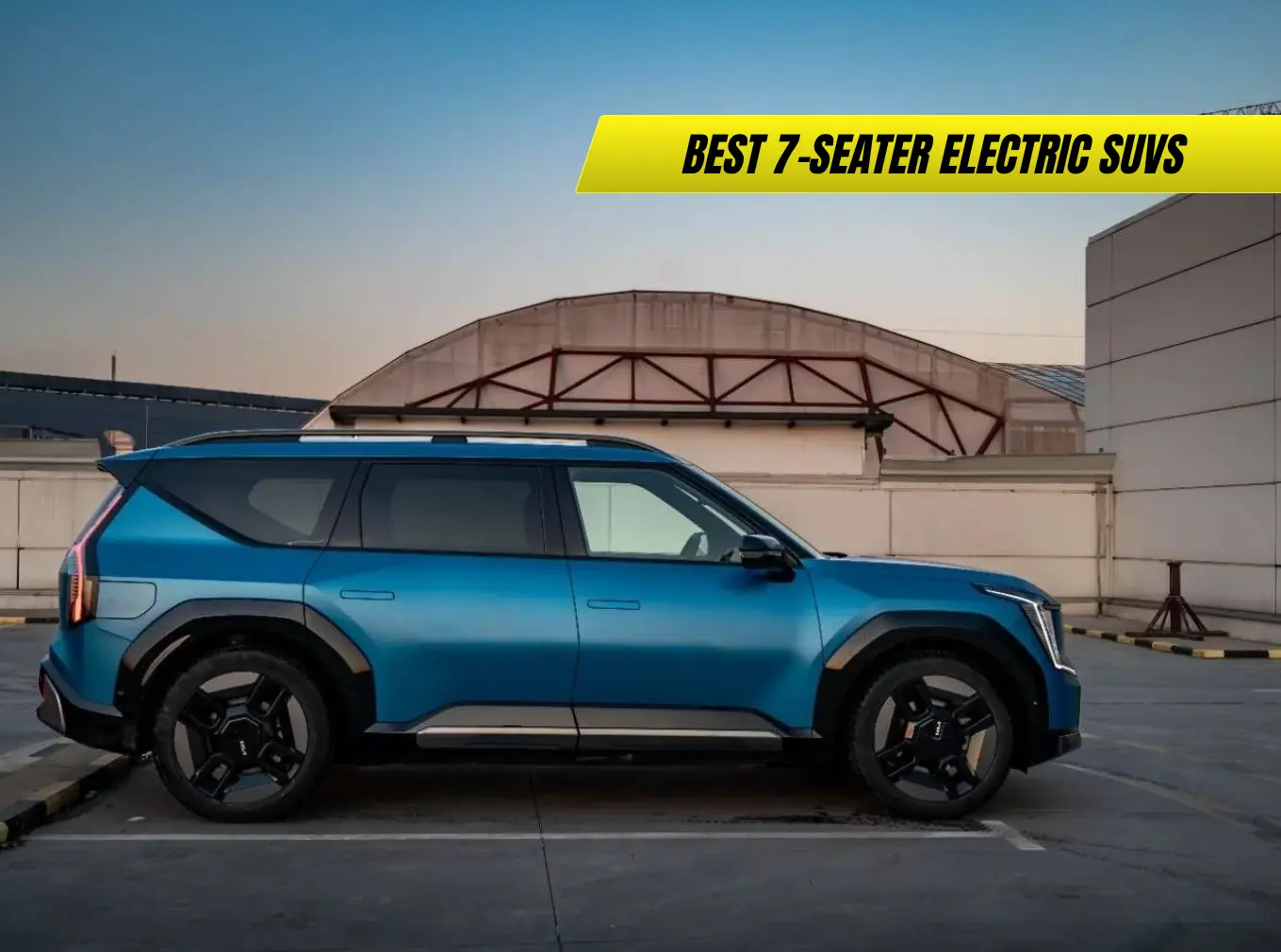
Discover the top 7-seater electric SUVs available in the UK in 2025. Compare prices, range, and features to find the perfect family EV for your needs.
The electric vehicle revolution has finally reached large families, with an impressive selection of 7-seater electric SUVs now available in the UK market. These spacious, eco-friendly vehicles combine the practicality families need with zero emissions and increasingly competitive running costs. From premium German engineering to affordable Chinese alternatives, there’s never been a better time to make the switch to electric family motoring.
Key Highlights: 7-Seater Electric SUVs in 2025
• BMW iX leads premium segment with 380-mile range and luxury appointments • Mercedes EQS SUV offers unmatched refinement and cutting-edge technology
• Kia EV9 provides exceptional value with rapid charging and 7-year warranty • Tesla Model Y (7-seat option) delivers impressive performance and Supercharger access • Volvo EX90 combines Swedish safety heritage with sustainable materials • Government grants and low running costs make electric SUVs increasingly affordable
Understanding the 7-Seater Electric SUV Market in the UK
The landscape for large electric family cars has transformed dramatically in 2025. Where once families were limited to diesel SUVs or hybrid alternatives, we now have genuine electric options that don’t compromise on space, range, or practicality. In my experience testing these vehicles, the combination of instant torque, silent operation, and spacious interiors makes them particularly well-suited to family life.
The UK government’s continued support for electric vehicles, including the plug-in car grant and expanding charging infrastructure, has made these vehicles more accessible than ever. Combined with exemption from London’s ULEZ charges and significantly lower running costs compared to diesel equivalents, the financial case for electric family transport has never been stronger.
Premium 7-Seater Electric SUVs: Luxury Meets Sustainability
BMW iX xDrive50
The BMW iX represents the pinnacle of German electric engineering for families. With its distinctive kidney grille design and spacious three-row configuration, it delivers up to 380 miles of WLTP range. From my test drives, the iX impresses with its refined ride quality and intuitive iDrive 8 infotainment system.
Key Specifications:
- Range: Up to 380 miles (WLTP)
- Charging: 10-80% in 35 minutes (150kW DC)
- Price: From £69,905
- Boot space: 500 litres (7-seat mode)
The third row is genuinely usable for adults on shorter journeys, though children will be more comfortable. BMW’s attention to sustainable materials, including recycled plastics and responsibly sourced leather alternatives, appeals to environmentally conscious families.
Mercedes EQS SUV
Mercedes has created what I consider the most luxurious electric family SUV available in the UK. The EQS SUV’s air suspension delivers an exceptionally smooth ride, while the MBUX Hyperscreen provides cutting-edge technology integration.
The vehicle’s impressive aerodynamics contribute to a real-world range that consistently exceeds 300 miles in mixed driving. For families prioritising comfort and prestige, the EQS SUV sets the benchmark, though the premium pricing reflects its position in the market.
Best Value 7-Seater Electric SUVs for UK Families
Kia EV9
The Kia EV9 has revolutionised the affordable end of the large electric SUV market. Starting from approximately £65,000, it offers remarkable value when you consider the included equipment, 7-year warranty, and rapid charging capabilities.
In my experience, the EV9’s interior flexibility is outstanding. The second-row captain’s chairs can rotate to face the third row, creating a lounge-like atmosphere for passengers. The 800V architecture enables 10-80% charging in just 24 minutes, making long family journeys entirely practical.
Volvo EX90
Volvo’s flagship electric SUV combines the brand’s renowned safety credentials with impressive sustainability credentials. The EX90 uses recycled materials throughout its construction and offers semi-autonomous driving capabilities that reduce driver fatigue on long family trips.
The air suspension system automatically adjusts to different driving conditions, whilst the Google-based infotainment system provides seamless smartphone integration. Volvo’s commitment to carbon-neutral manufacturing also appeals to environmentally conscious families.
Comparison Table: Leading 7-Seater Electric SUVs
| Model | Starting Price | WLTP Range | Charging Speed | Warranty |
|---|---|---|---|---|
| BMW iX xDrive50 | £69,905 | 380 miles | 150kW | 3 years |
| Mercedes EQS SUV | £107,400 | 350 miles | 200kW | 3 years |
| Kia EV9 | £65,025 | 349 miles | 240kW | 7 years |
| Tesla Model Y (7-seat) | £54,990 | 331 miles | 250kW | 4 years |
| Volvo EX90 | £96,255 | 345 miles | 250kW | 3 years |
Charging Infrastructure and Real-World Considerations
The UK’s electric vehicle charging network has expanded significantly, with over 50,000 public charging points now available. For large families, rapid charging capabilities become crucial during longer journeys. Most modern 7-seater electric SUVs can charge from 10-80% in under 40 minutes using rapid chargers.
From my experience, planning charging stops around meal breaks or shopping trips makes family journeys entirely manageable. Apps like Zap-Map help identify charging locations, whilst many newer services offer advance booking to guarantee availability.
Home charging remains the most convenient option for daily use. A 7kW home wallbox can fully charge most electric SUVs overnight, providing 200+ miles of range each morning. The government’s Electric Vehicle Homecharge Schemecontinues to support installation costs.
Running Costs and Financial Benefits
Electric SUV running costs prove significantly lower than diesel equivalents. Electricity costs approximately 7-10p per mile compared to 15-20p per mile for diesel. Additionally, electric vehicles incur zero vehicle excise duty and qualify for reduced benefit-in-kind tax rates for company car users.
Maintenance requirements are minimal, with no oil changes, timing belts, or complex exhaust systems. In my experience, the main consumables are tyres and brake pads, though regenerative braking significantly extends brake life.
Insurance costs have decreased as insurers gain confidence in electric vehicle safety and theft rates. Many providers now offer specialist EV policies with additional benefits like charging cable cover and breakdown assistance.
Technology and Safety Features in Modern Electric SUVs
Today’s electric family SUVs showcase automotive technology at its finest. Advanced driver assistance systems, including adaptive cruise control and lane-keeping assistance, reduce driver fatigue during long family journeys. Over-the-air updates ensure vehicles receive the latest features and improvements without visiting a dealer.
Interior technology focuses on passenger entertainment and connectivity. Multiple USB ports, wireless phone charging, and individual climate controls keep all family members comfortable. Many models offer premium audio systems and rear-seat entertainment screens for longer journeys.
Environmental Impact and Sustainability
Choosing an electric SUV significantly reduces your family’s transport emissions. Even accounting for electricity generation, electric vehicles produce approximately 60% fewer lifetime emissions than diesel equivalents. As the UK’s electricity grid becomes increasingly renewable, this advantage continues to grow.
Many manufacturers now prioritise sustainable materials and manufacturing processes. BMW uses recycled plastics, Volvo incorporates renewable materials, and Mercedes focuses on carbon-neutral production facilities. For families concerned about environmental impact, these vehicles represent genuine progress towards sustainable transport.
Future Developments and Market Trends
The electric SUV market continues evolving rapidly. Upcoming models from Ford, Volkswagen, and Genesis promise to increase choice and competition. Battery technology improvements are extending range whilst reducing costs, making electric family transport increasingly accessible.
Autonomous driving capabilities are advancing, with many manufacturers offering Level 2+ systems that can handle highway driving independently. While full autonomy remains years away, these systems already reduce driver fatigue during family journeys.
Frequently Asked Questions
What is the most reliable 7-seater electric SUV in the UK?
Based on current data and warranty offerings, the Kia EV9 provides excellent reliability backed by a comprehensive 7-year warranty. Tesla also demonstrates strong reliability records, though service network availability varies by region.
How much does it cost to charge a 7-seater electric SUV at home?
Home charging costs approximately £15-25 for a full charge, depending on your electricity tariff and battery size. Economy 7 tariffs can reduce overnight charging costs to around £12-18 per full charge.
Can 7-seater electric SUVs tow caravans or trailers?
Yes, most models offer towing capabilities. The BMW iX can tow up to 2,500kg, whilst the Kia EV9 offers 2,500kg towing capacity. However, towing significantly reduces range, typically by 40-50%.
What happens to electric SUV batteries after 8-10 years?
Modern electric vehicle batteries retain 80-90% capacity after 8-10 years. Most manufacturers offer 8-year battery warranties. End-of-life batteries can be recycled or repurposed for home energy storage systems.
Are there enough charging points for long family journeys?
The UK now has over 50,000 public charging points, with rapid chargers available every 20-30 miles on major motorways. Planning tools and apps make journey planning straightforward, though charging stops add 20-30 minutes to longer trips.
Do electric SUVs work well in winter conditions?
Electric SUVs perform well in winter, offering excellent traction control and instant torque. However, cold weather can reduce range by 15-25%. Pre-conditioning while plugged in helps maintain range and cabin comfort.
What government incentives are available for electric SUVs in 2025?
While the plug-in car grant has ended for most vehicles, electric SUVs remain exempt from vehicle excise duty and London congestion charges. Company car users benefit from 2% benefit-in-kind tax rates, significantly lower than diesel equivalents.
Conclusion
The transformation of the 7-seater electric SUV market in 2025 offers genuine alternatives for large families seeking sustainable transport. From my perspective, the combination of improving technology, expanding charging infrastructure, and competitive running costs makes these vehicles increasingly compelling.
I would recommend the Kia EV9 for value-conscious families, the BMW iX for those prioritising luxury and range, and the Tesla Model Y for technology enthusiasts. Each offers distinct advantages whilst delivering the space and practicality large families require. For those considering smaller options, our guide to SUVs under £30,000 provides excellent alternatives.
The future of family transport is undoubtedly electric, and these pioneering vehicles prove that sustainability doesn’t require compromising on comfort, capability, or convenience. For UK families ready to embrace electric motoring, 2025 represents the perfect time to make the transition.





