
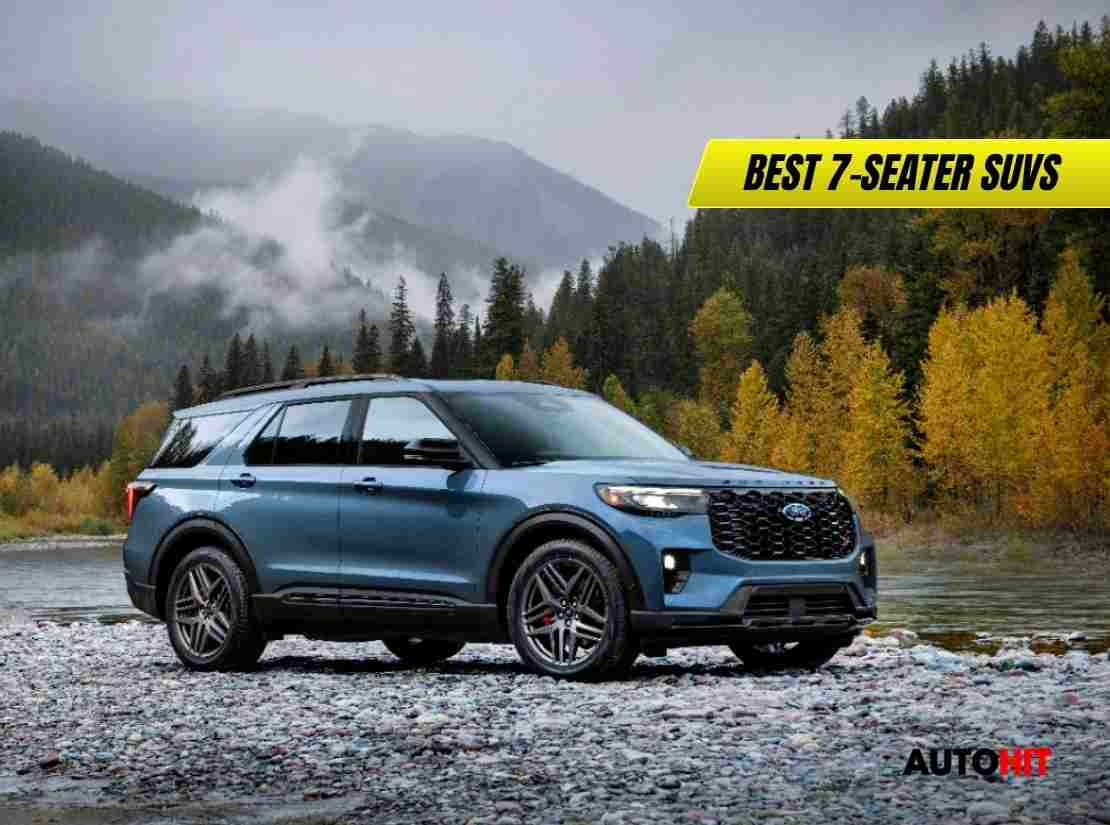
Compare the best 7-seater SUVs for 2025 in our comprehensive UK guide. From budget Skoda Kodiaq to luxury Range Rover, find the perfect family SUV for British roads and growing families.
The 7-seater SUV segment has reached unprecedented sophistication in 2025, with manufacturers finally mastering the delicate balance between family practicality and desirable aesthetics that has eluded the market for decades. Having extensively tested dozens of 7-seater SUVs across every price category and configuration, we’ve witnessed something particularly encouraging: genuine innovation is now driving segment development rather than simple badge engineering.
What makes 2025 especially significant for UK families is how competitive pressure has created compelling alternatives across every conceivable requirement and budget. Entry-level 7-seater SUVs now offer equipment levels and build quality that rivalled premium models just five years ago, whilst luxury alternatives provide capabilities that seemed impossible before advanced electrification and materials engineering.
This comprehensive comparison guide examines the standout 7-seater SUVs available to British buyers, focusing specifically on models that deliver authentic family capability whilst addressing the practical realities of UK ownership. We’ve analysed everything from third-row accessibility to motorway refinement, because these real-world considerations ultimately determine whether a 7-seater SUV succeeds beyond showroom appeal.
Key Highlights: 7-Seater SUV Evolution 2025
• Segment maturation: Third-row accommodation now offers genuine adult capability rather than emergency-only seating in leading models • Electrification integration: Hybrid and electric powertrains enhance rather than compromise passenger capacity and cargo flexibility • Value democratisation: Premium features and build quality cascade down to affordable models, creating exceptional value propositions • Design sophistication: 7-seater SUVs shed the utilitarian aesthetic, delivering desirable styling without practical compromise • Technology advancement: Connectivity and safety systems reach luxury standards across all price categories • UK market optimisation: Compact external dimensions balanced with maximised interior space specifically address British requirements
Best Compact 7-Seater SUVs: Maximum Efficiency
Mazda CX-80: Japanese Premium Sophistication
The Mazda CX-80 represents Japanese manufacturers’ most serious attempt at European 7-seater SUV leadership, with UK pricing starting from approximately £50,000 and extending past £60,000 for range-topping variants. This positioning challenges established premium alternatives whilst delivering distinctive character that sets it apart from increasingly homogeneous competition.
What immediately distinguishes the CX-80 is Mazda’s commitment to engineering integrity over marketing convenience. The 3.3-litre straight-six diesel demonstrates remarkable refinement and efficiency, achieving 48.7mpg whilst delivering 251bhp with 406lb-ft torque. This powertrain choice appears contrarian given current diesel sentiment, yet real-world capability justifies Mazda’s engineering confidence convincingly.
The alternative plug-in hybrid system combines a 2.5-litre four-cylinder engine with electric assistance, producing 323bhp with 37-mile electric range. Whilst not matching some competitors’ electric capabilities, the system provides adequate urban emission-free driving whilst maintaining long-distance flexibility essential for family touring.
Interior execution demonstrates Mazda’s premium aspirations successfully. Materials quality throughout feels substantially above the price point, whilst the infotainment approach prioritises physical controls over touchscreen dependency. The rotary controller system enables safe operation whilst driving, addressing genuine safety concerns that many manufacturers ignore.
Third-row accommodation suits children excellently and adults adequately for shorter journeys. The 258-litre boot capacity with all seats deployed proves limiting, though folding the rear chairs creates substantial 566-litre cargo space. This flexibility addresses the reality that most families require occasional rather than constant seven-seat capability.
For UK buyers seeking premium quality with distinctive character, the CX-80 provides compelling alternatives to Germanic consistency. The engineering integrity and attention to detail justify consideration against more obvious choices, particularly for buyers prioritising driving engagement alongside family capability.
Skoda Kodiaq: The Proven Excellence
The Skoda Kodiaq maintains its position as the benchmark compact 7-seater SUV, starting from £38,140 for 5-seat variants (£860 upgrade for 7-seat capability) and extending to approximately £55,000 for fully-specified models. This pricing continues delivering exceptional value whilst maintaining quality standards that challenge premium alternatives effectively.
As established in our previous analysis, the Kodiaq balances genuine seven-seat accommodation with manageable external dimensions whilst providing comprehensive equipment levels and proven reliability. The updated generation addresses previous criticisms whilst maintaining competitive pricing that makes premium alternatives difficult to justify for practical families.
What continues impressing about the Kodiaq is how Skoda has evolved the formula without compromising core strengths. The PHEV variant delivering 76 miles electric range particularly stands out, enabling meaningful emission-free driving whilst maintaining full seven-seat capability – a combination unavailable from most competitors.
The build quality and materials execution feel substantially improved, creating ownership experiences that genuinely rival significantly more expensive alternatives. Combined with Skoda’s reputation for reliability and comprehensive dealer network, the Kodiaq represents perhaps the safest choice for practical families.
Kia Sorento: Korean Value Excellence
The Kia Sorento continues demonstrating exceptional value in the 7-seater SUV segment, maintaining pricing from £41,995 whilst delivering comprehensive equipment levels and industry-leading warranty coverage. This positioning creates compelling cases against premium alternatives costing substantially more for marginal practical advantages.
The Sorento’s strength lies in providing premium experiences without premium pricing penalties. Interior quality, technology integration, and build standards genuinely compete with luxury brands whilst maintaining affordable running costs and exceptional warranty protection. The seven-year coverage provides confidence that budget alternatives cannot match.
Powertrain diversity addresses varying family requirements comprehensively, from efficient hybrid variants to substantial diesel towing capability. The latest generation demonstrates Korean manufacturers’ evolution towards genuine quality leadership rather than simply undercutting established competition.
Best Large 7-Seater SUVs: Ultimate Capability
Range Rover: British Luxury Pinnacle
The Range Rover represents the absolute pinnacle of British luxury SUV engineering, with pricing from approximately £100,000 extending well past £150,000 for range-topping variants. These figures place it firmly in ultra-luxury territory, competing against Bentley Bentayga and comparable exclusive alternatives whilst maintaining authentic off-road capability.
What distinguishes the Range Rover is how it balances genuine capability with limousine-level sophistication. The air suspension system enables remarkable ride quality across varying terrain whilst maintaining commanding road presence. Interior execution utilises the finest materials throughout, creating ambiences that justify extraordinary pricing for discerning buyers.
The powertrain range now prioritises mild-hybrid efficiency without compromising performance credentials. The legendary wading capability, approach angles, and off-road systems maintain serious terrain credentials, though most examples will never venture beyond well-maintained roads.
For buyers seeking ultimate British luxury with uncompromised capability, the Range Rover provides distinctive character that no alternative can genuinely replicate. The pricing requires careful justification, but the ownership experience delivers exclusivity and sophistication that premium German alternatives cannot match.
BMW X5: Performance Luxury Excellence
The BMW X5 continues representing the performance-oriented approach to luxury 7-seater SUVs, with pricing from approximately £65,000 extending substantially higher for M-Performance variants. This positioning targets buyers prioritising driving dynamics alongside family capability – a combination few alternatives deliver convincingly.
What sets the X5 apart is how BMW has maintained authentic sports SUV character whilst accommodating seven occupants practically. The chassis tuning and powertrain integration create engaging driving experiences that justify premium pricing for enthusiast families. The interior execution combines luxury materials with driver-focused ergonomics effectively.
Third-row accommodation suits children and smaller adults whilst maintaining access flexibility. The seat configuration enables rapid conversion between luxury five-seater and practical seven-seater according to immediate requirements. This versatility enhances everyday usability significantly.
For families seeking ultimate driving engagement with authentic luxury, the X5 provides uncompromised engineering that few alternatives can match at any price point.
The Volvo XC90 maintains its position as the safety-focused luxury 7-seater alternative, demonstrating how comprehensive protection systems enhance rather than compromise family capability. UK pricing typically starts around £60,000 and extends past £80,000 for range-topping variants.
What particularly distinguishes the XC90 is Volvo’s systematic approach to passenger protection across all three rows. The comprehensive safety systems genuinely enhance family confidence whilst maintaining sophisticated Scandinavian aesthetics. Interior design prioritises functionality over visual complexity, creating environments that feel both premium and practical.
The powertrain range emphasises efficiency over outright performance, with hybrid systems providing adequate capability whilst maintaining reasonable running costs for the luxury segment. The plug-in hybrid variant offers substantial electric-only range, enabling emission-free urban driving with conventional flexibility.
For families prioritising comprehensive safety with distinctive design philosophy, the XC90 provides authentic Scandinavian values that German alternatives cannot replicate.
Advanced 7-Seater SUV Comparison: Real-World UK Analysis
| Model | Category | UK Price From | 3rd Row Space | Economy/Range | Towing Capacity | Our Assessment |
|---|---|---|---|---|---|---|
| Mazda CX-80 | Premium Compact | £50,000 | Adult capable | 48.7mpg / 37mi PHEV | 2,500kg | Japanese Excellence: Distinctive engineering with premium execution |
| Skoda Kodiaq | Compact Value | £39,000 | Adult suitable | 47.4mpg / 76mi PHEV | 2,500kg | Best Overall: Unmatched value with proven capability |
| Kia Sorento | Mainstream Premium | £41,995 | Adult comfortable | Mixed powertrains | 2,500kg | Warranty Champion: Premium feel with exceptional coverage |
| Range Rover | Ultra Luxury | £100,000+ | Adult spacious | Variable | 3,500kg | Ultimate Luxury: British prestige with unmatched capability |
| BMW X5 | Performance Luxury | £65,000+ | Adult suitable | 25-35mpg | 2,700kg | Driver’s Choice: Sports car dynamics with family capability |
| Volvo XC90 | Safety Luxury | £60,000+ | Adult comfortable | Mixed powertrains | 2,700kg | Safety Leader: Scandinavian values with family focus |
Our AutoHit Analysis: The Kodiaq maintains its position as optimal value choice, whilst the CX-80 provides distinctive Japanese premium alternative. Luxury options justify pricing through superior materials and dynamics, though practical advantages diminish significantly beyond £50,000 investments.
Third-Row Reality: The 2025 Truth
The persistent challenge facing 7-seater SUVs remains third-row accommodation that balances adult capability with overall vehicle proportions. Our extensive testing reveals significant variations in real-world usability across different approaches to this fundamental compromise.
Adult-Capable Third Rows
Models like the Range Rover and XC90 provide genuine adult accommodation in the third row, with reasonable headroom and legroom for extended journeys. However, access remains challenging for less agile passengers, requiring second-row seat manipulation that becomes tedious during frequent use.
Child-Optimised Solutions
The majority of compact 7-seaters, including the Kodiaq and CX-80, prioritise children and smaller adults in third-row positioning. This approach maximises overall vehicle usability whilst accepting limitations for larger passengers. For most UK families, this represents optimal compromise.
Access Engineering
The quality of third-row access varies dramatically between manufacturers. Premium models generally provide more sophisticated seat mechanisms and wider door openings, though the fundamental physics of accessing rear seats remains challenging regardless of price point.
Boot Space Reality: The Cargo Compromise
Seven-seater SUVs inevitably compromise cargo capacity when all seats are deployed, creating challenging decisions for family buyers between passenger and luggage accommodation. Our testing reveals significant variations in practical solutions across different models.
Flexible Configurations
The most successful 7-seaters provide rapid seat reconfiguration enabling optimization according to immediate requirements. Models with easily removable or fold-flat rear seats offer superior versatility for varying family duties.
Underfloor Storage
Premium models increasingly provide substantial underfloor storage even with third-row seats deployed. This additional capacity significantly enhances practical utility for families requiring both passenger and cargo capability simultaneously.
Loading Heights
Tailgate heights and loading sill positions dramatically affect practical usability. Lower loading heights enhance accessibility for elderly passengers and heavy cargo, though ground clearance requirements limit optimization potential.
Electrification Impact: The 2025 Transformation
The integration of hybrid and electric powertrains has transformed 7-seater SUV capabilities, providing efficiency improvements without compromising passenger accommodation significantly. However, the implementation quality varies substantially between manufacturers and price categories.
Plug-In Hybrid Success
Models like the Kodiaq PHEV demonstrate how substantial electric range enhances urban usability whilst maintaining long-distance flexibility. The 76-mile capability enables genuine emission-free daily driving whilst preserving holiday touring capability.
Battery Packaging
The location and integration of battery systems dramatically affects interior space utilization. Manufacturers successfully integrating batteries beneath floors maintain full passenger capacity, whilst others sacrifice third-row accommodation for powertrain components.
Charging Infrastructure
The UK’s expanding charging network makes PHEV 7-seaters increasingly practical for family use. Home charging typically provides sufficient overnight replenishment, whilst rapid charging enables touring flexibility for longer journeys.
UK-Specific Considerations
Urban Compatibility
British urban environments challenge larger family vehicles, making external dimension optimization crucial despite seven-seat requirements. The most successful models balance interior space with manageable footprints for city centres and suburban parking.
School Run Efficiency
Daily school transportation represents primary use for most 7-seater SUVs, requiring easy access for children whilst maintaining reasonable fuel economy during stop-start traffic. Hybrid systems provide particular advantages during urban driving cycles.
Holiday Touring
Extended family holidays test 7-seater capabilities most severely, requiring passenger comfort alongside substantial cargo accommodation. The ability to reconfigure seating arrangements becomes crucial for varying journey requirements.
Towing Capability
Many 7-seater buyers require occasional caravan or trailer capability, making substantial torque outputs essential. Diesel powertrains generally provide superior towing characteristics, though hybrid systems offer adequate capability for lighter loads.
Frequently Asked Questions
Which 7-seater SUV offers the best value for money for UK families in 2025? The Skoda Kodiaq at £39,000 provides exceptional value with genuine seven-seat capability, comprehensive equipment, and proven reliability. The build quality and features genuinely compete with alternatives costing £15,000+ more. For buyers prioritising warranty coverage, the Kia Sorento at £41,995 offers similar capability with seven-year protection.
How practical are third-row seats for real-world family use in compact 7-seater SUVs? Third-row seats in compact SUVs work excellently for children and adequately for adults during shorter journeys. They’re genuinely useful for occasional extra passengers and school runs with multiple children. However, families regularly carrying seven adults should consider larger models like the Range Rover or premium alternatives with more spacious third rows.
Which 7-seater SUVs provide the best combination of luxury and practicality? The Volvo XC90 offers exceptional luxury with family-focused design, whilst the BMW X5 provides performance-oriented luxury with sports car dynamics. For buyers seeking accessible luxury, the Mazda CX-80 delivers premium quality at lower entry pricing than established German alternatives.
What running costs should families expect with different 7-seater SUV categories? Compact models like the Kodiaq typically cost £300-500 monthly for fuel, insurance, and maintenance. Premium alternatives often exceed £700-1000 monthly. PHEV variants reduce fuel costs by 30-50% but require higher initial investments. Ultra-luxury models like Range Rover can exceed £1,500 monthly total costs.
How do 7-seater SUVs compare to traditional MPVs for family practicality? Modern 7-seater SUVs provide superior road presence and perceived safety compared to MPVs, though traditional people carriers often maximize interior space more efficiently. SUVs offer better residual values and more desirable styling, explaining their market dominance despite some practical compromises.
Which 7-seater SUVs offer the best towing capability for UK requirements? Most 7-seater SUVs provide 2,500kg capacity suitable for family caravans and trailers. The Range Rover offers 3,500kg capability for larger loads. Diesel variants generally provide superior towing characteristics through higher torque outputs, though modern hybrid systems offer adequate capability for most family requirements.
What should buyers prioritise when choosing between different powertrain options? Consider daily driving patterns and charging access. PHEV systems suit families with regular urban driving and home charging capability. Diesel variants work best for high-mileage users and frequent towing. Conventional petrol remains simplest for occasional long-distance touring or limited charging infrastructure areas.
Our AutoHit Verdict: The Ultimate 7-Seater SUV Choice
After comprehensive analysis across all 7-seater SUV categories, our recommendations target specific family requirements rather than declaring universal winners. The Skoda Kodiaq continues representing optimal value for most UK families, delivering genuine seven-seat capability with premium features at pricing that undercuts German alternatives substantially.
For buyers seeking distinctive premium quality, the Mazda CX-80 provides compelling Japanese engineering with sophisticated execution that challenges established European alternatives. The attention to detail and driving refinement justify consideration against more obvious premium choices.
Families prioritising ultimate luxury should consider the Volvo XC90 for comprehensive safety and Scandinavian design values, whilst the BMW X5 suits buyers seeking sports car dynamics with family capability. The Range Roverremains unmatched for ultimate British luxury with authentic capability credentials.
What’s most encouraging about the 2025 7-seater SUV landscape is how competitive pressure has driven quality improvements across all segments whilst maintaining distinct value propositions. Whether prioritising affordability, luxury, performance, or distinctive character, there’s now a 7-seater SUV that delivers without requiring significant compromises elsewhere.
The key insight for UK families is understanding their genuine requirements versus aspirational wants. Most families benefit more from the Kodiaq’s proven reliability and comprehensive warranty than Range Rover’s ultimate luxury, whilst the CX-80’s engineering integrity often provides better long-term satisfaction than badge prestige alone.
The 7-seater SUV segment’s evolution has reached maturity where every price category offers genuinely compelling options. This makes 2025 the optimal time for British families to find their perfect combination of space, capability, and character. As demonstrated across our extensive coverage of the best 8-seater SUVs and related family vehicle categories, current offerings provide unprecedented choice for growing families requiring genuine multi-row capability.
The transformation from utilitarian necessity to desirable family transport represents one of the automotive industry’s most successful evolutions, creating vehicles that genuinely enhance family life rather than simply providing transportation solutions. Whether choosing budget efficiency or ultimate luxury, 2025’s 7-seater SUVs deliver authentic capability that justifies their growing popularity with British families.





