
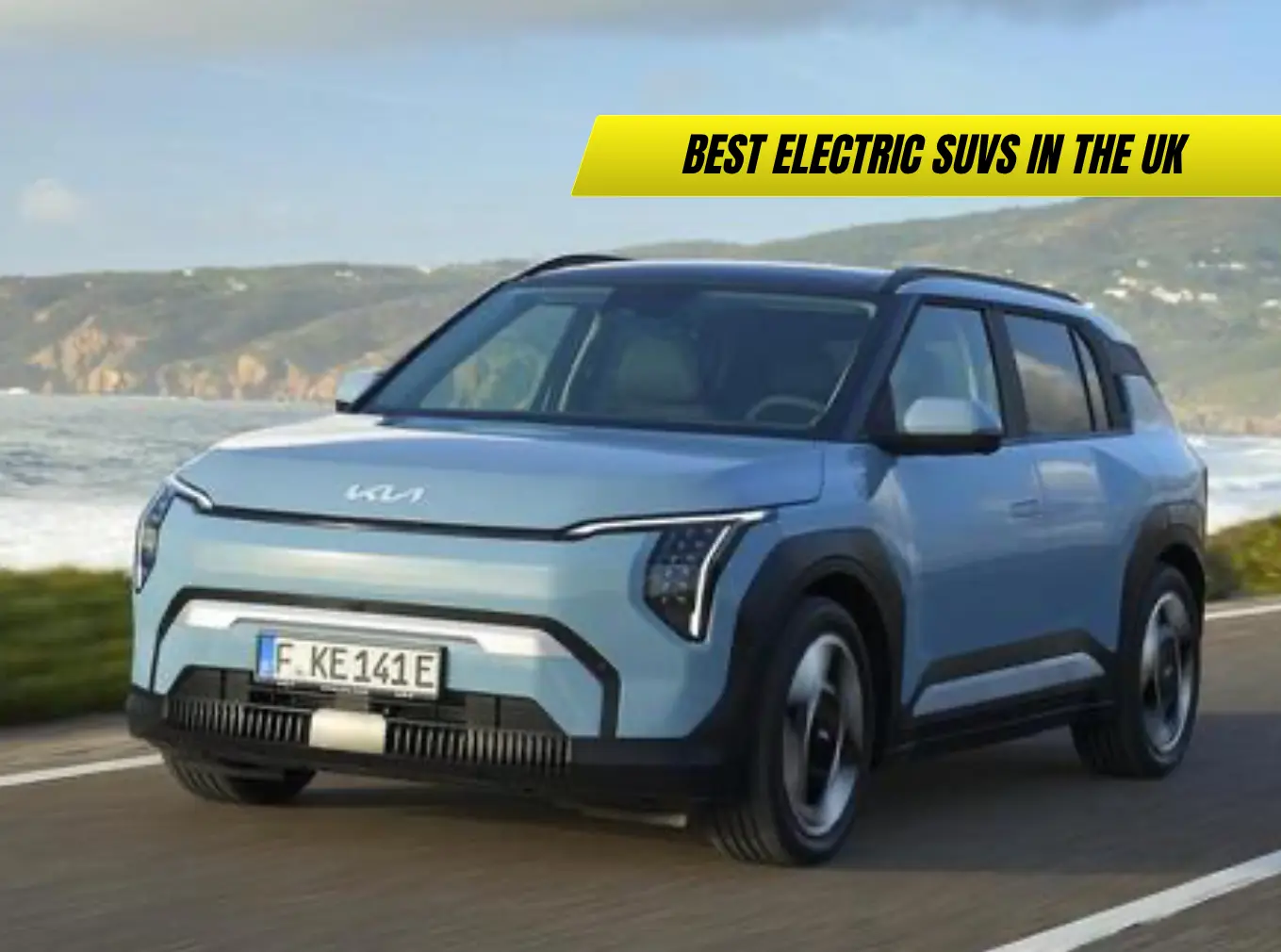
Electric SUVs are dominating the UK car market in 2025. Combining family practicality with zero-emission driving, they now account for over 30% of all new car registrations, according to the SMMT. In this complete guide, we analyse the best electric SUVs available in the UK, their real-world range, charging times, price brackets, and which models offer the best value for British buyers.
Key Points
- Electric SUVs now benefit from lower running costs and zero road tax until 2026.
- Average range: 250–340 miles, depending on size and battery capacity.
- Charging from 10–80% takes 20–35 minutes on a 150 kW DC charger.
- Ideal for company car users thanks to 2% Benefit-in-Kind (BiK) rate.
- Strong resale value for mainstream brands like Tesla, Kia, and Hyundai.
Why Electric SUVs Dominate 2025
The UK’s 2035 petrol and diesel phase-out deadline accelerates EV adoption.
SUVs are the preferred body style due to high seating, comfort, and boot space.
Technological advances now deliver real-world ranges comparable to diesels.
Government incentives, combined with home-charging grants, make EV ownership accessible even outside major cities.
Learn more about related policies at Best Plug-in Hybrid Cars UK 2025 – The Complete PHEV Guide for British Drivers.
Top Electric SUVs to Buy in 2025
| Model | Range (WLTP) | Charging (10–80%) | Price (From) | Notes |
|---|---|---|---|---|
| Tesla Model Y RWD | 283 miles | 27 min | £44,990 | Market leader for performance and software |
| Kia EV6 Air RWD | 328 miles | 18 min | £45,295 | Excellent efficiency and 800V charging |
| Hyundai Ioniq 5 | 315 miles | 20 min | £43,445 | Spacious, retro design, great tech |
| BMW iX1 eDrive20 | 270 miles | 29 min | £46,200 | Compact premium SUV feel |
| MG ZS EV Long Range | 273 miles | 40 min | £31,995 | Budget-friendly with strong warranty |
| Volvo EX30 | 298 miles | 26 min | £33,795 | High safety and Scandinavian design |
| BYD Atto 3 | 261 miles | 35 min | £34,995 | Rapid UK growth, solid reliability |
| Nissan Ariya 63kWh | 250 miles | 30 min | £39,995 | Strong build and comfort |
| Volkswagen ID.4 Life Pro | 322 miles | 28 min | £40,420 | Refined handling, family appeal |
Charging Infrastructure in 2025
The UK now has over 65,000 public charge points, including 12,000 rapid DC units.
Most new EV SUVs support Type 2 AC and CCS DC connectors.
| Charger Type | Power | Typical Time (0–80%) | Cost per kWh |
|---|---|---|---|
| Home wallbox | 7 kW | 8–10 hours | £0.28 |
| Rapid public | 50–150 kW | 30–40 min | £0.45–£0.69 |
| Ultra-rapid | 250–350 kW | 18–25 min | £0.65–£0.79 |
Home charging remains the cheapest and most convenient option, often costing under £10 per full charge.
To optimise costs, check tariffs from Octopus Energy and British Gas EV plans.
Running Costs Compared to Petrol SUVs
| Category | Electric SUV | Petrol SUV |
|---|---|---|
| Fuel / Energy per 10,000 miles | £400 | £1,600 |
| Road tax (2025) | £0 | £190 |
| Annual maintenance | £200–£300 | £500–£700 |
| Insurance | Similar | Similar |
| Total annual saving | £1,300+ | — |
From my point of view, the biggest advantage of electric SUVs is predictable operating costs.
You pay more upfront, but long-term expenses drop sharply.
Government Incentives and Taxes
- BiK (Benefit-in-Kind): 2% until 2025–26 for company cars.
- Road tax exemption: until April 2026.
- ULEZ-compliant nationwide.
- Homecharge Grant: up to £350 for residents of flats and rental properties.
Fleet buyers and business users especially benefit from the BiK tax rate, making electric SUVs cheaper than diesel counterparts in total cost of ownership.
Family and Everyday Usability
Electric SUVs now offer boots between 400–600 litres and optional frunks (front storage).
For instance:
- Kia EV6: 490 L rear + 52 L front
- Tesla Model Y: 854 L rear + 117 L front
- Hyundai Ioniq 5: 527 L rear + 57 L front
Most models support vehicle-to-load (V2L) tech to power laptops or appliances on trips — ideal for camping or road travel.
Charging at Home vs Public Network
Home Charging
- Install cost: £800–£1,200 (before grant).
- 7 kW wallboxes add ~30 miles/hour.
- Cheapest during off-peak tariffs (00:30–04:30).
Public Charging
- Useful for motorway travel or flats without parking.
- Networks like IONITY, Gridserve, BP Pulse, and Tesla Supercharger cover all major motorways.
Apps such as Zap-Map and Octopus Electroverse help locate chargers in real time.
Best Value Electric SUVs Under £40,000 (2025)
| Model | Range | Starting Price | Standout Feature |
|---|---|---|---|
| MG ZS EV | 273 miles | £31,995 | Best warranty |
| BYD Atto 3 | 261 miles | £34,995 | Build quality |
| Volvo EX30 | 298 miles | £33,795 | Compact premium feel |
| Hyundai Kona Electric | 300 miles | £34,995 | Efficiency |
| Peugeot e-2008 | 249 miles | £32,700 | Urban practicality |
For extended market insight, see 20 Best SUVs to Buy in 2025 Under £40K – Top Picks in the UK.
Premium and Luxury EV SUVs
| Model | Range | Price | Key Strength |
|---|---|---|---|
| Audi Q8 e-tron | 330 miles | £68,995 | Refinement & comfort |
| BMW iX | 382 miles | £69,905 | Technology & range |
| Mercedes EQE SUV | 340 miles | £90,560 | Comfort & innovation |
| Polestar 3 | 379 miles | £79,900 | Performance design |
| Lotus Eletre | 373 miles | £95,990 | British electric super-SUV |
Luxury models target the high-end segment with superior interiors and long-range capability.
Charging Etiquette and Smart Tips
- Avoid occupying chargers once charge reaches 80%.
- Use contactless payment or apps for faster sessions.
- Keep a Type 2 cable in your car at all times.
- Plan charging stops every 150–180 miles for motorway trips.
Smart-charging features in most EVs let you set charging times to benefit from off-peak electricity rates.
Common Misconceptions About EV SUVs
| Myth | Reality |
|---|---|
| “Electric cars can’t handle long trips.” | New models exceed 300 miles per charge. |
| “Public charging is too slow.” | Ultra-rapid networks now charge 10–80% in under 25 minutes. |
| “Batteries wear out quickly.” | Most carry 8-year warranties and retain >80% capacity. |
| “Too expensive.” | Total cost of ownership is now lower than diesel equivalents. |
Expert Opinion
From my point of view, 2025 is the turning point where electric SUVs became the default choice for British families and commuters.
The balance between range, practicality, and cost has reached maturity.
Brands like Kia, Tesla, and Volvo now offer solid technology with nationwide service networks, while newcomers such as BYD add affordability and long warranty coverage.
For most drivers, switching to electric this year makes both financial and environmental sense.
FAQs
Which electric SUV has the longest range in 2025?
The BMW iX (382 miles) and Polestar 3 (379 miles) currently lead.
Are electric SUVs good for long journeys?
Yes. The UK’s rapid-charger network allows 300+ mile trips with one 25-minute stop.
Do EVs need servicing?
Yes, but costs are lower—no oil, clutch, or exhaust maintenance.
How long does the battery last?
8–10 years on average, often with warranty protection for 100,000 miles.
Can I tow with an electric SUV?
Yes, many models (Tesla Model Y, Kia EV6, Ioniq 5) can tow 1,200–1,600 kg.
Electric SUVs in 2025 represent the most advanced and efficient vehicles on British roads.
In my experience, combining zero-emission driving with high comfort, fast charging, and strong resale makes them the most future-proof choice for both private and company car buyers.





