
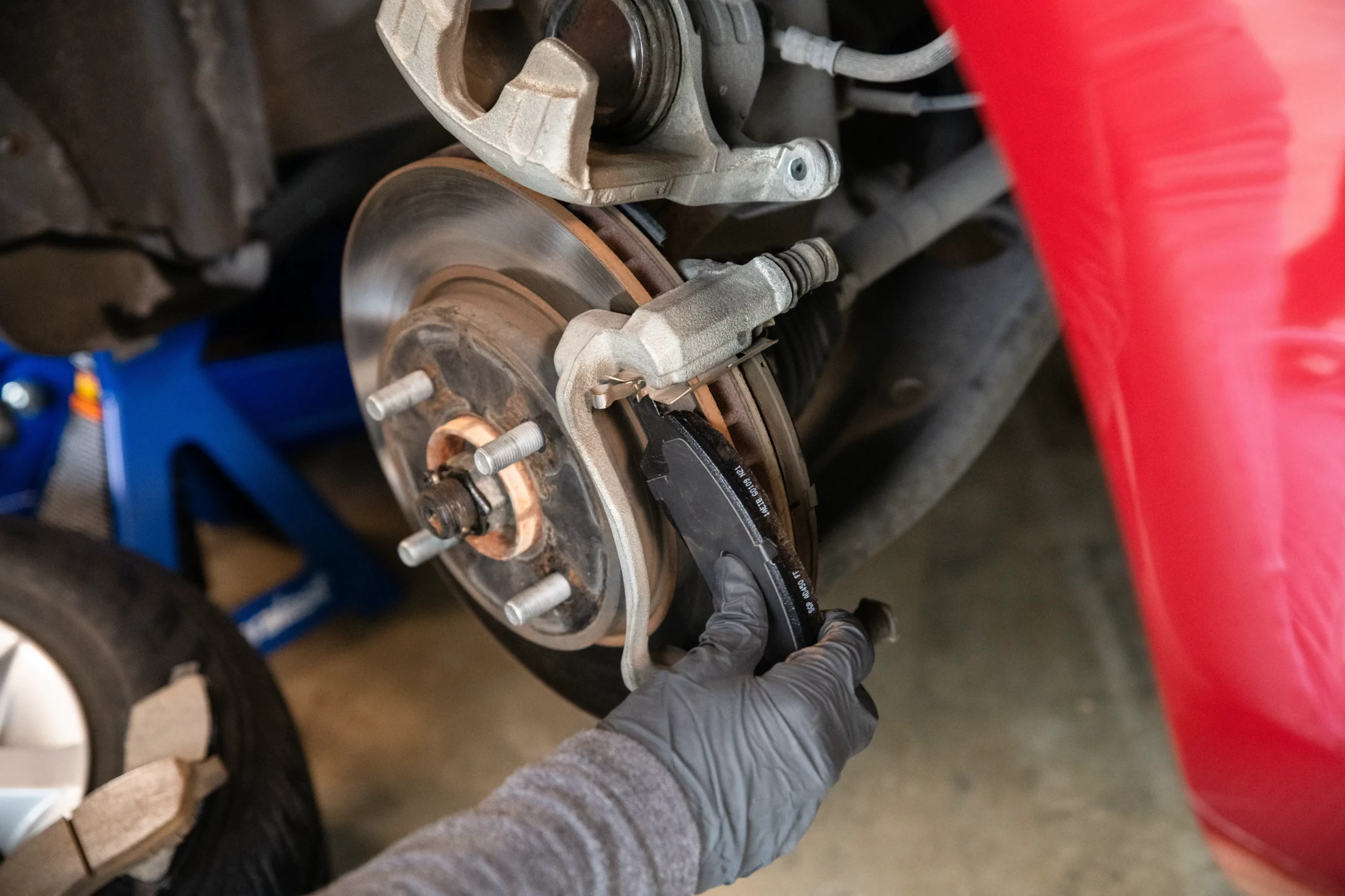
Brake checks are essential because stopping power is one of the most important safety systems on any car. A worn brake system often gives warning signs before failure, and catching them early can prevent longer stopping distances, MOT problems and expensive damage to discs or callipers.
Key Points
- Listen for squealing, grinding or clicking noises during braking.
- Check for uneven pedal feel, vibration or a pull to one side.
- Look through the wheel for obvious pad and disc wear where possible.
- Brake fluid should be at the correct level and not show signs of contamination.
- A change in braking behaviour often means the system should be inspected promptly.
- Worn brakes can damage other parts if they are left too long.
What To Watch For
The most common early sign is noise. A light squeal may indicate pad wear, while grinding usually suggests the brake material is already badly worn and metal may be contacting metal.
You should also pay attention to how the car feels under braking. If the pedal feels soft, pulses heavily or the car pulls to one side, the brake system needs a proper inspection.
Visual Checks
If the wheels allow a clear view, look at the brake pads and discs for obvious wear or scoring. Deep grooves, heavy rust or very thin pad material all suggest the system is approaching the end of its safe life.
Brake fluid is another useful clue. If the level is too low or the fluid looks dark and old, the system should be checked because wear and fluid condition often go together.
Why Early Checks Matter
Brakes usually do not fail without warning. They wear gradually, which means the driver often gets several signs before a serious problem develops.
In my experience, the earlier a brake issue is handled, the cheaper and simpler it usually is. Waiting too long can turn a pad change into a disc, calliper or fluid job as well.
What noise means my brakes are worn?
A light squeal often means the pads are getting low, while grinding usually means the brakes are badly worn and need immediate attention.
Can brakes wear unevenly?
Yes. A seized calliper, uneven pad wear or a problem with one side of the system can cause the car to brake unevenly.
Should the brake pedal feel firm?
Yes, in normal conditions the pedal should feel consistent and firm. A soft, spongy or pulsing pedal should be checked.
Is brake fluid part of the brake check?
Absolutely. Fluid level and condition matter because they affect how well the braking system works.
Can worn brakes damage the discs?
Yes. If pads are left too long, they can wear into the discs and create deeper damage that is more expensive to fix.
How often should brakes be checked?
They should be checked regularly, especially if the car is used daily. Any change in noise, feel or stopping distance should be treated as a reason to inspect them sooner.
Is a pull to one side always a brake fault?
Not always, but it is a strong warning sign. It can also involve tyre or suspension issues, so the whole front end should be considered.
Conclusion
A brake check is one of the most important parts of keeping a UK car safe. By watching for noise, pedal changes, vibration and uneven wear, drivers can catch problems early and avoid a much more expensive repair later.





