
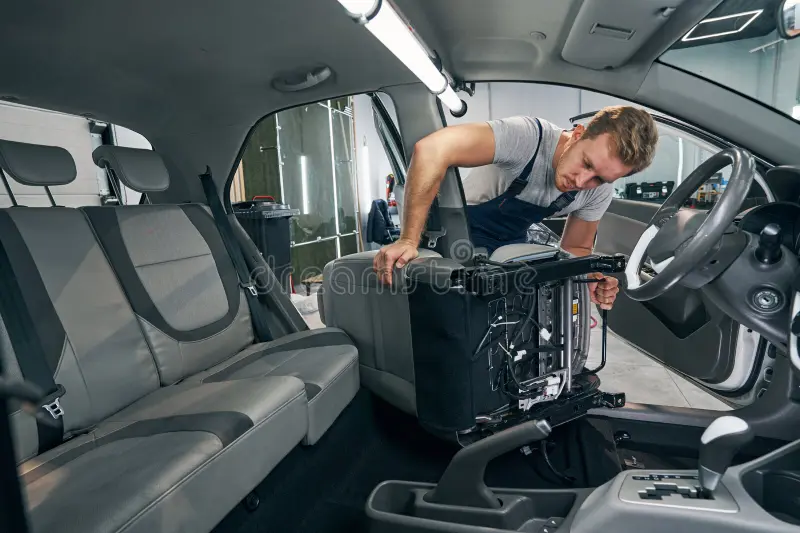
A clean cabin is not just about appearances. Proper sanitising helps reduce grime, odours and bacteria on the surfaces you touch most often, while also making the car feel fresher and more comfortable for daily use.
Key Points
- Sanitising works best after the interior has been properly cleaned first.
- High-touch areas such as the steering wheel, gear selector and door handles need the most attention.
- Glass, vents, seatbelts and touchscreens are often overlooked during quick interior cleans.
- Fabric seats and carpets can trap odours and moisture if they are not cleaned thoroughly.
- Using the wrong product can damage screens, plastics or trim finishes.
- A clean, dry cabin is easier to keep fresh over time.
Why Sanitising Matters
Car interiors collect more than visible dust. Everyday use leaves skin oils, food residue, moisture and grime on the surfaces that are handled most often, and those areas can quickly start to feel sticky, tired or unpleasant.
Sanitising is most effective when it follows a full clean rather than replacing one. Dirt and organic residue can reduce how well sanitising products work, so the first step is always to clear out the cabin and remove the obvious mess.
Where to Focus First
The most important places are the steering wheel, gear selector, handbrake area, door handles, seatbelt buckles, touchscreen controls and dashboard buttons. These are the main contact points and usually the fastest to build up grime.
After that, move on to seats, carpets, mats, air vents and storage areas. From a practical point of view, these areas matter because they hold dust, crumbs and odours that can make the whole cabin feel less clean even after the obvious surfaces have been wiped.
Fabrics, Odours and Moisture
Fabric seats and carpets tend to hold smells much longer than hard trim. Spills, damp shoes and trapped dirt can leave the cabin smelling stale even when it looks tidy.
That is why vacuuming and drying matter so much. If moisture is left in the cabin after cleaning, the car can quickly develop a musty smell, especially in the UK where damp conditions are common for much of the year.
Choosing Safe Products
Not every household cleaner is suitable for car interiors. Screens, piano black trim, soft-touch plastics and leather surfaces can all be damaged by harsh chemicals or heavy-handed wiping.
It is usually better to use products designed for automotive interiors and apply them with a clean microfibre cloth rather than spraying directly onto sensitive surfaces. This gives more control and reduces the risk of streaking or damage.
How often should I sanitise my car interior?
That depends on use, but high-touch surfaces are worth cleaning regularly. A more thorough interior sanitising session is a good idea whenever the cabin starts to feel dusty, stale or heavily used.
Should I clean before sanitising?
Yes. Sanitising works much better once dirt, crumbs and residue have already been removed. Cleaning first makes the treatment more effective.
What are the dirtiest parts of a car interior?
Usually the steering wheel, door handles, controls, seatbelt buckles, gear selector and touchpoints around the dashboard. These areas are handled most often and collect grime quickly.
Can I use household disinfectant wipes?
Sometimes, but only if they are safe for automotive surfaces. Some products can dry out trim, mark screens or damage delicate finishes.
Why does the car still smell bad after cleaning?
The source may be in the fabrics, carpets, vents or moisture trapped in the cabin. A surface wipe alone will not remove deeper odours.
Is sanitising the same as detailing?
Not exactly. Sanitising focuses on hygiene and high-touch areas, while detailing is usually more comprehensive and cosmetic in approach.
Do air vents need cleaning too?
Yes. Dust and stale smells can gather around vents and affect how fresh the cabin feels. They are easy to overlook during a basic clean.
Conclusion
Cabin sanitising is most effective when it combines proper cleaning, careful product choice and attention to the surfaces that are used every day. For UK drivers, keeping the interior clean and dry is one of the simplest ways to improve comfort, freshness and overall cabin condition throughout the year.





