
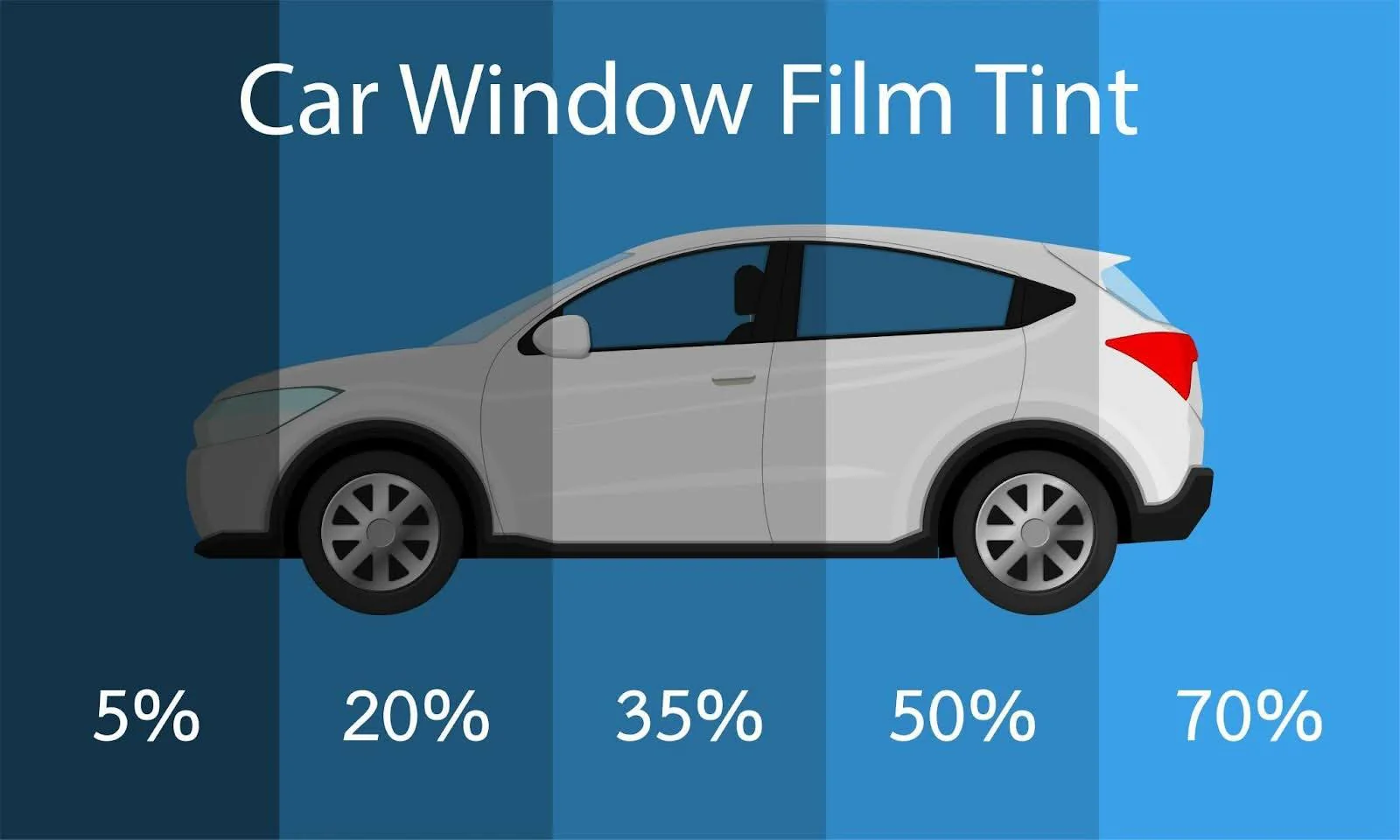
Window tinting is one of the most frequently misunderstood areas of vehicle modification law in the UK. The rules are specific, the enforcement consequences are real, and the interaction with MOT testing and insurance adds complexity that many drivers discover only when it is too late.
Key Points
- The front windscreen must allow at least 75% of light through (75% VLT minimum)
- Front side windows (driver and passenger) must allow at least 70% of light through
- Rear windows and the rear windscreen can be tinted to any darkness — no legal minimum applies
- Illegal front window tinting is an MOT failure and can result in a £2,500 fine and a vehicle prohibition notice
- The rules apply to vehicles first used on or after 1 April 1985 — older vehicles have more lenient standards
- Factory-fitted tinting from the manufacturer counts toward the VLT percentage — after-market film adds to what is already there
The Legal Framework
Window tinting law in the UK is governed by The Road Vehicles (Construction and Use) Regulations 1986, which set minimum Visible Light Transmission (VLT) percentages for different window positions. VLT is the percentage of available light that passes through the glass — a higher number means lighter tint; a lower number means darker.
The rules are straightforward:
| Window Position | Minimum VLT Required | Notes |
|---|---|---|
| Front windscreen | 75% | Strict — any factory gradient band above AS1 line must still meet 75% in the main area |
| Front side windows (driver + passenger) | 70% | Both nearside and offside front doors |
| Rear side windows | No minimum | Any darkness permitted |
| Rear windscreen | No minimum | Any darkness permitted — but reversing camera may be needed if obscured |
For vehicles first used before 1 April 1985, the minimum VLT for front side windows is 70% — the same as post-1985 vehicles — but the regulation references differ slightly. In practice, the same limits apply across all modern vehicles.
The Critical Point: Factory Tinting Counts
Many drivers assume they can apply an aftermarket tint film and simply ensure that the film itself meets the 70% or 75% minimum. This is incorrect.
The total VLT of the window — factory glass tint combined with any aftermarket film — must meet the legal minimum. Modern vehicle glass already transmits approximately 80–83% VLTbefore any aftermarket film is applied. A film sold as “70% VLT” applied to 82% factory glass produces a combined transmission of approximately 57% — well below the legal 70% minimum for front side windows.
The correct calculation: multiply the factory glass VLT by the film VLT percentage. For a front side window with 82% factory glass and a 70% film: 0.82 × 0.70 = 57.4% total VLT — illegal.
To achieve a legally compliant front side window with 82% factory glass, you need a film with a VLT of at least 85% — which is essentially clear film and provides no visible darkening effect. This is why any visible front side window darkening on a modern car is almost certainly illegalin the UK.
What the Penalties Are
At MOT:
Excessive window tinting on front side windows or the windscreen is a mandatory MOT failure— categorised as a Major defect. The vehicle cannot pass its MOT until the tint is removed or replaced with a compliant film.
On the road:
A police officer who stops a vehicle with suspected illegal tinting can use a tint meter (calibrated light transmission meter) to test the windows at the roadside. If the windows fail:
- A Vehicle Defect Rectification Notice requiring the tint to be corrected within a specified period
- In more serious cases, a Prohibition Notice preventing the vehicle from being driven until corrected
- A fixed penalty fine of up to £2,500 for failing to comply
Insurance:
Illegal window tinting constitutes a vehicle modification that changes its construction from the standard specification. This is a material modification that most insurers require to be declared. An undeclared illegal tint can give an insurer grounds to repudiate a claim in the event of an incident.
What You Can Legally Do
The rear of the vehicle — rear side windows and rear windscreen — has no VLT restriction. Owners can apply any degree of tinting to these windows without legal consequence, though very dark rear window tinting requires either a clear line of sight through the front mirrors or a calibrated rear-view camera for reversing.
For drivers who want a dark appearance on front windows, there is no legal route to achieving a significantly darker front side window on a vehicle registered after April 1985. The only options are:
- Very light near-clear films (85%+ VLT) that provide UV protection and minor heat rejection without visible darkening — fully legal and useful in summer
- Privacy glass from the factory — some manufacturers offer front side windows with a slight tint that is calibrated to meet the 70% minimum; this cannot be added after the fact
Aftermarket Tint: Legitimate Uses
Despite the front window restrictions, aftermarket window film has legitimate applications on UK vehicles:
- Rear side and rear window tinting — fully unrestricted; useful for UV protection of passengers, reduced cabin heat buildup, and privacy
- UV-blocking clear front films — protect the driver and front passenger from UV radiation without any visible darkening; useful for drivers with photosensitivity conditions
- Solar control films on rear glass — significantly reduce interior temperature in summer; WLTP test data from manufacturers in warm climates shows meaningful energy savings on EVs where reduced air conditioning lowers battery drain
For owners of vehicles with young children, applying a high-quality UV-blocking film to rear side windows — at any desired darkness — is a practical measure with no legal complexity.
FAQ
Can I tint my front windows if I have a medical exemption?
The UK does not have a formal medical exemption system for window tinting — the Construction and Use Regulations apply uniformly. Some enforcement discretion may be exercised for documented medical conditions requiring UV protection, but there is no legal certificate or exemption process. Contact your local police force’s roads policing unit for guidance specific to your circumstances.
Will dark rear windows fail an MOT?
No — rear windows have no VLT minimum and cannot fail an MOT on darkness grounds alone. They may fail if the tint is damaged, bubbling, or peeling in a way that affects the driver’s rearward visibility.
Is factory privacy glass legal?
Yes — factory-fitted privacy glass on rear windows is entirely legal. Most manufacturers calibrate front window glass to meet the 70% minimum regardless of appearance. Factory rear privacy glass typically transmits 20–30% VLT — darker than most aftermarket films.
Can police test my windows without stopping me?
Police can and do use handheld tint meters at the roadside. A vehicle does not need to be involved in any other incident — a routine stop or checkpoint can include a tint test.
Does window tinting affect my car’s resale value?
Dark rear window tinting has minimal effect on resale — most buyers are indifferent or neutral. Illegal front window tinting reduces resale value because it requires removal before MOT and may complicate private sale. Always remove non-compliant front tinting before offering a car for sale.





