
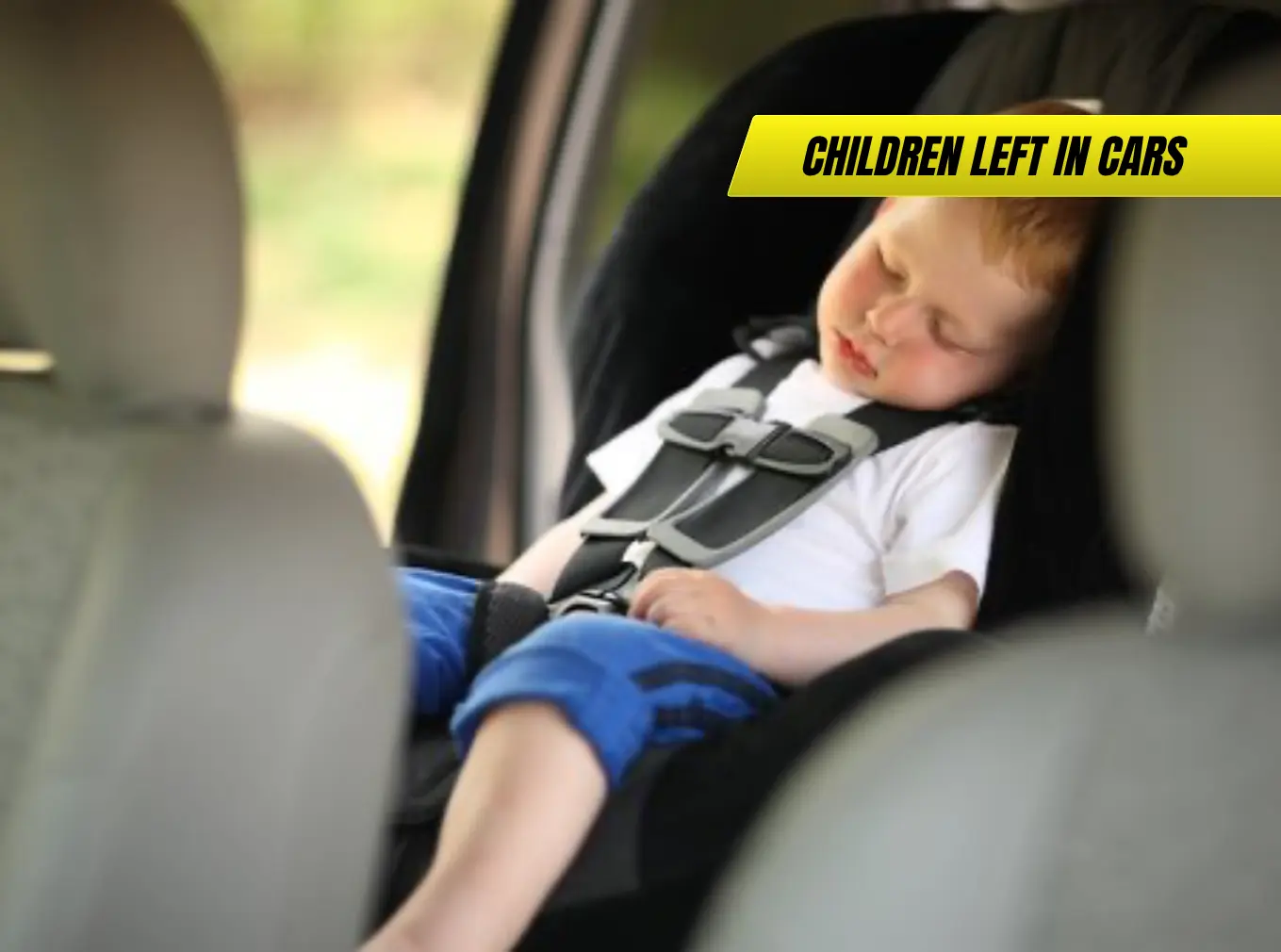
Leaving a child unattended in a car is one of the gravest mistakes a driver can make — and in the UK, it can carry criminal charges. Every summer, police and rescue services respond to hundreds of cases of children trapped in overheated vehicles, often with tragic consequences. In 2025, new public safety guidelines and harsher penalties make it clear: there is no safe time or place to leave a child alone in a car.
Key Points
- Leaving a child unattended in a car can lead to arrest and prosecution for neglect.
- Temperatures inside a parked vehicle can exceed 40°C in 10 minutes.
- Parents risk charges under the Children and Young Persons Act 1933.
- Rescue services are authorised to break into vehicles without liability.
- Modern cars with child locks and keyless systems increase accidental lock-in risk.
The Law: What Constitutes Neglect
There is no specific “law against leaving a child in a car,” but courts interpret it as neglect under Section 1 of the Children and Young Persons Act 1933:
“A person who, being responsible for any child or young person, wilfully assaults, ill-treats, neglects, abandons, or exposes such child… in a manner likely to cause unnecessary suffering or injury to health, commits an offence.”
Convictions can lead to up to 10 years in prison in severe cases. Even short absences — for shopping, paying for fuel, or school drop-offs — may qualify as “wilful neglect” if the child is endangered.
Temperature and Safety Risks
| Outside Temperature | Inside Car After 10 Minutes | After 30 Minutes | Risk Level |
| 22°C (mild) | 37°C | 45°C | Severe dehydration risk |
| 26°C (warm) | 40°C | 50°C | Possible heatstroke |
| 30°C (hot) | 45°C | 60°C | Life-threatening conditions |
| 35°C+ | 50°C+ | 65°C | Fatal within 10–15 minutes |
Children’s bodies heat up 3–5 times faster than adults, making heatstroke possible even in moderate weather.
Leaving windows slightly open does not prevent the temperature rise.
The RAC Foundation and NSPCC now treat “child left in car” as an automatic emergency call (999).
Legal and Financial Consequences
| Offence | Legal Reference | Typical Penalty | Additional Consequences |
| Neglect / endangerment | Children and Young Persons Act 1933 | Up to 10 years’ prison | Social services investigation |
| Causing harm / death | Offences Against the Person Act 1861 | Up to life imprisonment | Criminal record |
| Obstruction during rescue | Police and Criminal Evidence Act 1984 | £1,000 fine | Possible arrest |
| Damage caused by forced entry | — | None (emergency exemption) | Owner bears repair cost |
If police or firefighters break a window to rescue a child, you cannot claim damages from the authorities.
Common Scenarios That Lead to Offences
- Quick errands – “I’ll be back in two minutes.” Heatstroke can occur faster than you think.
- Sleeping child – leaving a baby or toddler unattended, even with air conditioning, is unsafe.
- School runs – dropping one child off while another waits in the car breaches supervision duty.
- Fuel stops – never leave children in the vehicle while refuelling or paying at the counter.
Each of these situations has already led to prosecutions or police warnings in the UK.
Smart Car Technology and False Security
Many drivers assume that keyless ignition or remote lock systems keep children safe — they don’t.
In 2025, several car manufacturers (Ford, Hyundai, Volvo) have added Child Presence Detection (CPD) sensors using radar to detect movement or breathing in the rear seat.
However, these systems are assistance features, not legal protection.
If a car alerts you but you ignore it, responsibility still rests entirely with you.
What to Do If You See a Child Alone in a Car
- Assess the situation – Is the child alert or in distress?
- Call 999 immediately – Inform police and provide location and registration.
- Break a window only if absolutely necessary – Prioritise passenger-side glass for safety.
- Move the child to shade and offer cool air or water once rescued.
The law protects bystanders who act “reasonably and in good faith” to prevent harm.
Insurance and Criminal Record Impact
A conviction for child neglect has lasting consequences:
| Category | Effect | Duration |
| Driving licence | Revoked (if linked to vehicle use) | Reapplication required |
| Insurance | Refused or tripled premiums | 5 years minimum |
| Criminal record | Permanent for serious offences | Shown on all DBS checks |
| Child services involvement | Yes | Until case closed |
Insurers classify such offences as gross negligence, leading to policy termination.
How to Prevent Accidental Lock-Ins
- Keep keys in your pocket, never inside the car.
- Engage child locks only when necessary.
- Place a personal item (phone or bag) next to the child seat as a reminder.
- Use smartphone apps (e.g., FordPass, Bluelink) that alert when the vehicle is locked with movement detected.
For guidance on child restraint laws, see Child Car Seat Rules and Safety Tips UK 2025.
My Point of View
From my point of view, leaving a child in a car for any reason is indefensible.
Modern life makes multitasking tempting, but no errand is worth the risk of a lifetime of guilt — or prison.
The law is not only about punishment but prevention: it forces drivers to treat every minute of unsupervised time as potential harm.
FAQs
Is it illegal to leave a child alone for “just a minute”?
If it causes risk or distress, yes. Even a short period can be classed as neglect.
Can I lock the car with air conditioning on?
No. Systems can fail or shut off automatically. It’s unsafe and not a legal defence.
What if I forget my child in the car accidentally?
You may still face investigation, but cooperation and remorse influence outcomes.
Can police break my window if my child is fine?
Yes, if they believe danger exists. The law protects their actions.
Are there age limits for leaving a child alone?
No fixed age, but under-12s are almost never considered safe unsupervised.
In 2025, UK law and public awareness both agree: a car is never a safe place for a child alone.
In my experience, prevention comes down to one habit — every time you park, look back before you lock.
Vuoi che proceda ora con il prossimo articolo evergreen:
“How to Detect and Repair a Damaged Car Wheel”?





