
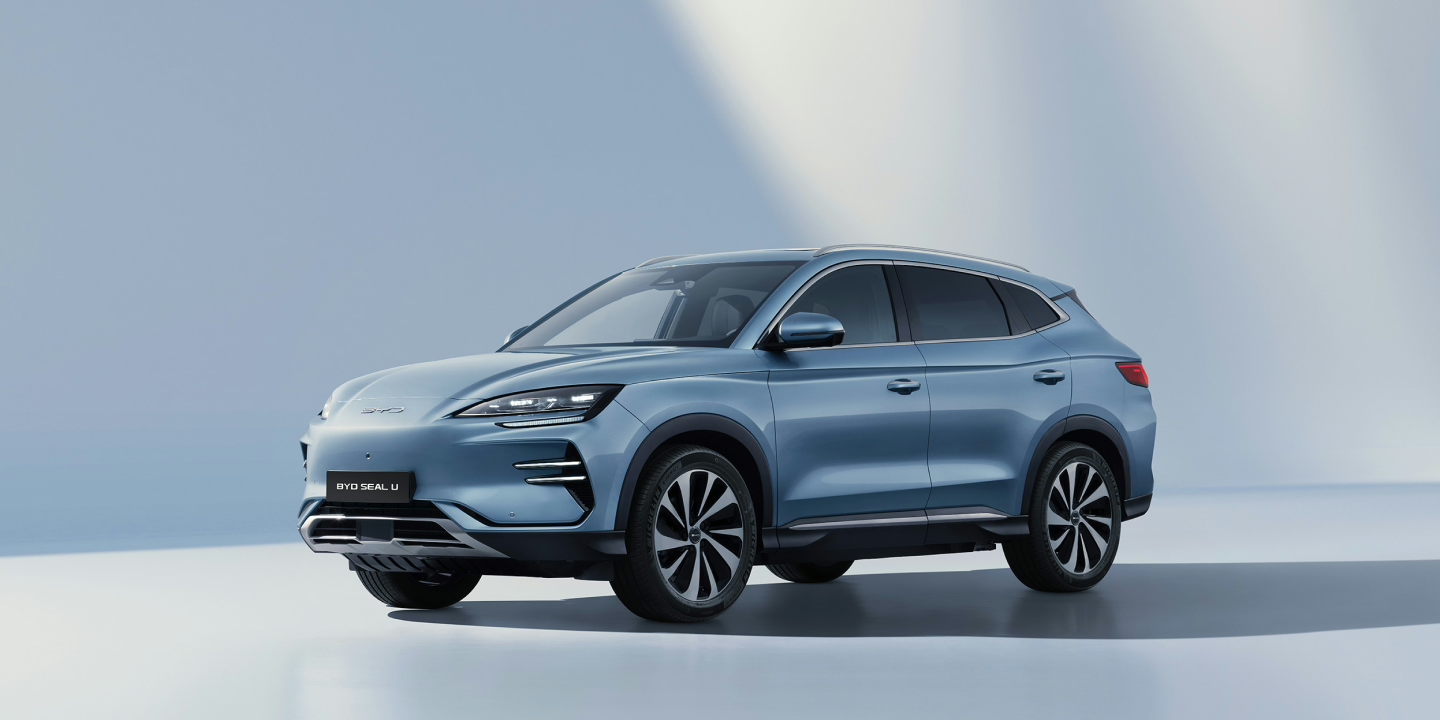
Explore three new electric SUVs from China—BYD Seal U, Leapmotor C10, and Xpeng G6—heading for the UK market! Discover their design, performance, and tech, plus how they stack up against local favourites.
Introduction: A Fresh Wave of Chinese EVs Crashing onto British Shores
Not long ago, the idea of Chinese car brands dominating UK roads seemed far-fetched. Yet, here we are in 2024/2025, witnessing a surge of advanced EVs (electric vehicles) made in China, from brands like MG, BYD, Xpeng, and Leapmotor. They’re poised not just for a cameo, but to challenge mainstream offerings from Europe, Korea, and even Tesla. While MG ZS EV and MG4 led the initial charge, the new wave is stepping up in refinement, technology, and battery innovation.
This article dives into three rising SUV EV contenders: the BYD Seal U, the Leapmotor C10, and the Xpeng G6. If you’re a UK driver curious about going electric—or just intrigued by next-gen Chinese cars—stay with us. We’ll examine each model’s design, specs, charging speed, approximate pricing, and how they may fare navigating British roads, from the Lake District to central London. Ready to discover the next big thing in EV crossovers? Let’s begin.
1. Why Chinese Electric SUVs Now Matter in the UK
1.1 A Booming EV Scene
The UK is ramping up its shift to electrified motoring. New petrol and diesel cars face a ban from 2030 (with some exceptions to 2035), while Ultra Low Emission Zones expand across major cities. More British motorists see EVs as an appealing, cost-effective alternative. And with electricity tariffs, home chargers, and government grants (like the previously available Plug-In Car Grant, albeit reduced), the conditions are ripe for new EV players to enter.
1.2 Chinese Automotive Expertise
China is the world’s largest EV market. Decades of heavy investment in battery manufacturing, plus enormous scale, let them produce advanced EVs with cost advantages. Now, brands from the East are no longer stuck making “cheap and cheerful” cars. They’re turning heads for advanced design, robust battery tech, and competitive prices.
- BYD leads in battery technology (particularly LFP/Blade). They already supply cells to other top OEMs.
- Xpeng focuses on software and autonomy, gunning to be the “Chinese Tesla.”
- Leapmotor aims to break in with a cost-performance ratio that might unsettle established players.
1.3 The UK Angle
British drivers often want compact or mid-size crossovers that handle well on narrower roads and still deliver space for the family. With a shift to electric, brand loyalty can waver—someone might ditch their usual Nissan or Peugeot if a sleek Chinese EV proves better value. Meanwhile, concerns about post-Brexit tariffs, Chinese imports, or local after-sales might hamper immediate adoption. But these newcomers have big ambitions and decent marketing budgets to reassure prospective buyers. Let’s see if they can break through.
2. Three SUVs in the Spotlight
2.1 BYD Seal U: A Big Crossover from a Battery Giant
Length: ~4.79 metres
Battery: ~71.8 kWh usable, LFP Blade technology
Power: ~218 bhp (FWD)
Range: ~500 km WLTP (approx. 310 miles)
After success with the compact Atto 3 (and bigger Tang in some regions), BYD extends its portfolio with the Seal U. This model effectively sits as a family-friendly electric crossover.
- Design: Understated lines, neat front fascia, flush door handles. Not the most flamboyant approach, but might appeal to those wanting a “normal-looking” EV.
- Battery: BYD’s famed “Blade Battery” has excellent safety credentials and solid cycle life. The trade-off is a slightly slower charging curve compared to some advanced NMC packs, typically peaking around 120-150 kW DC.
- Interior: A large 15.6-inch rotating screen, supportive seats, and decent trim materials. Cabin space in the rear is generous, giving it strong credentials as a family SUV.
- In the UK: BYD is setting up dealer networks in major cities. The brand is keen to highlight reliability and the long battery warranty to ease any concerns about “Chinese unknowns.”
2.2 Leapmotor C10: The Underdog with Surprising Value
Length: ~4.73 metres
Battery: ~69 kWh NCM
Power: ~231 bhp, FWD
Range: ~530 km WLTP (330 miles est.)
While the name “Leapmotor” may be new to you, they aim to break into Europe and the UK soon. The C10 is a mid-size SUV pitched as a real bargain with decent specs.
- Design: Slightly shorter than the Seal U, sporting sharper lines, possibly reminiscent of certain Lexus or DS crossovers. Overall effect: modern, tidy, and somewhat dynamic.
- Interior: Leapmotor wants to impress with an upmarket feel—soft-touch materials, a 14.6-inch central screen, advanced driver aids. They also promise low cabin noise, a priority for EV comfort.
- Performance: Faster acceleration (0–100 km/h in ~7.9s) than the Seal U, though the battery is smaller.
- Affordability: Rumoured entry price around £35k–£38k in continental markets. If true, that undercuts much of the competition in the UK. Hard to ignore for budget-conscious EV fans.
2.3 Xpeng G6: High Tech, Big Battery, and Sporty Touch
Length: ~4.75 metres
Battery: ~87.5 kWh, NMC
Power: ~286 bhp (RWD)
Range: ~570 km WLTP (350+ miles)
Xpeng, known for the P7 saloon and G9 SUV in China, introduces the G6 as a sleek “SUV-coupé.” Expect a big push on advanced software, autonomy, and large range.
- Design: Low drag (Cd 0.248). The roofline tapers elegantly for that sporty vibe. Possibly less rear headroom, but it screams “modern EV.”
- Performance: 0–100 in 6.7 seconds, RWD setup. The brand claims up to 280 kW peak DC charging, enabling super quick top-ups on motorways.
- Tech: XNGP driver assist, advanced voice controls, frequent OTA updates. The caveat: initial European firmware might limit certain features for legal compliance.
- Appeal for the UK: If you frequently do cross-country drives, that big battery plus fast charging is gold. The biggest question is how soon Xpeng will fully integrate with local charging networks beyond basic CCS.
3. Exterior Aesthetics: From Conservative to Futuristic
BYD Seal U:
- Clean lines, large but not bulky, emphasising harmony over aggressive angles. Possibly a safer design for older or more conventional tastes.
Leapmotor C10:
- A bolder approach, with sharper edges and a confident front mask. Some might find it the best “visual balance” in the trio.
Xpeng G6:
- Leans aerodynamic, with a coupe-like roof that can hamper rear visibility. Eye-catching if you want something distinct on UK roads.
4. Interiors & Creature Comforts
Below is a simplified table with some interior highlights:
| Model | Main Screen (inches) | Cabin Quality | Boot Space (L) | Apple/Android Integration |
|---|---|---|---|---|
| Seal U | 15.6 rotating | Good | ~552 | Likely yes |
| C10 | 14.6 fixed | Very good | ~580 | Should be included |
| G6 | ~14.96 fixed | Excellent | ~571 | Not at launch (planned) |
BYD Seal U
- Rotating screen: Big party trick, from horizontal to vertical.
- Feels “safe”: A typical family EV vibe. Materials improved from older BYD models.
- Practical: Good space for three in the back, decent child seat compatibility.
Leapmotor C10
- Quiet cabin: Leapmotor emphasises strong noise insulation.
- More “premium”: Surprising attention to detail. Possibly best interior among budget Chinese EVs.
- 14.6″ screen: Crisp UI, presumably straightforward to navigate.
Xpeng G6
- Minimal dash: Tesla-like approach, large single screen, minimal physical buttons.
- Advanced seating: Great ergonomics, some variants with cooled seats.
- Tech UI: They have Xmart OS. Apple CarPlay/Android Auto might come later, but not always out of the box.
5. Drivetrains, Range, and Charging
BYD Seal U:
- LFP battery ~71.8 kWh.
- ~500 km WLTP (310 miles).
- 0–100 km/h in 9.6 s.
- FWD, ~218 bhp.
- DC charge max ~150 kW.
Leapmotor C10:
- NCM battery ~69 kWh.
- ~530 km (330 miles) WLTP.
- 0–100 km/h in 7.9 s.
- FWD, ~231 bhp.
- DC charge ~150 kW.
Xpeng G6:
- NCM battery ~87.5 kWh.
- ~570 km (350+ miles) WLTP.
- 0–100 km/h in 6.7 s.
- RWD, ~286 bhp.
- DC charge up to 280 kW.
For UK motorway drivers, Xpeng’s fast-charging could be a game-changer on the M1 or M6, but only if you find HPC chargers able to feed 280 kW. In practise, Ionity and some other networks top at 350 kW, so that’s feasible. The Leapmotor’s advantage is its snappier acceleration vs the Seal U, but with a slightly smaller battery. BYD’s LFP approach offers robust longevity, but not the highest range or quickest charging.
6. ADAS and Semi-Autonomous Features
BYD
- Basic Level 2 autopilot: lane centering, adaptive cruise. Enough for typical commutes on the M25, albeit not ground-breaking.
Leapmotor
- Possibly a “Level 2+” system, merging lane-keep with auto-lane-change on certain roads. Good 360° camera coverage, helpful for tight UK urban roads.
Xpeng
- The G6 might come with XNGP, a next-gen suite that handles advanced route-based guidance. Potentially the most ambitious, but will be legally restricted to L2 in the UK, so you must keep hands on the wheel.
All three incorporate standard safety: blind-spot monitoring, emergency braking, cross-traffic alert, etc. For British drivers used to big brand ADAS (Volkswagen Travel Assist, Tesla Autopilot), these Chinese systems look competitive. The big unknown is real-world reliability in mixed UK roads—rural lanes, roundabouts, etc.
7. UK Pricing, After-Sales, and Competition
Indicative Price Range (converted roughly from euros, or brand statements):
- BYD Seal U: ~£40,000 to £42,000
- Leapmotor C10: ~£35,000 to £38,000
- Xpeng G6: ~£45,000 to £48,000
(Exact figures might differ once they officially launch in the UK, factoring in shipping, any tariffs, dealership margins, plus possible government VED or grants. And note, it’s unclear if the upcoming Zero Emission Vehicle Mandate in the UK will yield further rebates or changes.)
7.1 Rival EVs in Britain
- Tesla Model Y: The reigning favourite, priced from ~£45,000. More brand recognition, strong Supercharger network.
- Hyundai Ioniq 5 or Kia EV6: Stylish, proven, but can cost more if you want bigger batteries.
- MG Marvel R: Another Chinese contender, though overshadowed by the MG4’s success. Might be cheaper but less refined than these three.
7.2 Servicing and Warranties
- BYD typically offers 6-year/150k km vehicle warranty, 8-year/200k km battery.
- Leapmotor claims 8 years/200k km for both battery and the main car in some markets—impressive but needs confirmation in the UK.
- Xpeng states 7 years or 160k km for the vehicle, 8 years for the battery.
The challenge is how these warranties apply if local dealership presence is minimal. Some British buyers might worry about parts availability or how quickly an official workshop can fix an advanced EV system if there’s an error code. The brands vow to open service centres or partner with existing groups. Over time, that should expand outside of London or Manchester, but early adopters might face more inconvenience if they’re in, say, Cornwall or the Scottish Highlands.
8. Real-World Suitability in the UK
8.1 Town & City
- Leeds, Manchester, Birmingham: The C10’s slightly smaller footprint (4.73 m) might be simpler for on-street parking, though the Seal U or G6 remain quite agile.
- London’s ULEZ: All are zero tailpipe emission, so no daily charges. Congestion Charge is separate, but as fully electric vehicles, they might be exempt or discounted, check TFL rules.
8.2 Country Roads & Motorways
- The G6 is best for cross-country or motorway blasts, thanks to its big battery and super-fast DC charging. If you do a lot of M1 or M4 runs, that’s appealing.
- If you don’t exceed, say, 50 miles a day, any of the three can handle your routine with minimal charging.
- For family holiday runs to Devon or up to the Highlands, either the Seal U or the G6 with more range might reduce stops.
8.3 Snow & Inclined Terrains
- Currently, the UK-intended versions are FWD (BYD, Leapmotor) or RWD (Xpeng). If you’re located in rural Wales or mountainous parts of Scotland, you might prefer AWD, but that’s not confirmed (the G6 might get a dual motor in future). Winter tyres or all-season tyres can help traction.
9. Table Summing Up Key Points
| Model | Battery (kWh) | Range (WLTP) | 0–100 km/h | Drivetrain | Est. UK Price |
|---|---|---|---|---|---|
| BYD Seal U | ~71.8 | ~500 km | ~9.6 s | FWD (218 bhp) | ~£40–42k |
| Leapmotor C10 | ~69 | ~530 km | ~7.9 s | FWD (231 bhp) | ~£35–38k |
| Xpeng G6 | ~87.5 | ~570 km | ~6.7 s | RWD (286 bhp) | ~£45–48k |
(All data approximate, subject to final UK homologation.)
10. Frequently Asked Questions (FAQ)
- Are these vehicles entirely built in China, or partially assembled in Europe?
- For now, all come from China fully assembled. Future local assembly or factories in Europe are rumoured, but not official.
- What about residual value in the UK used market?
- Hard to predict. If these brands succeed, second-hand demand could be decent. But if they remain niche, depreciation might be higher than mainstream EVs.
- Is there any benefit for company-car drivers in the UK?
- As zero-emission vehicles, Benefit-in-Kind (BiK) rates remain low, so these EVs can be tax-friendly. The exact rates vary year to year.
- Could the brands open up battery leasing or subscription?
- Possibly. Some Chinese makers do that in other markets. Wait for the official announcements.
- Are all them reliant on CCS charging?
- Yes, they each adopt CCS Type 2 for AC/DC in Europe. Xpeng G6 might add advanced HPC capabilities (up to 280 kW).
Does BYD plan to offer the Seal U with a larger battery or a dual-motor AWD version in the UK anytime soon?
BYD has steadily expanded its model range worldwide, often starting with front-wheel-drive, mid-sized battery options, and then adding variants with bigger packs or all-wheel drive. In China, there has been speculation about a higher-performance or AWD “Seal U” variant featuring dual motors and more horsepower. That could push the combined output to 300+ bhp, granting 0–100 km/h times in the six-second range. But as of now, official statements for the UK remain vague.
If BYD sees strong demand for AWD crossovers in Europe’s northern climates (or mountainous regions where winter traction is essential), they might expedite a two-motor Seal U. Technically, BYD’s e-Platform 3.0 can accommodate such configurations. The brand already provides AWD versions on some larger Chinese-market SUVs (like the Tang). So, the platform feasibility is there.
A bigger battery could also come into play, possibly around 80 kWh or more, to chase that 550–600 km WLTP range. This might ensure better motorway travel for Brits covering extended distances, like from London to the Scottish Highlands in fewer charging stops. The question is whether such an upgrade might overshadow the model’s price advantage. One reason people like BYD is they expect a fair cost compared to mainstream rivals. If an AWD, bigger battery variant creeps close to £50k, it starts competing with Tesla or established European SUVs on cost.
Right now, the standard Seal U with ~72 kWh and FWD suits a broad range of families. But if, for instance, Xpeng G6 in AWD or other Chinese competitors push the technology envelope, BYD might respond. Keep an eye on announcements at European auto shows or official UK dealership reveals. The brand frequently checks local market feedback; if the British driver base demands more power or AWD, the brand is likely to deliver eventually. It’s just a matter of timing.
How is Leapmotor preparing for parts and servicing support across the UK, especially in smaller towns?
Leapmotor is a relatively fresh face in Europe. That begs the question: how do they plan to ensure a smooth after-sales experience for British buyers beyond major hubs like London or Birmingham? In the short term, the brand may open a handful of official showrooms near big cities, but that doesn’t necessarily solve the issue for owners in rural areas or small towns.
Rumour has it that Leapmotor is considering a two-tier approach. First, they might partner with existing automotive service networks—perhaps well-known independent chains or multi-brand EV specialists. This means staff in those workshops would receive training specifically on the C10’s powertrain and electronics. That approach is similar to how MG or Polestar handle expansions. By leveraging experienced local garages, Leapmotor can provide maintenance coverage beyond just a few large showrooms.
Secondly, they could use “mobile service” vans for certain interventions. For minor repairs, updates, or software diagnostics, a Leapmotor technician might travel directly to the customer’s location, reducing the need for the driver to trek far. This model is not entirely new; Tesla has done something similar with mobile service fleets in many regions.
Of course, big fixes—like battery replacements or severe collisions—still require a dedicated facility with the necessary lifts and battery-handling tools. For that, Leapmotor might rely on a single main distribution centre in the UK, possibly close to a port or major city, plus transport solutions for vehicles that can’t be driven. All of this remains to be confirmed.
In the medium term, if the C10 sells well, the brand will presumably open more “Leapmotor Experience Centres” or sign new partnerships. The key challenge is building consumer trust: British buyers want to be sure they aren’t left stranded with a brand that has minimal local presence. Leapmotor must prove its reliability and post-sales responsiveness to stand out in a crowded EV market.
Will Xpeng’s advanced driver-assistance features (like XNGP) be restricted by British regulations on hands-free driving?
Xpeng has made headlines with its strong emphasis on advanced driver-assistance systems, commonly called XNGP or Navigation Guided Pilot. In China, these features can handle lane changes, merges, and keep the vehicle centred on highways with minimal driver intervention. However, the legal framework in the UK (and most of Europe) remains conservative regarding autonomy above Level 2.
Level 2 means the driver must keep hands on the wheel and eyes on the road at all times, even if the system can momentarily steer or control speed. The car can’t perform full self-driving tasks or operate hands-free as it might under certain US state regulations. Xpeng is therefore forced to “dial down” some capabilities for compliance. For instance, the G6 might be hardware-ready for more advanced manoeuvres, but software-limited to a L2+ approach: active lane-keeping, adaptive cruise with stop-and-go, and maybe a driver-initiated lane change.
This also includes driver monitoring. European rules generally require a camera or torque sensor on the steering wheel that ensures you’re paying attention. If Xpeng tries to push more automated lane changes or overtaking, the system might beep or prompt the driver to confirm. Over-the-air updates could, in theory, expand features once UK regulations ease. But until the law changes, the G6 must remain at the same compliance level as a Tesla Model Y with Enhanced Autopilot or a Mercedes with Intelligent Drive in Level 2 format.
Despite these restrictions, it’s likely XNGP still offers robust functionality on dual carriageways or motorways, potentially beating many competitor ADAS in fluidity or intelligence. The real difference might be the “lack of partial self-driving” in city traffic that Xpeng can do in China but not here yet. Summing up, yes, XNGP will be toned down in the UK to meet local L2 standards, though the brand sees this as a stepping stone for future L3 or L4 if regulations allow.
Are any of these Chinese brands likely to open UK-based assembly lines to avoid import tariffs and reduce delivery times?
The short answer is: possibly not in the immediate future. Setting up an assembly line in the UK is no small venture, requiring investment in land, factories, workforce training, and supply chains. While Tesla has a Gigafactory in Germany, that’s because their volumes justify a major European plant. For BYD, Xpeng, or Leapmotor—none has explicitly confirmed a UK plant.
- BYD: Some rumours suggest BYD is exploring a manufacturing site in Europe, perhaps in Germany or Eastern Europe, but not specifically the UK. Tariffs are a concern, especially post-Brexit. If volumes skyrocket in Europe, building or acquiring a local facility might be cost-effective.
- Xpeng: So far, focuses on China-based production. They might partner with a contract manufacturer or possibly share resources with local companies, but no official statements about a UK site.
- Leapmotor: Being smaller, it’s even less likely they have resources to establish a separate factory here.
However, we can’t rule out collaborations. Some Chinese brands might do “final assembly” in the UK, shipping partially built modules to bypass certain tariffs. Alternatively, they could choose an existing idle plant in Europe. The decision depends on how the market evolves. If Chinese EVs gain a huge share quickly, local manufacturing becomes more appealing to reduce shipping costs and handle local adaptation.
For now, the typical arrangement is shipping fully built SUVs from China by sea, incurring a 10% or so import duty plus local VAT. That modestly increases the final retail price. If each brand finds strong sales success, local production remains a possibility—still, it’s not something likely in the next 12-24 months. British EV fans thus should expect Chinese EVs to remain direct imports for the foreseeable future, with no immediate local “Gigafactory” style site from these particular companies.
Which of these three SUVs offers the best towing capacity for a caravan or small trailer in British holiday trips?
Towing with an EV remains a frequent question among UK caravan enthusiasts who like weekends away in the Lake District or Cornish beaches. Yet, not all electric crossovers are approved to tow. Some come with a 0 kg towing rating. Let’s see how the BYD Seal U, Leapmotor C10, and Xpeng G6 compare:
- BYD Seal U: BYD has indicated certain versions can tow light loads (maybe up to 1000–1200 kg braked). The final homologation for the UK, however, might specify the official rating. LFP battery packs don’t impede towing per se, but the chassis or motor torque must handle the extra weight. If it’s FWD only, traction might be a limit.
- Leapmotor C10: Official data remains scarce. Some Chinese EVs skip towing capacity altogether. We might see a minimal rating of 750–1000 kg or none. If the brand wants to please family travellers, they should homologate at least 1000 kg.
- Xpeng G6: With a more powerful motor (286 bhp) and robust platform, one might hope for a 1200–1500 kg capacity, but it must be explicitly tested and stated. In markets like Norway, towing is crucial, so Xpeng might be more likely to certify a decent figure.
Towing reduces range significantly (by 30-40% or more), so plan your charging stops if you carry a caravan. EV owners also need to consider mounting a proper tow hitch with 13-pin electrics that operate the trailer’s lights or brakes. Not all Chinese EVs offer a factory hitch or wire harness from day one.
Hence, if your top priority is towing a 1200+ kg caravan, it’s vital to confirm the official rating for each model in the UK. Possibly the Xpeng G6 RWD, with high torque and battery, might be best—assuming they finalize the homologation. The Seal U should handle moderate loads if confirmed. Meanwhile, the C10 is uncertain, though we expect at least a minor capacity. Double-check with the brand’s official specification near launch.
How easy will it be to connect the G6 to Tesla’s open Superchargers in the UK—are there known compatibility issues?
With Tesla gradually opening selected Supercharger sites to non-Tesla EVs, British Xpeng G6 owners might plan to rely on these HPC spots for fast top-ups. The G6 allegedly supports up to 280 kW DC, so in theory a Tesla V3 station (250 kW max) is perfect. But are there potential pitfalls?
Firstly, not all Tesla Superchargers in the UK are open to third-party cars. The “Pilot Programme” lists certain locations, typically found in the Tesla app. You’d have to use the Tesla app to initiate the charging session, link a credit card, and pay a slightly higher per kWh rate than Tesla owners might. So yes, it’s feasible.
In terms of compatibility, physically both rely on CCS2. The handshake protocol can occasionally cause hiccups. For example, some owners of non-Tesla EVs mention random charging errors if the car’s software times out. Tesla’s official statement says it’s a pilot, so they’re refining interoperability. If the Xpeng G6 is well-coded for CCS, it should proceed smoothly. At worst, a future firmware update from Xpeng might fix minor handshake issues if they arise.
Another detail: space around the charging bays. Tesla typically positions cables to fit Tesla charge ports on the left rear. The G6’s port might be in a different location (front-left or rear-right?), so reaching the cable could be slightly awkward. Also, if the site is busy with Teslas, you may not get full 250 kW but a shared rate. The G6 might see real charging speeds near 200–220 kW if conditions allow, which is still very fast.
So while not a frictionless scenario, the synergy between G6 and Tesla Superchargers in the UK should be workable. Xpeng encourages customers to use Ionity or other HPC networks as well. Over time, as more non-Teslas flood these sites, any lingering software or design quirks should get ironed out.
Do the Seal U, C10, or G6 come with heated seats and a heat pump as standard for colder regions of the UK?
Cold British winters, or frequently damp conditions, prompt questions about winter comfort. Heated seats, steering wheels, and heat pumps can significantly improve an EV’s real-world efficiency and cosiness.
- BYD Seal U: Typically, BYD includes heated front seats on mid- or high-tier trims. Whether that’s standard across all UK-spec models or only on “Luxury” trim remains to be confirmed. Some markets see a heat pump system for more efficient cabin heating. Others might only have PTC (resistance) heaters. If a heat pump is included, that helps maintain better range in chilly conditions.
- Leapmotor C10: In China, the brand offers optional seat heating, seat ventilation, or no frills for base models. For an entry-lower cost brand, a heat pump might be an optional upgrade rather than standard, especially if they want to keep the price under a certain threshold. British consumers, though, appreciate a heat pump’s energy savings. Possibly a premium trim might have it.
- Xpeng G6: Because it’s pitched as more high-end, it’s likely to feature heated front seats, maybe heated rear seats in top versions. Xpeng typically emphasises occupant comfort. A heat pump has been standard in the G9 and P7 high trims, so the G6 presumably follows suit. That said, we need confirmation for UK versions specifically.
Therefore, the availability of these winter-friendly features can vary by trim. If you live in Scotland, Northern England, or Wales and want maximum winter range, you’ll prefer a version with a heat pump. Without it, the car consumes more battery to produce cabin warmth, slicing perhaps 10-15% from your cold-weather range. So keep an eye on official spec sheets or ask your local dealer. These items might also influence your decision if you hate frosty mornings in a cold seat or worry about battery drain in zero-degree weather.
Are British insurance providers offering competitive rates for these relatively unknown Chinese EVs, or do drivers face higher premiums?
When a new brand arrives—especially from a lesser-known Chinese manufacturer—insurers can be cautious. They look at historical claims data, cost of parts, and repair complexity to set premiums. For BYD, Xpeng, or Leapmotor, the local underwriters might not have extensive track records, leading them to factor in some extra risk margin. That could push premiums a bit higher than an equivalent Hyundai or Nissan at first.
However, MG (also Chinese-backed) overcame initial concerns, and many insurers now see the MG ZS EV or MG4 as mainstream. The same might happen with BYD, Xpeng, or Leapmotor, especially if the brands partner with major insurance networks. Some possible scenarios:
- Slightly higher initial rates: Because parts availability is uncertain or it’s unclear how quickly an official service centre can fix accident damage. If spares must be shipped from China, it might be costlier or slower.
- Downward adjustment over time: If claims data show these SUVs are no more expensive to repair than a typical EV, insurers reduce surcharges.
- Telematics: Some owners choose a telematic policy or usage-based coverage if their insurer is uncertain.
- Influence of trim levels: Typically, advanced ADAS can lower collision risk, something insurers appreciate. If the ADAS is proven effective at preventing accidents, that might yield moderate discounts.
Insurance aggregator sites in the UK (e.g., Confused.com, MoneySuperMarket) might not yet list “BYD Seal U” or “Leapmotor C10” in their default model drop-down. So owners may need to phone up or input data manually to get quotes. Over time, as these EVs sell in meaningful numbers, the quoting process becomes smoother.
Hence, expect initial teething issues for people insuring these new Chinese EVs. But as soon as the brand is recognized, you might pay a standard EV premium comparable to, say, a Kia e-Niro. Real costs remain to be seen, but typically the difference is not drastic if the brand shows reliable safety ratings and mainstream repair solutions.
What type of software updates (OTA) are promised for these SUVs to add new features or fix bugs after purchase?
Software Over-The-Air (OTA) updates are common in modern EVs, letting the manufacturer refine features or address bugs without requiring a workshop visit. Tesla popularised this, but Chinese automakers also champion frequent OTA updates. So how do BYD, Leapmotor, and Xpeng compare?
- BYD: Historically, their earlier EVs had more limited OTA capabilities. However, with the new e-Platform 3.0 (as in the Seal U), BYD states owners can get software patches for the infotainment system, battery management, or ADAS calibrations. Some updates might require dealer visits for major hardware or firmware changes. Over time, hopefully the brand will expand the scope of direct user-updatable modules.
- Leapmotor: The brand claims a comprehensive OS that can incorporate bug fixes, new interface designs, or improved charging logic. This is vital if the initial release has language or navigation quirks for the European market. They might also add extra “smart features” mid-life.
- Xpeng: Possibly the most OTA-centric among them. Xpeng’s Xmart OS or XNGP rely heavily on connected data. Past Xpeng owners in China receive routine updates that unlock new driving assist functionalities or add entertainment apps. For Europe/UK, some features may be regionally locked at first, then unlocked once local regulatory clearance is done.
A potential snag: if an update conflicts with local homologation or legal constraints, they might hold it back. Another question is the user’s experience of update intervals—like, does the driver get hammered with frequent and lengthy downloads? Usually, you can schedule them overnight. If the brand halts updates too soon, it leaves owners behind with older software.
In sum, the three OEMs publicly promote OTA as a method to keep their EVs fresh. The G6 especially might see meaningful enhancements to ADAS or infotainment. Nonetheless, new brand entrants occasionally face language or region-specific bugs. The real test: how quickly they respond to user feedback with those fixes. If they replicate Tesla’s style of frequent, valuable enhancements, owners can look forward to ongoing improvements well past initial purchase.
Could the depreciation rates for Chinese EVs surpass those of more established brands like Kia, Hyundai, or Tesla in the UK second-hand market?
Depreciation is often a worry for EV buyers, especially when it’s from a less established brand. Typically, cars from mainstream carmakers hold decent residual value if there’s brand trust. Chinese newcomers—like BYD, Leapmotor, or Xpeng—lack historical data in the UK, so some argue they might devalue faster. However, it’s not guaranteed.
- Unknown brand effect: Many used-car buyers prefer a known entity (Renault, Nissan, Kia). If a brand is rarely seen, second-hand shoppers may be uncertain about parts, battery health, or service coverage. That can push prices down.
- Price advantage from new: If you buy a brand-new Chinese EV significantly cheaper than a competitor, you might actually lose less proportionally. Because they started at a lower RRP, the absolute drop to 3 years old might be moderate.
- Market acceptance: If the brand invests in marketing, opens multiple dealerships, and garners good reliability scores, the used market might respond more positively. MG is a prime example: initially, MG’s residuals were so-so, but now their EVs hold decent value thanks to brand recognition.
- Technology updates: EV tech evolves quickly. If Xpeng or BYD push frequent new models or battery leaps, last year’s version might get overshadowed. That’s also true for any EV brand, though.
Therefore, while there’s a risk that Chinese EVs degrade in value more quickly, there’s also potential that strong battery warranties or good reliability offset that. Buyers wanting a second-hand bargain might appreciate a leap from new to used. We also note growing demand for used EVs in the UK as more low-emission zones appear. So if, say, the BYD Seal U gains a reputation for bulletproof battery reliability, it could hold value well.
Ultimately, it’s a wait-and-see scenario: brand presence, real-world feedback, and time on the market will shape second-hand pricing. However, the initial discount new might let owners accept a slightly less stable residual, knowing they already saved thousands at purchase.
Conclusion: A Changing EV Landscape in the UK
BYD Seal U, Leapmotor C10, Xpeng G6—these three highlight just how far Chinese automakers have come. Each SUV reflects a different angle:
- The Seal U if you value balanced engineering, brand reliability, and a “safer” design.
- The C10 if budget is key, but you still want decent range and surprising refinement.
- The G6 if you crave top-tier tech, extra range, and a more futuristic approach.
Their arrival underscores a new era for British EV shoppers. We’re no longer restricted to European, Japanese, or American EVs. The Chinese entrants are forging a path, offering top-notch batteries, advanced software, and attractive price points. Of course, questions remain—can they scale up service networks in smaller UK regions, how do they handle local roads’ potholes, and will they consistently deliver updates for Apple CarPlay or advanced ADAS?
But the bottom line is unstoppable: the Chinese EV wave is real, it’s here, and it’s shaking up the status quo. British buyers now have more choice, better bargains, and a certain freshness that legacy brands sometimes lack. Whether you fancy the robust Seal U, the value champion C10, or the high-tech G6, be prepared for a future in which “made in China” could be right at home on our British roads. The next step is to test drive them—maybe the future of your next family SUV lies in a brand you hadn’t even considered a year ago.
So, keep your eyes peeled for official UK launch details, check local showrooms in major cities like London, Birmingham, or Manchester, and see for yourself if these Chinese contenders match your expectations. Because the question is no longer “Will they come?” but “How soon might you be driving one?” The EV revolution just got a lot more interesting.





