
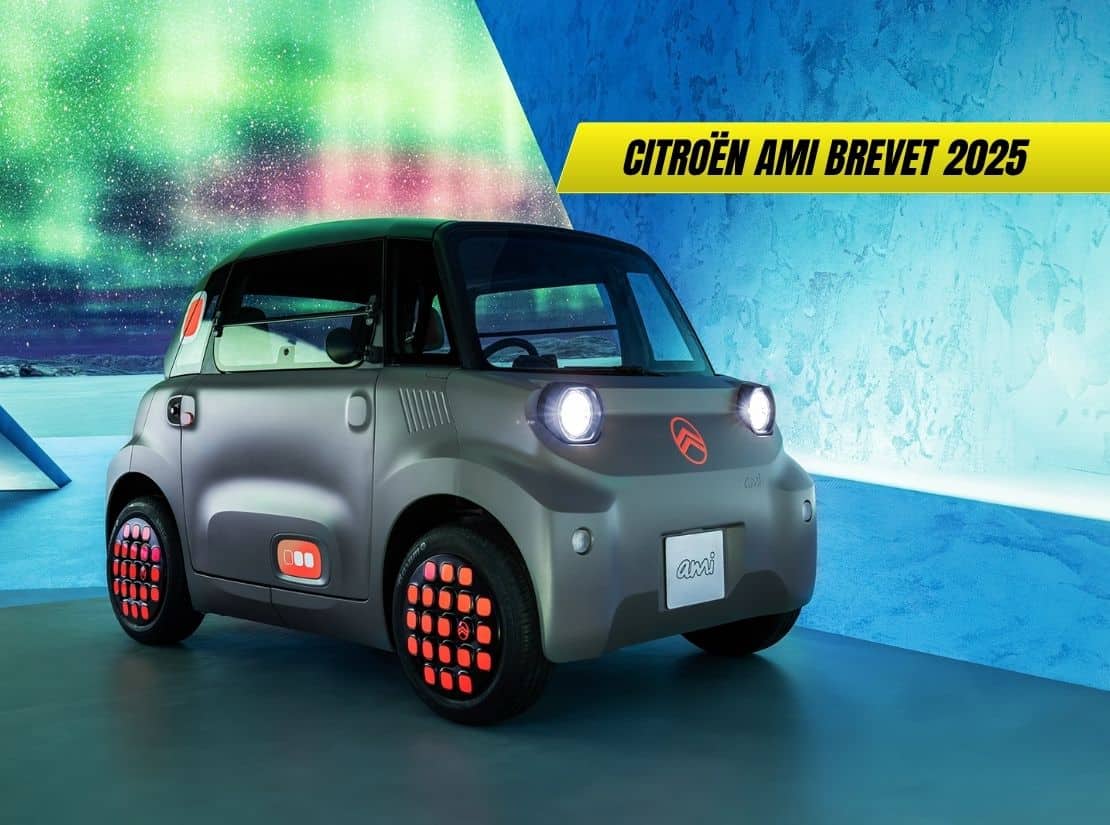
Citroën’s latest marketing initiative reveals a fascinating contrast between French and British approaches to young driver mobility. The brand has launched the “Citroën Ami Brevet” promotion, offering French students who achieved their Brevet des Collèges (equivalent to GCSEs) with distinction up to €300 off the purchase or lease of an Ami quadricycle. This clever marketing stunt not only celebrates academic achievement but also highlights the growing gap between Continental Europe’s embrace of micro-mobility solutions and the UK’s more restrictive approach to youth transport.
Having observed the UK’s complex relationship with micro-mobility vehicles over recent years, we at AutoHit find this promotion particularly illuminating. Whilst French 14-year-olds can legally drive an Ami with appropriate licensing, UK buyers face a different reality. Despite Citroën’s efforts to establish the Ami in Britain, the regulatory framework and cultural attitudes present significant barriers to widespread adoption among younger drivers.
The promotion itself is elegantly simple: French students receive €100 for “mention assez bien,” €200 for “mention bien,” and €300 for “mention très bien” – recognition that transforms academic achievement into tangible mobility rewards. For a quadricycle starting at €7,990 (approximately £6,800), these discounts represent meaningful savings that could influence purchasing decisions for families considering alternatives to traditional transport.
Key Highlights
• Academic Achievement Rewards: Graduated discounts from €100-300 based on Brevet des Collèges performance, valid until September 30, 2025 • Growing French Market: Quadricycle sector expanded 137% between 2019-2024, despite 2025 slowdown following subsidy removal • UK Regulatory Reality: British buyers require full AM licence (CBT + theory test) with minimum age 16, limiting youth market potential • Price Positioning: Ami starts from £7,705 in UK, competing with used conventional cars rather than targeting teenage buyers • Left-Hand Drive Only: UK models remain LHD configuration, reflecting limited local market adaptation • Cultural Divide: French embrace of micro-mobility contrasts sharply with British preference for traditional licensing progression
French Market Context and European Success
The Ami has achieved remarkable success in its home market, with over 75,000 units sold since its 2020 launch. This success stems from France’s regulatory environment that permits 14-year-olds to drive light quadricycles with appropriate licensing, creating a natural market segment absent in the UK.
The quadricycle market’s growth from 13,376 registrations in 2019 to 31,714 units in 2024 demonstrates genuine demand for these urban mobility solutions. However, the brutal halt following removal of the €900 ecological bonus in January 2025 illustrates the sector’s sensitivity to government incentives – a factor that could influence UK adoption should similar support emerge.
Regulatory Framework Differences
French licensing allows young teenagers to access quadricycle mobility through simplified testing procedures, creating a stepping stone between bicycles and full automotive licensing. This progression model enables families to introduce driving responsibility gradually whilst providing practical transport solutions for rural or suburban environments where public transport remains limited.
The UK’s different approach requires Category AM licensing (minimum age 16) involving CBT courses and theory tests, positioning quadricycles as alternatives to mopeds rather than transitional vehicles for younger users. This fundamental difference explains why the Ami struggles to find its natural demographic in Britain despite strong European success.
UK Market Challenges and Regulatory Constraints
The Ami’s UK positioning reveals the complexity of introducing European micro-mobility concepts to British markets. At £7,705-£8,605, the Ami competes with substantial used car inventory offering superior practicality, performance, and weather protection – factors that matter significantly in British conditions.
British buyers approaching quadricycle ownership typically possess full driving licences, making the comparison with conventional cars inevitable. A £7,000 budget easily secures reliable used vehicles like Ford Fiestas, Vauxhall Corsas, or Nissan Micras that provide superior capability, higher speeds, motorway access, and established support networks.
Licensing Requirements Reality
UK quadricycle regulations require Category AM licensing, obtainable from age 16 through CBT courses and theory tests. However, the practical benefit remains questionable when conventional licensing becomes available at 17, providing access to infinitely more capable and practical vehicles.
The regulatory framework essentially positions quadricycles as expensive alternatives to mopeds rather than gateway vehicles for young drivers. This fundamental misalignment explains why brands like Aixam withdrew from the UK market whilst maintaining strong Continental presence.
Cultural and Practical Barriers
British driving culture emphasises progression from provisional to full licensing as quickly as possible, viewing intermediate solutions as unnecessary complications. The weather factor cannot be understated – whilst Mediterranean climates favour open-air mobility solutions, British conditions demand weather protection and heating systems that quadricycles struggle to provide effectively.
The Ami’s 28mph speed limitation proves particularly problematic on UK roads where 30mph zones predominate and traffic flows typically exceed quadricycle capabilities. Unlike European city centres designed around lower speeds, British infrastructure assumes higher performance levels that quadricycles cannot match.
Infrastructure Compatibility
UK road infrastructure presents additional challenges for micro-mobility adoption. The absence of dedicated quadricycle infrastructure means sharing roads with vehicles travelling significantly faster, creating safety concerns that influence parental purchasing decisions.
Car parks, residential streets, and urban environments often lack specific accommodation for quadricycle requirements, forcing users to navigate spaces designed for conventional vehicles or two-wheelers – neither of which suit quadricycle dimensions and capabilities optimally.
European Success vs British Scepticism
The contrast between Continental success and British hesitation reflects deeper cultural differences about mobility, urban planning, and youth independence. European cities increasingly embrace diverse transport solutions, creating environments where quadricycles represent logical choices for specific journey requirements.
British buyers remain focused on capability and value, questioning why anyone would choose limited quadricycle performance when superior alternatives exist at similar prices. The used car market’s strength provides compelling alternatives that quadricycles struggle to match on practical merit.
Market Positioning Challenges
Citroën’s UK strategy attempts to position the Ami as urban chic rather than practical transport, emphasising style over substance. However, British buyers typically prioritise capability over aesthetics, particularly when spending thousands of pounds on transport solutions.
The marketing challenge involves convincing buyers that limitations represent features rather than compromises – a difficult proposition when conventional vehicles provide superior performance, comfort, and practicality at comparable costs.
Future Prospects and Market Evolution
The European micro-mobility trend suggests potential for UK market development, particularly as urban congestion increases and environmental concerns influence policy decisions. However, significant barriers remain around regulations, infrastructure, and cultural acceptance.
Government policies supporting micro-mobility could transform market dynamics, particularly if coupled with urban planning changes that favour lower-speed transport solutions. City centres increasingly implementing 20mph limits create environments where quadricycle limitations become less problematic.
Electric Vehicle Integration
The Ami’s electric powertrain provides environmental credentials increasingly valued by UK buyers, particularly in urban areas with emissions restrictions and charging infrastructure development. Zero local emissions ensure compliance with current and future environmental regulations whilst providing cost advantages through reduced fuel and maintenance requirements.
However, the electric advantage diminishes when comparing to conventional electric vehicles offering superior capability, range, and practicality at marginally higher costs. The value proposition remains challenging when alternatives provide dramatically better capability for modest price premiums.
Comparison with UK Alternatives
| Vehicle Type | Price Range | Age Requirement | Speed | Weather Protection | Practicality Score |
|---|---|---|---|---|---|
| Citroën Ami | £7,705-£8,605 | 16+ (AM licence) | 28mph | Basic | Limited |
| Used Fiesta | £5,000-£8,000 | 17+ (full licence) | 70mph+ | Excellent | High |
| Electric Scooter | £300-£1,500 | 16+ (CBT) | 28mph | None | Very Limited |
| Used e-Up! | £8,000-£12,000 | 17+ (full licence) | 80mph+ | Excellent | High |
| Moped | £1,500-£4,000 | 16+ (CBT) | 30mph+ | Minimal | Limited |
Industry Analysis and Implications
The Ami’s UK struggles illustrate broader challenges facing micro-mobility adoption in markets designed around conventional automotive solutions. Regulatory frameworks, infrastructure design, and cultural expectations create environments where traditional solutions maintain overwhelming advantages.
European success demonstrates potential for micro-mobility development under supportive conditions, but transferring these models to British markets requires fundamental changes in regulations, infrastructure, and buyer expectations that remain distant prospects.
Youth Mobility Solutions
British young drivers face limited options between bicycles and full automotive licensing, creating gaps that micro-mobility could theoretically address. However, the practical barriers around licensing, costs, and capability mean conventional progression remains more attractive for most families.
The absence of intermediate licensing categories limits market development opportunities, constraining quadricycles to niche roles rather than mainstream adoption pathways available in Continental markets.
Frequently Asked Questions
Could UK students benefit from similar promotions to the French Citroën Ami Brevet offer?
Whilst theoretically possible, UK students face different regulatory requirements that limit the Ami’s appeal. British 16-year-olds need Category AM licensing (CBT + theory test) rather than France’s simplified system for 14-year-olds. More significantly, at £7,705-£8,605, the Ami competes with capable used cars that offer superior performance, weather protection, and practicality – making academic discounts less compelling when better alternatives exist at similar prices.
Why don’t more UK teenagers drive quadricycles like the Citroën Ami?
The UK regulatory framework treats quadricycles as moped alternatives rather than stepping stones to full licensing. At 16, British teenagers can access CBT courses for mopeds or wait one year for provisional car licences, making quadricycles an expensive intermediate step with limited benefits. Additionally, the 28mph speed limit proves problematic on UK roads where traffic typically flows faster than quadricycle capabilities allow.
How does UK licensing for quadricycles compare to European systems?
UK licensing requires Category AM certification from age 16 (CBT course + theory test), whilst many European countries permit quadricycle access from 14-15 with simplified procedures. This fundamental difference explains European market success versus British scepticism – Continental systems create natural progression pathways whilst UK regulations position quadricycles as expensive alternatives to conventional licensing rather than transitional solutions.
Would government incentives boost UK quadricycle adoption like they did in France?
Potentially, but significant barriers remain beyond financial support. The removal of France’s €900 ecological bonus caused dramatic market contraction, suggesting subsidy-dependent demand. UK adoption would require regulatory changes enabling younger access, infrastructure adaptations for 28mph vehicles, and cultural acceptance of speed-limited transport – challenges that financial incentives alone cannot address.
Are there practical advantages to choosing a Citroën Ami over a used car in the UK?
Limited advantages exist for specific use cases: city centre driving with tight parking, zero emissions compliance, minimal running costs, and unique styling appeal. However, for £7,000-£8,000, buyers can access reliable used cars offering motorway capability, better weather protection, higher speeds, established service networks, and superior practicality. The Ami works best as a second vehicle for specific urban requirements rather than primary transport.
What alternatives exist for UK buyers wanting small, efficient urban transport?
Electric bicycles provide excellent urban mobility without licensing requirements, whilst conventional small cars (Aygo, i10, Up!) offer superior capability at similar costs. For those specifically wanting electric power, used Zoes or e-up!s provide conventional car capability with environmental benefits. Mopeds remain the closest alternative to quadricycle positioning but offer better value and performance at lower costs.
Could changes to UK regulations make quadricycles more attractive to young drivers?
Regulatory changes enabling 14-15 year old access could create market demand, but would require fundamental shifts in British licensing philosophy and road safety approaches. Infrastructure adaptations, cultural acceptance of speed-limited vehicles, and parental confidence in quadricycle safety would also need addressing. Such comprehensive changes appear unlikely given the UK’s preference for conventional licensing progression and established automotive infrastructure.
Conclusion: Cultural Divides and Market Realities
The Citroën Ami Brevet promotion illuminates fundamental differences between European micro-mobility enthusiasm and British automotive pragmatism. Whilst French students celebrate academic achievement with quadricycle discounts, UK buyers face regulatory barriers, infrastructure challenges, and cultural resistance that limit similar opportunities.
The contrast reveals how regulatory frameworks shape market opportunities – France’s supportive approach to youth mobility creates natural quadricycle demand that the UK’s conventional licensing structure cannot replicate. British buyers, faced with choosing between limited quadricycles and capable used cars at similar prices, naturally gravitate toward conventional solutions.
However, the European micro-mobility trend suggests potential for future UK development as urban policies evolve and environmental priorities influence transport choices. The Ami’s presence in Britain maintains awareness of alternative solutions whilst demonstrating the challenges facing micro-mobility adoption in markets designed around conventional automotive requirements.
Our assessment: The Ami Brevet promotion represents clever marketing that highlights British micro-mobility limitations rather than opportunities. Whilst Continental success demonstrates quadricycle viability under supportive conditions, UK market development requires regulatory, infrastructure, and cultural changes that extend far beyond manufacturer initiatives.
For British families considering transport solutions for young drivers, conventional progression from bicycles to full licensing remains more practical and economical than intermediate quadricycle ownership. The Ami succeeds as an urban curiosity and environmental statement but struggles as mainstream transport in conditions that favour conventional automotive solutions.
The promotion ultimately emphasises how regulatory frameworks determine market possibilities – a lesson relevant for UK policymakers considering micro-mobility development and urban transport evolution.
Meta Description: Citroën’s Ami Brevet 2025 student promotion offers €100-300 discounts in France. Analysis reveals UK young driver mobility gaps and micro-mobility adoption challenges versus European success.





