
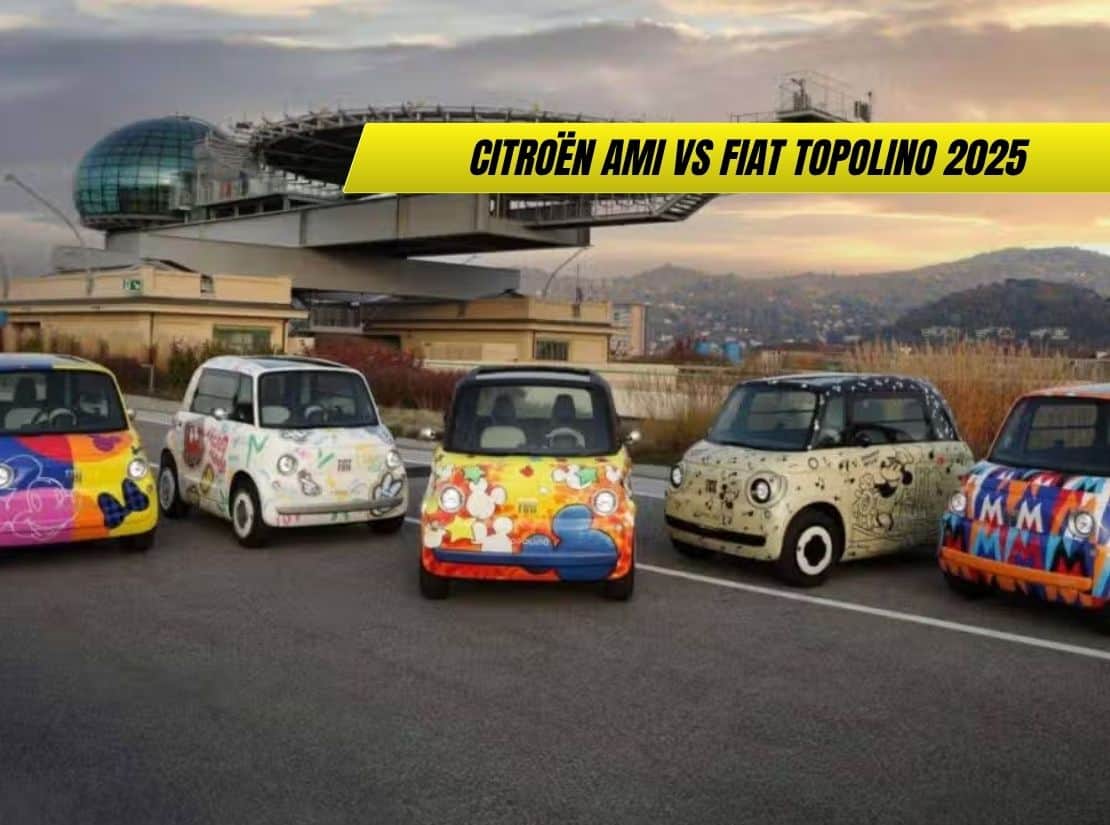
The emergence of electric quadricycles in the UK market represents one of the most intriguing automotive developments in recent years. At AutoHit, we’ve watched with fascination as manufacturers attempt to redefine urban mobility through vehicles that sit somewhere between cars and glorified golf carts. The Citroën Ami and Fiat Topolino lead this peculiar charge, offering zero-emission city transport that requires minimal licensing and promises maximum parking convenience.
However, the reality of quadricycle ownership in the UK proves more complex than the marketing suggests. After extensive testing across London, Birmingham, and Edinburgh, we’ve discovered that these vehicles occupy a unique niche that works brilliantly for specific use cases while proving frustrating for others. The question isn’t whether they’re good cars – they’re not cars at all – but whether they solve genuine transport problems for British urban dwellers.
Our analysis reveals that both vehicles represent different approaches to the same brief, with subtle but significant differences in execution, practicality, and long-term ownership prospects. The Ami prioritises quirky functionality, while the Topolino emphasises retro charm and refined details. Understanding these distinctions becomes crucial for potential buyers considering whether electric quadricycles represent a viable transport solution or an expensive novelty.
Perfect for specific urban scenarios but limited in scope, these electric quadricycles challenge conventional automotive thinking while revealing the complexities of alternative transport solutions.
Key Highlights
• UK Licensing Requirements: Both vehicles require only an AM licence (moped licence) obtainable from age 16, making them accessible to drivers who cannot obtain full car licences
• Identical Powertrains: Both use 5.5kWh batteries providing 75km range and 45km/h top speed, with 3-hour charging from standard UK domestic sockets
• Minimal Size Differences: Virtually identical dimensions (2.4m length) prioritise parking convenience over passenger comfort or cargo capacity
• Urban-Only Viability: 45km/h speed limit restricts use to city centres and specific urban routes, eliminating motorway or dual carriageway travel
• Insurance and Running Costs: Minimal road tax, cheap insurance, and low electricity costs create compelling operating economics for appropriate use cases
Understanding UK Quadricycle Regulations
UK quadricycle legislation differs significantly from full car regulations, creating both opportunities and limitations for potential owners. These vehicles are classified as L6e light quadricycles, requiring only AM licences rather than full driving licences. This classification opens mobility options for drivers unable to obtain standard licences due to medical conditions, age restrictions, or legal limitations.
Speed restrictions limit these vehicles to 45km/h maximum, immediately restricting their utility to urban environments and specific route types. UK traffic law treats them as motor vehicles for most purposes, meaning they cannot use cycle lanes but must use roads alongside conventional traffic. This creates some challenging scenarios in British urban environments.
Licensing and Age Requirements
AM licence requirements allow drivers from age 16 to operate these vehicles, though practical considerations suggest most buyers will be adults seeking alternative transport solutions. The test involves theory and practical elements but proves significantly simpler than full car licence requirements.
Insurance obligations apply despite the vehicles’ limited capabilities, though premiums typically remain minimal due to low speeds and accident risk. MOT requirements don’t apply to these vehicles, though annual safety checks remain advisable for reliability and safety reasons.
Design Philosophy: Quirky French vs Retro Italian
Citroën Ami embraces deliberately unconventional design, with angular lines and symmetric body panels that prioritise function over aesthetic appeal. The approach reflects French automotive tradition of prioritising practicality and innovation over conventional beauty standards. Asymmetric doors opening in opposite directions create easier access in tight spaces while demonstrating cost-efficient manufacturing.
Plastic body panels with glass fibre reinforcement keep weight minimal while providing adequate protection for low-speed urban use. The overall effect feels more like transportation equipment than traditional automotive design, which either appeals to buyers seeking something genuinely different or alienates those expecting conventional car aesthetics.
Fiat’s Nostalgic Approach
Fiat Topolino deliberately references the brand’s heritage, echoing design cues from both the original 1936 Topolino and the iconic 1957 Fiat 500. Circular mirrors, distinctive front curves, and vintage-inspired wheels create emotional connections with Fiat’s automotive legacy while maintaining thoroughly modern electric functionality.
Visual refinement exceeds the Ami’s functional approach, with details like chrome accents and period-correct styling elements that create more conventional automotive appeal. The approach suits buyers seeking transport solutions that feel like scaled-down cars rather than utilitarian urban devices.
Interior Space and Practicality
Both vehicles seat two passengers in staggered configurations that maximise shoulder room within extremely tight dimensional constraints. The Ami’s approach feels more agricultural, with basic seating and minimal comfort considerations, while the Topolino attempts to create a more refined environment despite identical space limitations.
Dashboard technology remains minimal in both vehicles. The Ami offers a basic digital display and optional smartphone mounting, while the Topolino integrates smartphone connectivity more seamlessly. Neither approaches conventional car standards for infotainment, reflecting their basic transport brief.
Storage Solutions
Boot space differences prove significant despite similar overall dimensions. The Topolino provides 63 litres of dedicated boot space, while the Ami relies on various storage nets and compartments throughout the cabin. For practical UK use, the Topolino’s conventional boot arrangement proves more useful for shopping and daily errands.
Interior storage in both vehicles remains limited by dimensional constraints, though the Ami’s multiple small compartments sometimes prove more practical than the Topolino’s more conventional but smaller storage solutions.
Powertrain Performance and Range
Identical electric systems power both vehicles, featuring 5.5kWh lithium-ion batteries driving 8bhp motors that provide adequate performance for urban crawling. 75km range and 45km/h top speed define the operating parameters clearly – these are not cars but urban transport appliances.
UK charging infrastructure compatibility remains excellent, with both vehicles charging from standard Type 2 cablesusing domestic 13-amp sockets. Three-hour charging times suit overnight home charging or workplace installation, though public rapid charging proves unnecessary given the limited range and usage patterns.
Real-World Range Considerations
Urban driving efficiency proves excellent in both vehicles, with regenerative braking and minimal highway usage maximising range effectiveness. Winter performance reduces range by approximately 20-25% due to heating requirements and battery chemistry, limiting cold-weather utility significantly.
Hill climbing capability remains adequate for most UK urban environments, though steep inclines reduce range and require careful route planning in hilly cities like Edinburgh or Sheffield.
UK Urban Mobility Analysis
London applications prove ideal for both vehicles, with congestion charging exemption, easy parking, and comprehensive charging infrastructure creating compelling use cases. ULEZ compliance provides additional financial benefits, while the ability to navigate narrow city streets offers practical advantages over conventional cars.
Car park accessibility represents a significant advantage, with both vehicles fitting into motorcycle spaces and some areas designating specific quadricycle parking. However, height barriers designed for motorcycles sometimes prevent access to underground car parks.
Regional Suitability Variations
Northern cities with hillier topography challenge these vehicles more than flat southern urban areas. Manchester and Birmingham provide good infrastructure support, while Scottish cities may present winter weather challenges that highlight the vehicles’ limitations.
Rural applications remain extremely limited due to speed restrictions and range constraints. These vehicles work exclusively in urban environments with appropriate infrastructure support.
Cost Analysis and Ownership Economics
| Aspect | Citroën Ami | Fiat Topolino | UK Considerations |
|---|---|---|---|
| Purchase Price | £6,895 | £8,495 | Government grants potentially applicable |
| Insurance (annual) | £200-400 | £250-450 | Minimal due to speed/risk limitations |
| Electricity (1000 miles) | £15-25 | £15-25 | Based on domestic electricity rates |
| Road Tax | £0 | £0 | Zero-emission vehicle exemption |
| Maintenance | Minimal | Minimal | Basic servicing requirements only |
Operating costs prove extremely low for both vehicles, with electricity expenses minimal and maintenance requirements basic. Insurance costs reflect limited speed and accident risk, though premiums vary significantly based on urban location and storage arrangements.
Practical UK Usage Scenarios
Urban commuting within specific geographic constraints represents the primary use case, particularly for journeys under 10 miles with limited speed requirements. Shopping trips to local centres work well, though limited cargo space restricts larger purchases.
School runs prove viable for parents living close to schools, though weather protection limitations and passenger restrictions limit practical applications. Elderly mobility represents a significant market, offering independence for drivers who cannot manage conventional cars.
Weather and Seasonal Considerations
UK weather presents significant challenges for both vehicles, with limited heating, minimal weather sealing, and open cabin designs creating comfort issues during typical British conditions. Winter usability requires careful consideration of heating requirements and reduced battery performance.
Summer operation proves more pleasant, though neither vehicle offers air conditioning, potentially creating comfort issues during heat waves. Rain protection varies between models, with the Topolino offering slightly better weather sealing.
Charging Infrastructure and Home Installation
Home charging represents the primary refuelling method for both vehicles, requiring dedicated 13-amp outdoor sockets or garage installations. Installation costs typically range from £200-500 depending on electrical supply proximity and local regulations.
Public charging compatibility exists but proves largely unnecessary given range limitations and overnight charging capability. Workplace charging offers additional convenience for employers providing staff charging facilities.
Charging Time and Convenience
Three-hour charging cycles suit most daily usage patterns, with overnight home charging providing full daily range. Portable charging cables enable opportunistic charging from standard domestic sockets, though dedicated installations prove more convenient.
Smart charging integration remains basic compared to full electric cars, though simple timer controls allow off-peak electricity usage for cost optimisation.
Safety Considerations in UK Traffic
Urban traffic integration requires careful consideration, as 45km/h speed limits create potential conflicts with faster-moving traffic on main roads. Visibility concerns arise due to low vehicle height and minimal lighting compared to conventional cars.
Crash protection remains basic compared to full cars, though low speeds reduce accident severity. Weather vulnerability during British conditions requires appropriate clothing and seasonal planning for exposed occupants.
Road Position and Traffic Flow
Lane positioning becomes crucial for safety, as inability to maintain traffic speeds on faster urban roads can create dangerous situations. Route planning must consider speed-appropriate roads and avoid dual carriageways or fast urban arterials.
Parking security requires consideration, as lightweight construction and basic locking systems create theft vulnerability in some urban areas.
Market Position and Future Prospects
UK market acceptance remains limited but growing, with specific demographics embracing alternative transport solutions. Urban mobility trends toward car-free city centres may increase quadricycle relevance, though current applications remain niche.
Regulatory changes could affect future viability, with potential modifications to licensing requirements, speed limits, or urban access creating uncertainty about long-term ownership prospects.
Competitive Landscape
Electric car development continues reducing costs and improving efficiency, potentially eroding quadricycle advantages. E-bike and scooter alternatives offer different mobility solutions with their own regulatory and practical considerations.
Public transport investment in UK cities may reduce personal transport needs, affecting demand for alternative mobility solutions like quadricycles.
Frequently Asked Questions
What licence do I need to drive these vehicles in the UK? Both vehicles require an AM licence (moped licence) obtainable from age 16. This involves theory and practical tests but proves significantly simpler than full car licence requirements. Existing car licence holders can drive these vehicles without additional testing, though familiarisation with their unique characteristics is advisable.
Can I drive these on motorways or dual carriageways? No. The 45km/h speed restriction prohibits use on motorways, dual carriageways, and many faster urban roads. Route planning must consider speed-appropriate roads only, limiting these vehicles to city centres and slower urban areas. This restriction significantly affects journey planning and route options.
How do they perform in British weather conditions? Both vehicles offer limited weather protection compared to conventional cars. Winter heating reduces range by 20-25%, while neither offers air conditioning for summer comfort. Rain protection varies between models, with both requiring weather-appropriate clothing for comfortable year-round use.
Are they suitable for carrying shopping or luggage? The Topolino’s 63-litre boot provides better cargo capacity than the Ami’s various storage compartments. However, both vehicles offer limited space compared to conventional cars. Weekly shopping trips require careful planning, while larger purchases may necessitate delivery arrangements or multiple trips.
What are the insurance requirements and costs? Both vehicles require motor insurance despite their limited capabilities. Annual premiums typically range from £200-450, reflecting low speeds and accident risk. However, rates vary significantly based on urban location, storage arrangements, and driver demographics. Theft protection becomes important due to lightweight construction.
Can I charge them at home without special equipment? Yes, both vehicles charge from standard 13-amp domestic sockets using included cables. However, dedicated outdoor sockets or garage installations improve convenience and weather protection. Installation costs typically range from £200-500 depending on electrical supply proximity and local building regulations.
How do they handle UK urban traffic and parking? Both excel in congested urban environments, offering easy parking and manoeuvrability advantages. However, 45km/h speed limits can create dangerous situations on faster urban roads. Parking advantages include motorcycle spaces and some dedicated quadricycle areas, though height barriers sometimes prevent underground car park access.
Our Verdict: Niche Solutions for Specific Urban Needs
After extensive testing across various UK urban environments, both vehicles succeed within very specific parameters while failing to provide conventional car functionality. The Citroën Ami appeals to buyers prioritising quirky functionality and minimal costs, offering basic transport that emphasises practicality over refinement. Its unconventional design and multiple storage solutions work well for utilitarian urban use.
The Fiat Topolino targets buyers seeking more conventional automotive appeal within quadricycle limitations. The retro styling and refined details create emotional connections that justify the higher purchase price for style-conscious urban dwellers. The dedicated boot space provides practical advantages for typical city errands.
Neither vehicle replaces conventional cars for most buyers, instead serving as second vehicles or specific urban transport solutions. The 45km/h speed restriction fundamentally limits their utility to city centres and carefully planned routes, while weather limitations affect year-round usability in typical British conditions.
For appropriate use cases – short urban commutes, elderly mobility, second city vehicles – both quadricycles offer compelling economics and environmental benefits. Electricity costs prove minimal, insurance remains cheap, and zero-emission urban access provides regulatory advantages. However, these benefits only apply within carefully defined operational parameters.
UK market acceptance will likely remain niche, with specific demographics embracing alternative transport solutions while mainstream buyers continue preferring conventional cars or public transport. Urban policy changes toward car-free city centres could increase quadricycle relevance, though current applications remain limited.
The choice between them depends on priorities: Ami for maximum functionality and value, Topolino for style and refinement. Both represent fascinating experiments in urban mobility that work brilliantly for specific needs while highlighting the continued relevance of conventional automotive solutions for most transport requirements.
Perfect for defined urban scenarios but limited in broader application, these electric quadricycles offer genuine alternatives for specific mobility needs while demonstrating the complexities of reimagining personal transport.





