
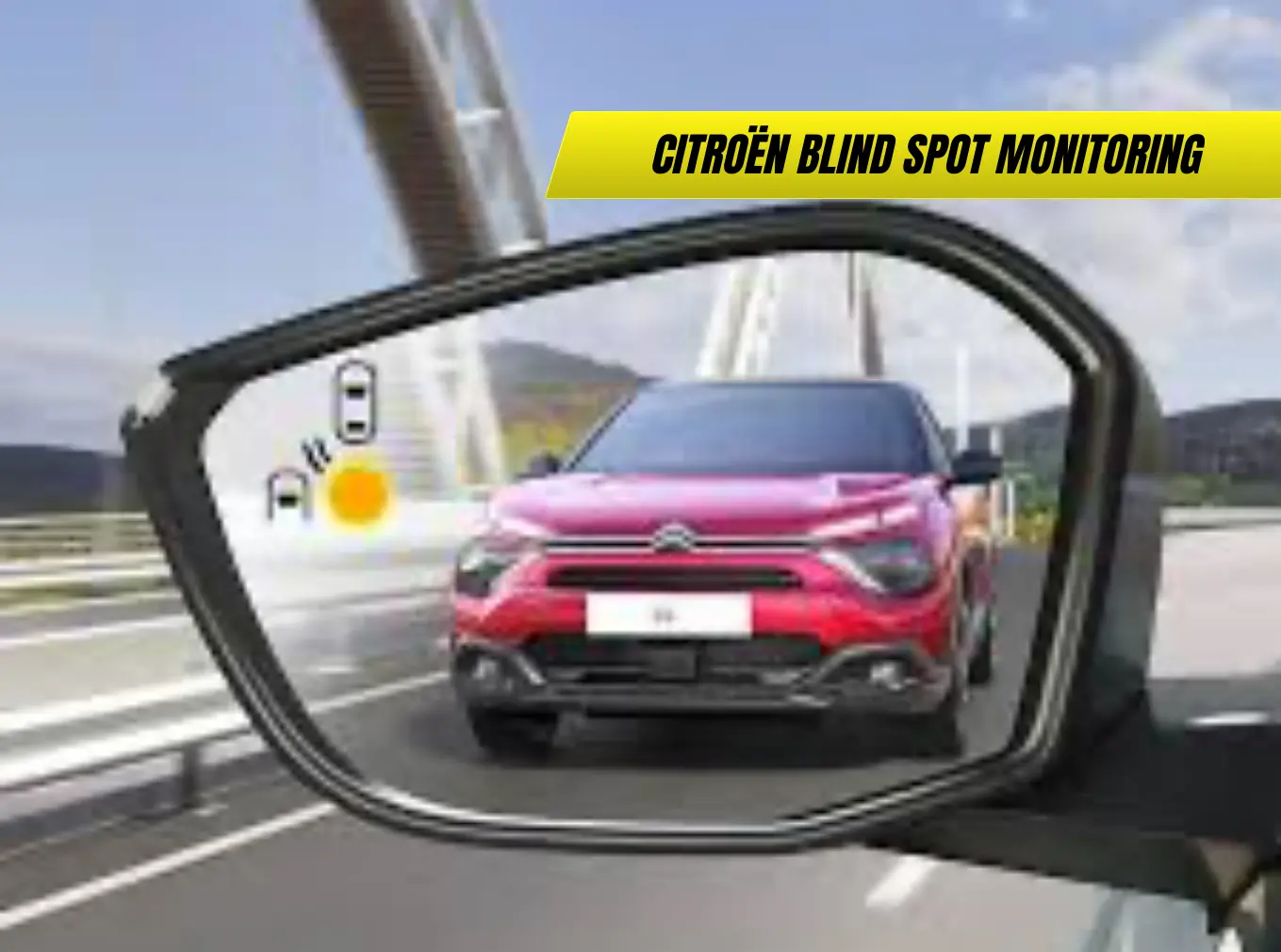
Blind Spot Monitoring (BSM) is one of Citroën’s most useful everyday safety systems, designed to alert drivers to vehicles positioned outside their natural field of vision. With multi-lane motorways, dense traffic and frequent lane changes across the UK, blind spot incidents remain a major cause of collisions. This updated 2025 guide explains how Citroën’s system works, when it activates, its limitations and how to use it effectively.
Key Points
- Uses radar sensors to detect vehicles in adjacent lanes.
- Illuminates warning lights in the door mirrors.
- Provides audible or steering warnings on some models.
- Works best between 15–85 mph.
- Helps avoid side-swipe collisions during overtaking and merging.
How Blind Spot Monitoring Works
Citroën’s BSM system uses rear-mounted radar sensors to monitor the areas slightly behind and to the side of your vehicle.
It detects:
- Cars
- Motorcycles
- Vans
- Larger vehicles approaching at speed
If a vehicle is in your blind spot, a small amber light illuminates inside the mirror housing.
If you signal a lane change while a vehicle is present, the alert becomes more urgent.
When the System Activates
The system typically operates when:
- Speed is between 15–85 mph
- Lane markings are clear
- Sensors are unobstructed
It is most effective on:
- Motorways
- Dual carriageways
- Busy A-roads
- Congested traffic
BSM is especially useful during overtaking and merging on roads like the M25, M6, A1(M), A14 and M4.
BSM vs Rear Cross Traffic Alert
| Feature | Blind Spot Monitoring | Rear Cross Traffic Alert |
|---|---|---|
| Detects vehicles behind | Yes | Yes (at parking speeds) |
| Detects crossing traffic | No | Yes |
| Useful for lane changes | Yes | No |
| Works while reversing | No | Yes |
Both systems work together on many Citroën models.
Benefits for UK Drivers
- Prevents side-swipe collisions
- Supports safer overtakes
- Helps in heavy rain when mirror visibility is reduced
- Provides awareness of fast-approaching motorcycles
- Reduces stress in dense traffic
Motorcyclists often sit in blind spots longer than cars, making BSM particularly valuable.
Limitations
BSM performance may be reduced when:
- Roads are extremely narrow
- Snow, ice or mud cover rear sensors
- Nearby metal objects (guard rails) interfere with radar
- Trailers or bike racks obstruct sensors
- Extreme weather reduces radar range
BSM does not replace manual shoulder checks.
Maintenance Tips
To keep the system working correctly:
- Clean rear bumper areas regularly
- Avoid placing reflective stickers near radar zones
- Keep sensors free of ice in winter
- Replace faulty sensors promptly
- Ensure alignment after bumper repairs
A dirty or damaged sensor can cause false or missing alerts.
Troubleshooting
| Issue | Likely Cause | Solution |
|---|---|---|
| Constant alerts | Sensor seeing metal barriers | Normal behaviour; proceed with caution |
| No alerts | System disabled or sensor blocked | Check settings / clean bumper |
| Warning light on dashboard | Sensor fault | Dealer diagnostic required |
| Alerts only on one side | Misaligned sensor | Recalibration at service centre |
If BSM switches itself off, the instrument cluster will normally show an explanation.
Using BSM Effectively
- Check mirrors as usual; don’t rely on BSM alone.
- Watch for the amber light before signalling.
- If light flashes urgently, stay in your lane.
- Keep lane changes smooth and gradual.
- Combine with Lane Keeping Assist for extra safety.
For wider safety-system support and dashboard troubleshooting, see:
My Point of View
From my point of view, Blind Spot Monitoring is one of the features that feels small until it prevents a major incident. On busy UK motorways—especially when dealing with fast-moving traffic or motorbikes—it adds a valuable extra layer of awareness that most drivers quickly learn to rely on.
FAQs
Does BSM work when towing a trailer?
Often no, because the trailer blocks rear sensors. Many systems disable automatically.
Can BSM detect cyclists?
Yes, but detection range may vary, especially in poor weather.
Why does BSM alert me near metal crash barriers?
Radar may reflect off barriers; this is normal.
Does it work in stop-start traffic?
Yes, although detection focus is strongest at higher speeds.
Can I turn the system off?
Yes, through the vehicle’s safety settings.
Conclusion
Citroën’s Blind Spot Monitoring system significantly enhances driver safety by detecting vehicles approaching from hard-to-see positions. In my experience, it is especially valuable during overtakes, heavy traffic and poor weather—situations where quick awareness can prevent serious collisions.





