
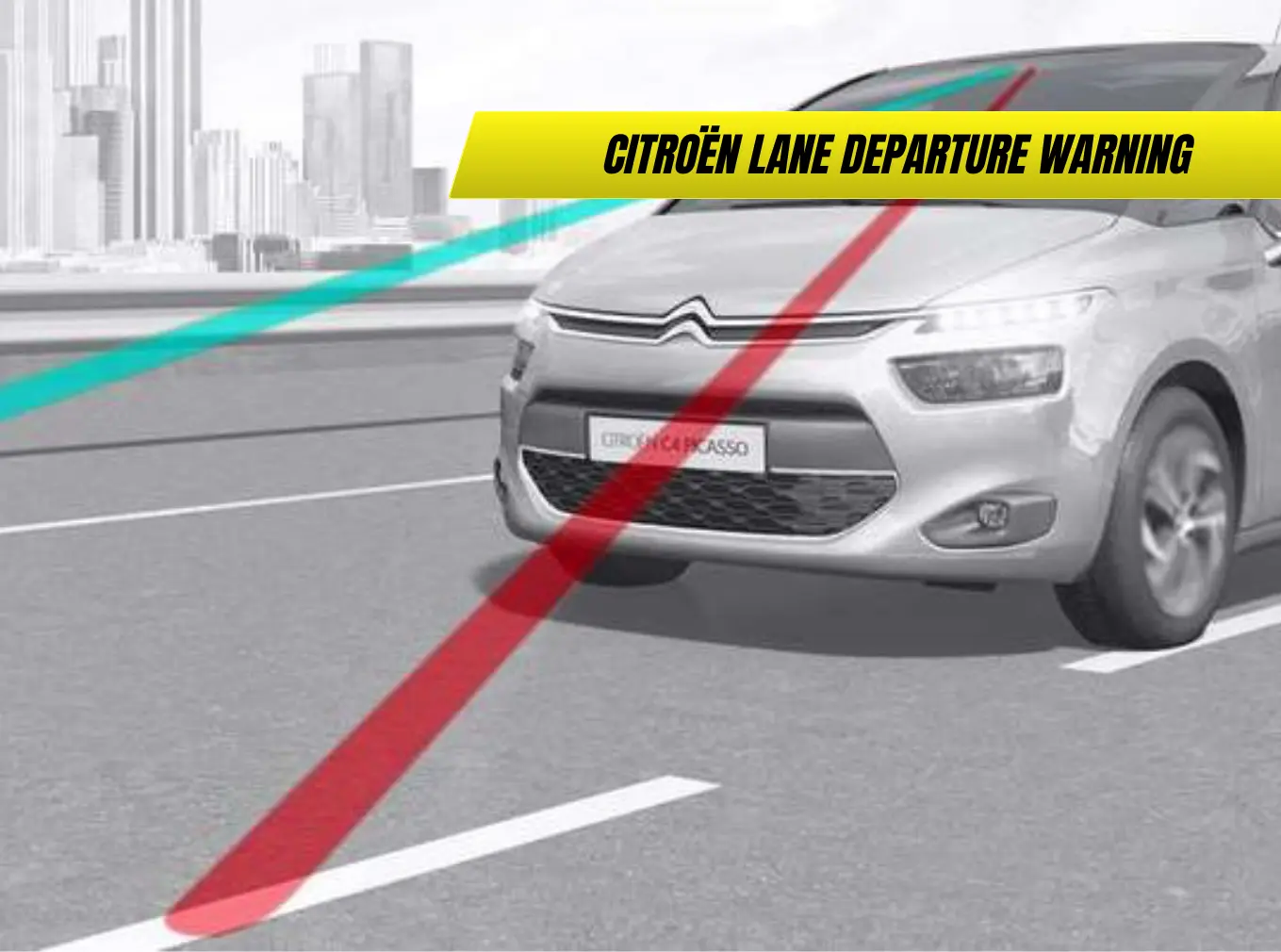
Lane Departure Warning (LDW) is one of the key safety features in modern Citroën vehicles, designed to reduce accidental lane drifting on UK roads. With busy motorways, narrow country lanes and frequent long-distance commuting, LDW helps prevent collisions caused by distraction or fatigue. This guide explains how the system works, when it intervenes, its limitations and how drivers can use it effectively.
Key Points
- LDW alerts the driver when the car unintentionally crosses lane markings.
- Uses a front-facing camera to read road lines.
- Works above specific speeds (often 37–40 mph depending on model).
- Does not steer the car — it warns, while LKA (Lane Keeping Assist) corrects.
- Performance depends on weather, road quality and clear markings.
How Lane Departure Warning Works
Citroën’s LDW uses a camera mounted behind the rear-view mirror to:
- Detect continuous and dashed lane markings
- Monitor vehicle position within the lane
- Identify unintentional drift
If the system detects the car crossing a line without indicators activated, it triggers a warning.
Warning Types
Depending on the model, alerts can include:
- Steering wheel vibration
- Audible beep
- Visual message on the instrument cluster
- Lane highlight turning red on the screen
These alerts encourage the driver to correct course immediately.
Lane Keeping Assist (LKA) vs Lane Departure Warning
| Feature | LDW | LKA |
|---|---|---|
| Detects lane drift | Yes | Yes |
| Actively steers | No | Yes |
| Warns the driver | Yes | Sometimes |
| Prevents lane departure | No | Yes |
| Works at low speeds | No | Often yes |
LDW is a passive alert system. LKA builds on it by gently guiding the steering back into the lane.
When LDW Activates
LDW typically works when:
- Speed exceeds approx. 40 mph
- Clear lane markings are visible
- Indicators are not used during lane change
It deactivates or becomes less effective when:
- Lane markings are faded or missing
- The road is covered in snow, fog or heavy rain
- The camera is obstructed by dirt on the windscreen
- Sharp bends limit lane visibility
Benefits on UK Roads
LDW is particularly useful in the UK because of:
- Long motorway journeys
- Late-night driving after work shifts
- High levels of stop-start fatigue
- Narrow rural roads prone to drift-related accidents
It forms part of Citroën’s wider Advanced Driver Assistance Systems (ADAS) package, improving overall road safety.
Customising LDW Settings
Drivers can adjust LDW through the vehicle’s touchscreen:
- Turn on/off
- Modify alert sensitivity
- Combine with LKA for extra support
- Review the status through dashboard icons
Different trims and models may offer varying levels of adjustment.
Troubleshooting LDW Issues
Common problems include:
- No alerts: camera may be covered or malfunctioning.
- False alerts: unusual road markings or worn paint.
- Inconsistent detection: heavy glare, rain or shadows affecting the camera.
- Warning light on dashboard: system needs calibration or windscreen replacement interfered with sensors.
If LDW becomes unreliable after a windscreen replacement, calibration at a specialist is required.
Maintaining LDW Performance
- Keep the windscreen clean, especially around the camera area.
- Replace damaged wipers to maintain visibility.
- Avoid mounting phone holders near the camera.
- Ensure correct tyre pressure to reduce wandering at higher speeds.
For related safety systems, see the full guide to dashboard alerts such as the spanner warning indicator:
My Point of View
From my point of view, LDW is one of the most valuable yet underrated safety features. It doesn’t replace driver attention, but it provides a crucial extra layer of protection during long or tiring journeys. Used together with LKA, it can prevent many drift-related incidents.
FAQs
Does LDW work in heavy rain?
Its performance may decrease as visibility worsens.
Does LDW steer the car automatically?
No. Only Lane Keeping Assist provides active steering.
Can I turn the system off?
Yes, LDW can be deactivated via the vehicle settings.
Does LDW work at all speeds?
No. It typically activates around motorway speeds (approx. 40 mph).
Does it work at night?
Yes, provided lane markings are visible to the camera.
Conclusion
Citroën’s Lane Departure Warning system adds a significant safety advantage for UK drivers by reducing unintended lane drift. When combined with good driving habits and regular vehicle maintenance, it helps prevent collisions and improves confidence on motorways and long-distance journeys. In my experience, LDW is most effective when paired with active systems like Lane Keeping Assist for maximum safety.





