
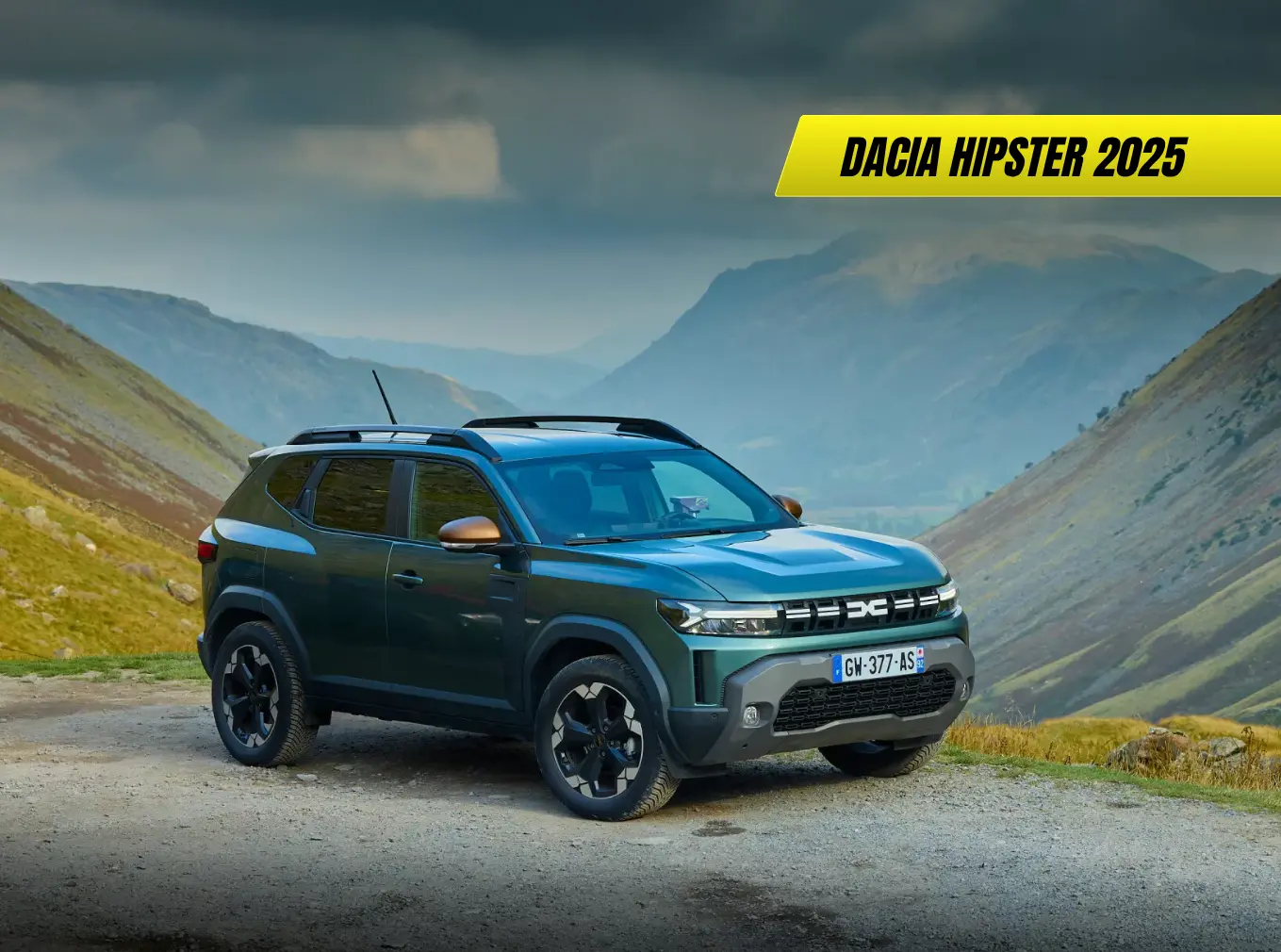
The Dacia Hipster 2025 is the brand’s boldest concept yet — a compact electric vehicle designed to combine affordability, fun and eco-friendly mobility for urban drivers. First unveiled as part of Dacia’s “Essential Outdoor” design philosophy, it takes inspiration from rugged outdoor gear and aims to redefine the entry-level electric segment in Europe and the UK.
From my point of view, the Hipster captures the adventurous, unpretentious spirit that defines Dacia. It’s a playful urban EV that dares to be different, proving that electric mobility doesn’t have to be expensive or boring.
The Dacia Hipster 2025 is a fully electric urban quadricycle with rugged design cues, modular components, and a target price of £13,000, making it one of the most accessible EVs expected on the UK market.
Key Highlights
- 100% electric two-seater city vehicle
- Up to 87 miles of range (WLTP city cycle)
- Removable battery modules for easy home charging
- Built-in smartphone integration instead of traditional infotainment
- Designed for young drivers and urban commuters
- Expected UK release in late 2025
Design: Rugged Minimalism
Dacia’s design boss David Durand describes the Hipster as a “tool for living” rather than just transport. The exterior design reflects simplicity and durability:
- Compact body with exposed bolts and matte plastic cladding
- “Y-shaped” LED headlights echoing the Dacia identity
- Raised ride height and short overhangs for city agility
- Roof rack system compatible with modular cargo boxes or sports gear
- Optional “Adventure Pack” adding skid plates and tow hooks
The Hipster stands at just 2.6 metres long, slightly larger than the Citroën Ami but more robust in appearance — like a miniature SUV rather than a pod-shaped city car.
“We want the Hipster to feel like a backpack on wheels — strong, useful, and ready for anything,” explains Durand.
Interior: Simple, Practical and Customisable
The cabin focuses on functionality and sustainability.
- Recycled plastic dashboard with rubberised texture
- Smartphone dock instead of an infotainment screen
- Waterproof seats with washable covers
- Modular storage compartments that clip onto the dashboard
- Open floor design for easy cleaning
Drivers can personalise the cabin using coloured straps, detachable accessories and Dacia’s YouClip system, first seen in the Jogger and Duster.
From my point of view, the Hipster’s cabin perfectly embodies Dacia’s “do more with less” approach — minimalist yet clever in every detail.
Powertrain and Performance
| Motor | Power | Battery | Range | Top Speed |
|---|---|---|---|---|
| Electric motor (rear-mounted) | 9 kW (12 hp) | 11 kWh modular lithium-ion | 87 miles | 28 mph (restricted) / 50 mph (open version) |
The Hipster will be offered in two configurations:
- City version, limited to 28 mph for AM-licence holders aged 16+
- Adventure version, capable of 50 mph for standard driving licence holders
Charging can be done from a domestic 230V socket in around 3.5 hours, or by removing the battery modules for indoor charging — a feature aimed at apartment dwellers.
UK Trims and Pricing
| Trim | Key Features | Price (est.) |
|---|---|---|
| Hipster City | Basic trim, 9 kW motor, removable batteries | £13,000 |
| Hipster Adventure | Roof rails, 50 mph capability, Adventure Pack | £14,500 |
Both trims are expected to include Dacia’s 5-year warranty and optional service plan. Leasing options similar to those of the Spring Electric will also be available.
Running Costs
| Expense | Annual Estimate |
|---|---|
| Charging (home) | £100–£120 |
| Insurance | £200–£300 |
| Road tax | £0 |
| Servicing | £60 |
| Total | ~£400–£500/year |
With near-zero running costs, the Hipster offers an electric mobility solution cheaper to own than many petrol scooters or e-bikes in the long term.
Sustainability
Dacia highlights the Hipster’s eco-friendly materials and modularity:
- 40% recycled plastics in bodywork
- Vegan upholstery and low-impact paints
- Designed for disassembly, simplifying recycling at end of life
- Built at Mioveni plant (Romania) using renewable energy
This aligns with Dacia’s strategy of reducing lifecycle emissions while keeping vehicles accessible to all.
Competitors in the UK
| Model | Range | Power | Price | Key Feature |
|---|---|---|---|---|
| Dacia Hipster 2025 | 87 mi | 12 hp | £13,000 | Rugged, modular design |
| Citroën Ami | 46 mi | 8 hp | £8,700 | Cheapest city EV |
| Fiat Topolino | 46 mi | 8 hp | £8,500 | Retro design |
| Silence S04 | 92 mi | 15 hp | £14,000 | Battery swapping |
| Microlino Lite | 62 mi | 12 hp | £12,000 | Premium microcar style |
The Hipster’s added range, SUV stance and customisable features make it the most lifestyle-oriented option among compact EVs.
Technology and Safety
Though basic, the Hipster includes essential safety and convenience features:
- ABS and Electronic Stability Control (ESC)
- Dual airbags (rare for quadricycles)
- Hill Start Assist and automatic lights
- MyDacia smartphone app with charge tracking
- Optional Bluetooth speaker system
It’s fully compliant with L7e quadricycle safety standards, ensuring road legality in the UK.
FAQ
When will the Dacia Hipster 2025 launch in the UK?
Expected in late 2025, following its European debut mid-year.
How much will it cost?
Starting from around £13,000, with higher trims near £14,500.
Who can drive it?
The base version can be driven by 16-year-olds with an AM licence.
Is it ULEZ compliant?
Yes — it’s a zero-emission electric vehicle.
Can the batteries be removed?
Yes, the modular packs are removable for home charging.
Conclusion
The Dacia Hipster 2025 proves that electric mobility can be simple, sustainable and affordable. With its tough styling, modular batteries and low running costs, it’s the ideal second car or city companion for British households.
From my point of view, the Hipster perfectly captures Dacia’s adventurous essence — functional, playful, and unpretentious. If priced right, it could become the UK’s most charming urban EV, opening electric mobility to a new generation of drivers.





