
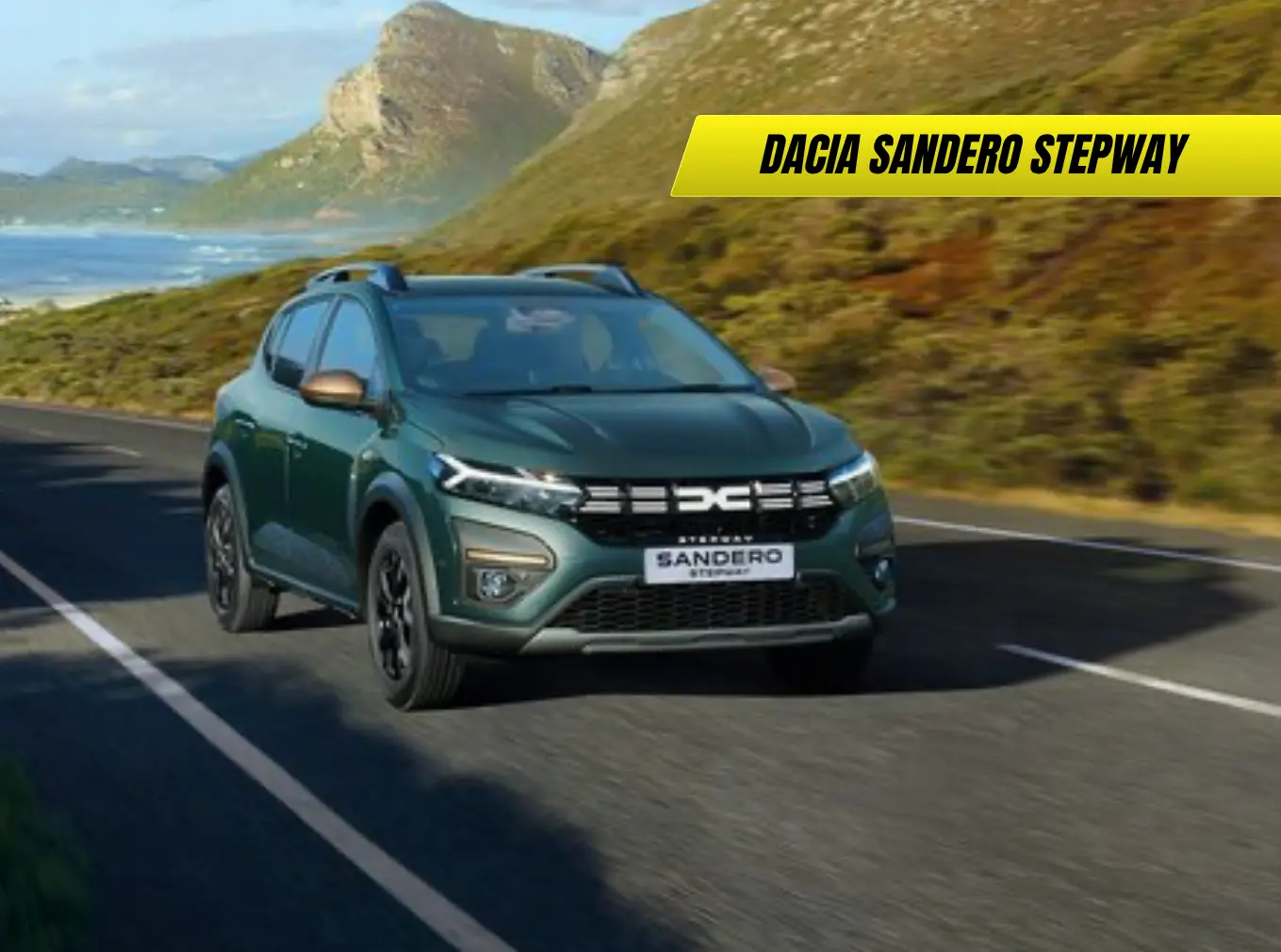
The world’s best-selling affordable car is about to gain its most significant powertrain update ever — and spy shots confirm the hybrid Sandero is already being tested on public roads.
A hybrid version of the 2026 Dacia Sandero and Sandero Stepway has been spotted testing, adopting the Renault Alliance Hybrid 155 system — a 1.8-litre petrol engine with two electric motors producing a combined 155 hp, expected on sale in early 2027.
Key Points
- Hybrid system borrowed from Renault Alliance Hybrid 155 platform
- 1.8-litre naturally aspirated petrol engine plus two electric motors
- Combined output of 155 hp
- 1.4 kWh battery for short electric boosts and urban efficiency
- Multi-mode automatic gearbox with four petrol and two EV ratios
- On sale expected early 2027
Why the Sandero Hybrid Matters
The Dacia Sandero has been Europe’s best-selling new car on multiple occasions, and one of the consistently cheapest new cars available in the UK. It has always succeeded on raw value: low purchase price, affordable insurance, and decent reliability. A hybrid powertrain changes the equation dramatically, promising significantly reduced fuel consumption — particularly in urban stop-start driving — without the charging infrastructure requirements of a full EV.
For UK buyers on a tight budget who drive primarily in city environments, a hybrid Sandero would represent one of the most cost-effective ways to reduce fuel spend without committing to the higher purchase price of a plug-in or full electric vehicle. Our dedicated Dacia Sandero 2026preview has further background on the upcoming model generation.
The Hybrid System: How It Works
The powertrain heading to the Sandero is the same Renault Alliance Hybrid 155 setup already found in the Renault Clio, Captur, and Austral. It pairs a 1.8-litre naturally aspirated four-cylinder petrol engine with a high-voltage electric motor (49 kW) and a secondary starter-generator motor (25 kW). A compact 1.4 kWh battery stores recovered energy from regenerative braking and engine overrun.
The system uses a multi-mode automatic transmission with no conventional clutch. It features four gear ratios for the combustion engine and two dedicated electric ratios, allowing the car to pull away smoothly on electricity alone at low speeds before the petrol engine engages seamlessly. Renault claims the system allows over 80% of urban driving time in electric mode under typical city conditions — a figure that translates directly into real-world fuel savings for UK drivers.
Expected Performance and Fuel Economy
Based on the same system in the Renault Clio Hybrid, the Sandero Hybrid is likely to offer 0–62 mph in approximately 9.5–10 seconds and a top speed around 180 km/h (112 mph). More relevantly for budget buyers, fuel consumption on the WLTP combined cycle is expected to be in the region of 4.5–5.0 l/100km (56–63 mpg) — a substantial improvement over the current 1.0-litre petrol’s 50 mpg real-world average.
UK road tax implications will depend on the final CO2 figure, but a sub-100 g/km result seems achievable, which would place it in a favourable VED band. For guidance on how road tax bands affect running costs, the DVLA’s official rates page is the definitive reference.
| Spec | Detail |
|---|---|
| Engine | 1.8-litre petrol + 2 electric motors |
| Combined power | 155 hp |
| Battery | 1.4 kWh |
| Est. fuel economy | 56–63 mpg (WLTP) |
| Expected on sale | Early 2027 |
What About the Sandero Stepway?
The Stepway — Dacia’s raised, lightly off-road-styled variant — is also expected to receive the hybrid powertrain. Spy shots have captured both regular Sandero and Stepway prototypes undergoing testing simultaneously, confirming that neither variant will be left behind in the electrification push. The Stepway’s raised ride height and all-terrain styling make it particularly popular in the UK, where it competes against crossovers significantly more expensive.
When will the Dacia Sandero Hybrid go on sale in the UK?
Sales are expected to begin in early 2027, following the hybrid system’s introduction in late 2026.
Is the Dacia Sandero Hybrid a plug-in?
No. It is a self-charging full hybrid — the 1.4 kWh battery charges through regenerative braking and engine overrun. There is no external charging capability.
How much will the Dacia Sandero Hybrid cost in the UK?
Pricing has not been confirmed, but a premium of approximately £1,500–£2,000 over the current petrol equivalent seems likely, placing it around £16,000–£18,000 depending on trim.
Will the hybrid Sandero have automatic transmission only?
Yes. The multi-mode automatic gearbox is integral to the hybrid system’s operation and is not available with a conventional manual option.
Does the Dacia Sandero Hybrid qualify for any UK green incentives?
As a self-charging hybrid rather than a plug-in, it will not qualify for plug-in car grant schemes. However, its improved CO2 figure should result in lower first-year VED and potentially lower insurance groupings.
From my point of view, the Dacia Sandero Hybrid could be one of the most important affordable car launches of 2027. It brings meaningful real-world fuel efficiency to the budget sector without demanding lifestyle compromises — and at a price point that will be accessible to far more British buyers than any rival EV.





