
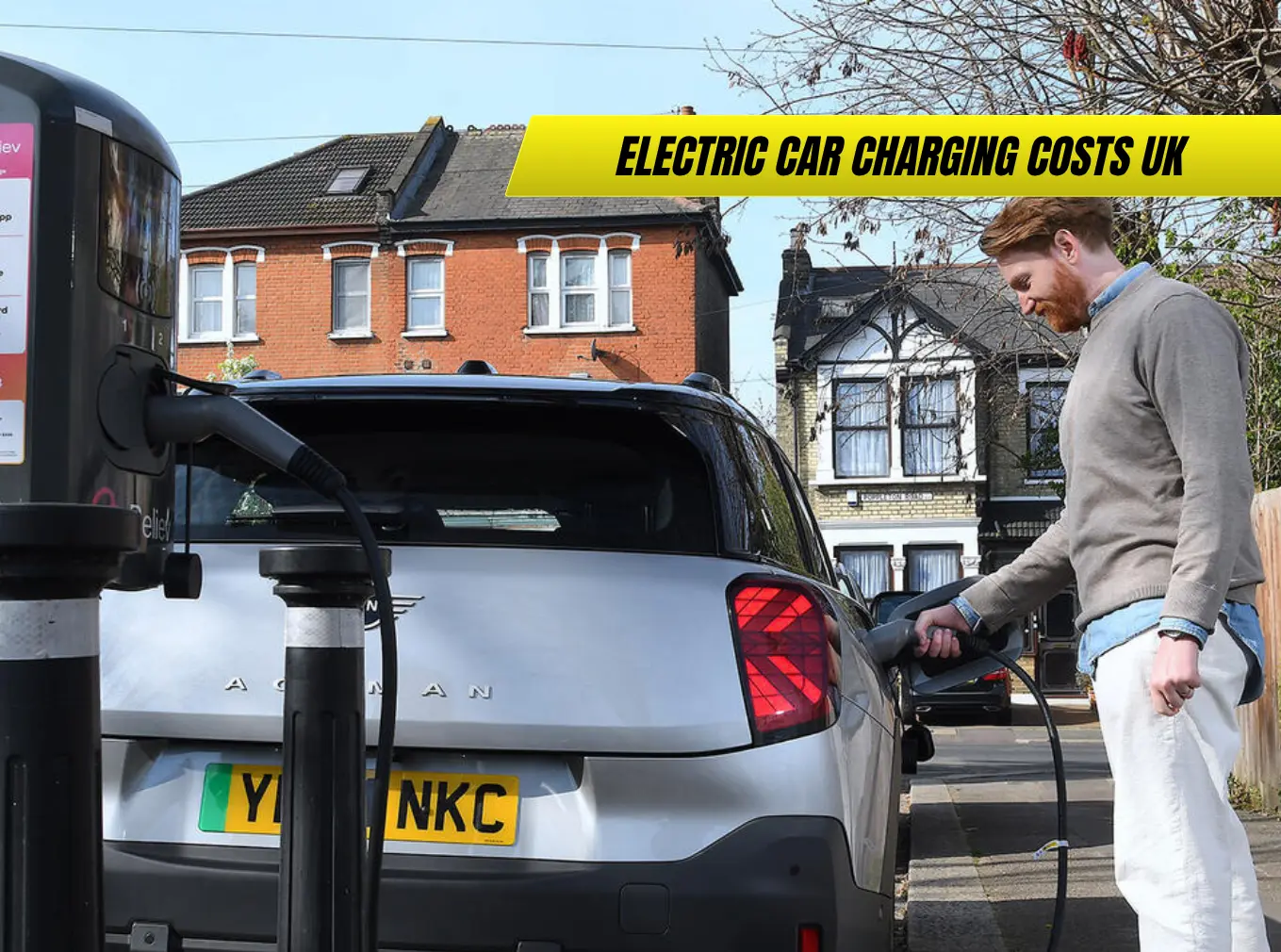
In 2025, UK electric vehicle ownership continues to rise, but charging costs vary widely depending on location, time, and charging speed. With home energy tariffs, public network fees, and ultra-rapid motorway pricing all changing, understanding the real cost per mile is key to managing EV ownership effectively.
Key Points
- Average home charging cost: £0.14 per kWh (off-peak).
- Public charging cost: £0.35–£0.75 per kWh.
- Typical full charge (60 kWh battery): £8–£35.
- Off-peak smart tariffs cut costs by up to 60%.
- Charging at home remains three to four times cheaper than motorway chargers.
Average Home Charging Costs in 2025
Most EV drivers charge at home overnight using smart tariffs from suppliers such as Octopus Energy, OVO, or British Gas.
Home rates depend on time of day and tariff type.
| Tariff Type | Typical Rate (per kWh) | Full 60 kWh Charge | Range Cost (250 miles) |
|---|---|---|---|
| Standard tariff | £0.28 | £16.80 | £0.067 per mile |
| Smart off-peak tariff | £0.14 | £8.40 | £0.034 per mile |
| Peak daytime rate | £0.34 | £20.40 | £0.082 per mile |
Off-peak charging between midnight and 4 a.m. provides the best value.
Smart chargers (e.g., Ohme, Wallbox, Pod Point) can automatically start sessions during low-rate periods.
Public Charging Prices
Public charging remains useful for long trips or city dwellers without driveways.
Networks set prices based on charging power and location.
| Network | Type | Typical Rate | Notes |
|---|---|---|---|
| Pod Point | Fast (7–22 kW) | £0.35/kWh | Common in Tesco car parks |
| Shell Recharge | Rapid (50 kW) | £0.59/kWh | Widespread nationwide |
| Ionity | Ultra-rapid (350 kW) | £0.69–£0.75/kWh | Motorway service areas |
| Gridserve | Rapid (60–120 kW) | £0.49/kWh | Linked to Electric Forecourts |
| Tesla Supercharger | 250 kW | £0.52/kWh (members) | £0.62 for non-members |
An 80% charge on a 60 kWh EV typically costs £25–£30 on ultra-rapid chargers — about £0.10–£0.12 per mile, compared with £0.03–£0.04 per mile at home.
No products found.
Charging at Work or Retail Locations
Many employers and supermarkets offer free or discounted workplace charging.
Typical arrangements:
- Free for staff during working hours (≤7 kW).
- Two-hour limits in supermarket car parks (Tesco, Lidl, Sainsbury’s).
- Membership schemes for access (e.g., BP Pulse subscription at £7.85/month).
Some businesses claim tax deductions for employees charging fleet EVs at home under HMRC-approved mileage reimbursement rates.
Real Cost Comparison vs Petrol and Diesel
| Vehicle Type | Fuel / Energy Cost | Cost per Mile | Annual Cost (10,000 miles) |
|---|---|---|---|
| Electric (home, off-peak) | £0.14/kWh | £0.034 | £340 |
| Electric (public rapid) | £0.60/kWh | £0.12 | £1,200 |
| Petrol | £1.55/litre | £0.17 | £1,700 |
| Diesel | £1.65/litre | £0.15 | £1,500 |
Even with public charging, EVs remain cheaper overall due to lower maintenance and tax costs.
How Smart Tariffs Work
Smart energy plans allow EVs to draw power automatically during cheap, renewable-heavy hours.
Examples (2025 rates):
- Octopus Go: £0.09/kWh between 00:30–04:30.
- OVO Charge Anytime: £0.10/kWh all night.
- EDF GoElectric 35: £0.12/kWh off-peak, £0.35 peak.
Smart wallboxes connect to your supplier’s API, automatically adjusting charging time to minimise cost.
Subscription Models and Discounts
Some networks offer subscription savings for frequent users:
| Network | Subscription | Monthly Fee | kWh Discount |
|---|---|---|---|
| BP Pulse | £7.85 | £0.44/kWh instead of £0.55 | -20% |
| Ionity Passport | £11.99 | £0.59/kWh instead of £0.75 | -21% |
| Tesla Membership | £10.99 | £0.52/kWh instead of £0.62 | -16% |
Regular motorway users can save £15–£25/month with these plans.
Factors That Influence Charging Costs
- Battery size – larger packs require more kWh per charge.
- Driving efficiency – aggressive acceleration increases energy use.
- Weather – cold reduces range, raising cost per mile.
- Charging losses – 5–10% energy lost as heat in cables and converters.
- Network fees – include card transaction charges and VAT (20%).
Tax Incentives and Workplace Benefits
Electricity used for home charging is not taxed separately for company car drivers if reimbursed under HMRC advisory rates.
In 2025, the Benefit-in-Kind rate for EVs remains 2%, preserving strong savings compared to ICE vehicles.
Businesses installing chargers can claim 100% capital allowance under the Workplace Charging Scheme (WCS).
Environmental Impact and Renewable Charging
Charging overnight coincides with the UK’s lowest grid carbon intensity.
Using a renewable tariff such as Octopus Energy’s Go Green reduces lifetime emissions by up to 40% compared to standard electricity.
For further insight into sustainable motoring, see UK Toll Roads and Charges 2025 – Complete Guide.
Expert Opinion
From my point of view, the difference between public and home charging is the defining factor in EV economics.
Drivers who can install a home wallbox save hundreds annually, while those relying on motorway networks pay nearly as much as petrol users.
Planning charging sessions and embracing smart tariffs now define the true cost of owning an electric vehicle in Britain.
FAQs
How much does it cost to charge a 60 kWh EV at home?
Roughly £8–£9 off-peak or £17–£20 on standard tariffs.
What’s the cheapest charging option in the UK?
Smart overnight home tariffs between £0.09 and £0.14 per kWh.
Are public chargers taxed at 20% VAT?
Yes. Home energy remains at 5%, public charging is charged at 20%.
Does it matter if I charge to 100%?
Avoid full charges daily; keep between 20–80% for battery health.
How do I find the cheapest charger nearby?
Use apps like Zap-Map, PlugShare, or your car’s inbuilt navigation.
In 2025, understanding EV charging costs is about timing, not distance.
In my experience, UK drivers who schedule smart overnight charging, combine home and public options wisely, and monitor tariffs save up to £1,000 a year while keeping their EVs efficient and their wallets intact.





