
Ferrari confirms “Luce” (Light) nameplate for debut electric supercar launching late 2025 featuring quad-motor 880V architecture delivering 1,000+ hp, revolutionary Jony Ive-designed interior eliminating traditional Ferrari cabin layout, and pricing estimated €500,000-600,000 positioning as marque’s technological flagship entering electrification era while maintaining Maranello performance DNA through advanced torque vectoring enabling unprecedented cornering dynamics impossible achieving with combustion powertrains.
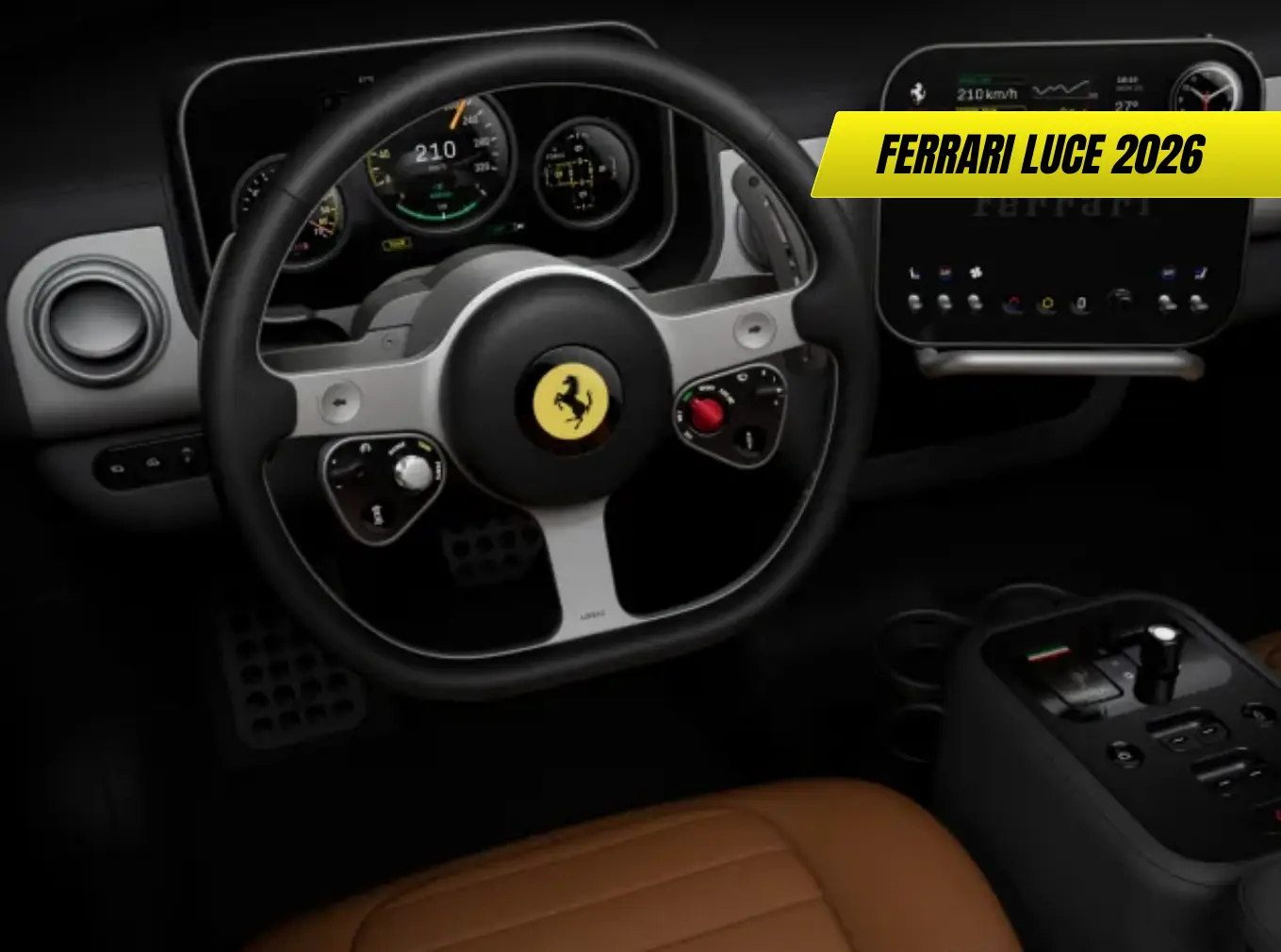
Ferrari’s transformation from combustion purist toward electrified future accelerates through Luce (Italian for “Light”) representing Maranello’s first pure-electric production model following decades resistance toward battery propulsion, with company president Benedetto Vigna describing electric Ferrari not as compromise but “amplification of emotion” enabling performance envelope expansion beyond combustion limitations while revolutionary Jony Ive interior design (former Apple chief design officer responsible iPhone, iPad, MacBook aesthetic defining modern consumer electronics) abandons traditional Ferrari cabin architecture eliminating protruding center console, conventional instrument cluster, and physical control proliferation favoring minimalist environment prioritizing driver focus and spatial purity echoing Ive’s Apple philosophy where technology disappears into seamless user experience rather than overwhelming through visual complexity characterizing competitor hypercars festooned with buttons, switches, and screens creating cognitive overload distracting from pure driving experience Ferrari considers fundamental brand identity. The quad-motor 880V architecturepositions each wheel with independent electric motor enabling torque vectoring precisionimpossible achieving mechanical all-wheel-drive systems limited by physical drivetrain connections, while combined 1,000+ hp output (exact figures undisclosed) delivered through instantaneous electric response eliminates turbo lag and throttle delay plaguing even Ferrari’s most advanced twin-turbo V8 engines requiring milliseconds transitioning between part-throttle cruising and full-power acceleration, though Maranello engineers acknowledge electric powertrain cannot replicate visceral combustion sensations (exhaust note, gear shifts, engine vibration) Ferrari purists consider irreplaceable despite objective performance advantages electric motors deliver through superior power-to-weight ratios, instant torque delivery, and maintenance-free operation eliminating traditional supercar ownership burdens (frequent servicing, clutch replacements, engine rebuilds) costing tens of thousands annually justifying €500,000-600,000 estimated pricing representing substantial premium over SF90 Stradale plug-in hybrid (€500,000) but undercutting potential competitors including Rimac Nevera (€2 million), Lotus Evija (€2+ million), and future Porsche Mission X likely exceeding €1 million creating market positioning between mainstream electric supercars (€200,000-300,000) and ultra-exotic million-dollar hypercars targeting billionaire collectors rather than driving enthusiasts prioritizing track capability over investment potential.
Revolutionary Interior Design: Jony Ive Philosophy
Understanding Luce’s cabin requires examining Ive’s design principles developed through three decades Apple leadership transforming consumer electronics from complex utilitarian devices into intuitive lifestyle objects.
Minimalist Spatial Architecture
Elimination of Traditional Ferrari Layout
Conventional Ferrari interiors feature:
- Prominent center console separating driver and passenger
- Multitude of physical switches and buttons
- Traditional analog or digital instrument cluster
- Complex steering wheel controls (manettino dial, endless buttons)
- Visual complexity reflecting mechanical sophistication
Ive’s Radical Departure
Leaked images reveal:
- Floating center display suspended between driver and passenger zones (no traditional console)
- Clean horizontal dashboard extending seamlessly door-to-door without vertical interruptions
- Minimized physical controls with essential functions integrated touch-sensitive surfaces
- Transparent elements creating visual lightness and spatial openness
- Natural materials (possibly sustainably-sourced wood, recycled metals) replacing traditional leather/carbon fiber excess
Design Philosophy Alignment
- Apple approach: Technology should be invisible until needed, then instantly accessible
- Ferrari application: Driving controls immediately available without visual distraction
- Result: Cabin appears simpler yet functions more intuitively than conventional layouts
Materials and Sustainability
Ive’s Environmental Commitment
Following Apple departure 2019, Ive founded LoveFrom design studio emphasizing:
- Sustainable material sourcing
- Recycled component integration
- Longevity over planned obsolescence
- Timeless aesthetic avoiding trend-driven obsolescence
Ferrari Luce Application
- Recycled aluminum structural elements
- Vegan leather alternatives (controversial for traditional Ferrari buyers)
- Reclaimed wood interior accents
- Low-VOC adhesives and coatings
- Modular components enabling future upgrades versus complete vehicle replacement
Market Reception Challenge
Ferrari clientele historically conservative:
- Traditional buyers expect sumptuous leather, exotic materials
- Sustainability initiatives perceived as compromise versus luxury
- Ive’s minimalism may alienate customers preferring conspicuous craftsmanship
- Success depends on execution quality matching or exceeding traditional Ferrari standards
Display Technology and Interface
Curved Panoramic Screen (Rumored)
- Single seamless display spanning driver zone to passenger
- Context-aware information presentation (driving data left, passenger entertainment right)
- Configurable layouts adapting to driving mode (track, touring, urban)
- Haptic feedback replacing physical button satisfaction
Gesture and Voice Control
- Minimal physical interaction required
- Natural language processing for climate, navigation, media
- Gesture recognition for secondary functions
- Steering wheel controls limited to essential driving inputs
Powertrain and Performance
Ferrari remains secretive regarding Luce specifications, but industry intelligence provides outline.
Quad-Motor 880V Architecture
Motor Configuration
- Four independent permanent magnet synchronous motors
- One motor per wheel enabling true torque vectoring
- Combined output estimated 1,000-1,200 hp (750-895 kW)
- Individual motor output: ~250-300 hp per corner
880V Electrical System
Higher voltage versus typical 400V EV systems enables:
- Reduced current for equivalent power (thinner cables, less heat)
- Faster charging capability (350+ kW theoretical)
- More efficient power transmission
- Compact motor design (higher voltage = smaller motors for equivalent output)
Porsche comparison: Taycan pioneered 800V architecture enabling 270 kW charging, Ferrari likely exceeding with 880V potentially supporting 350-400 kW charging rates reducing charge times to 15-18 minutes for 10-80% replenishment.
Battery Technology
Capacity and Range
- Estimated capacity: 100-120 kWh
- Target range: 350-400 km (217-248 miles) WLTP
- Real-world range: 280-320 km accounting for performance driving
Deliberate Range Limitation
Ferrari prioritizes:
- Performance over efficiency (heavier battery = worse handling)
- Track capability (thermal management for sustained power delivery)
- Weight distribution (battery positioned for optimal center of gravity)
- Target use case (weekend supercar, not daily commuter)
Chemistry Speculation
- High-nickel NMC chemistry maximizing energy density
- Silicon-doped anodes improving capacity
- Advanced thermal management enabling sustained track use
- Structural battery integration (pack forms chassis element)
Performance Targets
Acceleration (Estimated)
- 0-100 km/h: Under 2.0 seconds (potentially 1.8-1.9s)
- 0-200 km/h: Under 5.5 seconds
- Quarter-mile: Low 9-second range
Top Speed
- Limited to 340-350 km/h (211-217 mph)
- Higher speeds theoretically possible but battery consumption impractical
- Focus on corner speed versus straight-line velocity
Track Performance
- Sub-7:00 Nürburgring Nordschleife lap (target)
- Torque vectoring enabling faster corner entry speeds
- Regenerative braking supplementing carbon-ceramic discs
- Challenge: Battery thermal management during extended sessions
Torque Vectoring Revolution
Electric quad-motor systems enable handling precision impossible with combustion powertrains.
How Traditional AWD Works
Mechanical Limitations
- Power distributed through differentials, driveshafts, transfer cases
- Weight penalty from mechanical components
- Response lag from physical drivetrain compliance
- Limited adjustability (fixed torque split ratios or basic electronic intervention)
Ferrari Luce Advantage
Independent Wheel Control
Each motor adjusts output thousands of times per second:
- Corner entry: Outside front wheel receives additional torque rotating vehicle into apex
- Mid-corner: Inner wheels reduce power preventing understeer, outer wheels increase maintaining rotation
- Corner exit: Power gradually transfers rear for optimal traction
- Emergency maneuvers: Individual wheels brake or accelerate preventing loss of control
Result: Car rotates around driver’s intended line with supernatural precision, masking weight and making 2,200+ kg vehicle feel agile as mid-engine combustion Ferrari weighing 1,500 kg.
Software Defining Character
Ferrari offers selectable driving modes:
- Strada (Road): Comfort-oriented, smooth power delivery
- Sport: Sharper responses, more aggressive torque vectoring
- Race: Maximum attack, torque vectoring optimized for lap times
- ESC Off: Full driver control (experienced drivers only)
Over-the-air updates potentially adding new modes or refining existing algorithms post-purchase.
Pricing and Market Positioning
Expected Pricing Structure
Base Luce: €500,000-550,000
- Quad-motor AWD standard
- 100 kWh battery
- Jony Ive interior
- Comprehensive standard equipment
Assetto Fiorano Package: +€50,000-75,000
- Track-focused suspension
- Lightweight components (carbon fiber seats, deleted rear seats)
- Aggressive aerodynamics
- Michelin Pilot Sport Cup 2 tires
Personalization: Sky’s the limit
- Ferrari’s Tailor Made program enables unlimited customization
- Bespoke paint, interior materials, detailing
- Customers routinely spend €100,000+ on personalization
Competitive Landscape
| Model | Power | Price | Launch |
|---|---|---|---|
| Ferrari Luce | 1,000+ hp | €500,000-600,000 | Late 2025 |
| Ferrari SF90 Stradale PHEV | 1,000 hp | €500,000 | Available now |
| Porsche Taycan Turbo S | 952 hp | €220,000 | Available |
| Rimac Nevera | 1,914 hp | €2,000,000 | Limited production |
| Lotus Evija | 2,000 hp | €2,000,000+ | Delayed |
| Tesla Model S Plaid | 1,020 hp | €140,000 | Available |
Ferrari Advantage: Brand heritage, driving dynamics, exclusivity, dealer network, resale value
Challenges: Convincing Ferrari purists accepting electric propulsion, competing against cheaper electric alternatives (Porsche Taycan), justifying pricing versus more powerful competitors (Rimac)
Production and Availability
Manufacturing Location
Maranello, Italy (Ferrari headquarters)
- Dedicated electric vehicle production line
- Limited annual production maintaining exclusivity
- Estimated 1,500-2,500 units annually (significantly lower than SF90’s ~3,000)
Order Timeline
- Reservations: Open now (deposit required, amount undisclosed)
- Production start: Q4 2025
- First deliveries: Early 2026
- Waiting list: Likely 12-18 months for new orders
Market Allocation
Ferrari typically allocates production:
- 45% Americas (primarily USA)
- 30% Europe (Italy, UK, Germany, Switzerland)
- 20% Asia-Pacific (China, Japan, Middle East)
- 5% Rest of world
Frequently Asked Questions
When will Ferrari Luce be revealed?
Official debut expected Q3-Q4 2025 with production beginning late 2025 and first customer deliveries early 2026. Ferrari maintaining secrecy until formal presentation event.
How much does Ferrari Luce cost?
Estimated €500,000-600,000 base price before personalization options potentially adding €50,000-150,000+ for Assetto Fiorano track package, bespoke paint, custom interior materials, and carbon fiber components. Competitive with SF90 Stradale plug-in hybrid while undercutting Rimac Nevera (€2 million).
What is the range of Ferrari Luce?
Estimated 350-400 km (217-248 miles) WLTP combined cycle with real-world range likely 280-320 km depending on driving style. Ferrari prioritizes performance and handling over maximum range, targeting weekend supercar use rather than daily commuting where 400+ km range would be beneficial.
Will Ferrari Luce have traditional Ferrari engine sound?
No. Pure electric powertrain produces minimal noise beyond electric motor whine and tire roar. Ferrari developing “authentic electric sound” avoiding artificial V12 simulation considered dishonest, instead emphasizing electric powertrain’s unique character through torque vectoring dynamics and instant acceleration impossible combustion engines.
Can I charge Ferrari Luce at home?
Yes. 880V architecture supports DC fast charging (350+ kW theoretical) plus AC home charging (11-22 kW). Full charge from home requires 5-10 hours depending on connection, while DC fast charging enables 10-80% replenishment in 15-20 minutes at compatible high-power chargers (not universally available current infrastructure).
How does Jony Ive interior differ from traditional Ferrari?
Eliminates protruding center console, reduces physical button count drastically, features floating curved display, emphasizes spatial purity and minimalism versus traditional Ferrari cabins showcasing complex mechanical controls. May include sustainable materials (recycled aluminum, vegan leather) controversial among traditional Ferrari clientele expecting sumptuous animal hides and exotic trim.
Will Ferrari continue making combustion engines?
Yes. Ferrari committed maintaining combustion and hybrid models alongside electric vehicles through at least 2030. Company targets 60% electrified lineup (PHEV + BEV) by 2030 with 40% remaining pure combustion for purist customers unwilling transitioning electric propulsion despite regulatory pressures and performance advantages.
Is Ferrari Luce faster than SF90 Stradale?
Likely yes in acceleration (sub-2.0-second 0-100 km/h versus SF90’s 2.5 seconds) due to instant electric torque versus combustion engine/transmission lag. Track lap times uncertain as Luce carries significant weight penalty (2,200+ kg versus SF90’s 1,570 kg) though torque vectoring may compensate through superior corner speeds impossible achieving SF90’s mechanical AWD system.
Conclusion
Ferrari Luce represents Italian supercar manufacturer’s boldest transformation since mid-engine layout adoption 1973 through V8 Dino, embracing pure-electric propulsion and radical Jony Ive interior design simultaneously challenging brand heritage while advancing performance envelope beyond combustion limitations through quad-motor torque vectoring enabling handling precision impossible mechanical drivetrains, though success depends convincing conservative Ferrari clientele accepting minimalist sustainable cabin aesthetic and silent electric operation replacing traditional sensory experiences (V12 symphony, manual gearbox, mechanical complexity) defining Maranello mystique for eight decades. The €500,000-600,000 pricing bridges mainstream electric performance (Porsche Taycan Turbo S €220,000) and ultra-exotic hypercars (Rimac Nevera €2 million) creating market positioning targeting affluent driving enthusiasts prioritizing track capability and advanced technology over combustion nostalgia or investment potential, though limited production (1,500-2,500 annual units) and lengthy waiting lists maintain exclusivity preventing Ferrari electric transition undermining brand prestige through volume proliferation diluting marque’s rarefied status among automotive hierarchy where accessibility represents failure rather than democratic success mass-market manufacturers celebrate through sales growth Ferrari deliberately constrains maintaining desirability exceeding availability creating perpetual demand impossible satisfying intentionally preserving mystique justifying premium pricing and ensuring every Ferrari remains special event rather than common sight supercar congregations increasingly dominated mass-produced McLarens and Lamborghinis sacrificing exclusivity pursuing quarterly earnings growth Ferrari’s private status (67% Exor/Agnelli family control versus public competitors answerable institutional shareholders) enables resisting.





