
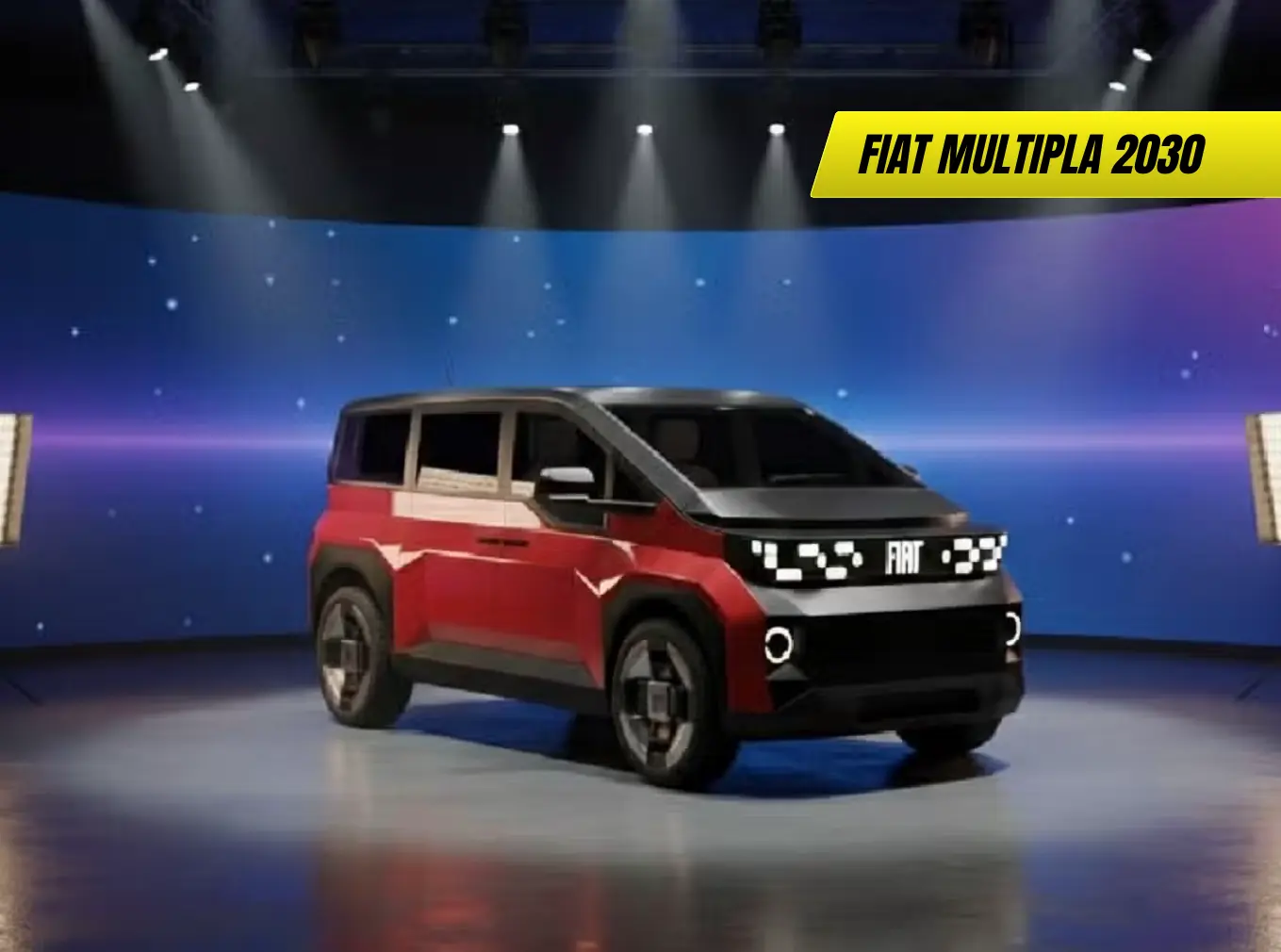
Fiat revives iconic Multipla nameplate for autumn 2026 launch as seven-seat compact MPV built on Stellantis Smart Car platform shared with Grande Panda, offering 1.2-litre hybrid and 44kWh electric powertrains starting around £22,000-28,000 targeting practical families prioritizing space over SUV styling.
Italian brand Fiat resurrects legendary Multipla name for autumn 2026 launch positioning new model as seven-seat compact MPV addressing family transportation needs through maximum interior space efficiency rather than conventional SUV approach dominating contemporary market, built on Stellantis Smart Car platform shared with recently-launched Grande Panda alongside Citroën C3 Aircross and Opel Frontera enabling cost-effective production and diverse powertrain integration. The approximately 4.4-meter length delivers five or seven-seat configurations depending on customer requirements, featuring flexible seating arrangements enabling cargo/passenger optimization through removable or folding third-row seats matching segment leaders like Citroën Berlingo Multispace and Dacia Jogger while undercutting pricing by £3,000-5,000 through simplified equipment and shared platform economies. Design language follows Grande Panda’s pixel-inspired aesthetic featuring vertical front fascia, rectangular LED headlights, protective black plastic cladding suggesting adventurous capability, and pixelated rectangular taillights creating contemporary appearance distinguishing new Multipla from controversial original’s organic curves while maintaining spaciousness philosophy. Powertrain lineup mirrors Smart Car architecture offerings including 1.2-litre PureTech/FireFly turbocharged 3-cylinder producing 100-136hp with mild hybrid 48V assistance and dual-clutch automatic transmission, plus fully-electric variant featuring 113hp motor with 44kWh battery delivering estimated 300km (186 miles) WLTP range targeting urban families prioritizing zero-emission capability for daily commuting with occasional longer journeys supported by rapid 100kW DC charging. UK pricing estimated £22,000-28,000 spanning base hybrid through top-specification electric seven-seater, positioning Multipla substantially below premium MPV alternatives (VW Touran from £32,000, Ford S-Max from £35,000) while offering competitive space and equipment through strategic rationalization avoiding luxury pretensions focusing purely practical family transportation requirements.
Platform Strategy: Stellantis Smart Car Flexibility
The new Multipla’s foundation rests on Stellantis Group’s Smart Car platform – versatile modular architecture enabling diverse body styles, powertrains, and market positioning through shared mechanical components reducing per-unit costs and development timelines.
Smart Car Platform Overview
| Characteristic | Specification | Benefits |
|---|---|---|
| Architecture | Modular transverse FWD/AWD-capable | Cost-efficient production, multiple body styles |
| Wheelbase range | 2,540-2,670 mm | Accommodates B to C-segment vehicles |
| Body length range | 3,990-4,400+ mm | Compact city cars through family MPVs |
| Powertrains | Gasoline, hybrid, plug-in hybrid, BEV | Customer choice across electrification spectrum |
| Production locations | Morocco, Serbia, Turkey, Spain | Global manufacturing flexibility |
| Shared models | Fiat Grande Panda, Citroën C3/C3 Aircross, Opel Frontera, Peugeot e-208 (future) | Economies of scale across brands |
Multipla-Specific Implementation
The Multipla utilizes extended wheelbase variant (~2,670mm) enabling third-row seating integration without excessive overall length compromising urban maneuverability, similar to strategy employed by Citroën C3 Aircross (seven seats, 4,395mm length) and Opel Frontera (seven seats, 4,385mm length) – essentially platform siblings wearing different brand identities and styling treatments.
Dimensional Comparison
| Model | Length | Wheelbase | Seats | Platform | Market Position |
|---|---|---|---|---|---|
| Fiat Multipla 2026 | ~4,400 mm | ~2,670 mm | 5 or 7 | Smart Car | Budget MPV |
| Citroën C3 Aircross | 4,395 mm | 2,670 mm | 5 or 7 | Smart Car | Platform twin |
| Opel Frontera | 4,385 mm | 2,670 mm | 5 or 7 | Smart Car | Platform twin |
| Fiat Grande Panda | 3,990 mm | 2,540 mm | 5 | Smart Car | Shorter variant |
| Dacia Jogger | 4,547 mm | 2,898 mm | 5 or 7 | CMF-B | Larger, roomier |
| VW Touran | 4,527 mm | 2,791 mm | 5 or 7 | MQB | Premium positioning |
The 4.4-meter length positions Multipla as genuinely compact MPV suitable urban environments while providing adequate third-row space for children or occasional adult passengers – critical balance enabling family functionality without excessive size compromising parking and maneuverability in congested cities.
Design Evolution: From Controversial Original to Contemporary Pixels
The new Multipla faces unique challenge honoring original model’s spaciousness philosophy while avoiding polarizing styling that limited commercial success despite exceptional practicality.
Original Multipla Legacy (1998-2010)
The first-generation Multipla achieved cult status through revolutionary packaging placing three individual seats across front and rear rows within compact 4.09-meter length, creating unmatched interior space efficiency. However, the controversial “double-decker” styling featuring two-tier windscreen and bulbous proportions polarized customers – praised by design critics but rejected by mainstream buyers preferring conventional aesthetics, limiting sales despite superior practicality versus contemporaries.
2026 Design Philosophy: Pixel Modernism
The new Multipla abandons organic curves for angular, geometric design language matching Grande Panda’s contemporary aesthetic appealing to modern tastes while maintaining spaciousness core value, similar to approaches in Toyota Corolla Cross 2025.
Exterior Styling Elements
Front Design
- Vertical fascia: Upright grille and bumper maximizing interior volume while creating imposing presence
- Rectangular LED headlights: Slim horizontal units integrated into pixel-inspired light signature
- Hidden charging port: Electric variants conceal charging cable behind FIAT logo creating clean appearance
- Protective cladding: Black plastic lower bumper and wheel arches suggesting rugged capability
Side Profile
- High roofline: Maximizing headroom across three rows without excessive length
- Large greenhouse: Extensive glass areas improving visibility and creating airy cabin feel
- Straight shoulder line: Running from front fenders to taillights creating visual length
- Sliding rear doors (possible): Potential feature improving access in tight parking spaces (unconfirmed)
- 19-inch wheels: Substantial rolling stock (on higher trims) balancing proportions
Rear Design
- Pixelated rectangular taillights: Small rectangular LED elements creating contemporary signature
- Body-colored integration: Lights integrated seamlessly into tailgate rather than protruding
- Vertical tailgate: Maximizing cargo opening and load height for practicality
- Roof rails: Functional luggage-carrying capability standard or optional depending on trim
Interior Layout: Three-Row Versatility
Seating Configurations
Five-Seat Layout (Standard)
- Three individual seats front row (possible following original Multipla’s innovation)
- Two-seat second row with armrest/storage between
- Substantial cargo area with flat floor (~350-400 liters estimated)
- Folding second row creating van-like cargo capacity (1,500+ liters)
Seven-Seat Layout (Optional or Higher Trims)
- Conventional two front seats with center console
- Three-seat second row bench (60/40 split-folding)
- Two individual third-row seats suitable children/small adults
- Reduced cargo capacity (~200 liters) with all seats deployed
- Flat cargo floor folding third row (~400-500 liters)
- Maximum cargo capacity folding second and third rows (1,600+ liters)
Interior Technology and Materials
Following Grande Panda’s cabin architecture:
- 10-inch digital instrument cluster: Customizable displays showing driving information
- 10.25-inch central touchscreen: Infotainment with wireless Apple CarPlay/Android Auto
- Simplified controls: Physical buttons for HVAC and key functions avoiding excessive touchscreen complexity
- Durable materials: Hard-wearing fabrics and plastics suitable family use with children
- Easy-clean surfaces: Practical considerations prioritizing functionality over luxury
- USB-C charging ports: Multiple outlets serving all seating rows
- Ambient lighting: Available on higher trims creating pleasant atmosphere
Powertrain Options: Hybrid and Electric Flexibility
The Multipla’s powertrain lineup mirrors Smart Car platform offerings, providing customer choice across electrification spectrum while maintaining affordable entry pricing.
1.2-Litre Mild Hybrid (Base)
Specifications
- Engine: 1.2L PureTech/FireFly turbocharged 3-cylinder
- Output: 100 hp (base) or 136 hp (performance variant)
- Mild hybrid: 48V belt-integrated starter generator (BISG)
- Transmission: 6-speed dual-clutch automatic (eDCT)
- Fuel economy: 50-55 mpg combined estimated
- CO2 emissions: ~120-130 g/km
- 0-62 mph: ~11-12 seconds (100hp) / ~9-10 seconds (136hp)
Technology Benefits
- Smoother start-stop operation reducing engine vibration during restarts
- Modest electric boost during acceleration improving responsiveness
- Regenerative braking recovering energy during deceleration
- Reduced fuel consumption versus non-hybrid equivalent (~10-15% improvement)
The dual-clutch automatic transmission provides more refined operation versus traditional manual, appealing to family buyers prioritizing ease of use in urban traffic rather than manual engagement typical enthusiast vehicles.
Fully-Electric Variant
Specifications
- Motor: Single front-mounted electric motor
- Output: 113 hp (83 kW)
- Battery: 44 kWh lithium-ion (usable capacity)
- WLTP range: ~300 km (186 miles)
- Real-world range: ~240-270 km (150-170 miles) typical conditions
- DC fast charging: Up to 100 kW maximum
- 10-80% charging: ~30 minutes at 100kW charger
- AC charging: 7.4 kW standard (11 kW optional)
- Home charging time: 6-7 hours (7.4kW wallbox)
- 0-62 mph: ~9-10 seconds estimated
Electric Advantages
- Zero local emissions enabling access to clean air zones
- Lower running costs versus gasoline (~4p/mile electricity vs ~15p/mile gasoline)
- Simplified drivetrain reducing maintenance requirements
- Instant torque delivery improving urban drivability
- Quiet operation enhancing cabin refinement
Electric Disadvantages
- Limited range versus hybrid/gasoline (300km vs unlimited with refueling)
- Charging time considerations for longer journeys
- Higher purchase price (~£4,000-5,000 premium over hybrid)
- Cold weather range reduction (~20-30% in winter conditions)
- Payload reduction due to battery weight affecting seven-seat practicality
The 44kWh battery proves adequate for daily family duties including school runs, shopping, and local activities within typical 30-40 mile daily driving patterns, while occasional longer journeys require strategic charging stops at increasingly-ubiquitous rapid chargers along UK motorway network.
UK Market Positioning and Competitive Landscape
The Multipla enters fiercely-competitive compact MPV segment facing established rivals and shifting customer preferences favoring SUVs over traditional people-carriers.
Direct MPV Competitors
| Model | Price Range | Seats | Powertrain Options | Key Positioning |
|---|---|---|---|---|
| Fiat Multipla | £22,000-28,000 (est) | 5 or 7 | Mild hybrid, BEV | Budget versatility |
| Citroën C3 Aircross | £23,000-29,000 | 5 or 7 | Gasoline, mild hybrid, BEV | Platform twin, French style |
| Opel Frontera | £23,500-29,500 | 5 or 7 | Gasoline, mild hybrid, BEV | Platform twin, German brand |
| Dacia Jogger | £18,000-24,000 | 5 or 7 | Gasoline, hybrid, LPG | Ultimate value leader |
| Renault Grand Scenic | £40,000-48,000 | 5 or 7 | Plug-in hybrid, BEV | Premium positioning |
| VW Touran | £32,000-38,000 | 5 or 7 | Gasoline, mild hybrid | German quality, premium |
| Citroën Berlingo Multispace | £25,000-32,000 | 5 or 7 | Gasoline, diesel, BEV | Van-based practicality |
Market Challenges
Declining MPV Segment
- UK MPV sales collapsed ~60% 2015-2025 as buyers shifted toward SUVs
- Remaining MPV buyers prioritize maximum practicality over styling
- Stigma surrounding “people-carriers” associated with suburban families
- Limited emotional appeal versus adventurous SUV positioning
SUV Competition
Multipla also competes against compact SUVs offering elevated seating without MPV stigma:
- Nissan Qashqai: £28,000-37,000 (5 seats, popular choice)
- Hyundai Tucson: £30,000-42,000 (5 seats, premium features)
- Peugeot 5008: £32,000-40,000 (5 or 7 seats, SUV styling)
- Škoda Kodiaq: £34,000-45,000 (5 or 7 seats, premium quality)
Multipla’s Unique Proposition
Advantages Over SUVs
- Superior interior space efficiency for equivalent exterior dimensions
- Better fuel economy through lower ride height improving aerodynamics
- Lower center of gravity enhancing handling dynamics
- Typically lower pricing than SUV equivalents
- Easier third-row access through taller doors and lower floor height
Disadvantages Versus SUVs
- Less fashionable styling lacking SUV’s adventurous image
- Lower seating position reducing commanding driving view
- Perceived as “uncool” by image-conscious buyers
- Reduced ground clearance limiting light off-road capability
- Potentially lower resale values due to declining segment popularity
The Multipla’s success depends on attracting pragmatic family buyers prioritizing functionality over image – demographic valuing £22,000-28,000 pricing enabling seven-seat capability at costs matching five-seat SUVs while accepting MPV styling trade-offs.
Frequently Asked Questions
When does the new Fiat Multipla launch?
Autumn 2026 (September-November) UK debut with sales commencing immediately. Production begins summer 2026 at Stellantis facility (likely Morocco or Serbia) with European-wide rollout through Q4 2026 and early 2027. Order books potentially opening spring 2026 enabling customer reservations ahead of production start.
How much will the Fiat Multipla cost?
Estimated £22,000-28,000 spanning base 100hp mild hybrid five-seater through top-specification 113hp electric seven-seater. Entry pricing competitive with Citroën C3 Aircross and Opel Frontera (platform twins) while undercutting premium alternatives like VW Touran (from £32,000) by £4,000-10,000 through simplified equipment and budget brand positioning.
Does the new Multipla seat seven passengers?
Yes, optional seven-seat configuration available featuring three-seat second row and two individual third-row seats suitable for children or occasional adult passengers. Five-seat layout also offered maximizing cargo capacity for buyers not requiring third row. Flexible seating enables customer optimizing space allocation matching specific family requirements.
What powertrains are available?
1.2-litre turbocharged 3-cylinder mild hybrid (100hp or 136hp) with dual-clutch automatic transmission, plus fully-electric variant featuring 113hp motor and 44kWh battery delivering 300km (186 miles) WLTP range. No diesel or plug-in hybrid options planned given Smart Car platform specifications and market trends away from diesel toward full electrification.
How does the Multipla compare to Dacia Jogger?
Both target budget-conscious families requiring seven seats. Jogger offers better value (from £18,000) and slightly more space (4.5m length) but older CMF-B platform and less contemporary design. Multipla counters with modern pixel styling, available BEV powertrain, and newer technology though commanding £4,000-10,000 premium. Choice depends on budget priorities versus technology desires.
Is the electric Multipla practical for families?
Depends on usage patterns. 300km WLTP range (240-270km real-world) proves adequate for daily school runs, shopping, and local activities within 30-40 mile radius. However, longer family road trips require charging stops potentially inconvenient with children. Hybrid variants offer unlimited range through refueling making them more versatile for occasional long journeys.
Will the Multipla be popular in the UK?
Uncertain. MPV segment declined dramatically as buyers shifted toward SUVs perceived as more fashionable. However, pragmatic families prioritizing space efficiency and value over image may appreciate Multipla’s seven-seat capability at competitive pricing. Success depends on Fiat effectively marketing practical benefits overcoming SUV-dominated market preferences, similar to considerations in Nissan Qashqai e-Power 2025.
How big is the boot compared to rivals?
Estimated 200 liters all seats deployed (seven-seat mode), 400-500 liters third row folded (five-seat mode), and 1,600+ liters maximum capacity with all rear seats folded. This compares favorably against VW Touran (743L seats up / 1,980L maximum) and Citroën C3 Aircross (460L / 1,600L) though trailing Dacia Jogger (607L / 1,819L) due to larger external dimensions.
Conclusion
The Fiat Multipla’s autumn 2026 revival represents strategic bet on declining MPV segment where pragmatic family buyers prioritize interior space efficiency and value pricing over fashionable SUV styling dominating contemporary automotive landscape, leveraging Stellantis Smart Car platform economies enabling £22,000-28,000 pricing delivering seven-seat capability at costs matching five-seat SUVs while offering modern pixel-inspired design, comprehensive mild hybrid and electric powertrain choice, and contemporary technology features including 10.25-inch touchscreen and digital instrumentation competitive with mainstream European rivals costing £4,000-10,000 more. The approximately 4.4-meter length creates genuinely compact urban footprint while accommodating five or seven passengers through clever packaging inherited from original Multipla’s space-efficiency philosophy, though avoiding controversial organic styling in favor of angular contemporary aesthetic appealing to modern tastes without alienating mainstream buyers who rejected predecessor despite exceptional practicality.
For UK buyers, the Multipla’s commercial viability depends fundamentally on overcoming SUV-dominated market preferences where elevated seating positions and adventurous styling trump MPV space efficiency among image-conscious customers, limiting audience to pragmatic families willing accepting “uncool” people-carrier stigma in exchange for tangible functional benefits including superior third-row access, better fuel economy, and lower pricing enabling seven-seat capability within constrained budgets. The electric variant’s 300km range proves adequate for typical daily family duties while hybrid alternatives address occasional long-distance requirements without charging anxiety, creating comprehensive powertrain lineup matching diverse customer electrification priorities and usage patterns across budget-to-mainstream pricing spectrum.
Whether Multipla achieves projected success reversing declining MPV segment trends or becomes niche offering serving small audience rejecting SUV orthodoxy depends on execution quality, marketing effectiveness communicating practical advantages, and broader cultural shifts potentially favoring rational space-efficient transportation over fashionable but less practical SUV alternatives as economic pressures intensify and environmental consciousness increases among family buyers reconsidering vehicle priorities beyond styling and image toward fundamental transportation functionality and long-term ownership economics.





