
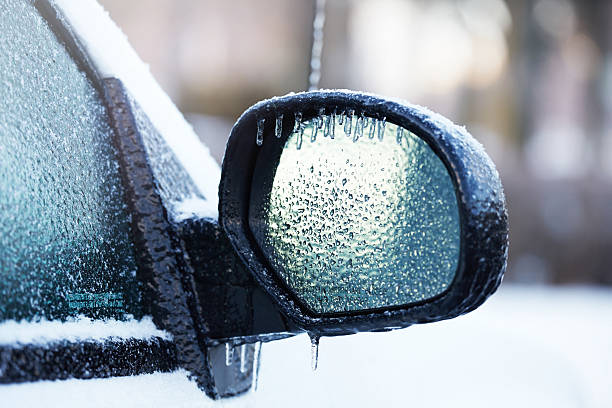
Driving away on a winter morning with frozen wing mirrors might seem harmless — but UK law is clear on the obligation, and the penalties for ignoring it are more significant than most drivers realise. This guide explains exactly what the law requires, what the fines are, and how to prevent frozen mirrors from becoming a morning problem.
What UK Law Says About Frozen Mirrors and Winter Visibility
Rule 229 of the Highway Code is unambiguous: before setting off in snowy or icy conditions, drivers must ensure all windows are clear, lights and number plates are visible, and — critically — that mirrors are clear and the windows are fully demisted. This is not advisory guidance; it is a legal requirement backed by Section 41D of the Road Traffic Act 1988, which mandates a full, unobstructed view of the road before a vehicle moves.
Driving with frozen, iced, or obscured wing mirrors is therefore not simply inadvisable — it is a potential criminal offence that can result in a Fixed Penalty Notice and penalty points.
| Offence | Penalty Code | Fine | Penalty Points |
|---|---|---|---|
| Driving with obscured mirrors/windows | CU20 | £60 | 3 points |
| Careless or inconsiderate driving | CD10/CD30 | Up to £2,500 | 3–9 points |
| Dangerous driving (severe cases) | DD40 | Unlimited fine | 3–11 points + disqualification |
| Leaving engine running unattended on public road | CU20 | £20–£80 | None (fixed penalty) |
The Legal Basis: What You Must Clear Before Moving
The RAC confirms that failing to properly clear a vehicle before driving — including mirrors — can result in a £60 fine and three penalty points under the CU20 offence code, which covers using a vehicle with parts or accessories in a dangerous condition.
More seriously, if a collision occurs and investigation reveals that the driver had obscured mirrors or windows, this can escalate to a careless or dangerous driving charge — offences that carry unlimited fines and potential disqualification. For drivers who have accumulated points, three additional points for an obscured mirror violation could take them significantly closer to the 12-point threshold at which disqualification becomes automatic. Our guide on UK driving licence points and what happens at 12 points explains the consequences in full.
The legal requirement extends beyond just the driver’s side mirror. All mirrors — both wing mirrors and the interior rear-view mirror — must provide clear rearward vision before moving. Snow on the roof is also addressed: Rule 229 specifically requires the removal of snow that might fall off into the path of other road users, which includes snow sliding from the roof onto the rear window or being thrown from the vehicle onto following traffic.
How Ice Forms on Wing Mirrors — and Why They Are Especially Vulnerable
Wing mirrors ice up faster and more severely than windscreens in most winter conditions because their small surface area, thin glass, and exposed position provide little thermal mass. A windscreen retains residual heat from the cabin for longer; a wing mirror is fully exposed to ambient temperature and can freeze solid within an hour of a car being parked in sub-zero conditions.
The mirror glass itself is thinner than windscreen glass and more susceptible to thermal shock — meaning the aggressive scraping techniques that are acceptable on a windscreen can crack mirror glass if applied carelessly. The electric heating elements built into most modern heated mirrors are also vulnerable to damage from forceful scraping.
| Method | Effectiveness | Risk to Mirror Glass |
|---|---|---|
| Heated mirrors (activated via demist button) | Excellent — 2–4 minutes | None |
| De-icer spray | Very good — 60–90 seconds | Minimal — safe on all mirrors |
| Soft cloth or gloved hand | Moderate — clears surface ice | None |
| Plastic ice scraper (light touch) | Good | Low if used gently |
| Metal scraper or credit card | Fast | High — risks scratching or cracking |
| Boiling or hot water | Fast | Very high — thermal shock risk |
The Correct Approach to Clearing Frozen Mirrors
Using the Heated Mirror Function
The simplest and safest method on any car equipped with heated wing mirrors — which covers the majority of UK cars manufactured since 2010 — is to activate the heated rear screen button. On most vehicles, this simultaneously activates the heated wing mirrors, which typically clear fully within two to four minutes without any physical intervention.
This function draws power from the car’s electrical system rather than the engine heat, meaning it operates effectively even before the engine has fully warmed. It is the method recommended by the RAC and virtually every mirror manufacturer for clearing ice without risking damage.
If the car does not have heated mirrors, the cabin heater directed at the side windows (where available) provides some indirect warmth to the mirror housing, though clearing time will be longer.
Using De-Icer Spray
A quality de-icer spray applied directly to the mirror glass breaks the bond between ice and glass within 60–90 seconds and can be wiped clear with a soft cloth or gloved hand — no scraping required. This is the recommended method for mirrors without a heating element, as it avoids the risk of scratching the mirror glass or damaging the mirror adjustment mechanism.
Apply generously from a distance of 15–20cm, allow the chemical to penetrate for at least 60 seconds, then wipe with a clean microfibre cloth using gentle pressure from the centre outward. Avoid pressing the mirror housing with force, as the plastic mirror bracket can crack in very cold conditions when the plastic has become brittle.
Preventing Ice on Mirrors Overnight
Prevention requires almost no effort and eliminates the clearing problem entirely:
- Small elastic mirror covers — purpose-made covers that fit over the wing mirror housing and are held in place by elastic loops. They prevent ice formation entirely and cost £5–£10 per pair from any motor retailer
- Plastic bags secured with elastic bands — less elegant but equally effective; stretch a carrier bag over each mirror housing before overnight parking in sub-zero conditions
- Parking orientation — parking with the mirrors facing away from the prevailing wind direction reduces ice formation from wind-driven moisture
- Applying a thin film of de-icer spray the evening before — this creates a chemical barrier that prevents ice bonding to the glass in most conditions
For a complete guide to winter morning vehicle preparation — covering windscreen, mirrors, lights, and roof snow — our windscreen defrosting and winter legal obligations guide covers everything required before moving on a winter morning.
The Number Plate Obligation
Rule 229 also requires number plates to be clearly visible and legible before moving. A number plate obscured by snow or ice is an additional offence under the Road Vehicles (Display of Registration Marks) Regulations 2001 — a fixed penalty of £100 for an obscured rear plate. This is a separate offence from the window and mirror obligations and is enforced year-round, not just in winter.
Wipe both front and rear number plates before any winter journey. It takes under ten seconds and removes an unnecessary legal risk.
For a broader understanding of UK road rules and driver obligations throughout the year, the official Highway Code adverse weather conditions guidance at gov.uk provides the full text of Rules 226–237 covering all weather-related driving requirements.
Is it illegal to drive with one frozen wing mirror in the UK?
Yes — Rule 229 of the Highway Code, backed by Section 41D of the Road Traffic Act 1988, requires all mirrors to be clear before moving. A single frozen mirror constitutes a failure to comply with this requirement and can result in a £60 fine and three penalty points under the CU20 offence code.
What is the fine for driving with an obscured mirror in the UK?
The standard Fixed Penalty Notice is £60 and three penalty points. If the obstruction contributed to an accident, this can escalate to a careless driving charge with fines of up to £2,500 and between three and nine penalty points. Drivers close to the 12-point disqualification threshold should be particularly aware of the risk.
Do heated wing mirrors clear ice automatically?
On most vehicles, the heated mirror function activates when the heated rear screen button is pressed — it does not activate automatically. Some newer vehicles activate both the heated rear screen and heated mirrors automatically when the wipers are switched to a winter setting, but this is not universal. Check your vehicle’s handbook to confirm how your heated mirrors are activated.
Can I use a hairdryer on frozen mirrors?
A mains-powered hairdryer used in wet or icy outdoor conditions presents a serious electrical safety risk and should not be used. A 12V travel hairdryer powered from the car’s cigarette lighter socket is safer but far slower than de-icer spray. The spray-and-wipe method remains the quickest and safest approach for unheated mirrors.
Does forgetting to clear mirrors affect my car insurance?
If you are involved in an accident and investigation reveals that your mirrors were not clear before the journey, your insurer may use this as evidence of driving without due care and attention — which could affect your ability to claim under your policy or reduce a third-party claim settlement. Clear all mirrors and glass before every winter journey as a non-negotiable routine.
From my point of view, purchasing a pair of mirror covers in October for under £10 is one of the most practical and underrated winter motoring investments available — eliminating the mirror-clearing problem entirely and removing any legal risk associated with frozen mirrors before it can arise.





