
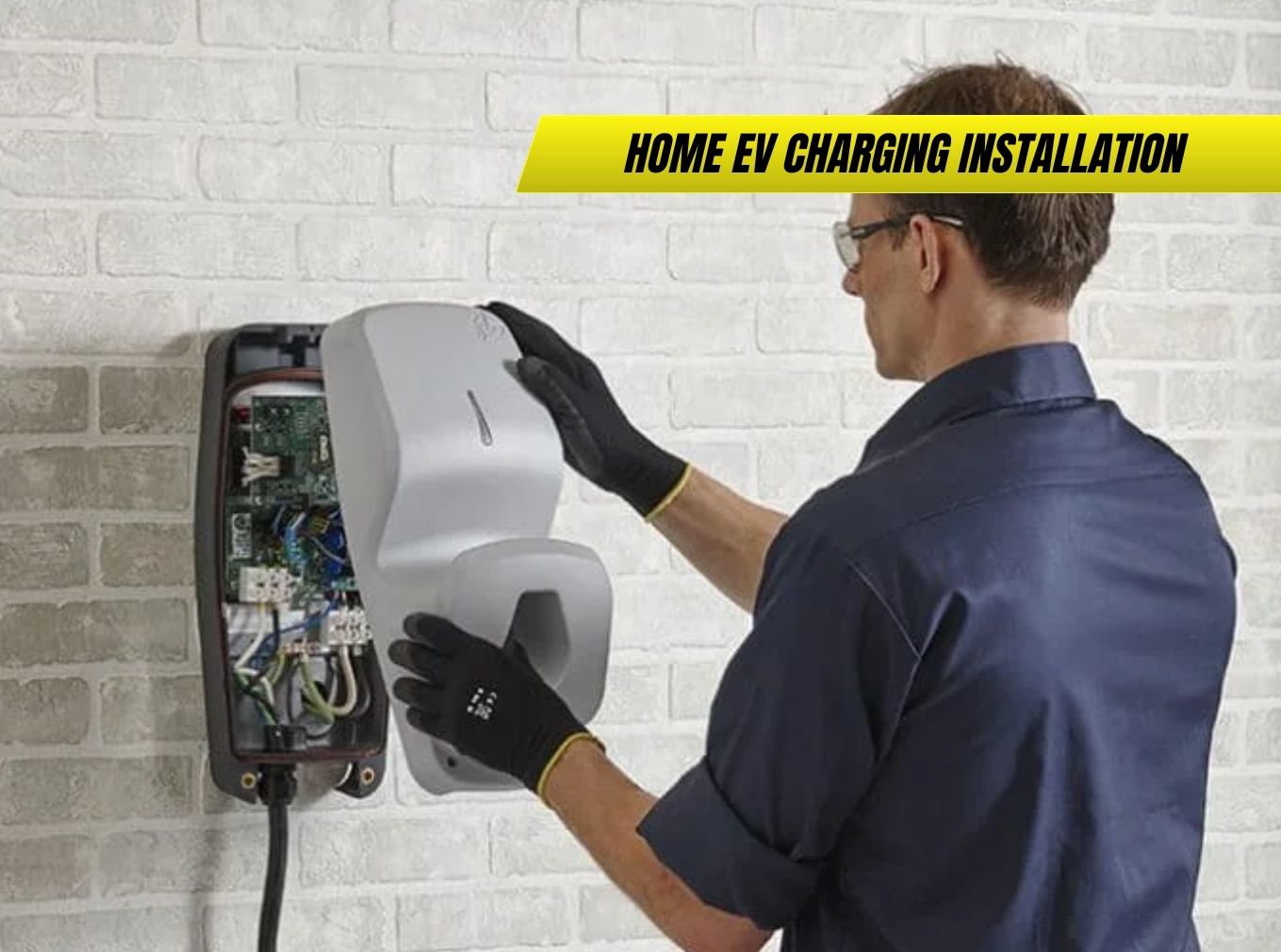
Complete guide to home EV charging installation in the UK. Learn about government grants, costs, installation requirements and choosing the best home charger for your electric vehicle.
Installing a home electric vehicle charger represents one of the most practical investments for EV owners, providing convenient overnight charging whilst reducing running costs significantly. From my experience helping families transition to electric motoring, proper home charging setup proves essential for maximising EV ownership benefits. This comprehensive guide covers UK government grants, installation requirements, equipment choices, and cost considerations for 2025.
Key Benefits: Home EV Charging in the UK
- Government grants covering up to £350 towards installation costs
- Overnight charging utilising cheaper off-peak electricity rates
- Convenience factor eliminating public charging queue concerns
- Faster charging with 7kW home chargers vs 3kW domestic sockets
- Property value increase with dedicated EV charging infrastructure
- Smart charging integration with renewable energy and time-of-use tariffs
Understanding Home EV Charging Options
Home charging typically operates at 7kW using dedicated wallbox units, providing 20-30 miles range per hour of charging for most electric vehicles. This proves significantly faster than domestic three-pin sockets limited to approximately 2.3kW, which can take 12-24 hours for full battery charges.
22kW three-phase chargers offer even faster home charging where properties have three-phase electricity supply, though most UK homes operate on single-phase systems limiting maximum charging speeds to 7kW.
From my analysis of current home charging technology, smart chargers have become the standard recommendation, offering app control, scheduling functions, load management, and grid integration capabilities that maximise efficiency and minimise costs.
Government Grants and Financial Support
EV Chargepoint Grant Scheme
The EV Chargepoint Grant provides £350 or 75% of total installation costs, whichever is lower, for eligible applicants. Flat dwellers and rented property residents can access these grants when dedicated parking is available.
Eligibility criteria include:
- Living in flats, maisonettes, or rented accommodation
- Having dedicated off-street parking
- Property built before 2022 (newer builds require EV charging provision)
- Installing smart chargers meeting government specifications
Application process involves approved installers claiming grants directly, reducing upfront costs for customers. Grant funding remains available throughout 2025, though budget limitations may affect availability in subsequent years.
| Grant Details | Specification | Coverage |
|---|---|---|
| Maximum grant | £350 per installation | 75% of total costs |
| Eligible properties | Flats, rented homes | With dedicated parking |
| Smart charger requirement | Government approved models | Mandatory for grants |
| Installation requirement | Approved installer | Professional certification |
Workplace Charging Scheme
Employers can access separate grant funding for workplace charging infrastructure, covering up to £350 per socket for employee use. This complementary scheme supports employees without home charging access.
Combined benefits from home and workplace charging create comprehensive EV infrastructure supporting complete transition from petrol or diesel vehicles.
Types of Home EV Chargers
Tethered vs Untethered Chargers
Tethered chargers include permanently attached cables, offering convenience for single-vehicle households. Cable lengths typically measure 5-8 metres, providing flexibility for different parking arrangements.
Untethered chargers require separate charging cables but accommodate multiple vehicle types and future EV purchases with different connector standards. This proves particularly valuable for households with multiple EVs or changing vehicle requirements.
Cost differences typically favour untethered units, though convenience factors often justify tethered installationsfor dedicated single-vehicle use.
Smart Charging Technology
Smart chargers provide remote monitoring, scheduling capabilities, and energy management features through smartphone apps. Load balancing prevents electrical system overloading when multiple devices operate simultaneously.
Time-of-use optimisation automatically schedules charging during cheaper electricity periods, typically overnight hours when grid demand decreases. Solar integration maximises renewable energy utilisation for properties with solar panel installations.
Dynamic load management adjusts charging rates based on household electricity consumption, preventing supply capacity exceedance and costly electrical upgrades.
Installation Requirements and Process
Electrical System Assessment
Professional electrical surveys determine supply capacity and upgrade requirements before installation. Typical UK homes with modern consumer units can accommodate 7kW chargers without major modifications.
Older properties may require consumer unit upgrades, earthing improvements, or supply capacity increases. Three-phase supplies enable faster charging speeds but remain uncommon in residential properties.
Circuit protection includes dedicated MCBs and RCD protection ensuring electrical safety throughout the charging process. Earth leakage monitoring provides additional safety measures specific to EV charging requirements.
Planning and Building Regulations
Permitted development rights generally allow home EV charger installation without planning permission, provided installations meet specific criteria regarding visibility and property boundaries.
Listed buildings and conservation areas may require planning consent for visible installations. Building regulations approval ensures electrical safety compliance and structural adequacy for wall-mounted units.
Apartment installations require landlord consent and may need management company approval for shared electrical systems and external building modifications.
For properties requiring electrical system diagnostics, our guide to spanner warning lights explains important warning indicators that may affect installation planning.
Choosing the Right Installer
OLEV Approved Installers
Government grants require OLEV-approved installers meeting strict competency standards and certification requirements. Authorised installers handle grant applications, certification processes, and ongoing supportresponsibilities.
Installation warranties typically cover equipment and workmanship for 3-12 months, though manufacturer warranties may extend equipment coverage significantly longer. Comprehensive insurance protects against installation defects and property damage.
Local installer networks often provide faster response times and better ongoing support compared to national franchises, though pricing and availability vary significantly by region.
Installation Process Timeline
Typical installations require 2-4 hours depending on complexity and electrical modifications required. Simple installations with adequate existing supply and short cable runs prove quickest.
Complex installations requiring electrical upgrades, three-phase connections, or extensive cable routing may require multiple visits and several days completion time.
Post-installation testing includes electrical safety checks, charging functionality verification, and smart features configuration. Customer handover covers operation instructions, app setup, and maintenance requirements.
Running Costs and Tariff Options
Electricity Tariff Comparison
Standard tariffs charge consistent rates throughout the day, typically 25-30p per kWh as of 2025. Economy 7 tariffs offer cheaper overnight rates (approximately 12-15p per kWh) during seven-hour off-peak periods.
Smart tariffs provide multiple rate periods optimising EV charging costs alongside household consumption. Intelligent Octopus and similar products offer EV-specific rates as low as 7.5p per kWh during optimal charging windows.
Solar integration enables self-consumption of renewable energy, potentially reducing charging costs to zero during peak generation periods. Battery storage extends solar utilisation into evening charging sessions.
| Tariff Type | Peak Rate | Off-Peak Rate | EV-Specific Benefits |
|---|---|---|---|
| Standard | 28p/kWh | N/A | None |
| Economy 7 | 32p/kWh | 14p/kWh | 7-hour cheap period |
| Smart/Agile | Variable | 7.5-15p/kWh | Flexible pricing |
| Solar+Battery | Grid rate | Free/Export | Maximum self-consumption |
Annual Running Cost Examples
Typical annual mileage of 10,000 miles requires approximately 2,500-3,500kWh depending on vehicle efficiency and driving conditions. Home charging at 14p/kWh off-peak costs £350-490 annually.
Public charging for equivalent mileage at average rates of 35-45p/kWh increases annual costs to £875-1,575, demonstrating significant home charging savings.
Petrol equivalent at current fuel prices and 40mpg efficiency costs approximately £1,400-1,800 annually, confirming substantial EV savings with home charging.
Smart Home Integration
Renewable Energy Optimisation
Solar panel integration enables excess generation to power EV charging during daylight hours. Smart chargersautomatically adjust charging rates based on available solar output and battery state of charge.
Home battery systems store excess solar energy for evening EV charging, maximising renewable energy utilisation and grid independence. Integrated energy management coordinates heating, hot water, and EV charging priorities.
Grid services participation allows EV batteries to provide demand response and frequency regulation, potentially generating income whilst supporting grid stability.
Future-Proofing Considerations
Vehicle-to-Grid (V2G) technology enables bidirectional charging, allowing EV batteries to supply household electricity during peak demand periods. Current UK regulations are developing to support V2G implementations.
Load management capabilities prepare installations for multiple EV ownership and increasing household electricity demands. Scalable systems accommodate future expansion without complete reinstallation.
Connector standards continue evolving, though Type 2 remains UK standard for AC charging. Universal compatibility ensures long-term equipment viability across different vehicle manufacturers.
Common Installation Challenges
Property Limitations
Rented properties require landlord permission and may face restrictions on permanent modifications. Portable charging solutions offer alternatives though typically with reduced charging speeds and convenience.
Apartment blocks face complex approval processes involving management companies, other residents, and shared electrical systems. Dedicated parking requirements may prove challenging in urban environments.
Listed buildings and conservation areas restrict visible modifications, requiring careful planning and potentially alternative solutions like discrete cable routing and hidden installations.
Electrical Limitations
Older properties with inadequate electrical supplies may require expensive upgrades including new consumer units, supply capacity increases, or extensive rewiring. Cost implications can significantly exceed grant coverage.
Rural properties with limited electricity supply may need supply reinforcement from distribution network operators, potentially involving significant delays and additional costs.
Shared supplies in converted properties create complex approval processes and may require electrical system separation before individual charger installation.
❓ Frequently Asked Questions
H4: How much does home EV charging installation cost without grants?
Total installation costs typically range £800-£1,500 including equipment and labour for standard installations. Complex installations requiring electrical upgrades may cost £1,500-£3,000+. Equipment costs account for £400-£800, whilst installation labour ranges £300-£700 depending on complexity and regional pricing variations.
H4: Can I install an EV charger if I don’t have a driveway?
On-street parking without dedicated off-street space prevents standard home charger installation due to cable trailing and safety concerns. Alternative solutions include workplace charging, public rapid charging networks, or community charging hubs. Some local councils are trialling lamppost charging and dedicated residential charging bays.
H4: What’s the difference between Mode 2 and Mode 3 charging?
Mode 2 uses portable units plugging into domestic sockets or dedicated outlets, typically limited to 3kW. Mode 3involves dedicated wallbox chargers with permanent installation offering 7-22kW charging speeds. Mode 3provides enhanced safety, faster charging, smart features, and weather resistance making it preferred for home installations.
H4: Do I need special electricity supply for EV charging?
Standard UK domestic supplies (230V single-phase) accommodate 7kW chargers without major modifications in most properties. Three-phase supplies enable 22kW charging but remain uncommon in residential properties. Supply capacity assessments determine if consumer unit upgrades or supply reinforcement are necessary before installation.
H4: How long does it take to charge an electric car at home?
7kW home chargers typically provide 20-30 miles range per hour depending on vehicle efficiency. Complete charging from empty to full takes 4-8 hours for most modern EVs with 40-80kWh batteries. Overnight chargingeasily accommodates daily driving requirements for typical UK mileage patterns of 20-40 miles per day.
H4: Can I use any electrician to install my home EV charger?
Government grants require OLEV-approved installers with specific EV charging certification. Non-approved installers cannot access grants and may lack specialised knowledge of EV charging regulations and safety requirements. Approved installers provide certification, warranties, and ongoing support ensuring compliant and safe installations.
H4: What happens to my home charger if I sell my house?
Home EV chargers typically remain with properties as permanent installations, potentially adding property valueand appeal to EV-driving buyers. Removal is possible but rarely cost-effective given installation complexity. New owners can continue using existing chargers with different vehicles provided connector compatibility, or upgrade equipment whilst retaining electrical infrastructure.
Planning Your Home Charging Setup
Installing home EV charging represents a significant step towards energy independence and sustainable motoring. From my experience, proper planning and professional installation ensure optimal performance and long-term satisfaction with home charging investments.
Grant availability makes 2025 an excellent time for installation, though funding limitations may affect future support. Early applications through approved installers secure maximum financial benefits whilst building sustainable transport infrastructure.
Technology evolution continues improving efficiency and reducing costs, though current systems provide excellent functionality and future compatibility. Smart charging features ensure optimal energy utilisation and grid integration supporting broader renewable energy adoption.
For those considering electric vehicle purchase alongside charging infrastructure, our guides to [best second-hand electric cars](https://





