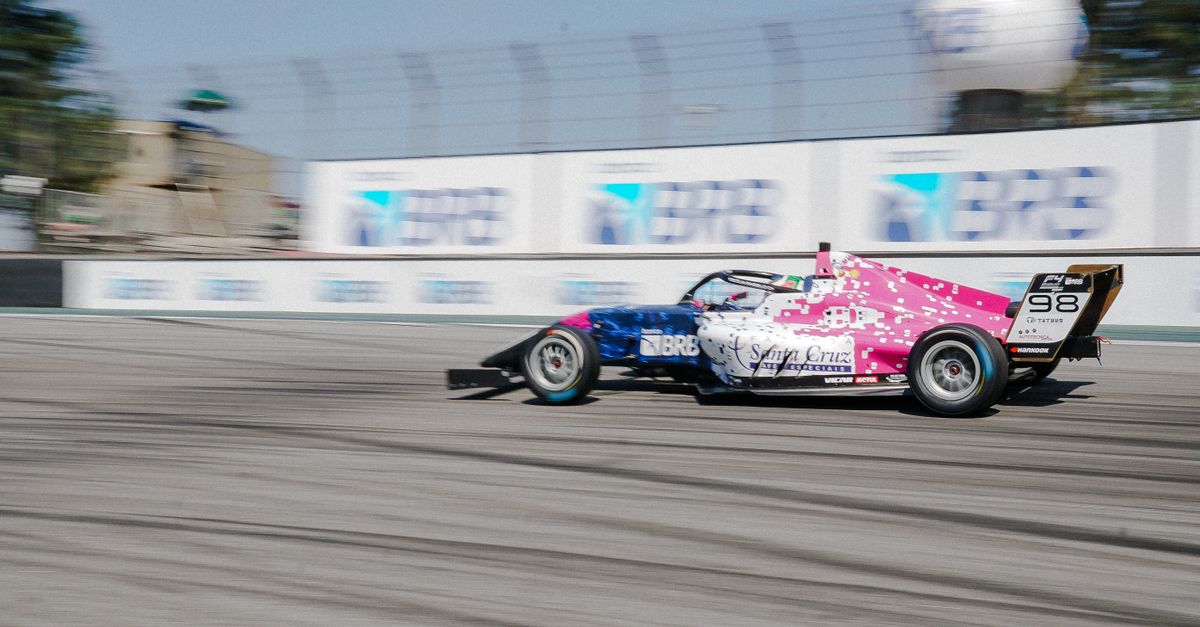
Formula 1 qualifying is the part of a race weekend that turns one-lap pace into the starting order for the Grand Prix. Practice helps teams prepare the cars, while the main qualifying session decides where drivers line up. On a Sprint weekend, a separate qualifying session has a different job. Formula 1’s beginner’s guide outlines the standard weekend structure.
Practice: preparation, not pole position
A standard Formula 1 weekend normally includes free practice before three-part race qualifying. Drivers use these sessions to assess car set-up and learn the circuit, but practice does not normally determine the race grid.
That means the fastest driver in practice has not secured pole position. The practice timing sheet shows how the cars performed during preparation; qualifying decides the important starting places. Formula 1’s weekend guide explains this distinction.
The three knockout stages
Main Grand Prix qualifying is divided into Q1, Q2 and Q3. Drivers set lap times in each phase, with slower cars eliminated between phases and the fastest drivers progressing. The format is described in the official F1 glossary and the FIA Sporting Regulations.
Q1: the first cut
Q1 is the opening qualifying phase. Its job is to establish which drivers advance to Q2. The slowest group is eliminated at the end of the session, so those drivers do not get a second opportunity to improve their times in Q2.
Q2: reaching the pole-position fight
The drivers who survive Q1 set another batch of lap times in Q2. The slower drivers in this group are then eliminated, while the quickest progress to Q3.
Q2 therefore decides who earns the chance to compete for pole position, as well as separating the drivers who reach the final phase from those who do not.
Q3: deciding pole
Q3 is the final phase and the contest for the front of the Grand Prix grid. The driver who records the quickest Q3 lap takes pole position. The other Q3 lap times establish the remaining leading grid places.
Pole position means starting at the front; it is not a race result. The Grand Prix still has to be completed, and qualifying only determines the starting order.
The broad Q1-Q2-Q3 structure is the key point, but the exact number of cars eliminated is a detail set by the applicable sporting regulations. It is safer to check the FIA rulebook for the season being watched than to rely on an older fixed number, as regulation versions can differ.
Sprint weekends: two qualifying sessions, two starting orders
A Sprint weekend includes Sprint Qualifying as a separate session. It sets the starting order for the Sprint, while the main qualifying session determines the grid for the Grand Prix. The Sprint format also provides less practice running than a conventional weekend, according to McLaren’s Formula 1 guide and Formula 1’s weekend explainer.
So when watching a Sprint event, it is important to identify which starting order is being decided. Sprint Qualifying is for the Sprint; main qualifying is for the Grand Prix.
Quick reference
| Session | What it decides |
|---|---|
| Free practice | Car set-up and circuit learning; it does not normally determine the Grand Prix grid |
| Q1 | Which drivers advance to Q2 |
| Q2 | Which drivers advance to Q3 |
| Q3 | Pole position and the leading Grand Prix grid places |
| Sprint Qualifying | The starting order for the Sprint |
The simple version
Practice is preparation. Q1 and Q2 progressively reduce the field, while Q3 decides pole and the front of the Grand Prix grid. On a Sprint weekend, Sprint Qualifying should be treated as a separate session because it arranges the Sprint rather than the Grand Prix.