
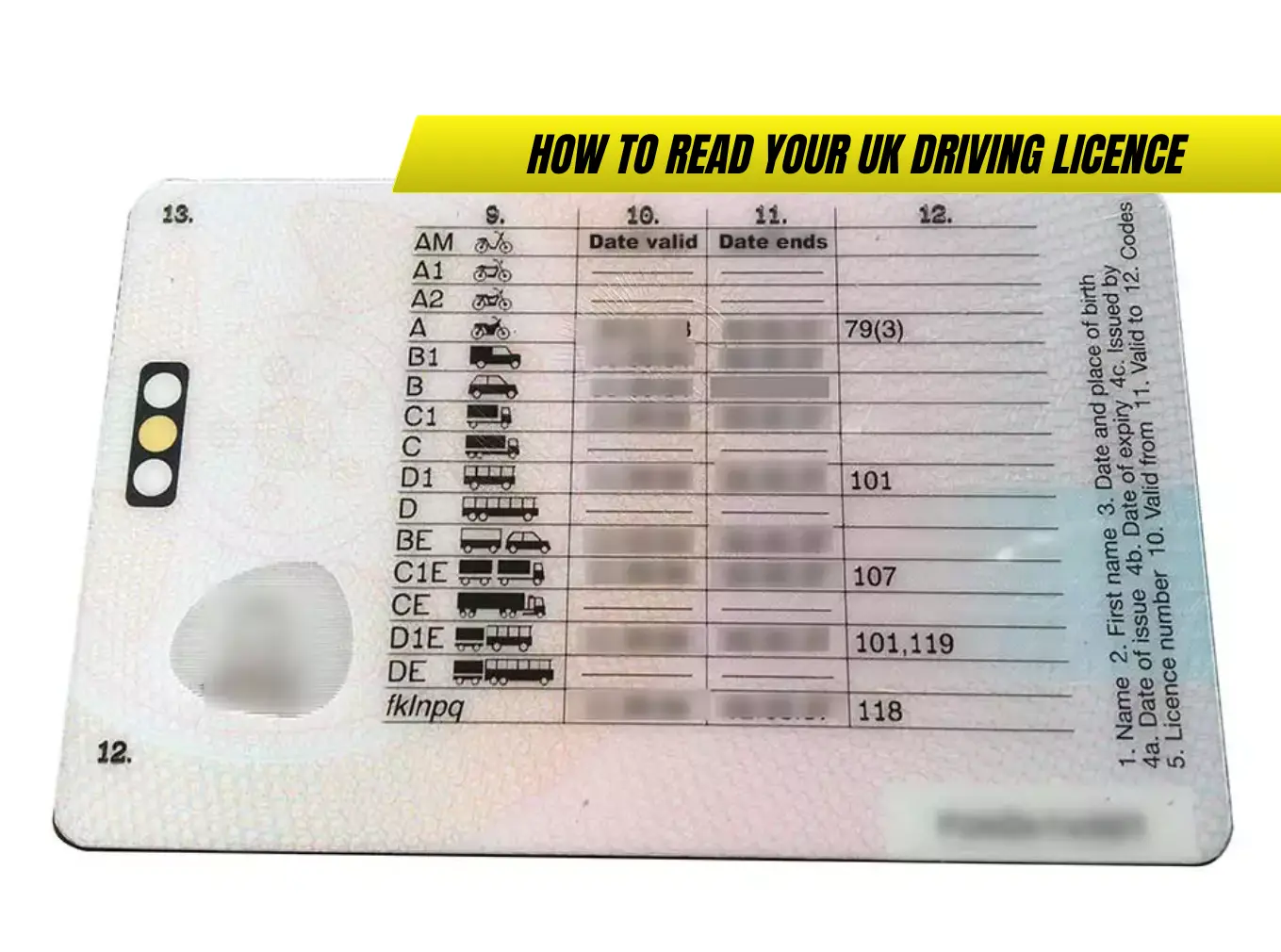
Complete UK driving licence guide 2025: Read categories, understand codes, vehicle entitlements, restrictions, and everything drivers need to know about their licence.
Understanding your UK driving licence has become increasingly important as vehicle categories multiply and regulations evolve to accommodate new technologies and safety requirements. What appears as a simple plastic card actually contains a wealth of coded information determining which vehicles you can legally drive, under what conditions, and with what restrictions. From basic Category B car entitlements to specialized commercial licences, knowing how to decode this information prevents legal violations, ensures insurance compliance, and helps identify opportunities for expanding your driving privileges through additional testing or training.
Key Takeaways:
- ✓ Category B (standard car licence) allows vehicles up to 3,500kg plus trailer up to 750kg
- ✓ Over 50 restriction codes indicate conditions like eyesight correction (01) or hearing aids (02)
- ✓ Licence entitlements vary based on when you passed your test, particularly for towing
- ✓ Medical standards differ between Group 1 (cars/motorcycles) and Group 2 (commercial vehicles)
- ✓ Digital licence checking available online using licence number and postcode
Understanding Your UK Driving Licence Structure
The modern UK photocard driving licence contains sophisticated information systems designed to provide comprehensive details about your driving entitlements, restrictions, and personal information in a secure, standardized format. In my experience helping drivers understand their licences, the complexity often surprises people who assume their licence simply permits “driving cars.”
Front of Licence (Sections 1-9):
Personal Information Sections
- Section 1: Surname (family name)
- Section 2: Other names (first and middle names)
- Section 3: Date and place of birth
- Section 4a: Date of issue
- Section 4b: Date of expiry
- Section 4c: Issuing authority (DVLA)
- Section 5: Licence number (16-character unique identifier)
- Section 6: Photograph
- Section 7: Signature
- Section 8: Address
- Section 9: Vehicle categories you can drive
Back of Licence (Sections 10-12): The reverse side provides detailed breakdown of driving entitlements with specific dates and any applicable restrictions.
Understanding the Licence Number System
The 16-character licence number contains encoded personal information:
- Characters 1-5: First five letters of surname (padded with 9s if needed)
- Characters 6-7: Decade and year of birth
- Characters 8-9: Month of birth (plus 50 if female)
- Characters 10-11: Date of birth
- Characters 12-13: Year of birth and first initial
- Characters 14: Middle initial
- Characters 15-16: Computer-generated check digits for security
From my point of view, understanding this system helps verify licence authenticity and explains why licence numbers appear complex but follow logical patterns.
For comprehensive guidance on maintaining your driving record, our detailed guide to UK driving licence pointsprovides essential information about penalty management.
Vehicle Categories: What You Can Drive
The category system determines which vehicles your licence authorizes you to operate, with specific requirements, restrictions, and testing procedures for each classification.
Two-Wheeled Vehicle Categories
Category AM (Mopeds and Light Vehicles):
- Vehicles: Two or three-wheeled vehicles with maximum speed 28mph (45km/h)
- Engine: Up to 50cc for combustion engines
- Age: 15 years minimum (16 in Northern Ireland)
- Special: Light quadricycles up to 425kg (excluding batteries for electric)
- Requirements: CBT (Compulsory Basic Training) and theory test
Category A1 (Light Motorcycles):
- Engine: Up to 125cc
- Power: Maximum 11kW (14.7hp)
- Power-to-weight: Not exceeding 0.1kW/kg
- Age: 17 years minimum
- Includes: Motor tricycles up to 15kW power output
- Testing: Theory and practical motorcycle tests required
Category A2 (Medium Motorcycles):
- Power: Up to 35kW (47.6hp)
- Power-to-weight: Not exceeding 0.2kW/kg
- Age: 19 years minimum
- Restrictions: Cannot be derived from vehicle with more than double the power
- Progression: Can upgrade to Category A after 2 years experience
Category A (Full Motorcycles):
- Power: Over 35kW or power-to-weight exceeding 0.2kW/kg
- Age: 24 years minimum (or 21+ with A2 upgrade route)
- Includes: Motor tricycles over 15kW
- Testing: Direct access or progressive route from A2
Car and Light Vehicle Categories
Category B (Standard Cars): This represents the most common UK driving entitlement, but specific allowances vary based on test dates.
Post-1997 Test Holders:
- Vehicles: Up to 3,500kg Maximum Authorized Mass (MAM)
- Passengers: Up to 8 passenger seats (plus driver)
- Trailers: Up to 750kg, or heavier if combined weight stays under 3,500kg
- Tricycles: Motor tricycles over 15kW (if over 21 years old)
Pre-1997 Test Holders (Grandfather Rights):
- Enhanced Entitlements: Vehicle and trailer combinations up to 8,250kg MAM
- Minibuses: Can drive minibuses with trailers over 750kg
- Towing: Significantly higher towing allowances than newer licence holders
Category B Automatic:
- Restriction: Limited to automatic transmission vehicles only
- Upgrade: Can convert to manual entitlement through manual transmission test
- Impact: Affects rental car options and vehicle choice flexibility
Category BE (Car and Trailer):
- Requirements: Full Category B licence first
- Trailers: Over 750kg MAM up to 3,500kg
- Testing: Specific trailer test focusing on coupling, reversing, and safety
- Applications: Caravans, boat trailers, large equipment transport
Commercial Vehicle Categories
Category C1 (Medium Vehicles):
- Weight: 3,500kg to 7,500kg MAM
- Trailers: Up to 750kg
- Age: 18 years minimum
- Medical: Enhanced medical standards (Group 2)
- Uses: Large vans, small trucks, ambulances
Category C1E (Medium Vehicles with Trailers):
- Combination: C1 vehicles with trailers over 750kg
- Total Weight: Combined MAM cannot exceed 12,000kg
- Requirements: C1 licence plus additional trailer test
Category C (Large Goods Vehicles):
- Weight: Over 3,500kg MAM
- Trailers: Up to 750kg
- Professional: Usually requires Driver CPC for commercial use
- Medical: Annual medical examinations after age 45
Category CE (Large Goods Vehicles with Trailers):
- Combination: Category C vehicles with trailers over 750kg
- Applications: Articulated lorries, large truck and trailer combinations
- Professional: Essential for many commercial transport roles
Passenger Vehicle Categories
Category D1 (Minibuses):
- Length: Up to 8 metres
- Passengers: 9-16 passenger seats
- Age: 21 years minimum
- Medical: Group 2 medical standards
- Uses: Small buses, community transport
Category D (Full Buses):
- Passengers: More than 8 passenger seats
- Age: 24 years minimum (21 with certificate)
- Professional: Driver CPC required for commercial operation
- Responsibility: Public Service Vehicle (PSV) licence may be needed
Restriction Codes: Understanding Your Conditions
UK driving licences use numerical codes to indicate specific conditions that drivers must meet to operate vehicles safely and legally.
Vision and Sensory Codes
Code 01 – Eyesight Correction:
- Requirement: Must wear glasses or contact lenses while driving
- Legal Status: Driving without correction when code 01 present is illegal
- Updates: Must inform DVLA of significant vision changes
- Enforcement: Police can check compliance during routine stops
Code 02 – Hearing/Communication Aid:
- Requirement: Must use hearing aid or communication device
- Applications: Drivers with hearing impairments
- Safety: Ensures ability to hear emergency vehicle sirens
- Technology: May include visual alert systems
Code 05 – Driving Only in Daylight:
- Restriction: No driving between sunset and sunrise
- Medical: Usually relates to night vision problems
- Impact: Significantly limits driving flexibility
- Review: Regular medical assessments for potential removal
Physical Adaptation Codes
Code 10 – Modified Transmission:
- Requirement: Vehicle must have adapted transmission controls
- Applications: Drivers with limited mobility
- Technology: Hand controls for gear changes
- Vehicles: Must ensure any driven vehicle has appropriate modifications
Code 15 – Modified Clutch:
- Requirement: Adapted clutch operation
- Applications: Left leg disabilities, reduced strength
- Alternatives: Automatic transmissions may remove need for modification
Code 20 – Modified Braking Systems:
- Requirement: Adapted brake controls
- Safety Critical: Essential for emergency stopping capability
- Variations: Hand-operated brakes, left-foot braking systems
Code 25 – Modified Accelerator Systems:
- Requirement: Adapted accelerator controls
- Common: Left-foot accelerator installations
- Integration: Often combined with other control modifications
Complex Adaptation Codes
Codes 30-35 – Combined Control Systems:
- Code 31: Pedal adaptations and safeguards
- Code 32: Combined brake and accelerator systems
- Code 33: Combined brake, accelerator, and steering systems
- Code 35: Modified control layouts
Code 40 – Modified Steering:
- Applications: Reduced arm mobility, one-handed operation
- Technology: Spinner knobs, reduced-effort steering systems
- Assessment: Regular review to ensure continued suitability
Motorcycle-Specific Codes
Code 44 – Motorcycle Modifications: With subcategories for specific adaptations:
- 44(1): Single-operated brake systems
- 44(2): Adapted front wheel brake
- 44(3): Adapted rear wheel brake
- 44(4): Adapted accelerator controls
- 44(5): Modified transmission and clutch
- 44(6): Adapted rear-view mirrors
- 44(7): Modified controls (indicators, lights)
- 44(8): Seat height modifications
For comprehensive guidance on vehicle safety systems that interact with licence restrictions, our detailed guide to vehicle warning systems provides essential information.
Medical Standards and Licence Categories
UK driving licences operate under two distinct medical standard systems, with requirements varying significantly between personal and commercial driving entitlements.
Group 1 Medical Standards
Applicable Categories:
- Category AM, A1, A2, A (motorcycles)
- Category B, BE (cars and light trailers)
- Category B1 (light vehicles)
- Category f, g, h, k (agricultural and specialized vehicles)
Standard Requirements:
- Vision: 6/12 vision with both eyes (6/6 with one eye if monocular)
- Visual Field: 120-degree horizontal field required
- Medical Conditions: Self-declaration system with DVLA notification for specified conditions
- Renewal: Every 10 years until age 70, then every 3 years
Common Disqualifying Conditions:
- Epilepsy: Unless seizure-free for specified periods
- Diabetes: Requiring insulin with hypoglycemic episodes
- Heart Conditions: Serious cardiovascular diseases
- Mental Health: Conditions affecting judgment or reaction times
Group 2 Medical Standards (Enhanced)
Applicable Categories:
- Categories C1, C1E, C, CE (goods vehicles)
- Categories D1, D1E, D, DE (passenger vehicles)
- Professional driving entitlements
Enhanced Requirements:
- Vision: 6/9 or better with both eyes
- Medical Examination: Professional medical assessment required
- Frequency: More frequent renewals and health monitoring
- Conditions: Stricter standards for disqualifying medical conditions
Professional Medical Assessment:
- Initial Application: Full medical examination by registered medical practitioner
- Periodic Review: Regular reassessment based on age and medical history
- Condition Monitoring: Ongoing supervision of chronic conditions
- Occupational Health: Consideration of professional driving demands
Age-Related Licence Management
Standard Renewals:
- Under 70: 10-year renewal periods
- 70+: 3-year renewal periods with enhanced medical scrutiny
- Medical Monitoring: Increased frequency of health assessments
Professional Driver Requirements:
- Age 45: Annual medical examinations begin for Group 2 categories
- Age 65: Enhanced medical assessment protocols
- Fitness Maintenance: Ongoing responsibility to maintain medical standards
Conditional Licensing: Some medical conditions may result in conditional licences with:
- Time Limitations: Shorter validity periods
- Regular Review: More frequent medical assessments
- Restriction Codes: Specific conditions for safe operation
- Monitoring Requirements: Ongoing medical supervision
Towing Entitlements and Trailer Regulations
Towing regulations represent one of the most complex aspects of UK driving entitlements, with significant variations based on when drivers passed their tests and what additional qualifications they possess.
Historical Changes in Towing Rules
Pre-1997 Licence Holders:
- Grandfather Rights: Can tow combinations up to 8,250kg MAM
- Minibuses: Entitled to drive minibuses with trailers over 750kg
- No Additional Tests: Full entitlement without further examination
- Insurance: Must ensure adequate cover for higher weight limits
1997-2013 Licence Holders:
- Standard Entitlement: Vehicles up to 3,500kg with trailers up to 750kg
- Combined Weight: Total of 4,250kg maximum
- Heavier Trailers: Could tow over 750kg if combined weight stayed under 3,500kg
- B+E Test: Required for heavier combinations until December 2021
Post-2013 Changes: Recent regulatory changes have simplified towing entitlements:
- December 2021: Removed requirement for separate B+E test
- Automatic Entitlement: All licence holders can now tow up to 3,500kg MAM
- DVLA Records: Automatically updated to reflect new entitlements
- Physical Licence: BE category added at next renewal
Current Towing Regulations
Standard Entitlements (All Licence Holders):
- Vehicle Weight: Up to 3,500kg MAM
- Trailer Weight: Up to 3,500kg MAM
- Combined Total: Must respect vehicle manufacturer’s towing limits
- Brake Requirements: Trailers over 750kg must have independent braking
Safety Requirements:
- Mirrors: Extended mirrors if trailer wider than car
- Lighting: Trailer must display same number plate as towing vehicle
- Breakaway Cable: Required on trailers with independent brakes
- Loading: Secure load distribution and proper nose weight
Speed Restrictions When Towing:
- Motorways: 60mph maximum (normally 70mph)
- Dual Carriageways: 60mph maximum
- Single Carriageways: 50mph maximum (normally 60mph)
- Built-up Areas: 30mph (unchanged from normal limits)
Professional and Heavy Towing
Category C1E Requirements: For combinations exceeding 3,500kg but under 12,000kg total:
- Additional Test: Specific trailer test required
- Medical Standards: Group 2 medical certification
- Professional Use: Often requires Driver CPC qualification
- Insurance: Commercial vehicle insurance typically required
Applications:
- Large Caravans: Heavy American-style RVs
- Boat Trailers: Large sailing boats and motor cruisers
- Equipment Transport: Construction or agricultural machinery
- Commercial Trailers: Business goods transport
For comprehensive guidance on vehicle compliance that affects towing, our detailed guide to UK speed camera regulations provides essential enforcement information.
Digital Licence Checking and Online Services
Modern DVLA services provide comprehensive digital access to licence information, enabling drivers, employers, and rental companies to verify entitlements and restrictions electronically.
Online Licence Checking Service
GOV.UK Check Your Licence:
- Requirements: Licence number, National Insurance number, postcode on licence
- Output: Detailed PDF showing all entitlements and restrictions
- Security: Generates unique check codes for third-party verification
- Updates: Real-time information reflecting current status
Information Provided:
- Categories: All vehicle types you can drive
- Restrictions: Any codes and their meanings
- Validity Dates: Start and end dates for each entitlement
- Penalty Points: Current endorsements and their expiry dates
Employer and Rental Verification
Business Use:
- Employment Checks: Employers can verify driver qualifications
- Insurance Compliance: Ensuring appropriate coverage for licence category
- Fleet Management: Monitoring staff driving entitlements
- Compliance Auditing: Regular verification of commercial driver qualifications
Rental Car Services:
- Entitlement Verification: Confirming ability to drive rental vehicle
- International Recognition: Supporting overseas car rental
- Age Restrictions: Combining with rental company age policies
- Insurance Validation: Ensuring coverage matches licence restrictions
Licence Renewal and Updates
Online Renewal Services:
- Standard Renewals: Photo updates and address changes
- Medical Declarations: Self-certification for health conditions
- Payment Processing: Secure online fee payment
- Document Delivery: New licences posted to registered address
Notification Requirements: Drivers must inform DVLA of:
- Address Changes: Within specified timeframes
- Medical Conditions: That may affect driving ability
- Name Changes: Following marriage or legal changes
- Vision Changes: Significant deterioration requiring correction
Special Circumstances and Exemptions
Various situations create special considerations for licence requirements, restrictions, or entitlements that drivers should understand.
Disability Adaptations and Support
Automatic Entitlement Extensions:
- Physical Disabilities: May receive additional category entitlements
- Provisional Entitlements: Disabled drivers with Category B provisional may get A1 motorcycle entitlement
- Assessment Support: DVLA provides specialized assessment services
- Equipment Funding: Some adaptations eligible for government support
Blue Badge Integration:
- Parking Benefits: Blue Badge scheme provides parking concessions
- Licence Restrictions: May include codes requiring specific vehicle adaptations
- Assessment Coordination: Medical assessments may coordinate with Blue Badge applications
- Vehicle Adaptations: Motability scheme supports adapted vehicle access
Military and Emergency Services
Service Personnel:
- Enhanced Entitlements: Military driving qualifications may transfer to civilian licences
- Accelerated Testing: Some services provide expedited licence acquisition
- Professional Recognition: Military transport experience recognized for civilian applications
- International Deployment: Special provisions for overseas service
Emergency Services:
- Blue Light Training: Additional qualifications for emergency response driving
- Enhanced Categories: Access to specialized vehicle categories
- Professional Development: Career progression through additional licence categories
- Safety Standards: Higher medical and competency standards
International Drivers
Visiting Drivers:
- Temporary Recognition: International licences recognized for limited periods
- Exchange Procedures: Conversion processes for permanent residents
- EU Licences: Specific arrangements for European licence holders
- Testing Requirements: When UK tests are required for licence exchange
UK Drivers Abroad:
- International Driving Permits: Additional documentation for overseas driving
- Recognition Periods: How long UK licences remain valid abroad
- Insurance Considerations: Coverage requirements for international driving
- Return Procedures: Maintaining UK licence validity during extended overseas residence
Frequently Asked Questions
What does Category B on my driving licence allow me to drive?
Category B allows you to drive vehicles up to 3,500kg Maximum Authorised Mass (MAM) with up to 8 passenger seats (plus driver). You can tow trailers up to 750kg, or heavier trailers if the combined vehicle and trailer weight doesn’t exceed 3,500kg. If you passed your test before 1 January 1997, you have enhanced “grandfather rights” allowing vehicle and trailer combinations up to 8,250kg MAM. You can also drive motor tricycles over 15kW power if you’re over 21. Recent changes mean all UK licence holders can now tow trailers up to 3,500kg MAM without additional tests.
What do the restriction codes on my licence mean and are they legally binding?
Restriction codes are legally binding conditions you must meet while driving. Code 01 means you must wear glasses or contact lenses – driving without them is illegal. Code 02 requires hearing aids or communication devices. Codes 10-44 indicate various vehicle modifications required (modified transmission, brakes, steering, etc.). These codes ensure safe driving for people with medical conditions or disabilities. Violating restriction codes can result in prosecution for driving otherwise than in accordance with your licence, potentially invalidating insurance and resulting in fines, penalty points, or driving bans.
How can I check what vehicles I’m entitled to drive online?
Use the GOV.UK “view your driving licence information” service. You’ll need your driving licence number, National Insurance number, and the postcode on your licence. The service generates a detailed PDF showing all vehicle categories you can drive, any restriction codes, validity dates, and current penalty points. This creates a secure check code for third-party verification. The information is real-time and reflects your current entitlements. Employers, rental companies, and insurance providers often use this service to verify driving qualifications.
Can I drive automatic cars if I passed my test in a manual car?
Yes, a manual driving licence (Category B) allows you to drive both manual and automatic vehicles. However, if you passed your test in an automatic car, you have a restricted licence (Category B Auto) that only permits automatic vehicles. You cannot legally drive manual cars with an automatic-only licence. To remove this restriction, you must pass a driving test in a manual vehicle. This is important for rental cars abroad, employment requiring manual vehicles, and vehicle purchasing decisions. Check your licence for any automatic restriction.
What’s the difference between Group 1 and Group 2 medical standards?
Group 1 standards apply to cars, motorcycles, and light vehicles (Categories A, AM, B, BE, B1), requiring basic fitness with self-declaration of medical conditions and 6/12 vision standard. Group 2 standards govern commercial vehicles (Categories C, CE, D, DE), requiring professional medical examinations, higher vision standards (6/9 or better), annual medicals after age 45, and stricter criteria for disqualifying conditions. Group 2 licence holders face more frequent renewals, enhanced medical monitoring, and potentially career-ending medical disqualifications that wouldn’t affect Group 1 licences.
When do I need to renew my driving licence and what triggers a renewal?
Standard licences require renewal every 10 years until age 70, then every 3 years. You must renew if your photo is over 10 years old, your address changes, your name changes (marriage, etc.), you develop medical conditions affecting driving, or your licence is lost, stolen, or damaged. Commercial licence holders (Group 2) face more frequent renewals and medical assessments. Renewal involves updating photos, confirming medical fitness, and paying renewal fees. Driving with an expired licence is illegal and may invalidate insurance, even if you’ve applied for renewal but not received the new licence.
What happens if I want to upgrade my licence to drive larger vehicles?
Upgrading requires applying for additional categories through DVLA. For motorcycles, you can progress from A1 to A2 to A after specified periods and ages. For commercial vehicles (C1, C, D1, D), you need provisional entitlement, enhanced medical certification, theory tests, and practical tests. Many categories require you to be over specific ages (21 for D1, 24 for D). Commercial driving often requires Driver Certificate of Professional Competence (CPC) qualification. Costs include application fees, medical examinations, theory and practical test fees, and training expenses. Professional instruction is usually essential for passing commercial vehicle tests.
Conclusion: Making Sense of Your Driving Entitlements
Your UK driving licence represents far more than a simple permission to drive cars – it’s a sophisticated legal document that precisely defines your vehicle entitlements, medical restrictions, and regulatory compliance requirements. Understanding how to read and interpret this information protects you from legal violations while helping you maximize your driving opportunities within the bounds of safety and regulation.
Key Understanding Points:
Category Complexity: The progression from basic Category B through specialized commercial categories reflects the increasing skill, responsibility, and safety requirements associated with different vehicle types. Each category carries specific training, testing, and medical requirements that ensure appropriate competency.
Restriction Awareness: Licence restriction codes aren’t optional suggestions – they’re legally binding conditions that ensure safe driving for people with medical conditions or disabilities. Ignoring these restrictions can result in serious legal consequences and insurance invalidation.
Historical Considerations: When you passed your driving test significantly affects your entitlements, particularly for towing. Understanding grandfather rights and regulatory changes helps ensure you’re operating within your legal permissions while identifying opportunities for expanded entitlements.
Medical Responsibility: The distinction between Group 1 and Group 2 medical standards reflects the increased responsibility that comes with commercial driving. Professional drivers face enhanced medical scrutiny that may affect long-term career prospects.
The digital age has made licence verification easier through online services, but this also means employers, insurers, and rental companies can quickly verify your exact entitlements and restrictions. Maintaining accurate, up-to-date licence information becomes increasingly important in this transparent environment.
Whether you’re a new driver understanding your first Category B entitlement or a professional driver managing complex commercial qualifications, the key lies in treating your licence as a dynamic document that requires ongoing attention and compliance. Regular review of your entitlements, prompt notification of relevant changes, and understanding of the restrictions and opportunities your licence provides forms the foundation of responsible, legal driving in the UK.
Modern driving demands go beyond simply having “a driving licence” to understanding exactly what your specific licence permits and requires. This detailed knowledge protects your legal standing while ensuring you can take full advantage of the driving opportunities your qualifications provide.
For additional guidance on UK motoring regulations and compliance, explore our comprehensive guides to UK toll road systems and vehicle maintenance requirements that support safe and legal vehicle operation.





