
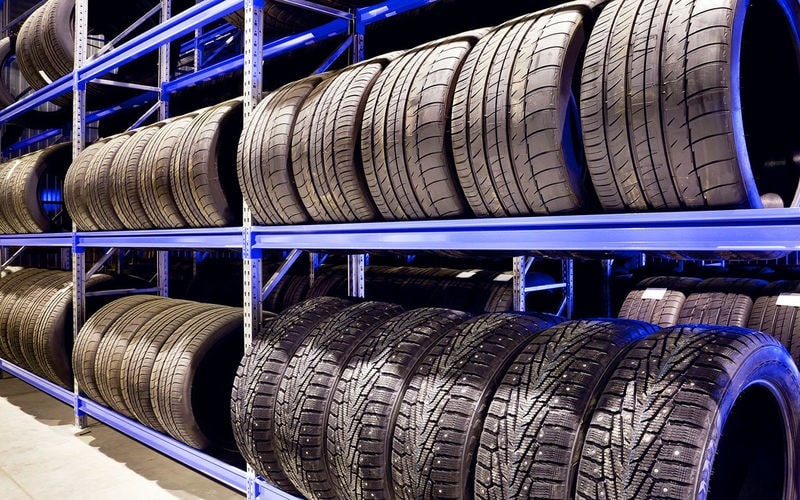
The complete guide to storing seasonal tyres correctly at home — covering the errors that cause premature ageing, cracking, and deformation, and the correct storage conditions for maximum tyre longevity.
Every driver who runs seasonal tyres faces the same biannual challenge: where to store the off-season set safely, and how to do it without inadvertently shortening its useful life. The mistakes made during storage are responsible for a significant proportion of premature tyre deterioration in the UK.
Tyre Storage: Key Points
- Tyres should be stored in a cool, dark, dry location — away from direct sunlight, ozone sources, and temperature extremes
- UV light and ozone are the primary causes of rubber oxidation and sidewall cracking during storage
- Tyres mounted on wheels should be stored horizontally stacked or hung; tyres without wheels should be stored vertically, never stacked flat
- Tyre bags are the single most effective storage aid — they seal out ozone and UV while retaining the tyre’s natural moisture balance
- Never store tyres near electric motors, generators, welding equipment, or central heating boilers — all generate ozone that accelerates rubber degradation
- Reduce pressure by approximately 0.5 bar when storing tyres for the season — but never deflate completely
The Most Damaging Storage Mistakes
Storing Near Heat and Ozone Sources
Ozone — a form of oxygen generated by electric motors, fluorescent lights, and combustion equipment — attacks rubber at the molecular level, causing surface cracking and internal degradation that is invisible until the tyre is placed under load. A garage that houses a washing machine, lawnmower, chest freezer, or central heating boiler contains an ozone-rich environment that can age a stored tyre significantly over a six-month storage period.
The damage caused by ozone is cumulative and irreversible — cracking in the sidewall or tread grooves indicates advanced oxidation that compromises the tyre’s structural integrity. A tyre stored incorrectly for three consecutive seasons may fail its next safety inspection even at low mileage.
The fix: Store tyres in tyre bags — purpose-made black polythene bags that seal the tyre from atmospheric ozone. A set of four tyre bags costs under £15 and can prevent hundreds of pounds of premature tyre replacement.
Leaving Tyres in Direct Sunlight
UV radiation from sunlight is as damaging as ozone — it breaks down the anti-oxidant and anti-ozonant compounds built into the tyre’s rubber formulation. A tyre stored in a garage with a south-facing window, or outdoors covered only with a thin tarpaulin, receives enough UV exposure over a summer to cause visible surface checking and internal polymer degradation.
Even indirect sunlight reflected from a white wall can cause sufficient UV exposure to accelerate ageing meaningfully. The correct storage location is genuinely dark — a cupboard, a purpose-built tyre rack in a dark corner, or sealed tyre bags in any location.
Storing Unmounted Tyres Flat (Stacked Horizontally)
A tyre without a wheel rim stored in a horizontal stack bears the weight of every tyre above it on a single point of the sidewall — the contact point with the tyre below. Over months of storage, this localised pressure causes flat-spotting of the sidewall and can distort the tyre’s bead area, making correct seating on the rim difficult at the next change.
The correct storage position for unmounted tyres: Stand them upright vertically, leaning against a wall or in a tyre rack. If they must be stacked, rotate them monthly to distribute pressure — but vertical storage is always preferable.
Mounted tyres (on wheels): These can be stored either horizontally stacked (the wheel rim takes the load, not the tyre sidewall) or hung on purpose-made tyre hooks through the wheel centre. Hanging mounted tyres by the tread is inadvisable as it can cause deformation.
Storing at Incorrect Pressure
Leaving tyres at full operating pressure during storage is not dangerous but unnecessarily stresses the tyre’s structure over months of inactivity. Deflating completely, conversely, allows the tyre to deform and can cause the bead to seat incorrectly on the rim.
The recommended approach: Reduce pressure by approximately 0.3–0.5 bar below the normal operating pressure before storage. This relieves the internal stress without allowing deformation. Reinflate to the correct operating pressure before fitting.
Hanging Unmounted Tyres on Hooks Through the Tread
Some drivers hang unmounted tyres (without wheels) on wall-mounted hooks through the tread area — a practice that causes continuous localised pressure on one section of the tread and sidewall, potentially causing permanent deformation over a six-month storage period.
Unmounted tyres should always be stored upright and vertical, either freestanding on a tyre rack or leaning against a wall with the weight distributed evenly around the bead.
The Correct Storage Setup at Home
Ideal storage conditions:
- Temperature: 5°C to 25°C — a typical UK garage is adequate for most of the year; avoid spaces that freeze below -20°C or overheat above 35°C
- Humidity: moderate — not damp enough to promote mould on any fabric elements, not so dry that the rubber dries excessively
- Light: complete darkness, or sealed tyre bags in any location
- Ozone: no electric motors or combustion equipment within the same enclosed space
Practical setup for most UK homes:
- Black tyre storage bags (one per tyre, sealed) — £10–£20 for a set of four
- A cool corner of the garage or utility room away from the boiler
- Tyres standing vertically if unmounted; stacked flat on their rims or hung if mounted
For garages without space, many UK tyre fitting centres — including Kwik Fit and ATS Euromaster — offer tyre hotel storage services for approximately £30–£50 per set per season, handling both storage and the changeover fitting at the appropriate time.
Can I store tyres in my loft?
A loft is generally unsuitable — summer temperatures in a UK loft can exceed 40–50°C, which accelerates rubber ageing significantly. Additionally, the limited airflow and potential UV exposure through roof lights make most loft spaces a poor storage environment. A garage or purpose-built outdoor storage unit is preferable.
How long can I store tyres before they become unsafe?
Correctly stored tyres can remain serviceable for five to six years — Michelin recommends a maximum storage life of six years and an absolute maximum of ten years for any tyre regardless of condition. Incorrectly stored tyres may degrade significantly in as little as two to three seasons, particularly if exposed to ozone, UV, or temperature extremes.
Should I clean tyres before storing them?
Yes — remove brake dust, road grime, and any tyre dressing products before storage. Tyre dressings contain solvents that can accelerate rubber degradation over time. Clean with mild soapy water, rinse thoroughly, and allow to dry completely before bagging.
Is it safe to store tyres on a concrete floor?
A concrete floor is generally acceptable provided the surface is dry. Historically, concerns existed about concrete releasing compounds harmful to rubber — modern evidence suggests this risk is minimal with sealed tyre bags. The primary concern with concrete floors is dampness rather than chemical interaction.
Do I need to mark which tyre came from which position?
Yes — marking the position (front-left, front-right, rear-left, rear-right) with chalk or a tyre marker before removal enables correct refitting at the next change, which is particularly important if the tyres are directional (rotation direction matters) or if you are managing a tyre rotation programme to equalise wear.





