
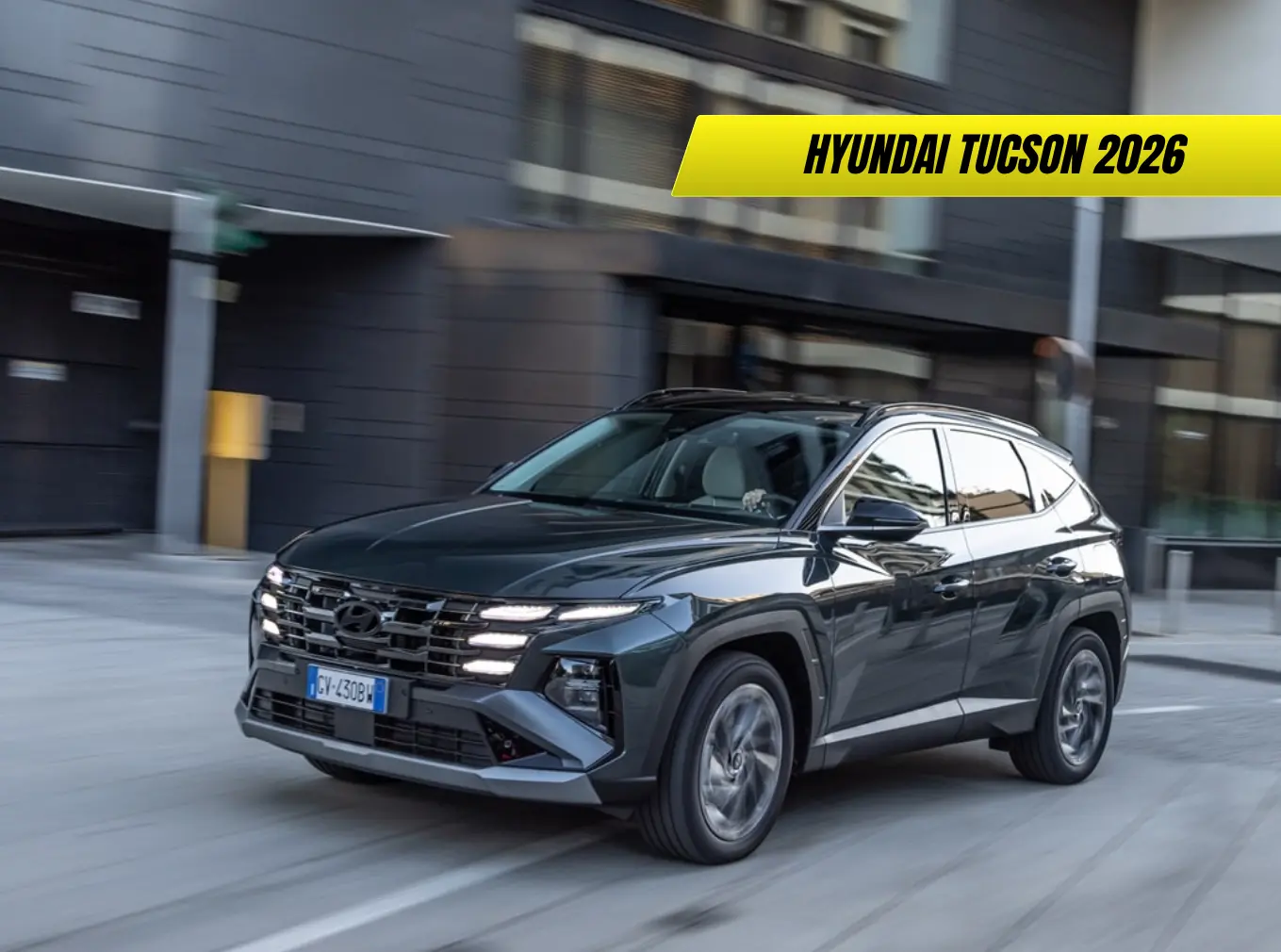
The updated Hyundai Tucson 2026 builds on one of the UK’s most popular family SUVs with sharper styling, a genuinely spacious interior and one of the most comprehensive electrified powertrain line-ups in the C-SUV segment.
Key Points
- Available as petrol mild hybrid, self-charging hybrid (215 PS), plug-in hybrid (PHEV) and 1.6 diesel mild hybrid
- UK prices from £34,860 for the Hybrid; PHEV from approximately £38,000
- Boot capacity from 616 to 1,795 litres — among the largest in the segment
- PHEV delivers up to 38 miles of electric range with a 13.8 kWh battery
- Standard 12.3-inch dual-screen infotainment with wireless Apple CarPlay and Android Auto
- 5-year unlimited mileage warranty and 8-year battery warranty on hybrid variants
- 0–62 mph in 8.2 seconds (hybrid 215 PS); top speed 120 mph
Design and Exterior: Bold, But Not Brash
The 2026 Tucson facelift refines what was already one of the most distinctive designs in its class. At 4.51 metres long, 1.87 metres wide and 1.65 metres tall, it sits squarely in the heart of the C-SUV segment — large enough to be genuinely practical, but not so bulky as to feel unwieldy in urban environments. The front end is the star of the show: a wide parametric grille integrates the headlights seamlessly, with four LED elements per side that appear to disappear into the grille pattern when switched off — an optical trick that remains striking even after extended familiarity.
At the rear, the characteristic horizontal light bar with its twin LED “teeth” continues the Tucson’s signature visual identity, while the Hyundai logo mounted within the rear window is an unusual but coherent design choice. N Line trim adds a sportier bodykit and more aggressive front and rear bumpers, lending the car a premium visual weight that punches above its price point.
Interior: Practical, Premium and Well-Equipped
Inside, the Tucson impresses with a well-resolved dashboard that blends a driver-orientated floating console with a clean horizontal layout. The dual 12.3-inch screens — one for instruments, one for infotainment — dominate the fascia and run intuitive, responsive software. Wireless Apple CarPlay and Android Auto work seamlessly, and the standard head-up display (Ultimate trim and above) projects navigation instructions directly onto the windscreen — a genuinely useful feature in urban driving.
A Blind Spot View Monitor displays live camera feeds from the relevant door mirror when an indicator is activated, effectively creating a digital blind-spot window. This system works particularly well on UK dual carriageways and motorways. Some touch-sensitive controls for the climate system are positioned slightly low and require more concentration than physical buttons — a minor but recurring criticism. Material quality throughout is above average for the price, with soft-touch surfaces in key contact areas and neat, durable trim finishes across all variants.
Boot Space and Practicality
One of the Tucson’s standout strengths is its class-leading boot capacity of 616 litres in standard configuration, expanding to a substantial 1,795 litres with the rear seats folded. This comfortably exceeds most direct rivals, including the Kia Sportage (526 litres) and Ford Kuga (411 litres PHEV), making the Tucson a particularly strong choice for families, dog owners and frequent travellers. The wide, deep loading aperture minimises awkward lifting, and a standard power tailgate on Black Line and above adds everyday convenience.
Powertrain Options: Electrified Across the Range
The UK Tucson range is fully electrified — there is no pure petrol or diesel offering without at least mild-hybrid assistance. The four powertrain options cover a broad spread of needs:
| Powertrain | Combined Output | 0–62 mph | Key Feature |
|---|---|---|---|
| 1.6 T-GDi 48V Mild Hybrid | 150 PS | ~10.5 sec | Most affordable entry point |
| 1.6 T-GDi Self-charging Hybrid | 215 PS | 8.2 sec | No plug-in needed |
| 1.6 T-GDi Plug-in Hybrid (PHEV) | 261 PS | 8.4 sec | 38 miles electric range |
| 1.6 CRDi Diesel Mild Hybrid | 136 PS | ~10.8 sec | Best real-world motorway economy |
The self-charging hybrid (HEV) variant represents the sweet spot for most UK buyers — 215 PS, smooth torque converter automatic gearbox and no need for a charging cable. In mixed real-world driving, fuel consumption of around 5.6–7.5 l/100 km (38–50 mpg) is achievable, depending on conditions and driving style.
On the Road: Comfort Over Aggression
The Tucson drives exactly as its character suggests — it is a relaxed, long-distance companion rather than a sharp handler. The suspension is tuned for comfort over dynamism, absorbing speed bumps, potholes and Britain’s famously patched road surfaces with composure. Some body roll appears during brisk cornering, which is entirely natural for an SUV of this size and orientation. The torque converter automatic gearbox delivers gear changes notably more smoothly than rival dual-clutch units at low speeds — a genuine comfort advantage in urban stop-start traffic.
The steering weights up meaningfully in Sport mode, adding a sense of involvement without transforming the car’s fundamental character. The regenerative braking paddles operate on a three-level intensity scale in Eco mode — though the logic is inverted (the “−” paddle increases regeneration rather than reducing it), which requires brief acclimatisation. The overall verdict: this is a supremely capable motorway and A-road cruiser, well-suited to the realities of UK family motoring. If you are also considering alternatives, our review of the Nissan Qashqai e-Power is worth reading alongside this one.
UK Trim Levels and Pricing
| Trim | Powertrain | UK Price (from) | Key Additions |
|---|---|---|---|
| Element | Hybrid | £34,860 | 17-inch alloys, dual-zone climate, 12.3-inch screens, wireless charging |
| Black Line | Hybrid | £36,975 | Heated front/rear seats, Krell audio, 18-inch alloys, power tailgate |
| Ultimate | Hybrid | £42,225 | Leather, panoramic roof, head-up display, 360-degree camera, 19-inch alloys |
| N Line | Hybrid | from £38,820 | Sportier bodykit, sport suspension, N Line interior accents |
PHEV variants are priced approximately £2,000–£3,000 above equivalent hybrid trims. All-wheel drive is available on both hybrid and PHEV powertrains for an additional premium of approximately £2,000. Full configurations are available at hyundai.com/uk.
Running Costs, Road Tax and UK Ownership
The Tucson Hybrid emits approximately 111–120 g/km of CO₂, placing it in a mid-range VED band. The PHEV variant — at approximately 35–40 g/km — qualifies for a significantly lower Benefit-in-Kind (BiK) rate of 8%, making it a compelling company car choice. As with all cars priced above £40,000, the £620 luxury car supplementapplies to top-spec trims for five years.
Hyundai’s warranty package is among the strongest in the class: a 5-year unlimited mileage manufacturer’s warranty and a dedicated 8-year/160,000-mile battery warranty on hybrid and PHEV variants — offering genuine long-term reassurance. For guidance on dashboard maintenance alerts, our spanner warning light guide provides useful context for new Tucson owners.
ULEZ, Clean Air Zones and Environmental Credentials
The Tucson PHEV, with its sub-40 g/km CO₂ output and ability to cover most urban journeys in zero-emission electric mode, is fully ULEZ-compliant and exempt from Clean Air Zone charges in London and other UK cities. The self-charging hybrid, while not zero-emission, also meets Euro 6 standards and is compliant across all current UK clean air zones. For drivers also weighing up the broader family SUV market, our guides to the best plug-in hybrid cars in the UK and the Toyota Corolla Cross 2025 provide useful comparative context.
FAQ
How much does the Hyundai Tucson 2026 cost in the UK?
The Tucson Hybrid starts from £34,860 in Element trim. The N Line hybrid begins from approximately £38,820, and the Ultimate from £42,225. PHEV variants command a premium of roughly £2,000–£3,000 over equivalent hybrid trims.
What is the electric range of the Hyundai Tucson PHEV?
The Tucson Plug-in Hybrid offers a WLTP electric range of up to 38 miles from its 13.8 kWh battery — sufficient for most daily urban and suburban commutes in the UK.
Is the Hyundai Tucson available with all-wheel drive?
Yes. AWD is available on both the self-charging hybrid and the plug-in hybrid variants, at an additional cost of approximately £2,000 over the front-wheel-drive equivalent.
What warranty does the Hyundai Tucson come with?
Hyundai offers a 5-year unlimited mileage warranty on the Tucson, plus an 8-year/160,000-mile battery warrantyon hybrid and PHEV powertrains — one of the most comprehensive packages in the C-SUV class.
How does the Tucson compare to the Kia Sportage?
Both cars share the same platform and powertrains. The Tucson edges ahead on boot space (616 vs 526 litres) and interior design; the Sportage is typically slightly cheaper in comparable specification. In my experience, the Tucson feels slightly more premium from behind the wheel.
Is the Hyundai Tucson ULEZ-compliant?
Yes. All Tucson variants meet Euro 6 emissions standards and are compliant with ULEZ and Clean Air Zone requirements across the UK. The PHEV variant is particularly efficient in urban conditions, covering most short journeys in zero-emission electric mode.
Does the Tucson self-charging hybrid need to be plugged in?
No. The self-charging hybrid (HEV) charges its battery automatically through regenerative braking and engine power — no external charging is required. Only the PHEV variant requires plugging in to access its full electric range.
Conclusion
The Hyundai Tucson 2026 remains one of the most well-rounded family SUVs available in the UK. Its class-leading boot capacity, comprehensive electrified powertrain choice, distinctive design and exceptional warranty package combine to make a compelling case at its price point. I would recommend the Black Line Hybrid as the sweet spot of the range — it adds the most valued comfort features over the entry-level Element without the premium of the Ultimate trim. For buyers who charge at home and whose daily driving falls within 38 miles, the PHEV variant makes strong financial sense, particularly as a company car. The Tucson faces stiff competition from the Kia Sportage and Ford Kuga, but its combination of space, technology and long-term ownership security keeps it firmly at the top of the segment.





