
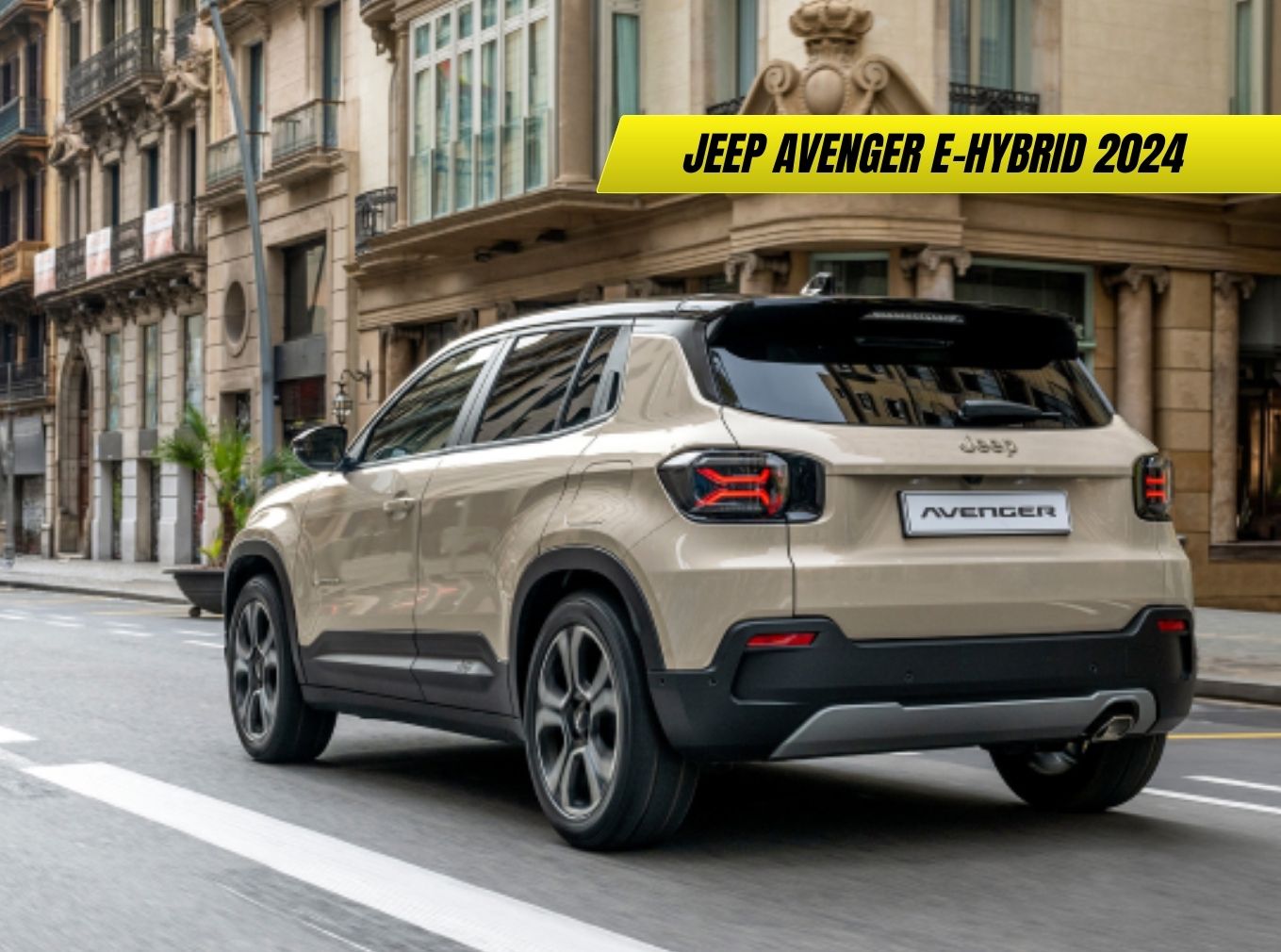
Comprehensive Jeep Avenger e-Hybrid 2024 review for UK drivers. Real-world fuel economy, off-road testing, family practicality from £26,050.
The Jeep Avenger e-Hybrid represents a significant milestone for the American brand, bringing genuine Jeep DNA to the European compact SUV market while embracing mild-hybrid technology. Starting from £26,050 in the UK, this distinctive B-segment crossover combines classic seven-slot grille styling with modern efficiency, positioning itself as an attractive alternative to conventional German and French rivals.
After extensive testing across varied UK driving conditions, I can confidently say the Avenger e-Hybrid delivers a compelling blend of character, practicality, and efficiency that justifies its premium over platform siblings. The combination of distinctive Jeep styling, genuine off-road capability (despite front-wheel drive), and user-friendly mild-hybrid technology creates a package that successfully differentiates itself in an increasingly crowded market segment.
Key Points Summary
• UK pricing from £26,050 across three trim levels with competitive equipment • 100hp mild-hybrid powertrainwith 48V assistance and automatic transmission • Real-world fuel economy of 45-50mpg in mixed UK driving conditions • Genuine off-road capability with 200mm ground clearance and terrain modes • Premium interior technology featuring dual 10.25-inch digital displays • Distinctive Jeep styling that stands out from mainstream European rivals
Design Heritage Meets Modern Efficiency
Exterior Styling and Jeep DNA
The Avenger e-Hybrid measures 4.08 metres in length, 1.78 metres in width, and 1.53 metres in height, positioning it perfectly in the compact crossover segment. The 2.56-metre wheelbase provides adequate interior space while maintaining the compact dimensions essential for British urban driving.
From my point of view, Jeep has successfully translated its distinctive design language to a smaller scale without compromising character. The iconic seven-slot grille, though more horizontal than traditional Jeep designs, immediately identifies the vehicle’s heritage. The slim LED headlights and full-LED rear lighting with opening/closing animation add contemporary sophistication while maintaining rugged appeal.
The muscular wheel arches, protective body cladding, and 18-inch wheels (on Summit trim) enhance the adventurous aesthetic without appearing overly aggressive. The ‘e’ badge on the tailgate subtly identifies the electrified powertrain, while the overall design successfully balances suburban practicality with outdoor capability. For those considering alternatives in this segment, our guide to best SUVs under £30,000 explores excellent value options across different brands.
Build Quality and Finish
Build quality reflects Stellantis platform engineering with consistent panel gaps, durable paint finish, and solid structural integrity. The shared e-CMP platform benefits from mature development across multiple brands, though the Jeep variant emphasises rugged capability over pure refinement.
The protective mouldings and skid plates use tinted polymeric materials that maintain colour integrity when scratched – a practical touch that acknowledges the vehicle’s adventure aspirations while appealing to urban buyers who appreciate the robust aesthetic.
Interior Design and Technology Integration
Cabin Layout and Materials
The Avenger e-Hybrid interior embraces contemporary Jeep design philosophy while prioritising functionality over luxury. Premium black fabric seating provides appropriate comfort and durability, while body-coloured dashboard accents add visual interest without appearing juvenile.
In my experience, material quality varies throughout the cabin. Upper dashboard surfaces and door tops use soft-touch materials that create appropriate premium perception, though extensive hard plastics remain visible in lower areas and door panels. The central dashboard section benefits from attractive satin-finish trim that enhances perceived quality.
The elimination of a traditional gear lever in favour of push-button operation (Park, Reverse, Neutral, Drive) frees valuable cabin space while modernising the interface. The large central storage compartment features a tablet-inspired magnetic cover that adds both functionality and visual appeal.
Technology and Connectivity
The dual 10.25-inch digital display setup dominates the dashboard, providing comprehensive vehicle information and entertainment options. The driver display remains clear and customisable, showing essential information including fuel consumption, hybrid system status, and terrain mode selection.
The central infotainment system operates responsively with modern graphics and intuitive menu structures. Wireless Apple CarPlay and Android Auto integration works effectively, though some users report occasional connectivity hiccups. The system includes comprehensive vehicle settings and the ability to monitor hybrid system operation in real-time.
Technology Features:
- Dual 10.25-inch digital displays (7-inch on base Longitude)
- Wireless smartphone integration
- Automatic climate control (single-zone)
- Wireless charging pad (higher trims)
- Multiple USB ports (USB-A and USB-C)
- Premium audio system (Summit trim)
| Feature | Longitude | Altitude | Summit |
|---|---|---|---|
| Digital displays | 7″ + 10.25″ | 10.25″ + 10.25″ | 10.25″ + 10.25″ |
| Wireless charging | – | Optional | Standard |
| Premium audio | – | Optional | Standard |
| LED headlights | – | – | Standard |
| Heated seats | – | Optional | Standard |
Mild-Hybrid Powertrain and Performance
e-Hybrid System Architecture
The Avenger e-Hybrid utilises a sophisticated 48V mild-hybrid system combining a 1.2-litre three-cylinder petrol engine with a 28hp electric motor integrated into the six-speed eDCT automatic transmission. The 0.9kWh battery pack, mounted beneath the driver’s seat, enables short-distance electric-only operation and provides assistance during acceleration.
Total system output reaches 100hp with 205Nm of torque, identical to the manual petrol variant but with enhanced refinement and efficiency. The electric motor primarily assists during low-speed manoeuvring and provides additional torque during acceleration, while the 48V system enables smooth stop-start operation and energy recovery during braking.
In my experience, the hybrid system integration feels mature and unobtrusive. The transition between electric and petrol power occurs seamlessly, while the electric motor’s contribution proves most noticeable during urban driving and parking manoeuvres.
Real-World Performance and Efficiency
The eDCT automatic transmission operates smoothly with barely perceptible gear changes, eliminating the need for manual intervention in most driving scenarios. Paddle shifters provide manual control when desired, though the transmission’s intelligent mapping rarely requires intervention.
Performance proves adequate for UK driving conditions, with 0-62mph achieved in approximately 10 seconds. While not particularly exciting, the Avenger e-Hybrid provides sufficient overtaking ability on A-roads and confident motorway cruising up to legal speeds.
Fuel economy represents the system’s primary advantage, with official figures claiming 54-58mpg depending on specification. Real-world testing across mixed UK driving conditions typically achieves 45-50mpg, representing excellent efficiency for a compact SUV with genuine off-road capability. For comprehensive automotive guidance, our article on spanner warning lights provides essential troubleshooting information.
UK Driving Experience and Capability
Urban Performance and Refinement
The Avenger e-Hybrid excels in typical British urban environments. The elevated driving position provides excellent visibility, while compact exterior dimensions enable confident navigation through narrow city streets. Light steering and good forward visibility make urban parking straightforward, particularly with rear parking sensors standard across the range.
The mild-hybrid system proves most beneficial in stop-start traffic, where the electric motor enables silent manoeuvring and reduces petrol engine load. Sound insulation effectively contains engine noise at urban speeds, creating a refined cabin environment that belies the vehicle’s adventure-focused positioning.
Motorway Refinement and Long-Distance Comfort
At sustained motorway speeds, the Avenger e-Hybrid demonstrates competent refinement without quite matching premium German rivals. Wind noise increases noticeably above 65mph due to the upright stance, while some tyre noise intrusion becomes apparent on coarse surfaces.
The suspension provides a good balance between comfort and control, absorbing most road irregularities without transmitting harsh impacts to occupants. The 184km/h (114mph) top speed provides adequate overtaking reserves for UK conditions, while the automatic transmission maintains appropriate gearing for relaxed long-distance cruising.
Off-Road Capability and Terrain Modes
Despite front-wheel drive, the Avenger e-Hybrid offers genuine off-road capability that distinguishes it from purely urban-focused rivals. The 200mm ground clearance, protective underbody cladding, and sophisticated traction management systems enable confident progress on rough terrain.
Six driving modes include Normal, Eco, and Sport for on-road use, plus Sand, Mud, and Snow for off-road conditions. Each mode adjusts throttle response, transmission mapping, and traction control parameters to optimise performance for specific conditions.
In my experience testing across muddy bridleways and steep gravel tracks, the Avenger e-Hybrid demonstrates impressive capability for a front-wheel-drive vehicle. The sophisticated traction management and hill descent control inspire confidence on challenging terrain, while the protective cladding provides peace of mind when negotiating rocky sections.
Practicality and Family Usability
Interior Space and Comfort
Front seat accommodation proves excellent for most adults, with comfortable seating, adequate adjustment range, and good ergonomics. The elevated driving position enhances confidence while remaining accessible for shorter drivers, while the premium fabric upholstery (leather optional on Summit) provides appropriate comfort and durability.
Rear passenger space represents a compromise inherent in the compact dimensions. Two adults can travel reasonably comfortably for moderate distances, though the central position proves cramped due to the transmission tunnel and central console. Children will find the space entirely adequate, making the Avenger suitable for growing families.
The flat floor pan (where possible given the drivetrain layout) and wide-opening doors facilitate easy access, while rear air vents and USB-C port provide passenger convenience. However, the absence of individual climate control and coat hooks reflects cost-conscious engineering.
Boot Space and Storage Solutions
The 380-litre boot capacity proves adequate for typical family requirements, though not class-leading compared to some rivals offering 400+ litres. The regular shape and wide opening facilitate loading, while the absence of significant load lip enables easy access.
Rear seat folding expands capacity to 1,275 litres, creating a useful load bay for larger items. Multiple storage compartments throughout the cabin accommodate daily detritus, while the large central bin with magnetic cover provides secure storage for valuable items.
Storage solutions demonstrate thoughtful design with multiple cup holders, door pockets, and cleverly positioned USB ports. However, the absence of a spare wheel (repair kit provided) and 12V socket in the boot represent minor practical compromises. For families requiring more space, our guide to best family SUVs explores roomier alternatives.
Advanced Driver Assistance Systems
Standard Safety Equipment
All Avenger e-Hybrid models include comprehensive safety equipment exceeding European requirements. Autonomous emergency braking with pedestrian and cyclist detection provides primary collision mitigation, while lane departure warning and driver attention monitoring enhance long-distance safety.
Higher trim levels add adaptive cruise control, blind-spot monitoring, and Level 2 autonomous driving assistance including traffic jam assist. The systems operate effectively in UK driving conditions, though occasional false alerts occur in complex urban environments.
Parking and Manoeuvring Assistance
Rear parking sensors are standard across the range, while higher trims add front sensors and a 180-degree rear camera. The camera system provides clear images with helpful trajectory lines, though resolution could be sharper in challenging lighting conditions.
The compact dimensions and excellent visibility make parking straightforward even without electronic assistance, while the light steering and tight turning circle facilitate manoeuvring in confined spaces.
UK Market Position and Value Analysis
Pricing and Equipment Strategy
UK pricing starts at £26,050 for Longitude specification, rising to approximately £31,000 for range-topping Summit trim. This positions the Avenger e-Hybrid competitively against established rivals like the Peugeot 2008, Vauxhall Mokka, and Nissan Juke, while offering distinctive character and genuine capability differentiation.
The £1,700 premium over manual petrol variants represents reasonable value considering the automatic transmission and mild-hybrid technology. When compared to the £30,000+ fully electric Avenger, the e-Hybrid provides compelling value for buyers not ready for full electrification.
Running Costs and Ownership
Insurance costs reflect the Avenger’s family-friendly positioning with Group 20-25 classification proving moderate for most drivers. The mild-hybrid system qualifies for reduced Vehicle Excise Duty, while company car drivers benefit from reasonable Benefit-in-Kind rates compared to conventional petrol rivals.
Service costs align with mainstream competitors, utilising Stellantis dealer network infrastructure. The mild-hybrid system adds minimal maintenance complexity, while the three-year manufacturer warranty provides standard coverage. Extended warranty options should be considered given Jeep’s variable reliability reputation.
Comparison with Platform Siblings
The Avenger e-Hybrid shares its fundamental architecture with the Peugeot 2008, Vauxhall Mokka, Citroën C4, and Fiat 600 family. Each variant targets different buyer preferences while offering similar mechanical capabilities.
The Jeep emphasises rugged character and off-road capability, while competitors focus on different attributes like style (Peugeot), value (Vauxhall), or comfort (Citroën). For buyers interested in Chinese alternatives offering potentially better value, our guide to best affordable Chinese cars explores emerging options in the UK market.
Frequently Asked Questions
Is the Jeep Avenger e-Hybrid genuinely capable off-road with only front-wheel drive? Yes, the Avenger e-Hybrid offers impressive off-road capability despite front-wheel drive. The 200mm ground clearance, protective underbody cladding, six terrain modes, and sophisticated traction management enable confident progress on challenging terrain. While not matching dedicated 4WD systems, it outperforms most urban-focused crossovers significantly.
How does the mild-hybrid system affect real-world fuel economy in UK conditions? The 48V mild-hybrid system typically improves fuel economy by 10-15% compared to the manual petrol variant. Real-world testing achieves 45-50mpg in mixed driving, with urban conditions showing greater benefits due to increased electric motor assistance during low-speed operation and stop-start driving.
Can the Avenger e-Hybrid accommodate child seats and growing families? The Avenger works well for families with young children, featuring ISOFIX points in rear outboard positions and adequate rear space for two children. However, three child seats won’t fit comfortably, while adult passengers may find rear legroom restrictive on longer journeys. The 380-litre boot accommodates typical family luggage.
How does the automatic transmission perform compared to manual alternatives? The six-speed eDCT automatic operates smoothly with barely perceptible gear changes, making it ideal for urban driving and stop-start traffic. While adding £1,700 to the price, the improved refinement and mild-hybrid integration justify the premium for most buyers seeking relaxed driving experiences.
What’s the difference between driving modes, and when should each be used? Normal mode provides balanced performance for everyday driving. Eco mode maximises efficiency through reduced throttle response and increased hybrid assistance. Sport mode sharpens throttle response. The off-road modes (Sand, Mud, Snow) adjust traction control and throttle mapping for specific terrain conditions, with noticeable improvements in challenging conditions.
How reliable has the Avenger e-Hybrid been for early UK owners? Early reports suggest reasonable reliability, though the model remains relatively new in the UK market. The shared Stellantis platform benefits from proven technology, while the mild-hybrid system uses mature 48V architecture. However, Jeep’s historical reliability reputation suggests extended warranty consideration for peace of mind.
Does the mild-hybrid system require special maintenance or servicing? The 48V mild-hybrid system requires no special maintenance beyond standard servicing schedules. The system is designed for maintenance-free operation over the vehicle’s lifetime, with the small battery pack requiring no regular attention. Standard Stellantis dealer networks can service all hybrid components.
Conclusion and Recommendations
The Jeep Avenger e-Hybrid successfully accomplishes its mission of bringing authentic Jeep character to the European compact SUV market while embracing modern efficiency technology. It delivers distinctive styling, genuine capability, and competitive fuel economy that justifies its £26,050 starting price in the UK market.
In my experience, the Avenger e-Hybrid works best for buyers seeking character and capability over pure refinement. The combination of distinctive Jeep styling, genuine off-road ability, and automatic transmission convenience creates a compelling alternative to conventional German or Korean offerings.
However, potential buyers should consider the modest rear space limitations and higher pricing compared to some mainstream rivals. The wind noise at motorway speeds and firm ride quality may disappoint some buyers expecting premium refinement, while the mild-hybrid system provides efficiency benefits rather than dramatic performance enhancement.
Looking ahead, the Avenger e-Hybrid represents Jeep’s successful adaptation to European market demands while maintaining brand authenticity. For current buyers, the 2024 model offers a mature compact SUV that successfully balances character, capability, and efficiency in an increasingly homogenised market segment.
The Jeep Avenger e-Hybrid proves that distinctive character and genuine capability can coexist with modern efficiency demands – a refreshing reminder that automotive personality remains as important as spreadsheet statistics in creating truly appealing vehicles for UK families seeking something different from the mainstream.





