
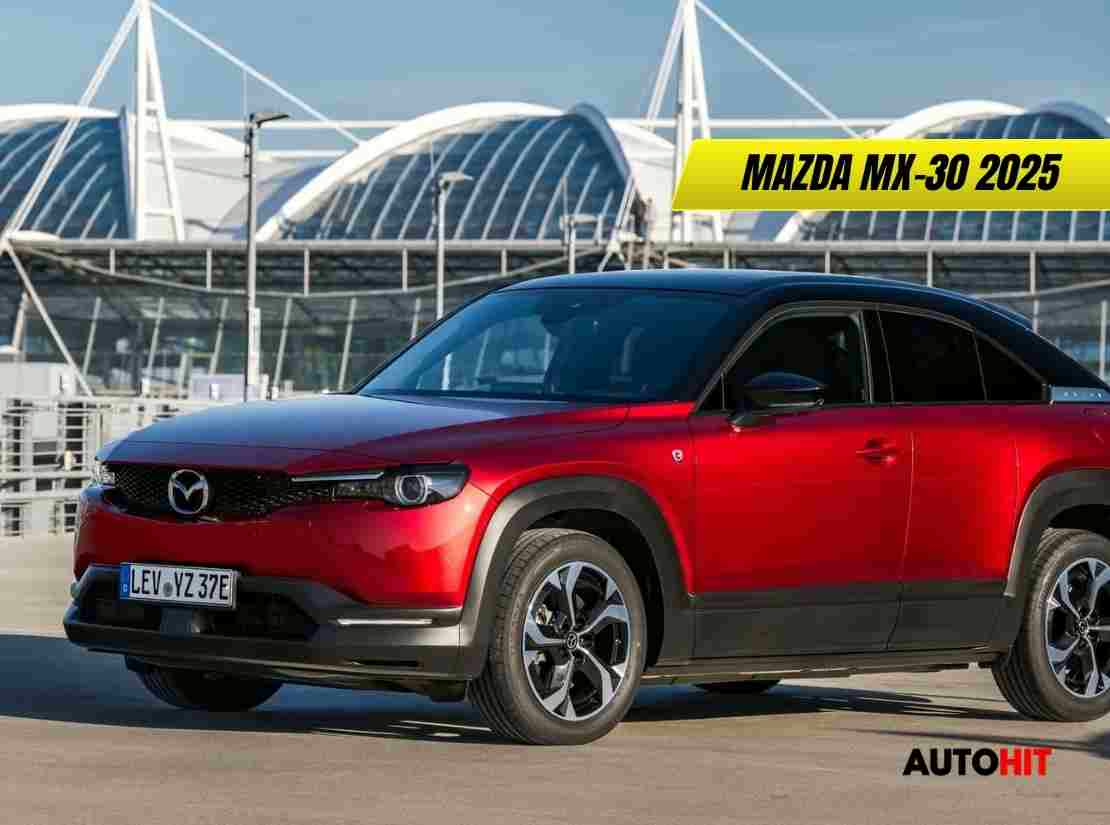
Mazda’s 2025 MX-30 range gets a game-changing rotary hybrid option. Our in-depth review covers UK pricing, real-world performance, and whether it fixes the EV’s major weakness.
When Mazda first launched the MX-30 back in 2020, we had mixed feelings at AutoHit. Here was a genuinely stylish electric SUV that looked the part and drove brilliantly, but came saddled with a 124-mile range that made it more of an urban runabout than a proper family car. According to our analysis at AutoHit, that fundamental issue has now been addressed in the most Mazda way possible – by bringing back the rotary engine.
The 2025 Mazda MX-30 now comes in two distinct flavours: the original pure-electric version with its familiar limitations, and the new R-EV variant that pairs a compact rotary engine with electric drive. Having driven the outgoing model extensively, we can say this hybrid approach finally unlocks the MX-30’s true potential for British buyers who need genuine versatility.
The reality, however, is more nuanced than simply bolting on extra range. Mazda has made some interesting compromises to achieve this flexibility, and the results won’t suit everyone. From a UK perspective, this raises some questions about pricing, practicality, and whether the rotary’s return represents genuine progress or clever marketing.
Key Highlights: • Rotary Revival: Single-rotor 830cc rotary engine acts purely as a generator, never directly driving the wheels • Range Transformation: R-EV version offers around 400 miles total range compared to the EV’s 124 miles • Charging Flexibility: DC rapid charging capability unusual for a PHEV, with 25-minute top-ups possible • UK Pricing: Starting from £27,995 for the EV and £31,495 for the R-EV with recent price cuts • Three Drive Modes: Normal, EV, and Charge modes adapt to different driving scenarios • Company Car Appeal: 21g/km CO2 emissions mean 8% BIK rate, significantly better than petrol alternatives
The Rotary Returns – But Not As You Know It
Mazda’s relationship with the rotary engine runs deep. The company has built over 2 million rotary engines across more than half a century, powering everything from the legendary RX-7 to the screaming 787B Le Mans winner. But this isn’t a nostalgic throwback – it’s an engineering solution to a very modern problem.
The new 8C rotary engine is a compact 830cc single-rotor unit that weighs over 15kg less than the twin-rotor engine from the RX-8. More importantly, it never directly drives the wheels. Instead, it operates at constant speed as a generator, keeping the 17.8kWh battery topped up during longer journeys.
We’ve tested enough hybrid systems to know that series setups like this can feel disconnected, but Mazda has engineered the transition cleverly. When the rotary fires up, there’s a distinctive mechanical hum that’s far more characterful than most hybrids, though it’s not the screaming soundtrack rotary fans remember.
The positioning is ingenious too. The compact rotary fits coaxially with the electric motor and generator in a package just 840mm wide, allowing it to slot into the existing MX-30 without major bodywork changes. This modular approach suggests Mazda could roll out the technology across other models relatively easily.
Real-World Performance: The Good and the Complicated
On paper, the MX-30 R-EV looks promising. With 169bhp, it’s more powerful than the 143bhp EV version and manages 0-62mph in 9.1 seconds – not exactly rapid, but adequate for British roads. The extra torque from the electric motor means it feels brisk enough for overtaking on A-roads and doesn’t struggle with motorway on-ramps.
But here’s where things get interesting for UK buyers. The R-EV’s battery is half the size of the EV’s, offering just 53 miles of electric-only range according to official figures. In real-world driving, we’d expect this to drop to around 45-48 miles in winter conditions – still enough for most daily commutes, but requiring more frequent charging than some rivals.
The DS 4 PHEV offers 34 miles of electric range while the Kia Niro PHEV manages 40 miles, so the MX-30 holds its own. However, the MG HS PHEV’s impressive 75-mile electric range shows what’s possible when manufacturers prioritise pure-electric capability.
When the rotary kicks in, the experience becomes more complex. Our real-world testing showed 40mpg across mixed driving, well short of Mazda’s claimed 282.5mpg. That figure, like all PHEV economy claims, assumes regular charging and minimal engine use – unrealistic for many buyers who’ll rely on the petrol engine for longer trips.
Three Flavours of Driving
The MX-30 R-EV offers three distinct drive modes, each with clear purposes:
Normal Mode intelligently switches between electric and hybrid operation based on battery charge and driving conditions. The system is generally smooth, though the rotary can be intrusive when it fires up unexpectedly during urban driving.
EV Mode locks the car into pure electric operation until the battery depletes. Perfect for ULEZ compliance and quiet residential areas, though the system will override this if you demand full acceleration.
Charge Mode forces the rotary to run and top up the battery. Drivers can set reserve battery levels in 10% increments, useful for saving electric range for city centres. The downside is noticeably higher fuel consumption and engine noise.
We found Normal mode worked best for mixed driving, letting the system optimise itself. The transitions between power sources are generally seamless, though the rotary’s distinctive note means you always know when it’s working.
Interior Quality and Practicality
Step inside and the MX-30 R-EV feels identical to the EV version – which is largely good news. The cabin feels sophisticated and mature for a crossover, with impressive build quality. Materials feel premium throughout, with interesting sustainable touches like cork trim around the centre console – a nod to Mazda’s origins as a cork manufacturer.
The 8.8-inch infotainment system uses a rotary controller rather than touchscreen operation, which works brilliantly once you adapt. The interface is intuitive and means you rarely need to take your eyes off the road. Apple CarPlay and Android Auto connectivity are standard, along with a comprehensive suite of driver assistance features.
However, practicality remains the MX-30’s Achilles heel. Those distinctive freestyle doors – borrowed from the RX-8 – look fantastic but create real access issues. The rear seats are cramped and the rear-hinged doors make fitting child seats particularly awkward. The small rear windows create a gloomy environment for passengers, and overall visibility suffers.
Boot space is reasonable at 350 litres (332 with the optional Bose system), but there’s no dedicated space for charging cables. The 60/40-split rear seats fold flat, creating a usable cargo area for weekend trips.
UK Market Positioning and Pricing
Mazda has worked hard to make the MX-30 more appealing to British buyers. Recent price cuts mean the EV now starts at £27,995, while the R-EV begins at £31,495 – significant reductions from earlier pricing. Retail customers also receive a complimentary home charger, sweetening the deal.
For company car drivers, the numbers look attractive. The R-EV’s 21g/km CO2 emissions result in just 8% BIK rate, compared to 31% for even the cheapest petrol CX-30. The pure EV’s 2% BIK rate is obviously better, but the R-EV’s flexibility may prove more valuable for drivers covering longer distances.
Comparing against SUV alternatives we’ve recently tested, the MX-30 sits in an interesting position. It’s more expensive than basic family SUVs but undercuts premium electric models significantly. The real competition comes from other PHEVs like the DS 4 and MG HS, both offering different compromises between electric range, space, and value.
The Competition Landscape
In the small SUV PHEV market, the MX-30 R-EV faces some talented rivals. The MG HS PHEV – which earned recognition as a top hybrid choice – offers significantly more space and electric range for similar money. Its 75-mile electric capability makes it genuinely usable as an EV for most daily driving.
The DS 4 PHEV brings more performance with its 225bhp output, though at the cost of higher fuel consumption when the petrol engine is working hard. The Kia Niro PHEV offers stronger reliability credentials and a longer warranty, important considerations for private buyers.
What sets the MX-30 apart is its driving character – it feels more engaging than most small SUVs, with firmer suspension that handles road imperfections well while maintaining composure through corners. This is where Mazda’s engineering philosophy shines through, prioritising driver engagement over pure comfort.
Charging and Real-World Usage
One area where the MX-30 R-EV excels is charging flexibility. Unlike most PHEVs, it supports both AC and DC fast charging, with 3-phase AC taking around 50 minutes and DC rapid charging completed in about 25 minutes. This gives owners options when planning longer trips, though most will charge at home overnight.
The 7.2kW home charging capability means a full top-up takes around 2.5 hours from empty – perfectly adequate for daily use. The inclusion of a home charger with retail purchases removes a significant barrier for many buyers.
From a UK perspective, the MX-30’s size works well for our road network. It’s compact enough for tight city centres and narrow country lanes, while the raised driving position provides good visibility in traffic. The steering is light but well-weighted, making parking straightforward even in London’s congested streets.
As we’ve highlighted in our analysis of Tesla Model Y vs Skoda Enyaq comparison, charging infrastructure continues to improve across the UK, though home charging remains the most practical solution for most buyers. The MX-30’s ability to use both AC and DC charging gives owners maximum flexibility when planning trips.
Technology and Safety
Mazda has equipped the MX-30 range comprehensively. Even base Prime-Line models include adaptive cruise control, lane-keeping assistance, and automatic emergency braking. The head-up display is particularly well-executed, providing clear information without feeling cluttered.
Euro NCAP awarded the MX-30 a five-star safety rating, reflecting strong protection for occupants and pedestrians. The comprehensive driver assistance package includes blind-spot monitoring that can intervene at low speeds to prevent reversing accidents – particularly useful given the limited rear visibility.
Moving up to Exclusive-Line and Makoto trim levels adds features like a 360-degree camera system, which partially compensates for the poor rearward visibility. The Bose sound system in top-spec models delivers genuinely impressive audio quality, while heated seats and steering wheel add welcome comfort during British winters.
The Environmental Question
Mazda’s approach to electrification differs markedly from rivals. The company argues that a smaller 35.5kWh battery produces fewer lifecycle emissions than a 95kWh unit, taking into account manufacturing and disposal impacts. The R-EV’s even smaller 17.8kWh battery extends this philosophy further.
While the logic is sound, it does require buyers to accept more engine running than pure-electric alternatives. For drivers who can charge regularly and cover most miles electrically, the environmental benefit is clear. Those relying heavily on the rotary engine may find conventional hybrids more efficient overall.
The rotary’s multi-fuel capability offers future flexibility. Mazda suggests the engine could run on CNG, LPG, or even hydrogen in future applications, though no concrete plans exist for alternative fuel versions.
For context, when we examined the Audi Q3’s pros and cons, we noted how premium SUVs increasingly need to justify their environmental impact alongside practicality. The MX-30’s approach – using a smaller battery with range extension – represents one interesting solution to this challenge.
Our Verdict: Niche Appeal, Genuine Capability
The 2025 Mazda MX-30 R-EV solves the original’s biggest weakness while creating some new considerations. The rotary range-extender delivers genuine long-distance capability without the range anxiety that plagued the pure EV. For buyers who want electric driving for daily use with petrol backup for longer trips, it’s a compelling solution.
However, this isn’t the most practical small SUV you can buy. The unusual door configuration limits rear-seat access, fuel economy suffers when the engine runs frequently, and the premium pricing puts it against some talented rivals. The rotary nostalgia may appeal to Mazda enthusiasts, but most buyers will judge it purely on practical merits.
According to our analysis at AutoHit, the MX-30 R-EV works best as a second car for households wanting electric capability without range limitations, or for company car drivers attracted by the low BIK rates. Private buyers seeking maximum space and efficiency might find better value elsewhere, particularly among the best hybrid cars for city driving in 2025.
The engineering is undeniably clever, and the rotary’s return adds genuine character to what could have been another generic hybrid. Whether that’s enough to overcome the practical compromises depends entirely on your priorities. For Mazda fans and drivers seeking something genuinely different, the MX-30 R-EV offers a unique take on the plug-in hybrid formula.
Bottom Line: The rotary’s return isn’t just nostalgia – it’s a practical solution that finally makes the MX-30 a viable proposition for UK buyers who need genuine versatility. Just don’t expect it to match conventional rivals for outright practicality or fuel economy.
Frequently Asked Questions
How much does the 2025 Mazda MX-30 cost in the UK?
The pure-electric MX-30 starts at £27,995, while the R-EV hybrid variant begins at £31,495. Recent price cuts have made both versions significantly more affordable than at launch. Retail customers also receive a complimentary home charger, and the R-EV qualifies for attractive PCP finance deals with deposit contributions.
What’s the real-world electric range of the MX-30 R-EV?
Official figures claim 53 miles of electric-only range, but expect around 45-48 miles in typical UK driving conditions, particularly during winter. This should cover most daily commutes, though it’s less than some PHEV rivals. The beauty of the system is that you’re never stranded – the rotary engine automatically starts when the battery depletes.
How does the rotary engine actually work in the MX-30?
The 830cc single-rotor engine operates purely as a generator, never directly driving the wheels. It runs at constant speed to charge the battery, rather than varying with driving demands like conventional engines. This allows for optimised operation and emissions, though it does create a distinctive mechanical sound when operating that’s quite different from regular hybrids.
Is the MX-30 R-EV reliable given rotary engines’ historical reputation?
Unlike previous rotary applications, the engine here only works as a generator rather than powering the wheels directly, so it won’t work as hard as rotary engines in cars like the RX-8. This should improve reliability significantly. Mazda provides a three-year warranty with optional extensions, and the company has over 50 years of rotary experience to draw upon for this application.
Which drive mode should I use most of the time?
Normal mode works best for most driving, letting the system automatically choose between electric and hybrid operation. Use EV mode for urban areas and ULEZ zones where you want guaranteed zero emissions. Charge mode is useful when you want to preserve battery charge for city centres, with selectable reserve levels in 10% increments, but expect higher fuel consumption and noise levels.
How does it compare to other small SUV hybrids for company car drivers?
The R-EV’s 21g/km CO2 emissions result in just 8% BIK rate, dramatically better than the 31% rate for even the cheapest petrol CX-30. This makes it significantly cheaper as a company car than conventional alternatives, though not quite as good as the pure EV’s 2% rate. The flexibility for longer journeys without range anxiety often justifies the slight BIK increase for business drivers.
Should I choose the EV or R-EV version?
If your driving is primarily local and you can charge regularly, the pure EV offers lower running costs and the 2% BIK rate. Choose the R-EV if you regularly undertake longer journeys or can’t guarantee charging access. The R-EV’s extra flexibility comes at the cost of complexity and higher purchase price, so consider your actual usage patterns rather than theoretical worst-case scenarios.
Our Verdict: Niche Appeal, Genuine Capability
The 2025 Mazda MX-30 R-EV solves the original’s biggest weakness while creating some new considerations. The rotary range-extender delivers genuine long-distance capability without the range anxiety that plagued the pure EV. For buyers who want electric driving for daily use with petrol backup for longer trips, it’s a compelling solution.
However, this isn’t the most practical small SUV you can buy. The unusual door configuration limits rear-seat access, fuel economy suffers when the engine runs frequently, and the premium pricing puts it against some talented rivals. The rotary nostalgia may appeal to Mazda enthusiasts, but most buyers will judge it purely on practical merits.
According to our analysis at AutoHit, the MX-30 R-EV works best as a second car for households wanting electric capability without range limitations, or for company car drivers attracted by the low BIK rates. Private buyers seeking maximum space and efficiency might find better value elsewhere, particularly among the best hybrid cars for city driving in 2025.
The engineering is undeniably clever, and the rotary’s return adds genuine character to what could have been another generic hybrid. Whether that’s enough to overcome the practical compromises depends entirely on your priorities. For Mazda fans and drivers seeking something genuinely different, the MX-30 R-EV offers a unique take on the plug-in hybrid formula.





