
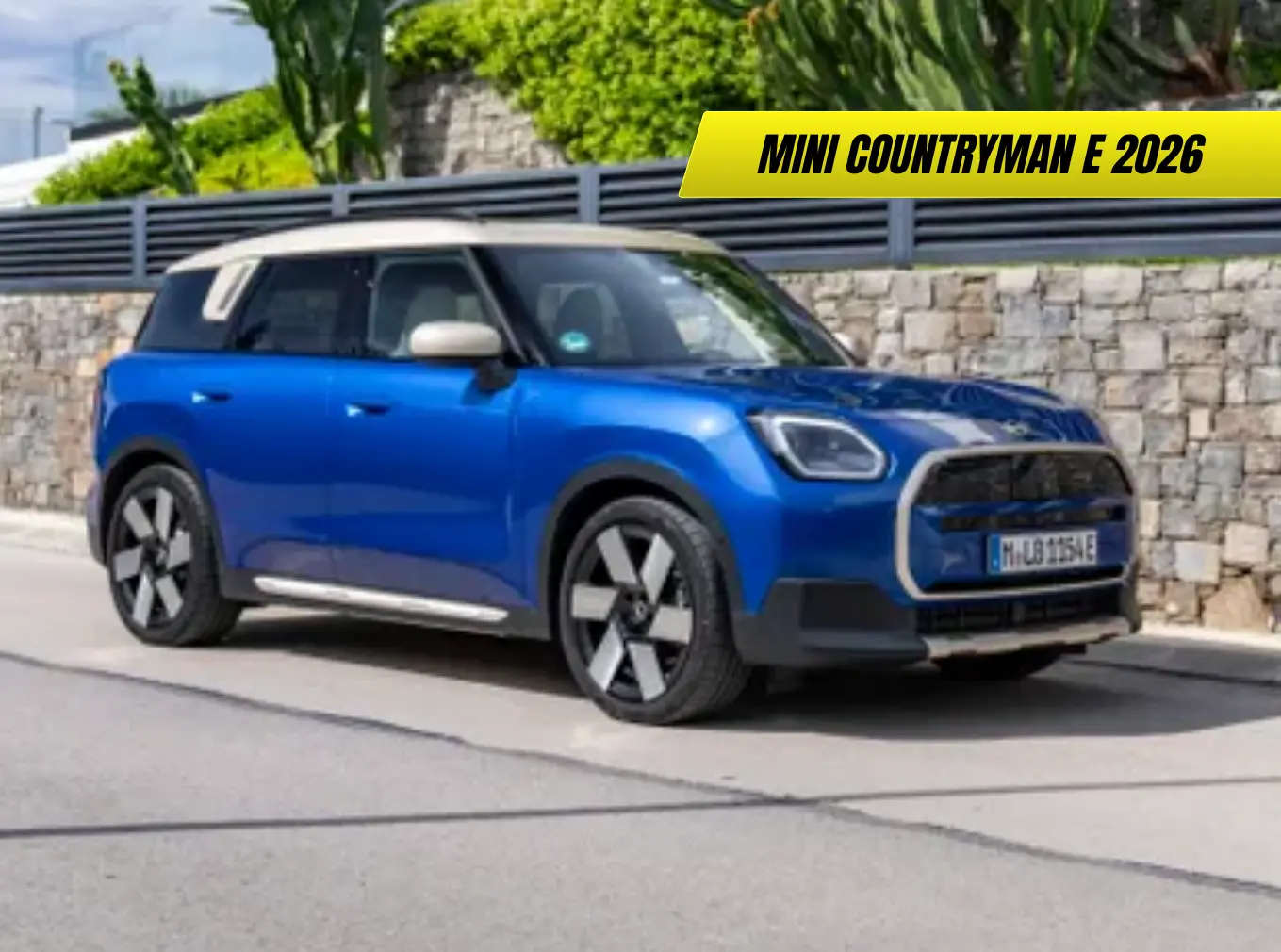
MINI Countryman E 2026 boasts 462 km range with prices from £42,500. Discover specs, charging times, and how it compares to Tesla Model Y and BMW iX1 in our complete UK buyer’s guide.
The MINI Countryman E receives significant range improvements for 2026, now achieving 462 km (287 miles) WLTP through software optimization and enhanced battery management without physical capacity increases, while the performance-focused SE variant delivers 433 km (269 miles) alongside dual-motor 313 hp all-wheel-drive capability. Both utilize a 66.45 kWh battery enabling 130 kW DC fast charging with 10-80% replenishment in just 29 minutes. UK pricing starts at £42,500 for the base E model and £50,500 for the SE variant, positioning this premium electric SUV as a compelling alternative to the Mercedes Electric GLC, Volvo EX30, and Polestar 2.
MINI Countryman Electric 2026: Range, Performance and Specifications
British premium compact SUV manufacturer MINI announces 2026 model year updates for Countryman E electric variants delivering significant range improvements through revised battery management software and motor efficiency optimization. The base Countryman E single-motor front-wheel-drive now achieves 462 km WLTP combined (287 miles), representing a 15-20 km improvement versus 2025 models through regenerative braking calibration and thermal management refinement.
The performance-oriented Countryman SE dual-motor all-wheel-drive reaches 433 km (269 miles) whilst delivering 313 hp combined output enabling 5.6-second 0-100 km/h acceleration. This rivals combustion MINI John Cooper Works performance within electric packaging, maintaining the brand’s go-kart handling DNA through low centre of gravity from floor-mounted battery positioning and 50:50 weight distribution.
Technical Specifications Comparison: E vs SE Models
| Specification | Countryman E (Base) | Countryman SE (Performance) |
|---|---|---|
| Motor Configuration | Single front motor | Dual motor (front + rear) |
| Power Output | 204 hp (150 kW) | 313 hp (230 kW) |
| Torque | 250 Nm | 494 Nm |
| Drive Type | Front-wheel drive | Electric all-wheel drive |
| 0-100 km/h | 8.6 seconds | 5.6 seconds |
| Top Speed | 170 km/h limited | 180 km/h limited |
| Battery Capacity | 66.45 kWh | 66.45 kWh |
| WLTP Range | 462 km (287 miles) | 433 km (269 miles) |
| Real-World Range | 370-400 km | 340-370 km |
| DC Fast Charging | 130 kW maximum | 130 kW maximum |
| Charging Time (10-80%) | 29 minutes | 29 minutes |
| UK Starting Price | £42,500 | £50,500 |
How MINI Achieved 2026 Range Improvements
MINI engineers delivered 15-20 km additional range without hardware modifications through sophisticated software optimization strategies, demonstrating that electric vehicle efficiency gains remain achievable without expensive battery upgrades.
Regenerative Braking Calibration
More aggressive energy recovery during deceleration now captures additional charge, with driver-selectable modes (Low, Medium, High) allowing customization. Adaptive regeneration adjusts based on traffic conditions and GPS data, delivering an estimated 5-8% efficiency improvement in urban driving scenarios.
Thermal Management Enhancement
Improved battery heating and cooling algorithms maintain optimal temperature ranges more efficiently. Reduced energy consumption for climate control through predictive preconditioning means the battery condition is optimized before journeys commence. Heat pump efficiency optimization (standard on UK models) contributes to 3-5% winter range improvement versus 2025 models.
Motor Efficiency Tuning
Revised inverter software reduces electrical losses, whilst optimized power delivery curves enhance highway cruising efficiency. Improved coasting efficiency reduces motor drag during deceleration, collectively achieving 2-3% overall consumption reduction.
Range Comparison: Premium Electric SUVs Available in UK
| Model | Battery Capacity | WLTP Range | Power Output | UK Price |
|---|---|---|---|---|
| MINI Countryman E | 66.45 kWh | 462 km | 204 hp | £42,500 |
| Volvo EX30 Single Motor | 69 kWh | 476 km | 272 hp | £36,495 |
| Polestar 2 Standard Range | 69 kWh | 518 km | 272 hp | £44,950 |
| Tesla Model Y RWD | 60 kWh est | 455 km | 299 hp | £44,990 |
| BMW iX1 xDrive30 | 66.5 kWh | 439 km | 313 hp | £51,905 |
| Audi Q4 40 e-tron | 77 kWh | 520 km | 204 hp | £49,950 |
The MINI Countryman offers competitive pricing against premium rivals, though drivers seeking maximum range may prefer the best plug-in hybrid cars for extended touring capability without charging concerns.
Interior Design and Technology Features
The 2026 MINI Countryman E showcases MINI Operating System 9 through a distinctive circular 240mm OLED central display, complemented by a digital instrument cluster behind the steering wheel. Wireless Apple CarPlay and Android Auto come standard, alongside over-the-air software updates ensuring the vehicle remains current throughout ownership.
Material quality emphasizes sustainability, with standard textile upholstery containing 35% recycled content. Vescin vegan leather options replace traditional leather, reflecting modern environmental considerations without compromising premium positioning. Customizable interior mood lighting through MINI Experience Modes allows drivers to personalize the cabin atmosphere.
Standard Equipment (UK Market)
UK-specification Countryman E models include comprehensive equipment as standard: dual-zone automatic climate control with heat pump, heated front seats, electric tailgate, LED headlights and taillights, 18-inch alloy wheels, parking sensors front and rear, plus reversing camera. This generous specification level reduces the need for expensive optional packages.
Charging Capabilities and Real-World Usage
DC Fast Charging Performance
The Countryman E supports 130 kW maximum DC fast charging via CCS2 connector (European standard). Real-world charging sessions average 100 kW due to charging curve taper, completing 10-80% replenishment in approximately 29 minutes at optimal conditions.
Preconditioning function prepares the battery for optimal charging temperature before arrival at rapid charging stations, maximizing charging speeds and reducing overall journey times. UK drivers benefit from expanding rapid charging infrastructure with over 7,000 rapid charger locations (50+ kW) and 2,500+ ultra-rapid sites (150+ kW) nationwide.
Home Charging Solutions
11 kW AC Charging (Standard Onboard Charger)
Full charge from empty requires 6-7 hours via dedicated home wallbox installation. Typical overnight replenishment takes 3-4 hours, adding over 200 km range suitable for most daily driving requirements. Three-pin domestic plug emergency charging (2.3 kW) is not recommended for regular use, requiring 30+ hours for full charge.
Real-World Range Scenarios by Season
Summer Conditions (20°C, No Climate Control)
- Countryman E: 410-450 km real-world mixed driving
- Countryman SE: 380-420 km real-world mixed driving
Winter Conditions (-5°C, Heating Active)
- Countryman E: 320-360 km (30% reduction versus summer)
- Countryman SE: 300-340 km (30% reduction)
Highway Only (120 km/h Constant)
- Countryman E: approximately 350 km
- Countryman SE: approximately 320 km
British drivers should account for seasonal variations when planning longer journeys, particularly during winter months when battery performance naturally decreases due to thermal management requirements.
UK Pricing Structure and Trim Levels
Countryman E Range (Single Motor FWD)
Countryman E Classic (£42,500)
Entry-level specification includes 18-inch alloy wheels, LED headlights, dual-zone climate control with heat pump, heated front seats, electric tailgate, MINI Operating System 9, plus parking sensors and reversing camera. This comprehensive standard equipment eliminates need for expensive option packages.
Countryman E Favoured (£44,500)
Adds 19-inch alloy wheels, premium audio upgrade, ambient lighting, and additional driver assistance features including enhanced autonomous emergency braking and traffic sign recognition.
Countryman E Sport (£46,500)
Incorporates sport suspension tuning, sport seats with enhanced bolstering, and exclusive exterior styling elements including gloss black trim accents and distinctive wheel designs.
Countryman SE Range (Dual Motor AWD)
Countryman SE Favoured (£50,500)
Dual-motor 313 hp AWD configuration with all Favoured equipment plus SE-specific suspension tuning optimized for performance driving whilst maintaining comfort for daily use.
Countryman SE JCW Trim (£52,500)
John Cooper Works styling package includes 20-inch exclusive alloy wheels, performance-oriented interior trim, JCW badging throughout, and sportiest suspension setup available. This top-specification model targets enthusiast drivers prioritizing dynamic capability.
Optional Equipment Packages
Comfort Access Pack (£1,000) – Keyless entry and start, electric driver seat adjustment, memory function for driver settings
Augmented Vision Pack (£1,500) – Head-up display, augmented reality navigation overlaying directions onto real-world view, 360-degree camera system
Panoramic Sunroof (£1,200) – Large glass roof panel with electric sunshade, adds minimal weight affecting range marginally
Ownership Costs and Running Expenses
Annual Running Costs (12,000 Miles UK Driving)
Electricity Consumption (Home Charging £0.24/kWh)
Countryman E averages 18 kWh/100km, costing approximately £550 annually for 12,000 miles. Countryman SE consumes 19 kWh/100km, totalling approximately £600 annually. These figures assume predominantly home charging rather than expensive public rapid charging networks.
Servicing and Maintenance
Electric vehicles require minimal maintenance versus combustion equivalents. Annual service costs approximately £150-200 covering inspection, fluid checks, and brake assessment. No oil changes, transmission services, or exhaust repairs reduce long-term ownership expenses significantly.
Insurance Considerations
Group 35-38 insurance rating positions the Countryman E moderately for premium EVs. Estimated annual premiums range £800-1,200 depending on driver age, location, claims history, and chosen excess levels. Comparing quotes across multiple providers reduces costs substantially.
Three-Year Total Cost of Ownership
- Purchase price: £42,500 (Countryman E Classic)
- Electricity: £1,650
- Servicing: £600
- Insurance: £3,000
- Depreciation: approximately £20,000 (estimated)
- Total: approximately £67,750 over 3 years
Company car drivers benefit from exceptionally low Benefit-in-Kind taxation at just 2% for 2026/27 tax year, creating substantial savings versus combustion alternatives attracting 25-37% BIK rates. Similar considerations apply to other best SUVs under £40k when evaluating total ownership costs.
Frequently Asked Questions
How much range does the 2026 MINI Countryman E have?
The 2026 MINI Countryman E achieves 462 km (287 miles) WLTP combined for the base E single-motor variant, representing a 15-20 km improvement versus 2025 models through software optimization. The performance SE dual-motor achieves 433 km (269 miles). Real-world range typically delivers 370-400 km (E) and 340-370 km (SE) depending on driving conditions and climate control usage.
What is the price of MINI Countryman Electric in the UK?
UK pricing starts at £42,500 for the Countryman E Classic single-motor front-wheel drive, rising to £52,500 for the Countryman SE JCW Trim dual-motor all-wheel drive. European pricing varies by market, with Germany starting at €45,900 and Italy at €46,500 approximately before local incentives.
How long does MINI Countryman take to charge?
DC fast charging completes 10-80% in 29 minutes at 130 kW maximum rate. Home charging via 11 kW wallbox requires 6-7 hours for full charge from empty, with typical overnight top-up taking 3-4 hours adding over 200 km range. Domestic plug (2.3 kW) emergency charging is not recommended for regular use, requiring 30+ hours for full charge.
Is MINI Countryman SE worth the extra cost over the E?
The SE adds £8,000 for dual-motor 313 hp AWD delivering 5.6-second 0-100 km/h (versus E’s 8.6s), all-weather traction, and sportier character but sacrifices 29 km range. Choose SE if prioritizing performance and AWD capability, or E if maximizing range and value. Most buyers find the E adequate for daily driving requirements.
How does MINI Countryman compare to Tesla Model Y?
Tesla advantages include longer range options (up to 565 km), superior Supercharger network access, more cargo space, and competitive pricing. MINI advantages encompass premium brand heritage, distinctive styling, superior perceived build quality, go-kart handling DNA, and comprehensive dealer network presence. Choose Tesla for technology and practicality, MINI for brand character and driving engagement.
What is the warranty on MINI Countryman Electric?
Vehicle warranty covers 3 years with unlimited mileage (standard UK specification). Battery warranty extends 8 years or 100,000 miles guaranteeing minimum 70% capacity retention. Paintwork warranty lasts 3 years, whilst perforation warranty extends 12 years. Extended warranty options are available for purchase covering additional years beyond standard coverage.
Can MINI Countryman tow a trailer?
No, MINI Countryman Electric variants are not currently approved for towing in the UK market. Combustion Countryman models offer up to 1,800 kg braked towing capacity, but electric versions lack towbar provision and manufacturer approval. Contact MINI UK directly if towing capability is an essential requirement, as specifications may change in future model years.
How much does MINI Countryman Electric cost to run annually?
Electricity costs approximately £550 annually for 12,000 miles when home charging at £0.24/kWh. Servicing requires £150-200 annually for minimal maintenance. Insurance ranges £800-1,200 depending on driver profile. Total running costs approximate £1,500-2,000 annually excluding depreciation, significantly lower than combustion equivalents requiring fuel (£2,000+) and more frequent servicing (£300+).
Market Availability and Ordering Process
2026 Model Year Availability Timeline
Order books opened in February 2026 for UK customers, with production ongoing at MINI’s Leipzig, Germany manufacturing facility. Delivery timeframes range 2-4 months depending on specification choices and current production allocation. Some immediate delivery vehicles are available in popular configurations including Countryman E Favoured in white or black with standard equipment.
UK launch coincides with European markets, ensuring British drivers receive the latest 2026 updates simultaneously with continental customers. Right-hand-drive production for the UK market benefits from MINI’s experience manufacturing premium compact vehicles tailored specifically for British road conditions and driver preferences.
Conclusion
The MINI Countryman E 2026 model year delivers meaningful range improvements demonstrating that electric vehicle efficiency gains remain achievable through software optimization without expensive hardware modifications. The base E variant’s 462 km WLTP range addresses previous criticism regarding inadequate real-world capability, whilst the performance SE’s 313 hp dual-motor configuration maintains the brand’s sporting heritage within electric packaging.
However, £50,500 pricing for the SE creates difficult value propositions versus longer-range competitors including Polestar 2 (518 km, £44,950) and more spacious alternatives like Audi Q4 e-tron (520 km, £49,950). MINI relies heavily on brand cachet and distinctive styling to justify premium positioning within the increasingly competitive premium compact electric SUV segment.
For British drivers prioritizing unique styling, engaging handling dynamics, and premium brand heritage, the Countryman E represents a compelling electric SUV choice. Those seeking maximum practicality and value may find better options among Chinese SUVs or mainstream European alternatives offering superior space and range at competitive pricing.
The MINI Countryman E succeeds in translating traditional MINI character into electric propulsion whilst maintaining the brand’s premium positioning, though success ultimately depends on customers valuing distinctive design and driving engagement over objective specification advantages competitors increasingly offer at lower prices.





