
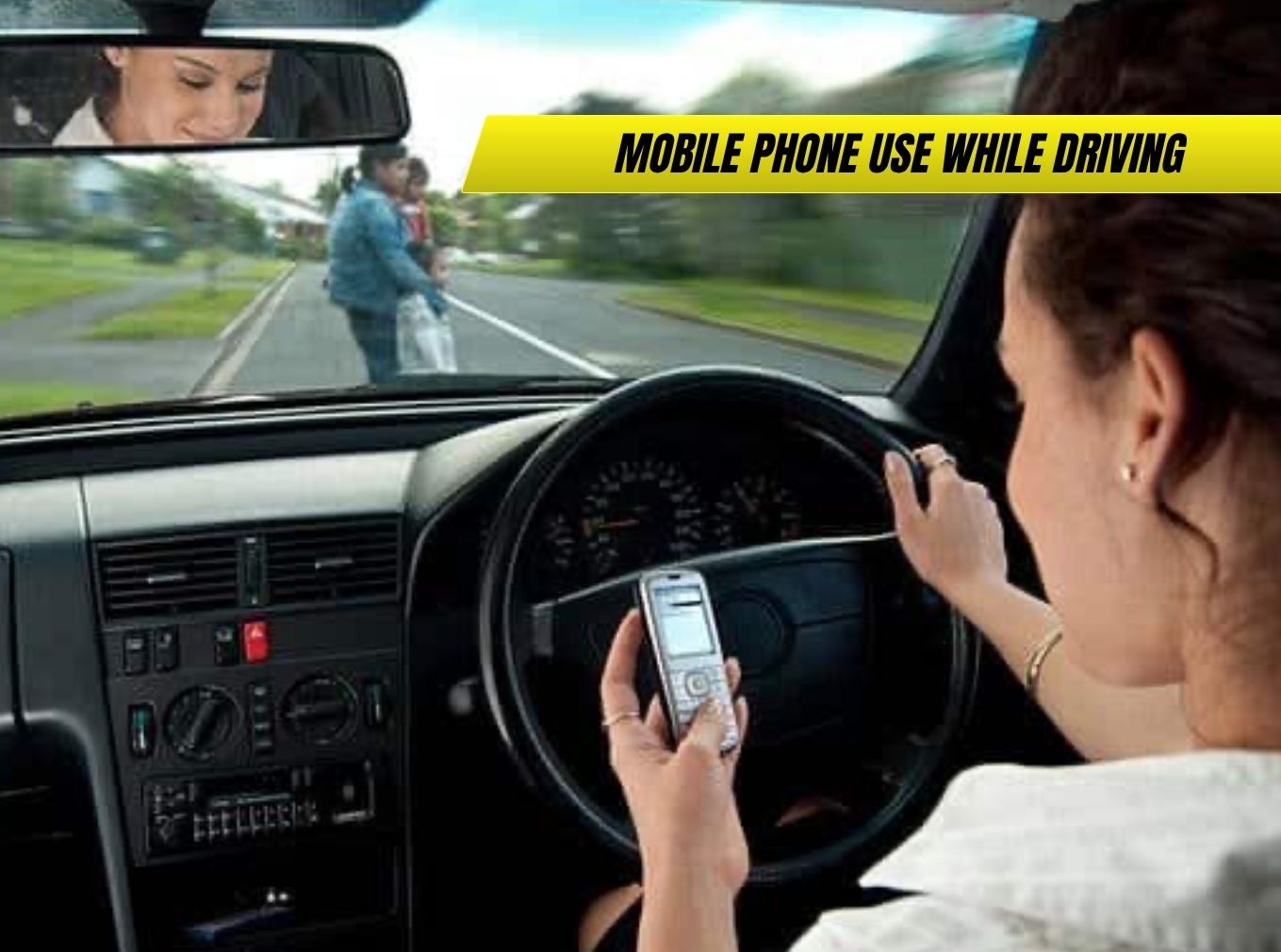
Complete guide to mobile phone use while driving in the UK. Legal penalties, insurance implications, and how phone use can void your coverage in 2025.
Using a mobile phone while driving has become one of the most significant road safety concerns facing UK motorists today. With smartphone technology becoming increasingly integrated into our daily lives, the temptation to check messages, answer calls, or use navigation apps while behind the wheel continues to grow. However, UK drivers may not fully understand how mobile phone use can dramatically impact their insurance coverage, potentially leaving them financially exposed in the event of an accident. This comprehensive guide examines the complex relationship between mobile phone use, legal obligations, and insurance implications for UK drivers in 2025.
Key Points Summary
• Legal ban comprehensive – UK law prohibits any handheld mobile phone use while driving, including stationary traffic • Insurance may be voided – Phone use during accidents can result in complete policy cancellation and claim rejection • Penalties are severe – Six penalty points and £200 fine for first offences, with potential driving bans • Hands-free has limitations – Even legal hands-free use can affect insurance if it contributes to accidents • Evidence is everywhere – Phone records, telematics, and witness statements can prove usage during incidents • Commercial drivers face more – Professional drivers may lose vocational licences and employment opportunities
UK Legal Framework for Mobile Phone Use While Driving
The UK’s approach to mobile phone use while driving has evolved significantly since the original 2003 legislation, with recent updates in 2022 closing loopholes and strengthening enforcement capabilities. Understanding the current legal framework helps drivers appreciate both immediate penalties and long-term insurance implications.
In my experience, many UK drivers remain confused about what constitutes legal mobile phone use while driving. The law prohibits using a handheld mobile phone for any interactive communication function while driving, including when stopped in traffic, at traffic lights, or in queues. This includes making calls, sending texts, taking photos, browsing the internet, or using apps – essentially any activity requiring you to hold and interact with the device.
The definition of “driving” extends beyond simply moving the vehicle. UK courts have consistently ruled that drivers remain “driving” when stationary in traffic, at traffic lights, or in temporary stops that are part of the driving process. Only when the engine is switched off and the handbrake applied in a safe location are drivers considered to have stopped driving.
Hands-free operation remains legal provided the phone is in a cradle or holder, and interaction occurs through voice commands or single-touch activation. However, from my point of view, even legal hands-free use carries risks if it distracts drivers sufficiently to cause accidents. Insurance companies increasingly scrutinise hands-free usage patterns when investigating claims, particularly in cases involving driver distraction.
The penalties for mobile phone use while driving include six penalty points and a £200 fine for first offences. Drivers who passed their test within two years face licence revocation and must retake both theory and practical tests. Repeat offenders or those causing serious accidents may face court proceedings, unlimited fines, driving bans, and potential imprisonment.
How Insurance Companies Investigate Mobile Phone Use
Modern insurance investigations employ sophisticated methods to determine mobile phone usage during accidents, often revealing information that drivers assumed would remain private. Understanding these investigation techniques helps drivers appreciate the comprehensive nature of insurer scrutiny following claims.
Let’s examine the primary investigation methods used by UK insurance companies. Phone network records provide detailed logs of call times, text messages, and data usage with timestamps accurate to the second. Insurance investigators routinely request these records when accident circumstances suggest possible phone involvement, comparing usage times with accident reports to establish causation.
Telematics technology, increasingly common in UK vehicles, records detailed driving behaviour including harsh braking, acceleration patterns, and speed variations that might indicate distraction. Modern black box insurance policies monitor these parameters continuously, providing insurers with comprehensive data about driving behaviour immediately before accidents.
Witness statements frequently mention observing drivers using phones before accidents, while police reports may include officer observations about phone usage or driver behaviour. Dash cam footage from other vehicles increasingly captures phone use evidence, as cameras become more widespread across UK roads.
Mobile phone forensic analysis can reveal detailed usage patterns even when drivers attempt to conceal evidence. Specialist investigators can recover deleted messages, call logs, and app usage data from damaged devices, providing comprehensive evidence of phone activity during accident timeframes.
Social media and digital footprints sometimes provide unexpected evidence of driver behaviour. Timestamped posts, location data, or messages sent from vehicles can contradict driver claims about phone usage during accident periods.
| Investigation Method | Information Revealed | Typical Timeline | Success Rate |
|---|---|---|---|
| Network Records | Calls, texts, data usage | Within 24 hours | 95%+ accuracy |
| Telematics Data | Driving behaviour patterns | Real-time | Continuous monitoring |
| Witness Statements | Visual observations | Days to weeks | Variable reliability |
| Device Forensics | Complete usage history | Weeks to months | 90%+ data recovery |
Insurance Policy Exclusions and Coverage Implications
Understanding how mobile phone use affects insurance coverage requires examining policy terms, exclusions, and the complex legal framework governing insurer obligations versus driver responsibilities.
Based on my experience, most UK insurance policies contain specific exclusions related to illegal activities, including mobile phone use while driving. These exclusions can void coverage entirely, leaving drivers personally liable for all accident costs including third-party claims, vehicle repairs, and legal expenses.
Policy exclusions typically operate on several levels. Primary exclusions void coverage when phone use directly causes accidents, while secondary exclusions may reduce payouts or increase excess payments even when phone use contributes indirectly to incidents. Some policies include graduated responses based on the severity of phone use and its relationship to accident causation.
Third-party coverage generally remains intact regardless of policy exclusions, as UK law requires insurers to honour third-party claims before seeking recovery from policyholders. However, insurers can pursue full cost recovery from drivers whose phone use caused accidents, potentially resulting in debts exceeding £100,000 for serious incidents involving multiple vehicles or injuries.
Comprehensive coverage faces greater vulnerability to exclusions, with insurers potentially refusing to repair or replace vehicles when phone use contributed to accidents. I would recommend carefully reviewing policy terms regarding illegal activities and driver behaviour, as these exclusions vary significantly between insurers.
Some progressive insurers offer modified policies that maintain coverage but impose penalties for phone use, such as increased excess payments or premium loadings for subsequent renewals. These approaches recognise that complete coverage voidance may conflict with broader insurance principles while still discouraging dangerous behaviour.
No-claims bonuses typically disappear when claims involve policy exclusions, requiring drivers to rebuild their claims history from zero. This penalty can add thousands of pounds to future premium costs over many years, representing a significant long-term financial consequence beyond immediate claim refusals.
Impact on Different Vehicle Categories and Driver Types
Mobile phone legislation and insurance implications affect different vehicle categories and driver types in varying ways, reflecting the diverse nature of UK road users and their specific risk profiles and legal obligations.
Commercial drivers face the most severe consequences from mobile phone violations, as vocational licences may be revoked independently of standard driving licence penalties. HGV, PCV, and taxi drivers typically lose their ability to earn income immediately upon conviction, while employers may dismiss drivers for insurance and compliance reasons.
Fleet insurance policies often include specific provisions regarding mobile phone use, with some requiring hands-free systems for all vehicles and implementing driver training programmes. Commercial policies may include graduated penalties based on driver compliance with company phone policies, recognising that business communication needs must be balanced with safety requirements.
Young drivers under 25 typically face higher insurance premiums and stricter policy terms regarding mobile phone use. Many insurers offer telematics-based policies that monitor phone usage alongside driving behaviour, providing premium discounts for compliance while imposing penalties for violations.
Company car drivers may face employment consequences beyond insurance implications, as many employers maintain strict mobile phone policies that include disciplinary action for violations. Some companies require signed agreements acknowledging that phone-related accidents may result in personal liability for excess payments or even full claim costs.
Motorcycle riders face particular risks from mobile phone use, as the physical demands of controlling motorcycles make phone operation especially dangerous. Insurance companies often apply stricter scrutiny to motorcycle claims involving potential phone use, recognising the increased vulnerability of two-wheeled vehicles.
Private hire and taxi drivers operate under additional regulatory frameworks that may impose separate penalties for mobile phone violations. Local licensing authorities can suspend or revoke taxi licences independently of driving licence penalties, effectively ending drivers’ ability to work.
Real-World Case Studies and Legal Precedents
Examining real-world cases helps illustrate how mobile phone use affects insurance claims and legal proceedings, providing practical insights into the consequences faced by UK drivers.
Let me share a representative case from 2023 where a Manchester driver caused a multi-vehicle accident while checking social media messages. Despite claiming the phone was being used hands-free for navigation, forensic analysis revealed active social media engagement seconds before impact. The insurance company successfully voided the policy, leaving the driver personally liable for £180,000 in third-party claims.
Another significant precedent involved a delivery driver whose telematics system recorded sudden braking patterns consistent with distracted driving. Phone records confirmed a lengthy call during the accident period, despite the driver’s claims of hands-free use. The commercial insurer recovered full claim costs from the driver’s employer, who subsequently dismissed the employee for policy violations.
A 2024 High Court ruling established important precedent regarding hands-free phone use and insurance coverage. The court determined that even legal hands-free use could constitute grounds for coverage reduction if investigation proved the conversation significantly distracted the driver. This ruling expanded insurer rights to investigate communication content and context during accident periods.
From my point of view, these cases demonstrate the comprehensive nature of modern insurance investigations and the severe financial consequences drivers face when phone use contributes to accidents. The legal trend clearly favours stricter interpretation of driver responsibilities and expanded insurer rights to refuse coverage.
Recent cases also highlight the importance of witness evidence and digital forensics in establishing phone use patterns. Courts increasingly accept technical evidence over driver testimony, recognising that phone records and telematics data provide objective proof of behaviour that contradicts subjective claims.
Prevention Strategies and Technology Solutions
Preventing mobile phone use while driving requires combining technological solutions, behavioural changes, and practical strategies that address the underlying causes of driver temptation to use devices.
I would recommend implementing multiple prevention layers rather than relying on single solutions. Phone settings including “Do Not Disturb While Driving” modes automatically silence notifications and calls when vehicle movement is detected, reducing temptation during driving periods. However, these systems require consistent activation and may not address urgent communication needs.
Physical solutions include lockable phone storage boxes that prevent access during driving, though these require discipline to use consistently. Some UK families implement “phone basket” policies where all devices are deposited before vehicle journeys, ensuring no temptation exists for any occupants.
Hands-free systems provide legal communication options when properly installed and configured. Modern vehicles increasingly include integrated systems that support voice commands and steering wheel controls, reducing the need for phone interaction. However, based on my experience, even hands-free systems require familiarity and practice to use safely without distraction.
Apps designed to prevent phone use while driving offer varying levels of effectiveness. Some applications block all phone functions when vehicle movement is detected, while others allow emergency calls or specific approved contacts. However, most apps can be disabled by determined users, limiting their effectiveness for drivers lacking self-discipline.
Education and awareness programmes help drivers understand both legal requirements and practical risks associated with phone use. Many UK driving instructors now include distraction awareness training, while some insurers offer premium discounts for completing approved courses.
Employer programmes for commercial drivers often prove most effective, combining policy enforcement with regular training and monitoring systems. Companies that implement comprehensive phone policies with clear consequences typically achieve better compliance rates than those relying solely on legal requirements.
| Prevention Method | Effectiveness | Cost | Implementation Difficulty |
|---|---|---|---|
| Phone Settings | Moderate | Free | Easy |
| Physical Storage | High | Low | Requires discipline |
| Hands-Free Systems | Good | £100-£500 | Professional installation |
| Blocking Apps | Variable | £5-£20/month | Technical setup required |
| Education Programmes | Moderate | £50-£200 | Time investment |
Insurance Shopping Considerations for Phone-Conscious Drivers
Selecting appropriate insurance coverage requires understanding how different insurers approach mobile phone use and the varying policy terms that affect coverage and premiums for phone-conscious drivers.
When shopping for insurance, examine policy terms regarding illegal activities and driver behaviour exclusions. Some insurers maintain strict exclusion policies that void coverage entirely for any illegal phone use, while others employ graduated responses based on the severity of violations and their relationship to accident causation.
Telematics-based insurance policies increasingly monitor phone usage alongside driving behaviour, offering potential premium discounts for compliance while imposing penalties for violations. These policies suit drivers confident in their phone discipline but may prove expensive for those with occasional lapses in behaviour.
Some specialist insurers offer policies specifically designed for commercial drivers or high-risk occupations, including terms that recognise the communication needs of business users while maintaining appropriate safety standards. These policies often include hands-free system requirements and driver training components.
I would recommend comparing not just premium costs but also policy terms regarding phone use, excess structures, and claims handling procedures. Some insurers known for competitive pricing may maintain strict exclusion policies that prove expensive if claims arise, while premium insurers might offer more comprehensive coverage with graduated penalties.
Consider insurers that offer driver education programmes, app-based monitoring, or other tools that help maintain safe driving practices. These additional services often indicate companies committed to genuine risk reduction rather than simply penalty imposition after violations occur.
Legal expenses insurance becomes particularly valuable for drivers concerned about phone-related incidents, as these policies can provide defence costs for prosecutions and regulatory proceedings that might arise from serious accidents involving mobile phone use.
Future Developments and Emerging Technologies
The landscape of mobile phone use while driving continues evolving as technology advances and regulatory frameworks adapt to new challenges and opportunities for both prevention and enforcement.
Emerging vehicle technologies promise to reduce phone use temptation through better integration of communication systems with vehicle controls. Advanced infotainment systems support comprehensive smartphone integration while maintaining hands-free operation, though these systems introduce new distraction risks that regulators and insurers continue evaluating.
5G connectivity and improved vehicle-to-infrastructure communication may enable more sophisticated monitoring systems that automatically detect and report mobile phone violations. Some European countries already pilot systems that can identify handheld phone use through roadside cameras and automatic number plate recognition technology.
Artificial intelligence applications in insurance investigation continue advancing, enabling more sophisticated analysis of phone usage patterns, driving behaviour correlations, and accident causation factors. These systems may eventually provide real-time risk assessment and intervention capabilities.
From my point of view, autonomous vehicle development will fundamentally change the relationship between phone use and driving safety, though this transition will occur gradually over many years. During the transition period, drivers may face increased scrutiny regarding phone use in semi-autonomous vehicles where attention requirements remain unclear.
Regulatory developments may include expanded definitions of phone use, stronger penalties for repeat offenders, and new requirements for hands-free system standards. The UK government continues reviewing mobile phone legislation effectiveness and may implement additional measures if current approaches prove insufficient.
Insurance industry evolution includes developing more sophisticated risk assessment models that consider individual driver behaviour patterns rather than simple demographic factors. Personalised policies based on actual phone usage and driving behaviour may become standard, offering better pricing for compliant drivers while imposing higher costs on risky users.
Frequently Asked Questions
Will my insurance definitely be cancelled if I use my phone while driving?
Not necessarily, but phone use significantly increases the risk of coverage problems. If phone use contributed to an accident, insurers may void your policy, refuse claims, or impose penalties. Even without accidents, some insurers may cancel policies or increase premiums if they discover phone use violations through telematics monitoring or other means.
Yes, but only if the phone is in a hands-free holder and you don’t touch it while driving. You can set up navigation before starting your journey and use voice commands if available. However, programming destinations or interacting with the screen while driving remains illegal and could void your insurance coverage if it contributes to an accident.
How do insurance companies know if I was using my phone during an accident?
Insurers use multiple investigation methods including phone network records, telematics data, witness statements, police reports, and device forensic analysis. Modern investigation techniques can determine phone usage to the second, making it nearly impossible to hide phone use during accident periods. Many drivers are surprised by the comprehensive nature of these investigations.
Does hands-free phone use affect my insurance coverage?
While hands-free use is legal, it can still affect insurance coverage if it contributes to an accident. Insurers may investigate whether phone conversations distracted you sufficiently to cause or contribute to incidents. I would recommend keeping calls brief and avoiding complex or emotional conversations while driving to minimise potential insurance implications.
What happens if I have six penalty points for phone use from my driving licence?
Six penalty points for phone use can significantly increase your insurance premiums, with some insurers refusing coverage entirely. If you’re a new driver (passed test within two years), your licence will be revoked and you’ll need to retake your tests. These consequences often prove more expensive than the original £200 fine.
Can my employer’s insurance cover me if I use my phone while driving a company car?
Company car insurance may be voided if phone use contributes to accidents, leaving both you and your employer financially exposed. Many employers maintain strict mobile phone policies and may pursue recovery of costs from employees who violate these policies. Always check company policies and ensure you understand both legal and employment consequences.
Yes, if your insurance policy is voided or claims are refused due to phone use, you’ll typically lose your no-claims bonus. This can add thousands of pounds to future premiums over many years, representing a significant long-term financial consequence beyond immediate penalties or claim refusals.
Conclusion
The relationship between mobile phone use and insurance coverage represents one of the most significant yet underappreciated risks facing UK drivers today. In my experience, many drivers focus primarily on immediate legal penalties while overlooking the potentially devastating financial consequences of insurance policy voidance following phone-related accidents.
I would recommend adopting a zero-tolerance approach to handheld phone use while driving, implementing multiple prevention strategies, and carefully reviewing insurance policy terms to understand your coverage obligations and exclusions. The modest inconvenience of hands-free communication or delayed message responses pales compared to the potential financial devastation of uncovered accident claims.
The evolving legal and technological landscape will continue changing how mobile phone use affects driving and insurance, but the fundamental principle remains constant: driver attention and responsibility cannot be compromised for communication convenience. Whether you’re driving one of the best family SUVs or commuting in a compact car, maintaining focus on driving rather than device interaction protects both your safety and financial security. As investigation techniques become more sophisticated and insurance policies adapt to new technologies, the importance of responsible phone use while driving will only continue growing for UK motorists.





