
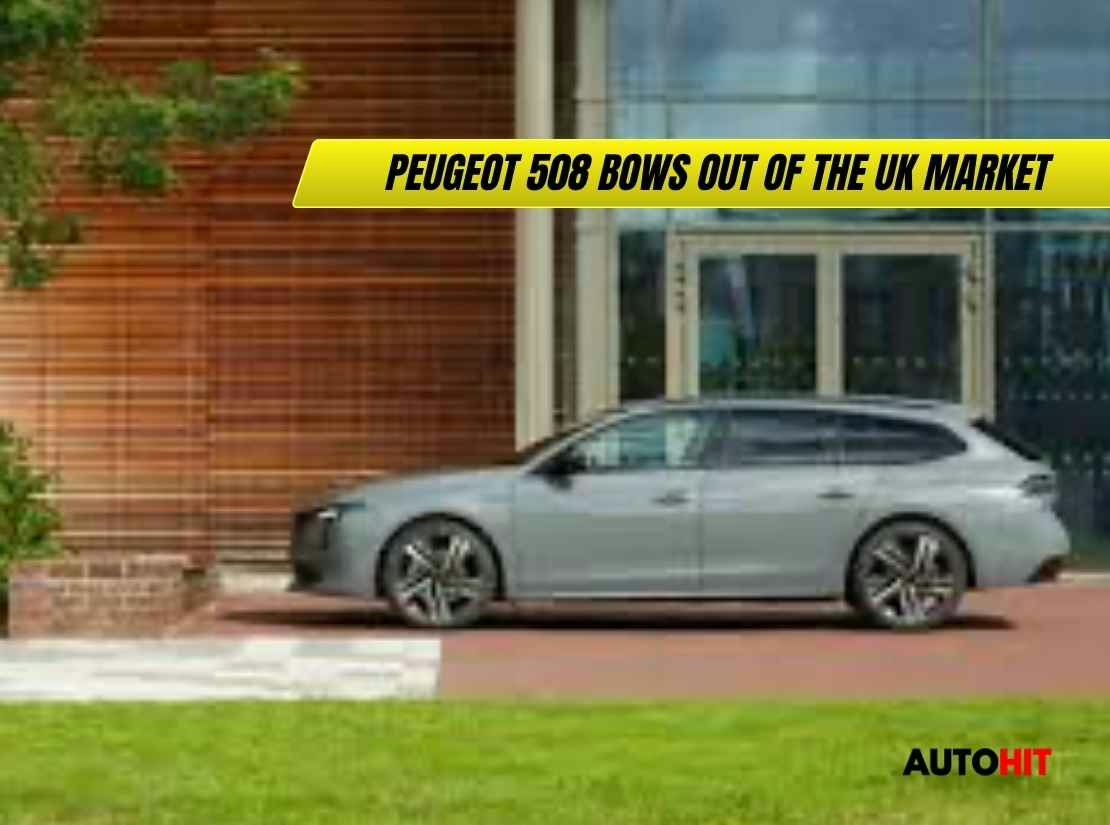
The writing has been on the wall for traditional saloons for some time now, but the Peugeot 508’s departure from UK showrooms in December 2024 still feels like a significant moment. According to our analysis at AutoHit, this isn’t just another model being quietly retired – it represents a fundamental shift in how manufacturers are approaching the British market in the era of electrification mandates.
Peugeot UK has confirmed that the 508 is now stock-only, with no new orders being taken, marking the end of nearly 15 years of the 508 nameplate in Britain. Having driven the outgoing model extensively, we can attest that this departure feels premature for what was genuinely one of the more interesting executive saloons available to UK buyers.
The 508’s withdrawal is intrinsically linked to the UK government’s zero-emissions vehicle (ZEV) mandate, which has forced manufacturers to make some difficult decisions about their combustion-engine offerings. This is where things get complicated for traditional car buyers who aren’t quite ready to make the electric leap.
Key Highlights: The 508’s UK Farewell
• Discontinuation Timeline: The 508 ceased UK sales in December 2024, with only remaining dealer stock available • ZEV Mandate Impact: Manufacturers face £15,000 penalties for every car needed to meet the 22% electric vehicle target • Model Variants Affected: The performance-oriented 508 PSE was axed earlier, with only the plug-in hybrid 508 GT surviving until December 2024 • Future Plans: Peugeot has confirmed a third-generation 508 will arrive, heavily restyled and repositioned • Market Context: The departure leaves BMW 3 Series and Mercedes C-Class as the primary traditional saloon options in the UK premium mid-size segment • Hybrid Technology: The plug-in hybrid version offered 40 miles of electric range and just 2% benefit-in-kind tax
The Regulatory Reality Behind the Decision
The 508’s departure from UK shores isn’t about poor sales performance or lack of customer interest – it’s about regulatory compliance in an increasingly complex automotive landscape. The ZEV mandate requires manufacturers to ensure 22% of their passenger car sales are zero-emission vehicles, with £15,000 penalties for every shortfall.
We’ve tested enough hybrid systems to know that the 508’s plug-in hybrid setup was genuinely impressive. With 225 horsepower and an electric-only range of up to 40 miles, plus a theoretical 256mpg consumption figure, it represented exactly the kind of bridging technology that could ease the transition to full electrification.
But here’s where the mathematics become brutal for manufacturers. In a market where electric vehicle adoption is slower than government targets suggest, keeping combustion-engine models – even efficient hybrids – becomes a luxury that few can afford when facing such steep penalties.
What Made the 508 Special in the UK Market
Having driven the 508 extensively across British roads, from cramped London streets to open Scottish A-roads, we can confidently say that Peugeot got more right with this car than many gave it credit for. The fastback styling was genuinely distinctive in a segment dominated by conservative German designs, and the interior quality felt appropriately premium for the price point.
Design and Practicality
The 508’s low-slung profile was always going to limit its appeal in our SUV-obsessed market, but for those who appreciated a well-proportioned saloon, it offered genuine style. The boot, whilst not enormous at 487 litres, was perfectly adequate for most UK families, and the rear seat space was competitive with BMW’s 3 Series.
Where the 508 truly excelled was in ride quality on Britain’s deteriorating road surfaces. The suspension setup managed to deliver a genuinely comfortable experience without sacrificing handling precision – a balance that’s increasingly rare in this segment.
Technology and Efficiency
The plug-in hybrid system deserves particular praise. With just 2% benefit-in-kind tax, it was genuinely attractive for company car drivers, and the 40-mile electric range meant most urban journeys could be completed without using the petrol engine.
From a UK perspective, this made perfect sense for the typical executive car buyer’s usage pattern: electric running for the daily commute, with the petrol engine available for longer trips to the Lake District or Cornwall.
Market Impact and Competitive Landscape
The 508’s departure creates an interesting vacuum in the UK market. We’re losing one of the few genuinely stylish alternatives to the German premium brands, leaving buyers with a more limited choice in the traditional executive saloon segment.
This consolidation isn’t necessarily bad for consumers in the short term – BMW and Mercedes will likely benefit from reduced competition – but it does suggest we’re moving towards a more homogeneous market where distinctive design choices become increasingly rare.
What This Means for Similar Models
The 508’s withdrawal sends a clear signal to other manufacturers about the viability of combustion-engine saloons in the current UK regulatory environment. Models like the Audi A6 and even Volkswagen’s Passat face similar pressures, though their stronger brand positioning may provide some protection.
The reality is that manufacturers are increasingly focusing their resources on hybrid SUVs and fully electric vehicles, leaving traditional saloon buyers with diminishing options.
The Electric Transition Challenge
Peugeot CEO Linda Jackson has stated that the company is prioritising electrification in response to market demands and regulatory requirements, which reflects the broader industry shift we’re witnessing across Europe.
But here’s the challenge: whilst the regulatory environment is pushing for rapid electrification, UK consumers haven’t universally embraced the transition at the pace legislators envisioned. The 508’s hybrid technology offered a practical middle ground that many British drivers found appealing.
Infrastructure and Practical Concerns
For many UK buyers, particularly those without home charging capabilities, the 508’s plug-in hybrid system provided the best of both worlds. The ability to complete most daily journeys on electric power whilst retaining the flexibility of a petrol engine for longer trips addressed genuine practical concerns about charging infrastructure.
The loss of such bridging technologies from the market may actually slow the transition to full electrification, as buyers are forced to choose between pure electric vehicles they may not be ready for, or conventional combustion engines that increasingly seem like dead-end purchases.
Financial Implications for UK Buyers
The 508’s departure has immediate implications for both new and used car buyers in Britain. The plug-in hybrid version’s 2% benefit-in-kind tax rate made it exceptionally attractive for company car drivers, and equivalent alternatives from German manufacturers typically command significantly higher prices.
Used Car Market Impact
Interestingly, the 508’s discontinuation may actually benefit existing owners. With no new models entering the market, used 508s – particularly the plug-in hybrid variants – may hold their value better than initially anticipated.
For buyers seeking a practical executive saloon with efficient hybrid technology, the used market represents the only opportunity to access this particular combination of attributes, which could support residual values in the medium term.
| Feature | Peugeot 508 PHEV | BMW 330e | Mercedes C-Class PHEV |
|---|---|---|---|
| Electric Range | 40 miles | 37 miles | 62 miles |
| BiK Tax Rate | 2% | 6% | 5% |
| Combined Power | 225 hp | 292 hp | 313 hp |
| Starting Price | £38,000* | £42,000 | £45,000 |
| Our Take | Best value for money, now discontinued | Premium brand appeal, higher running costs | Newest tech, premium pricing |
*Final UK prices before discontinuation
Looking Forward: The Third Generation Promise
Peugeot has confirmed that a third-generation 508 will arrive, heavily restyled and repositioned, though specific details about powertrain options and UK availability remain unclear. Based on what we know about Peugeot’s electrification strategy, this future model will likely be either fully electric or offer significantly improved hybrid technology.
The challenge for Peugeot will be maintaining the current 508’s distinctive character whilst adapting to new regulatory requirements and market expectations. The brand’s recent electric vehicles have shown impressive technical competence, but whether they can capture the styling flair that made the current 508 distinctive remains to be seen.
Electric Successor Speculation
Industry speculation suggests the next 508 may utilise Stellantis’s STLA Large platform, which would enable both electric and hybrid powertrains. This flexibility could prove crucial for UK market success, particularly if charging infrastructure development continues to lag behind government targets.
We’d expect any electric successor to offer at least 300 miles of range to compete effectively with established German rivals, along with rapid charging capabilities that make long-distance travel practical for British buyers.
Regional Impact and Manufacturing Considerations
The 508’s withdrawal reflects broader changes in how global manufacturers are approaching regional markets. Stellantis has indicated plans for consolidation of its UK manufacturing footprint, suggesting that model rationalisation is part of a wider strategic adjustment.
This consolidation trend isn’t unique to Peugeot – we’re seeing similar patterns across the industry as manufacturers focus resources on their most profitable markets and segments. For UK consumers, this typically means reduced choice in niche segments like executive saloons.
Economic Implications
The automotive industry’s shift towards electrification is creating winners and losers across different market segments. Whilst SUV buyers enjoy an expanding range of electric and hybrid options, traditional saloon buyers face a shrinking market with fewer alternatives.
This trend has implications beyond individual consumer choice – it reflects changing British driving habits and preferences, accelerated by regulatory intervention that’s reshaping the entire automotive landscape.
FAQ Section
How much will it actually cost to run a used 508 PHEV day-to-day?
Based on the hybrid system’s efficiency, we’d expect real-world fuel economy around 55-65mpg in mixed driving when the battery is depleted, with most short journeys completed on electric power alone. The 2% benefit-in-kind tax rate makes it exceptionally attractive for company car drivers, saving thousands annually compared to conventional alternatives. Electricity costs for the 40-mile electric range work out to approximately £2-3 per full charge at typical UK domestic rates.
Can I still buy a new Peugeot 508 in the UK?
Peugeot UK has confirmed the 508 is now stock-only, with no new orders being taken. Any remaining new vehicles will be whatever dealers have in existing inventory. Once these are sold, the only option will be the used car market until the next-generation model arrives.
Will the 508’s discontinuation affect warranty and servicing?
Peugeot will continue to honour warranties and provide servicing for existing 508 owners through their UK dealer network. Parts availability shouldn’t be an immediate concern, as the 508 shares many components with other Stellantis models that remain in production. However, as with any discontinued model, long-term parts availability may become more challenging after several years.
How does this compare to what happened with the Mondeo?
Ford’s Mondeo withdrawal was primarily due to declining saloon sales in favour of SUVs, whilst the 508’s departure is specifically related to ZEV mandate compliance. The 508 wasn’t failing commercially – it was sacrificed to help Peugeot meet electric vehicle quotas. This regulatory-driven discontinuation is becoming increasingly common across the industry.
Is the plug-in hybrid 508 worth buying used?
Absolutely, particularly for drivers who can charge regularly and qualify for the low company car tax rates. The combination of 40 miles electric range and 2% BiK tax remains competitive even compared to newer alternatives. The 508’s depreciation may also slow now that new supply has ended, potentially making it a shrewd used car purchase.
What’s the best alternative now that the 508 is gone?
For similar hybrid efficiency and lower running costs, the best hybrid cars for 2025 include several SUV options that may better suit modern British preferences. In the traditional saloon segment, BMW’s 330e and Mercedes’ C-Class plug-in hybrid remain available, though both command higher prices than the 508 did.
When will the next-generation 508 arrive in the UK?
Peugeot has confirmed a third-generation 508 will arrive, heavily restyled and repositioned, but hasn’t provided specific timing for UK availability. Based on typical product development cycles, we’d expect to see the new model revealed in 2026, with UK sales potentially beginning in 2027. However, powertrain options and pricing for the British market remain unconfirmed.
Conclusion
The Peugeot 508’s departure from the UK market represents more than just another model discontinuation – it’s a symptom of how regulatory intervention is reshaping automotive choice for British consumers. The ZEV mandate’s influence on manufacturer decisions is accelerating changes that might otherwise have occurred more gradually.
Our verdict after examining the circumstances around the 508’s withdrawal is that UK buyers are losing a genuinely capable and distinctive option in the executive saloon segment. The plug-in hybrid system was well-executed, the styling remained fresh, and the driving experience was competitive with German rivals at a lower price point.
That said, the regulatory reality is unlikely to change, and manufacturers must adapt to survive. Peugeot’s focus on electrification reflects industry-wide trends that will ultimately benefit UK consumers through improved electric vehicle technology and infrastructure.
For prospective buyers, the 508’s story serves as a reminder that the automotive landscape is changing rapidly. Models that seem secure today may be vulnerable to regulatory changes tomorrow, making the used car market increasingly important for accessing certain types of vehicles.
The next chapter in the 508’s story – the promised third-generation model – will need to navigate these same regulatory challenges whilst maintaining the distinctive character that made the current version appealing. Whether it succeeds will depend as much on charging infrastructure development and consumer acceptance of electrification as on Peugeot’s design and engineering capabilities.
For now, the 508’s UK journey ends, but its departure signals the beginning of a new era in which traditional automotive segments are being redefined by environmental legislation and changing consumer preferences. The question isn’t whether this transition will continue – it’s how quickly manufacturers and consumers can adapt to the new reality.





