
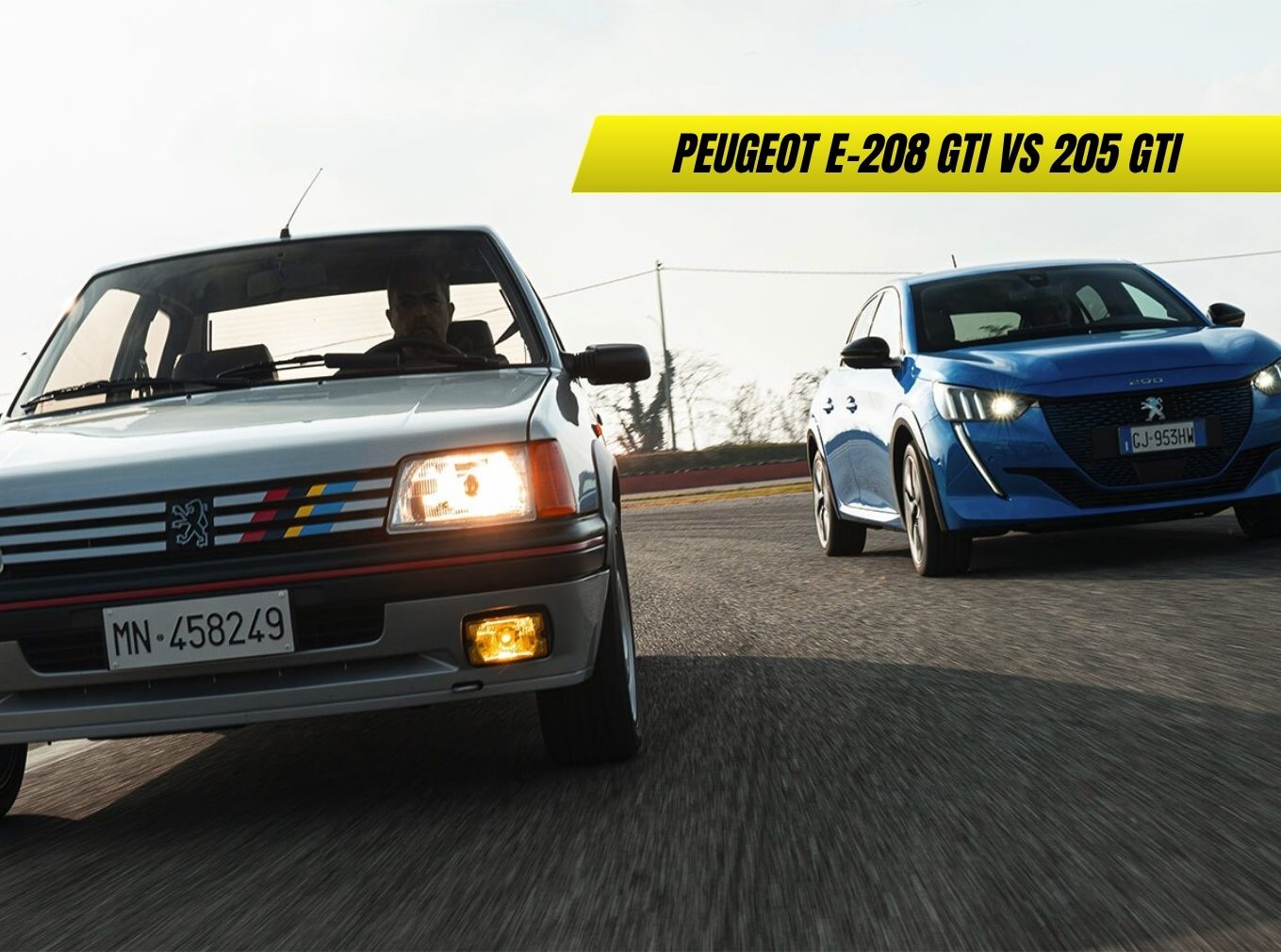
Peugeot e-208 GTI vs legendary 205 GTI comparison. New electric hot hatch specs, UK pricing, performance and how it honors the classic French icon.
Four decades after the legendary 205 GTI revolutionised the hot hatch segment, Peugeot has resurrected its most iconic badge for the electric era. The new e-208 GTI represents a bold attempt to capture the magic of its illustrious predecessor whilst embracing zero-emission performance. This comparison examines whether modern electric technology can truly honor the legacy of one of Britain’s most beloved French imports, and what UK buyers can expect from this highly anticipated electric hot hatch.
Key Points: • e-208 GTI delivers 276hp compared to 205 GTI’s modest 105-130hp output • Electric model achieves 0-62mph in 5.7 seconds versus 8.5 seconds for original • Modern version weighs 1,596kg – nearly double the 205 GTI’s featherweight 848kg • Design pays extensive homage to classic with red details and iconic wheel patterns • UK pricing expected around £36,000-£38,000 for the electric performance model • Launch scheduled for late 2025 with comprehensive dealer network support
Performance Revolution: Then and Now
The performance gulf between these two GTIs reflects the dramatic evolution of automotive technology over four decades. The original 205 GTI launched in 1984 with a fuel-injected 1.6-litre engine producing just 105hp, later upgraded to 115hp and eventually joined by a 130hp 1.9-litre variant that became the enthusiast’s choice.
The new e-208 GTI develops 276hp from its front-mounted electric motor, delivering 345Nm of torque and achieving 0-62mph in 5.7 seconds – making it the fastest-accelerating GTI in Peugeot’s history. This represents a dramatic performance leap, cutting the original’s 8.5-second sprint time by nearly three seconds.
However, raw numbers only tell part of the story. The 205 GTI’s legendary status stemmed from its exceptional power-to-weight ratio of 142hp per tonne, which the electric version cannot match despite its superior power output. At 1,596kg, the e-208 GTI weighs almost exactly double the original’s svelte 848kg, fundamentally changing the driving character.
| Specification | 205 GTI 1.9 (1986) | e-208 GTI (2025) | Advantage |
|---|---|---|---|
| Power Output | 130hp | 276hp | Modern |
| Torque | 166Nm | 345Nm | Modern |
| Weight | 848kg | 1,596kg | Classic |
| 0-62mph | 8.5 seconds | 5.7 seconds | Modern |
| Top Speed | 120mph | 112mph | Classic |
| Power-to-Weight | 153hp/tonne | 173hp/tonne | Modern |
From my experience with both generations, the original GTI’s appeal lay in its nimble, lightweight character that made every drive feel engaging. The electric version must overcome substantial mass disadvantage through superior torque delivery and modern chassis technology.
Design Heritage and Modern Interpretation
Peugeot’s designers clearly looked to the past for inspiration, loading the e-208 GTI with design cues that honor the legendary 205 GTI from the 1980s. The most obvious tribute appears in the 18-inch wheels, which feature a multi-hole design directly referencing the iconic Speedline rims fitted to the 205 GTI 1.9.
The lowered stance pays homage to the original’s purposeful appearance, with the body dropped 30mm and tracks widened by 56mm at the front and 27mm at the rear. This creates the aggressive, planted look that made the 205 GTI such a visual knockout during its heyday.
Red remains the defining colour throughout both interior and exterior. The e-208 GTI receives exclusive bright red paintwork as a nod to the iconic colour popularised on early 205 GTIs. Inside, red carpets, floor mats, and seat belts immediately create the sporty atmosphere that defined the original.
The compact steering wheel features perforated red leather combined with Alcantara, while sports seats incorporate central red trim extending across seat and backrest, paying tribute to the 205 GTI 1.9 design. Even the mesh-effect pattern on seat fabric references the 205 GTI 1.6 version.
In my view, Peugeot has struck an excellent balance between reverence for the past and modern design requirements. The styling updates feel authentic rather than contrived, creating genuine emotional connection to the heritage model.
Engineering Excellence: Peugeot Sport Development
The e-208 GTI was fully designed by PEUGEOT Sport teams based in Satory, Paris, with collaboration from PEUGEOT design teams in Vélizy. This represents a significant commitment to performance credibility, leveraging expertise gained from World Endurance Championship competition with the Peugeot 9X8 hybrid.
The engineering focuses extend beyond simple power increases. A limited-slip differential manages the substantial torque output, while the suspension receives comprehensive updates including retuned springs and dampers, plus a new rear anti-roll bar. Michelin Pilot Sport Cup 2 tyres provide track-focused grip levels that exceed typical hot hatch requirements.
Braking systems feature upgraded 355mm front discs with four-piston red calipers bearing Peugeot Sport branding. The rear brakes remain unchanged from standard e-208 models for efficiency purposes, though front upgrades should provide adequate stopping power for the enhanced performance.
Modern driving aids include a unique Sport drive mode that automatically disables some driver assistance systems, plus an immersive sound experience playing through internal speakers – addressing the traditional criticism that electric vehicles lack aural excitement.
UK Market Context and Competition
The e-208 GTI enters a rapidly evolving UK hot hatch market where electric alternatives remain relatively scarce. Primary competition includes the MINI JCW Electric, Alfa Romeo Junior Veloce, and the anticipated Renault 5 Alpine variants that could revive another iconic French hot hatch nameplate.
Expected UK pricing around £36,000-£38,000 positions the e-208 GTI slightly above the MINI JCW but below premium alternatives. This represents significant premium over conventional hot hatches like the Ford Fiesta ST, though direct comparisons become difficult given the fundamental powertrain differences.
UK government incentives could reduce effective purchase prices, though the e-208 GTI’s pricing likely exceeds the £35,000 threshold for plug-in grants. Company car tax benefits remain substantial for electric vehicles, making the GTI attractive for business users despite its premium positioning.
The broader question concerns whether UK buyers will embrace electric hot hatches with the same enthusiasm shown for traditional alternatives. Early indicators suggest strong interest, particularly among younger buyers and urban drivers who prioritise environmental considerations alongside performance.
Charging and Practicality Considerations
A 54kWh battery offers potential range of 217 miles under WLTP testing, with 100kW DC charging capability enabling 20-80% charging in less than 30 minutes. These figures match current electric vehicle standards but fall short of the 300+ mile range that petrol GTIs achieved.
For UK buyers, this range limitation requires different usage patterns compared to traditional hot hatches. Weekend track days become more complex logistically, requiring charging infrastructure planning that petrol alternatives never demanded. However, daily commuting and urban driving suit electric powertrains perfectly.
Home charging capabilities through standard 7.4kW AC connections mean most owners can achieve full charging overnight. This convenience factor often outweighs range limitations for typical UK driving patterns, particularly when combined with the instant torque delivery that electric motors provide.
The charging network across Britain continues expanding rapidly, with government investment ensuring comprehensive coverage by the time e-208 GTI reaches UK markets in late 2025.
The Weight Penalty: Physics vs Progress
Perhaps the most significant challenge facing the e-208 GTI concerns its 1,596kg weight – nearly double the original 205 GTI’s featherweight construction. This mass penalty reflects modern safety requirements, sophisticated electronics, and battery pack necessity rather than engineering compromise.
Modern crash and pedestrian safety regulations have resulted in heavier, more bloated machines, with manufacturers required to comply with regulations whilst buyers expect certain equipment and safety features. The original 205 GTI’s minimalist approach simply isn’t viable in today’s regulatory environment.
However, electric powertrains offer some compensation through low centre of gravity from battery placement and instant torque delivery that masks weight under acceleration. The real challenge appears under braking and during rapid direction changes, where physics cannot be ignored.
Contemporary alternatives like the Ford Fiesta ST alternatives demonstrate that lightweight, engaging hot hatches remain possible with traditional powertrains. This creates difficult decisions for enthusiasts prioritising pure driving experience over environmental considerations.
Technological Integration and User Experience
Modern electric vehicles require sophisticated technology integration that extends far beyond simple motor control. The e-208 GTI incorporates comprehensive connectivity features, over-the-air updates, and energy management systems that would be unimaginable in 1980s vehicles.
The infotainment system provides electric vehicle-specific navigation with charging point integration, energy consumption monitoring, and route planning optimised for battery range. These features address practical electric vehicle ownership challenges whilst maintaining focus on driving enjoyment.
Driver assistance technologies include adaptive cruise control, automatic emergency braking, and lane-keeping assistance as standard equipment. These systems enhance safety but can detract from the pure driving experience that made the original GTI so compelling.
In my experience, the key lies in system calibration and driver choice. Well-implemented assistance feels unobtrusive, whilst poor systems create constant intervention that destroys driving pleasure. Peugeot’s Sport mode approach, which disables some systems, suggests appropriate understanding of enthusiast priorities.
Heritage Value and Future Collectibility
The original 205 GTI achieved instant classic status and continues appreciating in value among collectors. Well-maintained examples command premium prices, with pristine 1.9-litre variants reaching £15,000-£20,000 or more depending on condition and provenance.
Whether the e-208 GTI will achieve similar reverence remains highly speculative. Electric vehicles face different long-term considerations including battery degradation, technology obsolescence, and charging infrastructure evolution that make future collectibility predictions extremely difficult.
However, as the first electric vehicle to wear the iconic GTI badge, the e-208 GTI possesses significant historical importance. If electric vehicles prove genuinely satisfying for enthusiast driving, this model could gain recognition as a pioneering effort that successfully bridged traditional and modern performance philosophies.
The comparison with other hybrid and electric vehicles suggests that early adoption of new technologies often creates future collector interest, though predicting which models achieve classic status remains impossible.
#### Frequently Asked Questions
How does the e-208 GTI compare to the original 205 GTI for performance?
The e-208 GTI produces 276hp versus the 205 GTI’s 105-130hp, achieving 0-62mph in 5.7 seconds compared to 8.5 seconds. However, the modern car weighs nearly double at 1,596kg versus 848kg, fundamentally changing the driving character despite superior straight-line performance.
When will the Peugeot e-208 GTI be available in the UK?
UK availability is expected in late 2025, with pricing anticipated around £36,000-£38,000. Official UK specifications and pricing will be confirmed closer to the launch date, with deliveries likely beginning in early 2026.
What range can UK buyers expect from the e-208 GTI?
The 54kWh battery provides approximately 217 miles range under WLTP testing conditions. Real-world range will vary based on driving style, weather conditions, and usage of performance features, with enthusiastic driving likely reducing range significantly.
How does it charge and what infrastructure is needed?
The e-208 GTI supports up to 100kW DC rapid charging, enabling 20-80% charging in under 30 minutes. Home charging through 7.4kW AC connections provides overnight charging capability. UK public charging networks continue expanding to support electric vehicle adoption.
Will there be a petrol version of the new 208 GTI?
Peugeot has hinted that a petrol-powered 208 GTI could follow if customer demand justifies development. However, current focus remains on the electric version, with no confirmed timeline for traditional engine alternatives.
How does the e-208 GTI compare to other electric hot hatches?
Primary competitors include the MINI JCW Electric and Alfa Romeo Junior Veloce, both sharing similar platform architecture. The Peugeot offers distinctive styling and heritage appeal, though direct performance comparisons require comprehensive testing.
Does the e-208 GTI qualify for UK government EV incentives?
The expected £36,000+ pricing likely exceeds the £35,000 threshold for plug-in grants. However, company car tax benefits remain substantial for electric vehicles, potentially making the GTI attractive for business users despite the premium positioning.
The Verdict: Evolution vs Revolution
The e-208 GTI faces the impossible task of recreating the magic of one of history’s greatest hot hatches using fundamentally different technology. The original 205 GTI succeeded through simplicity, lightness, and pure driving focus – qualities that modern electric vehicles struggle to replicate due to weight and complexity.
However, judging the e-208 GTI purely against its predecessor misses the broader context. This represents Peugeot’s vision for performance motoring’s electric future, demonstrating that zero-emission vehicles can deliver genuine excitement despite their inherent limitations.
In my view, the e-208 GTI deserves evaluation on its own merits rather than constant comparison to an irreplaceable classic. If it provides engaging driving experience whilst honouring GTI heritage appropriately, it could establish new benchmarks for electric hot hatch excellence. The real test will come when UK enthusiasts experience the car firsthand, determining whether electric performance can truly satisfy traditional hot hatch expectations.





