
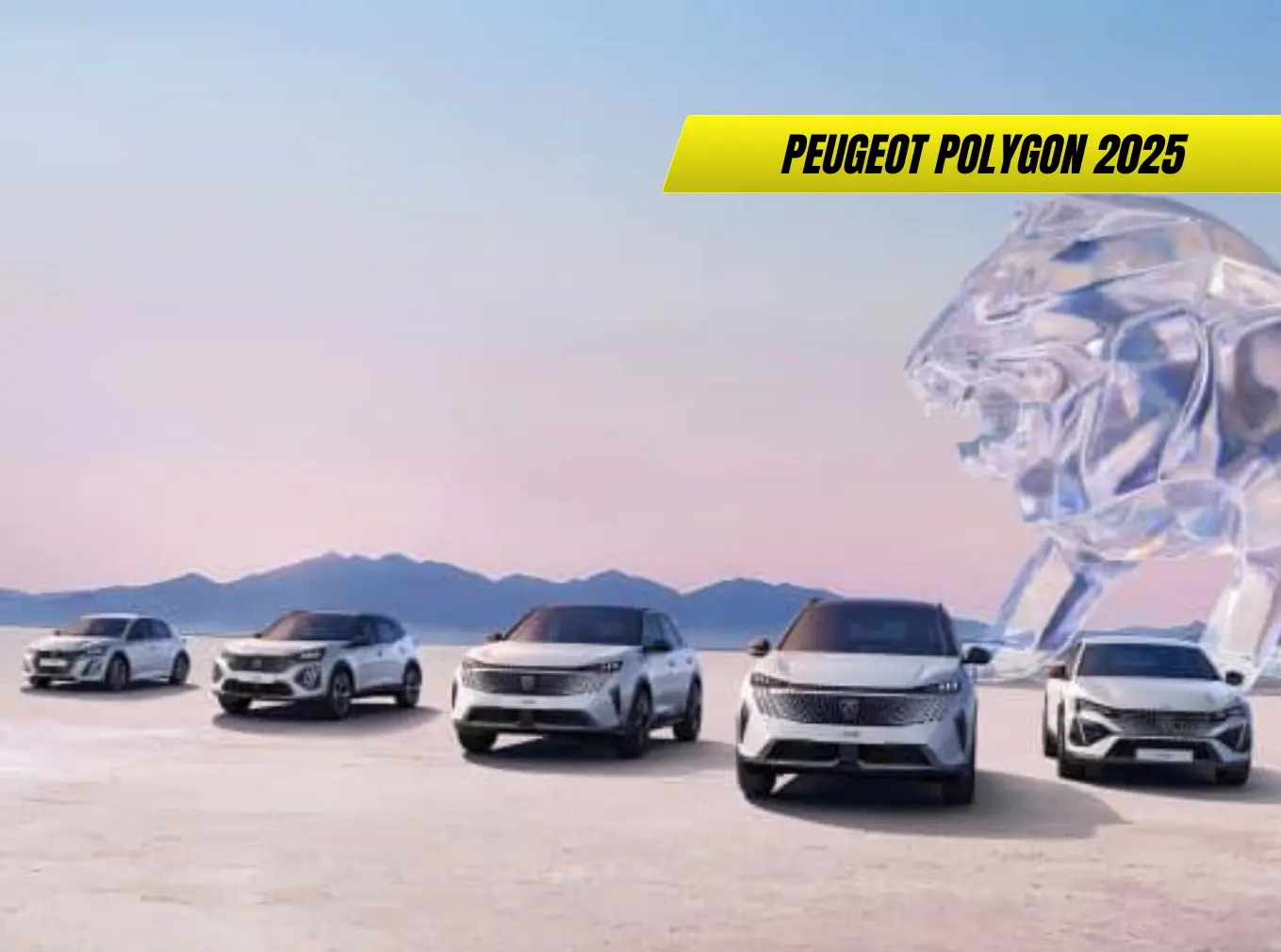
Peugeot Polygon 2025 concept previews the next-generation e-208 electric supermini arriving autumn 2026. UK specs, design details and pricing expectations revealed.
Peugeot has unveiled the Polygon concept—a striking design study providing the first glimpse of the next-generation e-208 electric supermini scheduled for launch in autumn 2026. This concept represents far more than typical motor show eye candy; it previews production-ready styling, technology, and specifications that will define Peugeot’s crucial small electric car offering for the second half of the decade. For UK buyers, the e-208 has proven one of Britain’s most popular electric superminis since its 2019 launch, combining distinctive French styling with practical electric range and competitive pricing. The Polygon concept suggests the next generation will push boundaries further with bolder design, enhanced technology, and potentially improved range—critical attributes as competition intensifies in the affordable electric car segment that represents the gateway to mass EV adoption across Britain.
Key Points:
- Peugeot Polygon concept previews next-generation e-208 electric supermini launching autumn 2026 in UK
- Expected to measure approximately 4.0-4.1 metres, maintaining compact supermini dimensions
- Anticipated range improvements to 280-320 miles WLTP with updated battery technology
- UK pricing likely starting £28,000-£32,000, competing with Vauxhall Corsa Electric and Renault 5 E-Tech
- Production version will retain concept’s bold design language including distinctive lighting signatures
- Enhanced interior technology with larger screens and updated Peugeot i-Cockpit interface
- Crucial model for Stellantis group’s UK electric vehicle strategy as combustion engine phase-out accelerates
Understanding the e-208’s Importance to Peugeot’s UK Strategy
The current Peugeot e-208 has achieved remarkable success in the UK market since its 2019 introduction, consistently ranking among Britain’s best-selling electric vehicles. This popularity stems from several factors: distinctive French styling that stands apart from conservative German rivals, practical 225-mile range adequate for most UK driving patterns, competitive pricing starting around £29,000, and Peugeot’s established UK dealer network providing convenient service access.
The e-208’s significance extends beyond simple sales numbers. As one of the most affordable electric vehicles from an established European manufacturer, it represents a crucial entry point for UK buyers making their first transition from petrol to electric power. Whilst Chinese competitors like MG offer cheaper electric cars, many British buyers prefer familiar European brands with proven UK presence, making the e-208 a natural choice for conservative purchasers seeking electric motoring without the perceived risk of unknown brands.
For Stellantis—the automotive conglomerate owning Peugeot alongside brands including Vauxhall, Citroën, Fiat, and Jeep—the next-generation e-208 carries enormous strategic importance. UK regulations mandate increasing percentages of manufacturer sales must be zero-emission vehicles, rising to 80% by 2030 and 100% by 2035. Affordable electric superminis like the e-208 will shoulder much of this transition, making their success or failure critical to meeting regulatory requirements without incurring substantial fines.
From my point of view, the Polygon concept’s reveal timing—approximately 18 months before production launch—indicates Peugeot’s confidence in the design direction and technical specifications. This extended preview period allows the brand to gauge public reaction, adjust specifications if necessary, and build anticipation amongst potential UK buyers. Our comprehensive guide to the cheapest cars in 2025 explores affordable new car options currently available, though the next-generation e-208 aims to redefine value in the electric supermini segment when it arrives.
Peugeot Polygon Design Language and Styling Cues
The Polygon concept showcases dramatically evolved styling compared with the current e-208, featuring bold design elements that Peugeot promises will translate substantially intact to the autumn 2026 production model. This represents a significant statement—concept cars typically showcase exaggerated design features that get diluted for production due to regulatory requirements, manufacturing constraints, and cost considerations. Peugeot’s assertion that the Polygon accurately previews production intent suggests remarkable confidence in the design.
Key styling elements include:
Front design: The Polygon features Peugeot’s latest interpretation of its distinctive face, with ultra-slim LED lighting signatures creating a futuristic appearance. The traditional grille area—redundant on electric vehicles requiring minimal cooling—transforms into a body-coloured panel incorporating subtle aerodynamic detailing and the illuminated Peugeot lion badge. This approach follows the industry trend of using former grille areas for brand identity and aerodynamic optimisation rather than functional air intake.
Side profile: Sharp character lines and sculpted surfaces create visual drama whilst maintaining the practical proportions necessary for a supermini. The concept sits on relatively large wheels—likely 18-19 inches on the show car—which will probably reduce to 16-17 inches for base production models to maintain affordable pricing and comfortable ride quality on Britain’s imperfect road surfaces.
Rear design: Perhaps the most distinctive element, the Polygon’s rear features three-dimensional LED tail lights creating a striking visual signature instantly recognisable from distance. These “3D claw” tail lights—Peugeot’s terminology—incorporate multiple layers of illumination creating depth and complexity. If production models retain this design with minimal dilution, the next e-208 will stand out dramatically in UK car parks and on British roads.
Colour and finish: The concept showcases a distinctive pearl white finish with contrasting black roof, a two-tone scheme increasingly popular across the automotive industry. Production models will likely offer this as an optional specification alongside conventional solid and metallic paint choices.
The overall impression suggests a vehicle that looks dramatically more expensive and sophisticated than its anticipated £28,000-£32,000 starting price would suggest—crucial for competing against increasingly design-forward electric vehicles from newer manufacturers who prioritise bold styling to compensate for limited brand heritage.
Expected Technical Specifications for the Production e-208
Whilst Peugeot hasn’t released complete technical specifications for the production vehicle previewed by the Polygon concept, we can make informed projections based on Stellantis group’s electric vehicle development strategy and competitive requirements in the UK market.
Battery and range specifications:
The current e-208 uses a 50 kWh battery delivering 225 miles WLTP range. The next generation should incorporate updated battery technology with improved energy density, enabling either larger capacity within similar packaging or equivalent capacity with reduced size and weight. I anticipate battery options of approximately 52-55 kWh for base models and potentially 65-70 kWh for long-range variants.
This would translate into WLTP range figures of approximately 250-280 miles for the standard battery and potentially 300-320 miles for the long-range option—significant improvements making the e-208 genuinely practical for longer UK journeys without requiring frequent charging stops. For context on electric vehicle capabilities, our detailed guide to the best electric cars in 2025 provides comprehensive range and specification comparisons across all segments.
Performance and efficiency:
Electric motor output will likely range from 136 bhp for base models to potentially 156-180 bhp for higher specifications, delivering 0-62 mph acceleration in approximately 8.5 seconds (base) to 7.5 seconds (performance variant). These figures provide adequate performance for UK driving whilst prioritising efficiency over outright speed—appropriate for a supermini focused on affordability and practicality rather than sporting performance.
Energy efficiency should improve through aerodynamic refinements, weight reduction using advanced materials, and updated motor technology. Expect consumption figures around 3.8-4.2 miles per kWh in real-world UK driving, translating into home charging costs of approximately 6-8p per mile using off-peak electricity tariffs—substantially cheaper than the 12-15p per mile typical of equivalent petrol superminis.
Charging capabilities:
DC rapid charging should support up to 100-120 kW maximum power input, enabling 20-80% charging in approximately 25-30 minutes at compatible public chargers. Whilst not matching the 150-200 kW+ capabilities of larger electric vehicles, this proves perfectly adequate for a supermini primarily charged at home overnight.
AC charging will support 7.4 kW single-phase or potentially 11 kW three-phase connections, allowing complete overnight charging using home wallboxes—the charging method most UK electric vehicle owners rely upon for daily use.
SpecificationCurrent e-208Next-Gen e-208 (projected)Vauxhall Corsa ElectricRenault 5 E-TechBattery Capacity50 kWh52-70 kWh50 kWh52 kWhWLTP Range225 miles250-320 miles222 miles248 milesPower Output136 bhp136-180 bhp136 bhp150 bhp0-62 mph8.3 seconds7.5-8.5 seconds8.1 seconds8.0 secondsDC Charging100 kW100-120 kW100 kW100 kWUK Price (current)£29,150£28,000-£35,000 (est.)£31,895£32,995
Interior Design and Technology Enhancements
The Polygon concept showcases significantly evolved interior design compared with the current e-208, featuring Peugeot’s latest i-Cockpit philosophy with enhanced digitalisation and sustainable materials. Production models should retain most of these advancements, representing substantial improvements over the already-distinctive current interior.
Digital interface updates:
The current e-208’s digital displays measure 10 inches for the central touchscreen and 10 inches for the configurable driver display. The next generation should incorporate larger screens—likely 10-12 inches for the touchscreen and potentially a full-width digital display spanning the driver’s sightline, similar to systems appearing in premium vehicles. This expanded screen real estate enables more comprehensive information display, improved navigation graphics, and enhanced customisation options.
The updated infotainment system should incorporate Stellantis group’s latest software architecture with over-the-air update capability, improved smartphone integration (wireless Apple CarPlay and Android Auto as standard), and potentially voice assistant functionality responding to natural language commands. These features bring the e-208 into line with expectations established by premium brands and newer electric vehicle manufacturers.
i-Cockpit evolution:
Peugeot’s distinctive i-Cockpit layout positions the instrument display above a compact steering wheel, creating a unique driving environment. The next generation should refine this concept with improved ergonomics addressing occasional criticism about seating position requirements and ensuring compatibility with drivers of all heights—a consideration particularly important for UK buyers where the e-208 competes as a first car for younger drivers and a practical city car for diverse demographics.
Sustainable materials:
Following industry-wide trends towards reduced environmental impact, the next e-208 interior should incorporate increased percentages of recycled and sustainable materials. Expect recycled plastics, synthetic leather alternatives using bio-based materials, and sustainably-sourced fabrics across various trim levels. These materials align with the electric vehicle’s environmental credentials whilst potentially reducing costs and weight compared with traditional automotive materials.
Practical considerations:
Interior space should remain broadly similar to the current model, with comfortable front seats and adequate rear accommodation for two adults or three children. Boot capacity will likely match or slightly exceed the current 311 litres—modest by family car standards but competitive within the supermini segment and adequate for most UK buyers’ daily requirements. For those requiring more substantial cargo capacity, our guide to mid-size SUVs explores larger alternatives, though at correspondingly higher prices.
UK Pricing Strategy and Market Positioning
Pricing will prove absolutely critical to the next-generation e-208’s UK success. The vehicle must balance advancing technology and enhanced specifications against maintaining accessibility for buyers making their first electric vehicle purchase—the demographic Peugeot must capture to achieve volume sales necessary for regulatory compliance and commercial viability.
I anticipate UK pricing structured as follows:
Base specification: £28,000-£30,000 with the smaller battery option (52-55 kWh), basic interior trim, 16-inch wheels, and essential equipment including LED lighting, digital displays, smartphone connectivity, and comprehensive safety systems. This entry price point proves crucial for competing with the Vauxhall Corsa Electric (currently £31,895) and newly-launched Renault 5 E-Tech (from £32,995).
Mid-specification: £31,000-£33,000 adding enhanced interior materials, larger alloy wheels (17 inches), upgraded infotainment with larger screen, additional driver assistance features, and potentially the larger battery option delivering extended range. This specification level likely captures the majority of UK sales, balancing equipment with value.
Top specification: £34,000-£36,000 incorporating the maximum battery capacity, premium interior finishes, largest wheels (17-18 inches), panoramic glass roof, 360-degree camera system, and all available technology features. This positions the e-208 just below premium small electric cars like the Mini Electric (from £32,000) and SEAT Born (from £37,000), appealing to buyers seeking maximum equipment without premium brand pricing.
These projections assume Peugeot maintains competitive positioning relative to the Vauxhall Corsa Electric—essentially the same vehicle mechanically due to shared Stellantis ownership. Historically, Peugeot prices slightly below or matches the Corsa Electric, using design differentiation and brand perception to justify similar pricing despite shared underpinnings. For UK buyers shopping within specific budget constraints, our article on cars under £25,000explores alternatives, though achieving that price point for electric vehicles becomes increasingly challenging as battery costs remain elevated.
Safety Features and UK Regulatory Compliance
The next-generation e-208 will incorporate comprehensive active safety systems meeting both current UK regulatory requirements and anticipated future mandates. Modern vehicles sold in Britain must include increasingly sophisticated driver assistance technologies, with regulations continuing to expand safety system requirements throughout the decade.
Expected safety equipment includes:
- Autonomous emergency braking with pedestrian, cyclist, and vehicle detection operating up to motorway speeds
- Adaptive cruise control with stop-and-go functionality for traffic jam assistance
- Lane departure warning with active lane keeping assistance providing gentle steering inputs to maintain lane position
- Traffic sign recognition identifying speed limits, no-entry signs, and other critical road signage
- Driver attention monitoring detecting fatigue or distraction and providing alerts
- Blind spot monitoring with visual alerts in door mirrors
- Rear cross-traffic alert warning of approaching vehicles when reversing from parking spaces
- Intelligent speed assistance automatically adjusting speed to match detected speed limits (driver can override)
These systems align with evolving UK speed camera regulations, which increasingly emphasise intelligent speed adaptation and connected safety features helping drivers maintain legal compliance. The integration of these technologies represents mandatory equipment rather than optional extras, ensuring all UK e-208 buyers benefit from comprehensive safety regardless of specification level chosen.
Euro NCAP crash testing should yield a five-star rating—the maximum score and increasingly expected by UK buyers as standard. Stellantis platforms consistently achieve strong safety ratings, and the updated architecture underneath the next e-208 should continue this performance with enhanced structural rigidity and optimised crumple zones protecting occupants in various collision scenarios.
Understanding vehicle warning systems remains important for all drivers. Resources explaining dashboard indicators like the spanner warning light help UK owners respond appropriately to vehicle alerts, whilst guides covering the AdBlue warning light remain relevant for drivers of diesel vehicles—though increasingly less applicable as the UK automotive market shifts towards electrification.
UK Market Competition and Alternatives
The next-generation e-208 enters an increasingly crowded UK electric supermini segment, where it faces competition from established rivals, new entrants, and Chinese manufacturers offering aggressive pricing. Understanding this competitive landscape helps UK buyers evaluate whether waiting for the autumn 2026 e-208 launch makes sense versus purchasing currently-available alternatives.
Direct UK competitors include:
Vauxhall Corsa Electric (from £31,895): Mechanically identical to the current e-208 due to shared Stellantis ownership, but with different styling and brand positioning. The next-generation Corsa Electric will likely share the e-208’s updated platform, creating a situation where UK buyers choose primarily on styling preference and dealer proximity rather than fundamental differences.
Renault 5 E-Tech (from £32,995): Recently launched retro-styled electric supermini generating enormous UK interest through distinctive design and Renault’s established brand presence. Offers 248-mile range and competitive specifications, representing perhaps the e-208’s strongest direct rival.
Mini Electric (from £32,000): Premium positioning with distinctive British heritage appeals to style-conscious buyers. However, modest 145-mile range significantly lags newer rivals, and the next-generation Mini Electric arriving around 2025/26 may prove more competitive.
MG4 (from £26,995): Chinese-owned but British-badged, offering exceptional value with 218-270 mile range depending on specification. Budget pricing challenges European rivals, though some UK buyers remain hesitant about Chinese ownership despite MG’s heritage.
Fiat 500 Electric (from £29,195): Italian style icon translated to electric power with distinctive design. However, tiny dimensions and modest 199-mile range limit practicality compared with larger superminis like the e-208.
For comprehensive comparisons of affordable electric options, our guide to the best electric cars in 2025 covers all segments and price points, helping UK buyers identify the most suitable choice for their specific requirements and budget.
From my perspective, the next-generation e-208 must excel across all dimensions—styling, range, technology, and pricing—to maintain its current UK market position against strengthening competition. The Polygon concept suggests Peugeot understands this challenge and has developed a compelling product, but ultimate success depends on execution details, final pricing, and how competitors respond with their own updates.
Running Costs and UK Ownership Considerations
For UK buyers, total cost of ownership extends beyond purchase price to encompass electricity costs, insurance, maintenance, depreciation, and taxation. Electric vehicles generally deliver advantages in several of these areas, though specifics vary based on individual circumstances and usage patterns.
Electricity costs for home charging the e-208 would work out at approximately 6-8p per mile using typical UK off-peak electricity tariffs of 7-10p per kWh. This compares extremely favourably with petrol superminis consuming 12-15p per mile and represents one of electric vehicles’ most compelling financial advantages. However, this assumes primarily home charging—public rapid charging has become expensive, with some networks charging 65-85p per kWh, which increases costs to 15-20p per mile, eliminating much of the financial advantage.
For UK drivers regularly using public charging or lacking home charging facilities, the economic case for electric vehicles weakens substantially. I strongly recommend UK buyers honestly assess their charging situation before committing to electric vehicle ownership—convenient, affordable home charging transforms the ownership experience, whilst reliance on expensive public charging can make electric vehicles more costly than petrol alternatives.
VED (road tax) for electric vehicles registered before April 2025 remains zero. Vehicles registered from April 2025 onwards—which would include the autumn 2026 e-208—pay zero VED in the first year, then the standard rate (currently £190) annually from year two onwards. This represents significant change from previous total exemption, adding £190 annually to ownership costs for most of the vehicle’s life.
Insurance costs for electric superminis typically fall into groups 20-28, broadly similar to equivalent petrol models. The e-208’s established UK presence should help maintain competitive premiums, as insurers have accumulated several years of claims data enabling accurate risk assessment. Expect annual insurance costs of £600-£1,200 depending on driver age, location, and claims history—somewhat higher than the £450-£900 typical for petrol superminis, but not dramatically so.
Maintenance costs should prove lower than petrol equivalents, as electric vehicles eliminate oil changes, have simpler drivetrains with fewer wearing components, and don’t require exhaust system maintenance. Annual servicing should cost £150-£250 covering brake fluid changes, cabin filter replacement, and system diagnostics. Brake component replacement occurs less frequently due to regenerative braking, and tyres may wear slightly faster due to instant torque delivery, though careful driving mitigates this.
Understanding UK road regulations remains important for all drivers. Our guide to UK toll roads and charges covers additional journey costs affecting total motoring expenses, whilst resources explaining UK driving licence points help drivers understand the penalty system applying equally to all vehicles regardless of propulsion type.
Should UK Buyers Wait for the 2026 e-208?
This question requires careful consideration of individual circumstances, alternative options, and the significant 18-month wait until the autumn 2026 UK launch. For some buyers, waiting makes perfect sense; for others, purchasing currently-available alternatives provides better solutions.
I would recommend waiting for the next-generation e-208 if:
- Your current vehicle remains reliable and adequate for another 18-24 months
- The Polygon concept’s styling particularly appeals to you versus current alternatives
- You specifically want the latest technology and maximum range within the supermini segment
- Budget constraints limit purchasing options now, but circumstances improve by late 2026
- You’re a committed Peugeot buyer preferring to remain with the brand despite alternatives
I would recommend purchasing current alternatives if:
- Your current vehicle requires replacement urgently due to reliability issues or changing circumstances
- The 18-month wait feels too long, and you want to begin enjoying electric vehicle benefits immediately
- Currently-available alternatives like the Renault 5 E-Tech or Vauxhall Corsa Electric meet your requirements adequately
- Immediate financial incentives (manufacturer offers, attractive finance rates) make current purchases more economical than waiting
- You’re not specifically committed to Peugeot, and other brands appeal equally
Leasing considerations: For UK buyers considering leasing rather than purchasing, short-term leases of current electric vehicles might provide the optimal solution—enjoy electric motoring immediately, then transition to the next-generation e-208 when it launches without the commitment and potential depreciation of outright purchase.
From my point of view, the 18-month wait from spring 2025 to autumn 2026 represents a long time in the rapidly-evolving electric vehicle market. Additional competitors will launch, battery technology will advance further, and pricing may shift as economies of scale improve and Chinese competition intensifies. Whilst the Polygon concept looks extremely promising, waiting indefinitely for future products means never benefiting from current offerings—sometimes the vehicle available today delivers better value than the theoretically superior vehicle arriving tomorrow.
Peugeot’s Broader Electric Vehicle Strategy
The next-generation e-208 represents just one element of Peugeot’s comprehensive electrification strategy for the UK and European markets. Understanding this broader context helps UK buyers assess Peugeot’s long-term commitment to electric vehicles and whether the brand represents a safe choice for buyers concerned about manufacturer support, parts availability, and model continuity.
Stellantis—Peugeot’s parent company—has committed to offering electric versions across its entire European lineup by 2025, with the company targeting 100% electric sales in Europe by 2030. This aggressive electrification timeline reflects both regulatory requirements and strategic decision-making about where the automotive industry is heading.
For Peugeot specifically, the electric lineup already includes the e-208, e-2008 compact SUV, e-308 family hatchback, and e-Rifter MPV, with additional models planned throughout the decade. This comprehensive range ensures UK buyers can remain within the Peugeot brand family across various life stages and changing requirements—crucial for building long-term brand loyalty and ensuring owners don’t defect to competitors when circumstances demand different vehicle types.
The next-generation e-208 previewed by the Polygon concept will share its updated platform with other Stellantis group models, including the next Vauxhall Corsa, Citroën C3, and potentially Fiat offerings. This platform sharing enables economies of scale reducing development costs whilst allowing each brand to maintain distinct styling and positioning—the strategy that has defined automotive conglomerates for decades but proves particularly crucial for managing the enormous investment required for electric vehicle development.
When will the next-generation Peugeot e-208 be available in UK dealerships?
Peugeot has confirmed autumn 2026 as the UK launch timeline for the production version of the e-208 previewed by the Polygon concept. This suggests deliveries beginning around September-November 2026, approximately 18 months after the concept’s reveal. UK buyers should expect pre-order opportunities opening around spring-summer 2026, allowing early adopters to secure launch edition vehicles.
What will the new e-208 cost in the UK?
Peugeot hasn’t announced official UK pricing, but based on current e-208 pricing (from £29,150) and competitive positioning, expect the next generation to start around £28,000-£30,000 for base specifications. Higher trim levels with extended range batteries will likely reach £34,000-£36,000, positioning the e-208 competitively against the Vauxhall Corsa Electric and Renault 5 E-Tech whilst undercutting premium alternatives.
How much range will the 2026 e-208 offer?
Based on the Polygon concept and Stellantis battery development, the next-generation e-208 should offer approximately 250-280 miles WLTP range for base models with standard batteries, potentially extending to 300-320 miles for long-range variants with larger battery packs. This represents substantial improvement over the current model’s 225-mile range, making it more practical for longer UK journeys.
Will the production e-208 look like the Polygon concept?
Peugeot has stated the Polygon concept accurately previews the production design, suggesting minimal dilution of the concept’s bold styling for the autumn 2026 launch. Expect the distinctive lighting signatures, sculpted bodywork, and futuristic proportions to translate substantially intact to showroom models, though wheel sizes may reduce slightly and some extreme detailing may soften for production viability.
Should I buy a current e-208 or wait for the next generation?
This depends on your circumstances and timeline. If you need a vehicle urgently and the current e-208 meets your requirements, purchasing now provides immediate benefits and potentially attractive current-model discounts as the next generation approaches. If your current vehicle remains adequate for another 18+ months and the Polygon’s enhanced specifications appeal strongly, waiting for the autumn 2026 launch makes sense.
How does the e-208 compare with hybrid alternatives?
The e-208 offers pure electric operation with zero local emissions and lower running costs versus hybrid alternatives, but requires charging infrastructure access and suits buyers primarily driving within its range limits. Hybrids provide flexibility for longer journeys without charging anxiety but deliver higher running costs and continued reliance on petrol. Our comprehensive guide to the best hybrid cars and plug-in hybrid guide explore these alternatives thoroughly.
Will Peugeot offer a petrol version of the next-generation 208?
Yes, Peugeot will likely continue offering petrol-powered versions alongside the electric e-208, though with reduced prominence as electrification accelerates. UK regulations mandate increasing percentages of manufacturer sales must be zero-emission, but combustion engines will remain available through the 2020s for buyers unable or unwilling to transition to electric power immediately.
Conclusion: Promising Future for Affordable Electric Motoring
The Peugeot Polygon concept provides an exciting glimpse of the next-generation e-208’s potential, showcasing bold design evolution, enhanced technology, and specifications addressing current model limitations. For UK buyers, this represents encouraging news—Peugeot clearly understands the competitive pressures in the electric supermini segment and has developed a product appearing capable of maintaining the e-208’s current strong UK market position whilst advancing on all fronts.
The autumn 2026 launch timeline provides Peugeot adequate time to refine production specifications, establish competitive UK pricing, and prepare dealer networks for the vehicle’s arrival. The 18-month preview period also allows UK buyers to plan their purchases, potentially timing current vehicle replacement to coincide with the next-generation e-208’s availability or arranging short-term leases bridging the gap between current needs and future preferences.
However, honest assessment requires acknowledging that 18 months represents significant time in the rapidly-evolving electric vehicle market. Additional competitors will emerge, battery technology will advance, and pricing dynamics may shift as Chinese manufacturers expand UK presence and established players respond with their own updates. The next-generation e-208 must not merely match today’s competition but exceed the competition existing in autumn 2026—a moving target requiring ongoing development and specification refinement until launch.
From my point of view, the Polygon concept demonstrates Peugeot’s seriousness about maintaining UK electric supermini leadership, but success depends entirely on execution. Concept cars always look fantastic under show lights with carefully-controlled presentation—production reality sometimes disappoints when compromises emerge for cost, regulation, or manufacturing viability. UK buyers should approach the next-generation e-208 with measured optimism: excited about its potential whilst remaining pragmatic about alternatives and avoiding indefinite purchasing delays for vehicles that may ultimately prove only marginally superior to excellent options available today.





