
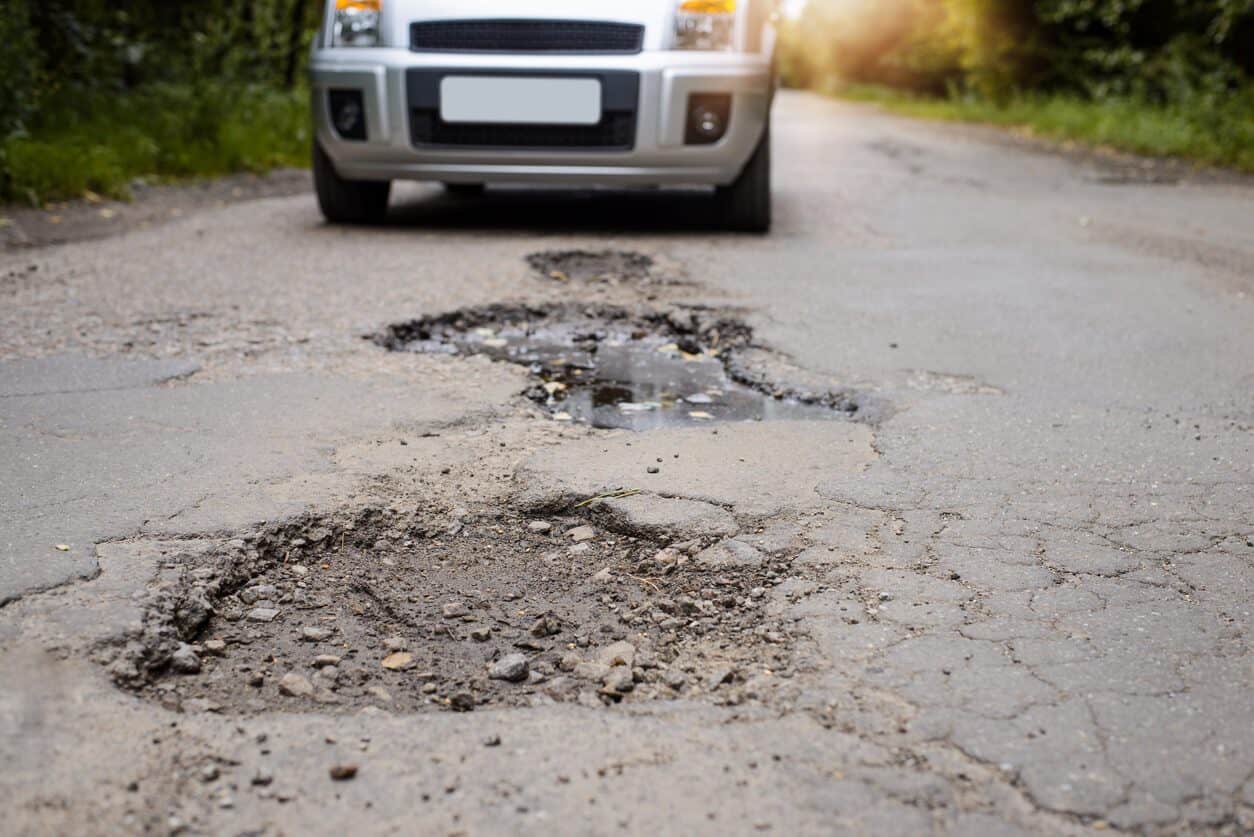
Pothole damage cost UK drivers an estimated £645 million in 2025, and with an £18 billion backlog of road repairs in England and Wales, the crisis is not going away. This guide covers the most common types of damage, how to claim compensation from your council, and how to prevent future problems.
Key Points
- Pothole damage to tyres, wheels, and suspension can cost hundreds of pounds to fix
- You may be entitled to full compensation from your local highway authority
- Fewer than 10% of pothole compensation claims are successfully paid out
- Claiming through your insurer typically affects your No-Claims Bonus
- Reporting a pothole to your council creates a paper trail that strengthens your claim
- Evidence — photos, receipts, and location data — is essential for a successful case
What Pothole Damage Costs UK Drivers
The scale of the UK pothole problem in 2026 is significant. Pothole damage cost British drivers approximately £645 million in 2025, according to analysis published by Treadfirst, while the Asphalt Industry Alliance has identified a record £18 billion backlog of road repairs needed across England and Wales. For individual drivers, a single pothole strike can result in a blown tyre, a buckled alloy wheel, a bent suspension arm, or a misaligned steering rack — any of which can cost hundreds to repair.
The most common types of pothole damage include:
- Tyre punctures or sidewall bulges — often the first sign of a severe impact
- Buckled or cracked alloy wheels — common on low-profile tyres
- Steering misalignment — the car pulls to one side after impact
- Suspension damage — including bent control arms or damaged shock absorbers
- Exhaust damage — if the underside of the vehicle strikes the road
How to Claim Compensation from Your Council
Whoever controls the road — usually a local council for B-roads and residential streets, or National Highways for motorways — has a legal duty to maintain it. If they have failed in that duty, you may be entitled to compensation. However, they cannot be held liable for a pothole they had no prior knowledge of, which is why reporting is so important.
Step-by-step process:
- Document the pothole immediately — take photographs of the pothole, your vehicle, and any visible damage. Record the exact location using a landmark, street sign, or the what3words app.
- Note the date, time, and direction of travel — this information will form the basis of your claim.
- Collect repair quotes and receipts — get at least two professional quotes; keep all invoices.
- Report the pothole — use the GOV.UK report tool to notify your council. This creates an official record.
- Submit a formal claim — write to the relevant highway authority including all evidence, copies of receipts, and your repair costs.
- Appeal if rejected — ask to see the council’s road inspection records. If your claim is denied unfairly, seek legal advice or escalate through the council’s complaints procedure.”If a road authority has failed in its maintenance duties, you may be entitled to full compensation for repairs.” — Martin Lewis, MoneySavingExpert
Should You Claim on Insurance Instead?
Claiming pothole damage through your car insurer is an option, but it comes with a significant drawback: most insurers treat it as an at-fault claim, since there is no third party from whom they can recover costs. Unless you have a protected No-Claims Bonus (NCB), making an insurance claim will likely increase your premium at renewal. For minor repairs — a single tyre, for example — claiming directly from the council is almost always the better route. For more serious structural damage worth over £1,000, consider seeking legal advice before deciding.
You may also be interested in our guide to AdBlue warning lights and what dashboard alerts to look out for after a pothole impact.
Preventing Pothole Damage
Prevention is not always possible, but good habits reduce your risk considerably:
- Check tyre pressures regularly — properly inflated tyres absorb impact better
- Inspect tread depth — worn tyres offer less protection; the UK legal minimum is 1.6mm
- Maintain wheel alignment — misalignment increases vulnerability and wear
- Slow down on damaged roads — lower speeds reduce impact force significantly
- Avoid puddles where possible — puddles may conceal deep potholes
If you notice your spanner warning light illuminate after hitting a pothole, have the car inspected promptly — it may indicate suspension or steering sensor damage.
Pothole Claim Success Rates
The statistics are sobering: fewer than 10% of pothole compensation claims submitted to councils are successfully paid out, according to a March 2026 report. Councils often invoke the Section 58 defence, which allows them to escape liability if they can demonstrate a reasonable system of road inspection was in place at the time of the incident. To overcome this, you need to show either that the pothole was previously reported and not repaired, or that inspection intervals were inadequate for a road of that traffic volume.
| Claim Route | Pros | Cons |
|---|---|---|
| Local council | No impact on NCB; full repair cost possible | Low success rate; slow process |
| Car insurer | Fast resolution; covers structural damage | Likely affects NCB; excess applies |
| Legal action | Higher payouts possible | Costly and time-consuming |
FAQ
How long does a pothole claim take?
Most council claims take 4 to 12 weeks to process. If your claim is rejected, an appeal or legal route may take several months longer.
Can I claim if I didn’t report the pothole at the time?
Yes — you can still claim retrospectively, but your case will be stronger if the pothole was previously reported by someone else. Check your council’s report history.
What evidence do I need for a pothole claim?
Photographs of the pothole and your vehicle, a precise location, date and time of the incident, and professional repair invoices or quotes.
Does pothole damage appear on a car’s history?
Not automatically, but repair records may be noted if work is carried out by a franchised dealer. An independent garage repair will not appear on a standard history check.
Can I claim for a pothole on a motorway?
Yes — but motorways are managed by National Highways rather than local councils. Contact National Highways directly or via their online portal.
What if the pothole was on a private road?
Local councils are not responsible for private roads. Responsibility falls on the landowner or management company. You would need to pursue a civil claim against them.
Claiming pothole compensation is never straightforward, but with solid evidence and persistence, it is absolutely possible. In my experience, the drivers who succeed are those who document everything immediately and do not accept the first rejection from a council. The road network may be deteriorating, but your rights as a motorist have not.





