
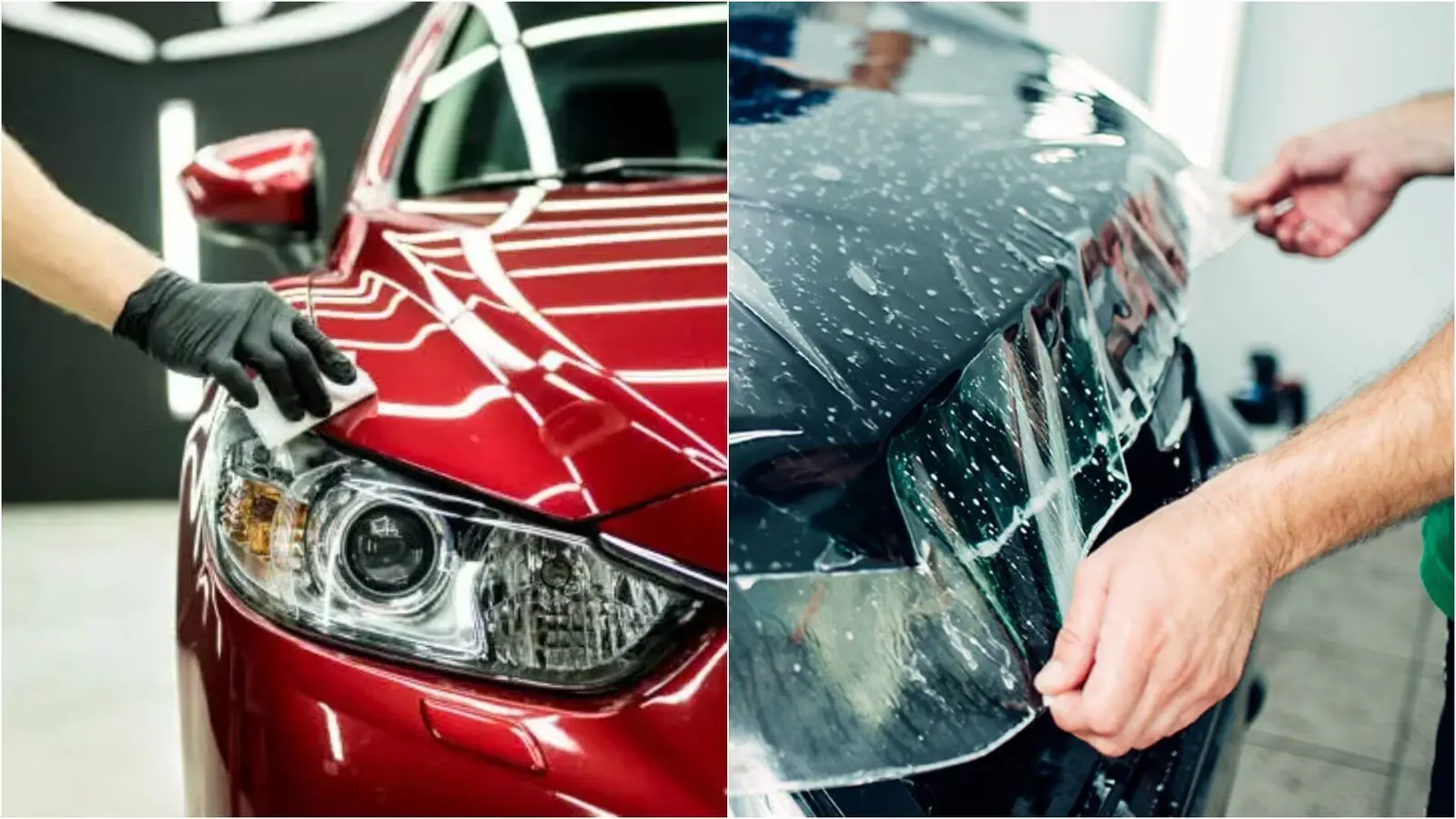
Paint protection is one of the fastest-growing sectors of UK car care — and the choice between Paint Protection Film and ceramic coating is increasingly relevant for new car buyers. Understanding what each product actually does, what it costs, and which suits your driving profile prevents an expensive decision made on marketing rather than substance.
Key Points
- PPF (Paint Protection Film) is a physical polyurethane film that absorbs stone chips, scratches, and impact — the only product that genuinely prevents paint damage
- Ceramic coating is a chemical layer that repels water, contaminants, and UV — it enhances appearance and makes washing easier but does not prevent stone chips
- PPF is significantly more expensive — full-vehicle PPF costs £3,000–£6,000+; a full ceramic coat typically costs £400–£1,200
- For most UK drivers, ceramic coating alone is the rational choice; PPF is justified for new, high-value, or frequently motorway-driven vehicles
- The combination of PPF on high-impact zones plus ceramic coat over the full vehicle is the professional detailer’s recommended approach
- Both products require professional application to perform correctly — DIY results are consistently inferior
What PPF Actually Does
Paint Protection Film is a 150–200 micron thick transparent polyurethane film applied directly to a vehicle’s painted surfaces. At that thickness — roughly equivalent to a sheet of standard printing paper — it is substantial enough to absorb the kinetic energy of a stone chip or minor abrasion before it reaches the paint beneath.
The key functional properties of quality PPF:
- Stone chip absorption — the primary reason PPF exists; it prevents the most common form of paint damage on UK motorways
- Self-healing surface — light surface scratches disappear with heat (direct sunlight or warm water); this is a genuine functional property, not marketing language
- UV protection — prevents paint fade and yellowing over time
- Chemical resistance — bird droppings, tree sap, and road contaminants do not penetrate to the paint surface
- Removable without damage — quality PPF can be removed cleanly after 5–10 years without damaging the original paint
The limitation of PPF is cost and coverage. A full-vehicle application using a premium brand such as XPEL Ultimate Plus, Llumar Platinum, or 3M Pro Series costs £3,000–£6,000 at a UK installer, depending on vehicle size and panel complexity. This is a significant investment justified primarily on new and high-value vehicles.
A more accessible approach — partial PPF on high-impact zones (bonnet, front bumper, headlights, door edges, wing mirrors) — costs £800–£1,500 and protects the areas that account for the overwhelming majority of stone chip damage on a typical UK driver’s vehicle.
What Ceramic Coating Actually Does
A ceramic coating — applied as a liquid polymer that bonds chemically with the paint surface and cures to a hard glass-like layer — is between 1 and 6 microns thick. At that thickness it provides no meaningful protection against stone chips or impact. What it does provide:
- Hydrophobicity — water beads and rolls off the surface, taking loose contamination with it; the car stays cleaner longer and is substantially easier to wash
- Chemical resistance — bird droppings, industrial fallout, and acidic contaminants are repelled rather than etching into the lacquer
- UV protection — reduces paint fade and oxidation
- Enhanced gloss — quality coatings genuinely deepen the paint’s visual clarity and gloss level
- Hardness — a cured ceramic coating tests at 9H on the pencil hardness scale, offering resistance to light swirl marks from washing
The honest limitation: ceramic coating will not prevent a stone chip. A car with a pristine ceramic coat will chip on the motorway exactly as readily as an uncoated one. Its value is in appearance maintenance, contamination resistance, and reduced washing effort — not physical impact protection.
Professional application from a reputable UK detailer costs £400–£1,200 depending on the product grade and preparation work required. The preparation — paint decontamination and machine polishing before application — is where the majority of the labour cost lies and is critical to the result; a ceramic coating applied over swirled or contaminated paint locks those defects in permanently.
PPF vs Ceramic Coating: Direct Comparison
| Property | PPF | Ceramic Coating |
|---|---|---|
| Stone chip protection | Yes — primary function | No |
| Scratch resistance | High (self-healing) | Partial (micro-abrasions only) |
| Chemical/bird dropping resistance | Yes | Yes — primary function |
| UV protection | Yes | Yes |
| Hydrophobicity | Moderate (high with coating on top) | High |
| Paint gloss enhancement | Neutral | Yes |
| Longevity | 5–10 years | 3–9 years |
| Partial application cost | £800–£1,500 (front end) | Not typically partial |
| Full vehicle cost | £3,000–£6,000+ | £400–£1,200 |
| Removable | Yes, residue-free | No (requires abrasive polishing) |
The Optimal Strategy: Combining Both
For new or high-value vehicles, the professional recommendation is a two-layer system: PPF applied to high-impact zones first, then ceramic coating over the entire vehicle — including the PPF surface — to add hydrophobicity, chemical resistance, and enhanced gloss across the whole car.
The combination delivers what neither product achieves alone: PPF handles the physical impacts on the most vulnerable panels; ceramic coating makes the entire vehicle easier to maintain and protects the PPF film’s own surface from chemical degradation. The total cost for this approach on a mid-size premium vehicle typically falls in the range of £2,000–£3,500depending on the extent of PPF coverage and the coating grade.
What UK Drivers Should Actually Choose
The decision depends primarily on three variables: vehicle value, driving profile, and budget.
Choose PPF if:
- You have bought a new car worth over £35,000
- You regularly drive motorways where stone chip exposure is high
- Preserving resale value is a priority
- You are driving a high-profile or prestige vehicle where paintwork condition is material to value
Choose ceramic coating if:
- Your vehicle is used, older, or under £25,000 in value
- You primarily drive urban and suburban roads with limited motorway use
- You want the car to be easier to clean and maintain its appearance
- Your budget does not extend to PPF
Choose neither if:
- Your vehicle is a high-mileage daily driver that will be replaced in two to three years regardless of paintwork condition
- The vehicle is already chipped or has imperfect paintwork — neither product improves existing damage
For UK motorway drivers specifically, the stone chip environment makes partial PPF on the front end a rational investment on any new car — the motorway section between junctions generates the density of gravel and debris that causes the majority of bonnet and bumper damage. A £900 partial front-end PPF application on a new vehicle preserving a factory paint surface for ten years is a defensible outlay; the same money on a three-year-old hatchback that will be replaced in eighteen months is not.
FAQ
Does ceramic coating scratch proof a car?
No — ceramic coating provides resistance to light swirl marks and micro-abrasions from washing, but it does not prevent scratches from keying, stone chips, or physical contact. This is a common misconception in detailing marketing.
How long does PPF last on a UK car?
Quality PPF from brands such as XPEL, Llumar, or 3M is warranted for 10 years against yellowing, bubbling, and delamination. Real-world lifespan on UK cars — which face more road salt and moisture than warmer climates — is typically 7–10 years with proper maintenance.
Can I apply ceramic coating myself?
Consumer-grade ceramic coatings are available as DIY products. They perform significantly below professional-grade coatings but provide a meaningful improvement over untreated paint for maintenance and hydrophobicity. For best results, the paint must be thoroughly decontaminated and polished before application.
Does PPF affect a car’s resale value?
Positively — a vehicle with documented PPF protection in excellent condition commands a premium at resale because buyers know the paintwork has been protected. Removing the PPF before sale reveals factory-fresh paint beneath, which further supports resale value.
Is PPF worth it on a used car?
Only if the existing paintwork is in excellent condition and the car has significant remaining value to protect. Applying PPF over chipped, scratched, or poorly corrected paint locks in those defects permanently under the film.





