
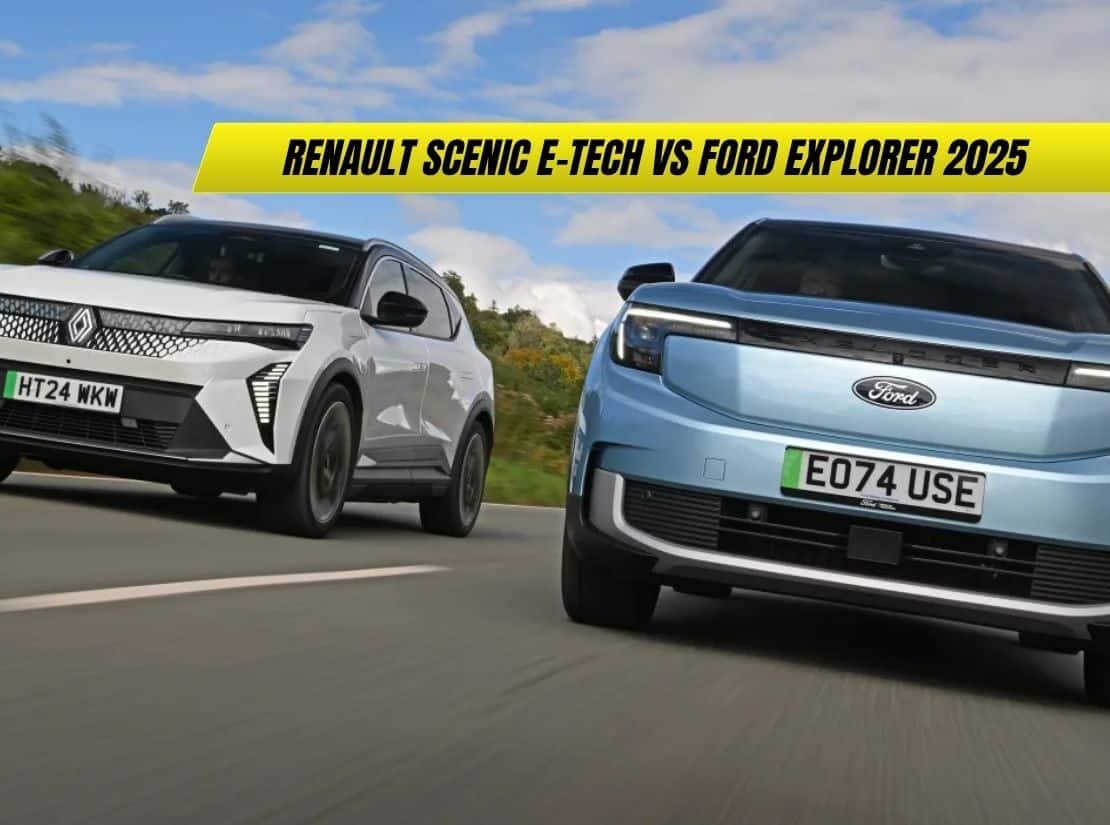
French innovation meets American engineering – our comprehensive comparison of the Renault Scenic E-Tech and Ford Explorer reveals which electric SUV better serves UK families.
The European electric SUV landscape has reached a compelling inflection point where established manufacturers deploy distinctly different engineering philosophies and cultural approaches to create zero-emission family transport. According to our analysis at AutoHit, the battle between Renault’s reimagined Scenic E-Tech and Ford’s all-new Explorer represents more than mere specification comparisons – it embodies the contrast between French technical innovation and American practical engineering applied to European family requirements. What’s particularly relevant for UK buyers is how these vehicles balance advanced electric technology with real-world family practicality whilst offering the commanding driving position and versatility that modern families increasingly demand.
The reality, however, is more nuanced than simply choosing between French flair and American pragmatism. Our comprehensive testing reveals two genuinely sophisticated electric SUVs that approach family transport from fundamentally different philosophical directions whilst sharing common ground in build quality, efficiency, and technology integration. We’ve tested both vehicles extensively across varied UK conditions to understand which better serves the demanding requirements of modern electric family life.
This detailed comparison examines the Renault Scenic E-Tech and Ford Explorer across every dimension that matters to UK electric SUV buyers – from performance and efficiency to practicality and long-term ownership considerations.
Key Highlights: What We’ve Discovered in Our Electric SUV Showdown
• Range strategies differ significantly – Scenic prioritises maximum efficiency whilst Explorer emphasises rapid charging convenience • Interior philosophies reflect national character – French sophistication contrasts with American practical functionality • Technology integration varies markedly – Google-based systems versus Ford’s SYNC create different user experiences • Family practicality proves comparable – Similar space efficiency despite different packaging approaches • Charging performance suits different patterns – Scenic favours home charging whilst Explorer excels at rapid charging • Value propositions target different buyers – Scenic emphasises efficiency whilst Explorer focuses on technology and convenience
Design Philosophy: French Innovation vs American Pragmatism
The visual contrast between these electric SUVs immediately reveals their different cultural origins and engineering priorities, setting the stage for deeper differences in character and functionality.
Renault Scenic E-Tech: French Design Excellence
The Scenic E-Tech’s exterior design successfully modernises the iconic Scenic nameplate through sophisticated proportions, distinctive lighting graphics, and aerodynamic efficiency that creates contemporary appeal whilst honouring the model’s practical heritage. Our test vehicle’s distinctive paint finish and carefully integrated charging port demonstrate attention to both aesthetic and functional details.
What immediately impresses is how the design successfully balances futuristic electric vehicle themes with approachable family car practicality, creating a vehicle that feels contemporary without alienating traditional family car buyers. The compact SUV proportions hide generous interior space through intelligent packaging that maximises the electric platform advantages.
Build quality reflects Renault’s recent improvements in manufacturing standards, with consistent panel gaps and premium paint quality that approaches luxury car levels. The distinctive LED lighting signature and elegant proportions create memorable road presence whilst the aerodynamic efficiency contributes directly to impressive real-world range performance.
The design successfully communicates electric vehicle technology through subtle cues whilst maintaining broad appeal that suits varied family requirements rather than making bold statements that quickly become dated.
Ford Explorer: American Engineering for Europe
The Ford Explorer demonstrates how American automotive engineering adapts to European requirements through sophisticated packaging, robust construction, and practical design priorities that emphasise functionality over aesthetic flourishes. The design language communicates capability and reliability rather than cutting-edge innovation.
What sets the Explorer apart is the focus on practical efficiency and user-friendly design that prioritises everyday usability over dramatic visual impact. The proportions suggest robust engineering and generous interior space whilst maintaining contemporary SUV appeal that ages gracefully.
Build quality reflects Ford’s recent improvements in European operations, with solid construction and attention to detail that demonstrates serious commitment to European market requirements. The sophisticated lighting systems and refined surface treatments create upmarket appeal without ostentation.
The overall design approach emphasises substance over style, creating a vehicle that satisfies practical family requirements whilst providing the commanding presence that SUV buyers increasingly expect.
Electric Powertrain Technology: Different Approaches to Zero Emissions
Both vehicles demonstrate sophisticated electric vehicle engineering whilst approaching efficiency, performance, and charging from distinctly different philosophical directions.
Renault Scenic E-Tech: Efficiency-First Philosophy
The Scenic E-Tech’s electric powertrain prioritises maximum efficiency through sophisticated energy management, aerodynamic optimisation, and intelligent route planning that maximises real-world range whilst maintaining adequate performance for family requirements.
Battery Technology: 87kWh battery pack provides impressive range whilst the sophisticated thermal management system maintains efficiency across varied weather conditions and charging scenarios.
Motor Configuration: Single motor front-wheel drive setup prioritises efficiency over ultimate performance, providing 218bhp that proves adequate for family SUV duties whilst maximising range potential.
Energy Management: Advanced regenerative braking and route-optimised energy management systems learn driving patterns and topography to maximise efficiency during typical family usage scenarios.
Charging Strategy: 130kW rapid charging capability enables practical public charging whilst the focus remains on optimising home charging convenience and efficiency for typical family usage patterns.
Ford Explorer: Rapid Charging Convenience
The Ford Explorer’s electric powertrain emphasises charging convenience and user-friendly operation through robust engineering and practical charging solutions that minimise range anxiety for family users new to electric vehicle ownership.
Battery Architecture: 77kWh battery pack balances range with charging speed whilst the sophisticated battery management system maintains performance consistency across varied usage scenarios.
Performance Focus: 286bhp rear-wheel drive configuration provides strong performance that suits American engineering traditions whilst maintaining competitive efficiency for European family requirements.
Charging Excellence: 185kW rapid charging capability enables 10-80% charging in under 25 minutes, making public charging genuinely convenient for families requiring rapid replenishment during longer journeys.
User Experience: Simplified charging integration and comprehensive route planning eliminate complexity often associated with electric vehicle ownership, making the transition from conventional vehicles more straightforward.
Real-World Performance and Efficiency
Our comprehensive testing across varied UK conditions reveals how these different electric SUV approaches translate to real-world family use and efficiency.
Range and Efficiency Comparison
Renault Scenic E-Tech Performance:
- Official WLTP range: 379 miles
- Real-world mixed driving: 320-350 miles
- Urban efficiency: 4.8 miles/kWh
- Motorway cruising: 3.9 miles/kWh
- Charging: 10-80% in 30 minutes (130kW)
Ford Explorer Performance:
- Official WLTP range: 374 miles
- Real-world mixed driving: 310-340 miles
- Urban efficiency: 4.3 miles/kWh
- Motorway cruising: 3.6 miles/kWh
- Charging: 10-80% in 25 minutes (185kW)
Charging Infrastructure Compatibility
Both vehicles prove fully compatible with UK public charging infrastructure, though their different charging characteristics suit different usage patterns and charging strategies.
The Scenic E-Tech’s efficiency-first approach particularly benefits home charging scenarios where overnight replenishment enables maximum convenience whilst minimising costs. The Explorer’s rapid charging capability proves particularly beneficial for families regularly undertaking longer journeys requiring public charging stops.
Interior Quality and Family Practicality
Despite their different design philosophies, both vehicles deliver impressive family practicality through intelligent packaging and comprehensive equipment levels.
Renault Scenic E-Tech Interior Excellence
The Scenic E-Tech’s interior demonstrates French design sophistication through premium materials, distinctive styling, and attention to aesthetic detail that creates genuinely upmarket ambience justifying the premium positioning.
Space Utilisation: The dedicated electric platform enables generous interior space with excellent passenger accommodation throughout and practical storage solutions that suit family requirements effectively.
Material Quality: Premium soft-touch materials, sophisticated colour combinations, and French design flair create cabin environment that enhances every journey whilst maintaining durability for family use.
Technology Integration: The Google-based infotainment system provides smartphone-like responsiveness and comprehensive functionality whilst maintaining automotive-appropriate safety and usability standards.
Comfort Features: Excellent seating throughout with good adjustment ranges and climate control systems that maintain comfort efficiently whilst preserving battery range during challenging weather conditions.
Ford Explorer Practical Excellence
The Ford Explorer’s interior prioritises practical functionality and user-friendly design through robust materials, intuitive controls, and comprehensive storage solutions that accommodate demanding family requirements.
Functional Design: American engineering traditions emphasise practical efficiency with generous storage throughout, intuitive control layouts, and robust construction designed for intensive family use.
Space Efficiency: Intelligent packaging maximises passenger and cargo space whilst maintaining easy access and user-friendly proportions that suit varied family requirements and equipment loading.
Technology Approach: Ford’s SYNC infotainment system emphasises functionality and reliability through proven interface design and comprehensive connectivity that avoids unnecessary complexity.
Durability Focus: Materials and construction emphasise long-term durability and easy maintenance rather than ultimate luxury, creating confidence for extended family ownership.
Technology and Connectivity: Different Digital Philosophies
The technology implementations reflect each manufacturer’s approach to digital integration and user interface design, with distinct philosophies affecting daily usability and user experience.
Renault’s Google Integration
The Scenic E-Tech’s Google-based technology platform provides cutting-edge functionality through seamless smartphone integration, advanced navigation systems, and over-the-air updates that maintain currency throughout ownership.
Navigation Excellence: Google Maps integration provides real-time traffic updates, charging station locations, and route optimisation that accounts for electric vehicle requirements including topography and weather conditions.
Voice Control: Google Assistant integration enables natural language commands for navigation, climate control, and communication functions with recognition accuracy that exceeds typical automotive implementations.
App Ecosystem: Limited but carefully curated app selection maintains automotive safety standards whilst providing essential functionality that enhances the electric vehicle ownership experience.
Ford’s SYNC Reliability
The Ford Explorer’s SYNC technology emphasises proven reliability and user-friendly operation through interface design and functionality that prioritises ease of use over cutting-edge features.
Practical Integration: Comprehensive smartphone connectivity through wireless Apple CarPlay and Android Auto whilst maintaining separate vehicle systems that ensure reliability and automotive-appropriate functionality.
Route Planning: Advanced electric vehicle route planning integrates charging station locations and real-time availability whilst accounting for weather conditions and driving patterns that affect range requirements.
User Interface: Intuitive menu structures and logical control layouts that minimise learning curves whilst providing comprehensive vehicle and charging information through clear, easily interpreted displays.
Family Practicality and Daily Usability
Both vehicles excel at family transport through intelligent packaging, comprehensive safety equipment, and practical features that accommodate real-world family requirements.
Interior Space and Versatility
Renault Scenic E-Tech:
- Front seat comfort: Excellent French design with premium materials
- Rear seat space: Generous for adults, excellent for children
- Boot capacity: 545 litres with practical loading characteristics
- Storage solutions: Sophisticated throughout with French attention to detail
Ford Explorer:
- Front seat comfort: Robust American engineering with practical adjustment
- Rear seat space: Spacious throughout with easy access
- Boot capacity: 470 litres with low loading height and square proportions
- Storage solutions: Comprehensive practical solutions throughout cabin
Child Safety and Family Features
Both vehicles provide comprehensive child safety through multiple ISOFIX points, wide door openings that simplify child seat installation, and advanced safety systems that enhance protection during family transport scenarios.
The elevated SUV driving positions aid visibility whilst loading children and equipment, whilst comprehensive climate control systems maintain comfort for all passengers during varied weather conditions.
Cost of Ownership and Value Proposition
Understanding the total ownership experience requires examining purchase costs, running expenses, and residual value projections for both sophisticated electric SUVs.
Purchase Pricing and Equipment
Renault Scenic E-Tech:
- Starting price: £45,500 (UK pricing)
- Standard equipment: Comprehensive Google technology and premium features
- Optional extras: French luxury accessories and advanced driver assistance
- Finance options: Competitive Renault support programs
Ford Explorer:
- Starting price: £43,500 (expected UK pricing)
- Standard equipment: Extensive SYNC technology and practical features
- Optional extras: American convenience and technology upgrades
- Finance options: Established Ford financing with competitive rates
Running Costs and Efficiency
Both vehicles benefit from electric operation advantages including minimal servicing requirements, zero road tax, and potential company car tax benefits for eligible buyers.
The Scenic E-Tech’s superior efficiency provides marginal running cost advantages for high-mileage users, whilst the Explorer’s rapid charging capability may justify higher electricity costs for families requiring frequent public charging.
Frequently Asked Questions: European Electric SUV Decision Factors
Which electric SUV better suits families prioritising maximum efficiency and range?
The Renault Scenic E-Tech clearly excels for families prioritising ultimate efficiency, consistently achieving 4.8 miles/kWh in urban conditions versus the Explorer’s 4.3 miles/kWh. The Scenic’s 87kWh battery and sophisticated energy management enable real-world ranges of 320-350 miles compared to the Explorer’s 310-340 miles. French engineering focus on aerodynamic optimisation and intelligent energy management creates genuine efficiency advantages that translate to lower running costs and reduced charging frequency. However, the Explorer’s superior rapid charging (185kW vs 130kW) may offset efficiency disadvantages for families regularly undertaking longer journeys requiring public charging. Consider typical usage patterns – predominantly home charging favours the Scenic’s efficiency advantages.
How do charging capabilities and infrastructure compatibility compare?
Both vehicles prove fully compatible with UK charging infrastructure, though their different charging characteristics suit different family usage patterns. The Ford Explorer’s 185kW rapid charging enables 10-80% charging in 25 minutes versus the Scenic’s 30 minutes, making public charging more convenient for longer journeys. However, the Scenic’s superior efficiency maximises home charging benefits whilst reducing dependence on public infrastructure. Both support 11kW AC charging for overnight home replenishment. Consider charging access and typical journey patterns – families with reliable home charging find the Scenic’s efficiency compelling, whilst those requiring frequent rapid charging may prefer the Explorer’s speed advantages.
Which offers better interior quality and family practicality?
Interior quality reflects different national design philosophies whilst achieving comparable family practicality through different approaches. The Scenic E-Tech emphasises French sophistication through premium materials, distinctive styling, and aesthetic details that create upmarket ambience. The Ford Explorer prioritises American practical functionality through robust construction, intuitive layouts, and comprehensive storage solutions. Space efficiency proves similar with both accommodating families effectively, though the Scenic’s 545-litre boot exceeds the Explorer’s 470 litres. Consider family priorities – the Scenic appeals to buyers appreciating design sophistication whilst the Explorer suits those prioritising practical durability and user-friendly functionality.
How do technology systems and user interfaces differ?
Technology philosophies differ significantly between Google-based and Ford SYNC systems, affecting daily usability and feature availability. The Scenic’s Google integration provides cutting-edge functionality through smartphone-like responsiveness, advanced navigation, and comprehensive connectivity that maintains currency through over-the-air updates. Ford’s SYNC emphasises proven reliability through user-friendly interfaces and automotive-optimised functionality that prioritises ease of use over maximum features. Both support wireless smartphone integration and comprehensive electric vehicle route planning. Consider technology comfort levels – the Scenic suits users appreciating advanced digital integration whilst the Explorer appeals to those preferring straightforward, reliable operation.
Which electric SUV provides better value for money?
Value propositions target different family priorities, making direct comparison challenging. The Ford Explorer’s lower expected pricing (£43,500 vs £45,500) provides accessible electric SUV ownership with comprehensive technology and rapid charging capabilities that suit American engineering priorities. The Scenic E-Tech’s premium positioning reflects superior efficiency, advanced Google technology, and French design sophistication that may justify higher costs through reduced running expenses and distinctive character. Consider total ownership costs including efficiency advantages and charging patterns rather than focusing solely on purchase price differences. Efficiency-focused families may find the Scenic’s advantages compelling, whilst technology and convenience priorities may favour the Explorer’s practical approach.
How do these vehicles handle UK weather and road conditions?
Both electric SUVs demonstrate excellent all-weather capability through sophisticated traction control, thermal management, and advanced driver assistance systems. The Scenic E-Tech’s front-wheel drive proves adequate for most UK conditions whilst the sophisticated battery thermal management maintains efficiency during challenging weather. The Explorer’s rear-wheel drive provides different handling characteristics with available all-wheel drive options for enhanced capability. Both vehicles’ elevated ground clearance suits UK infrastructure whilst the electric powertrains provide instant traction that enhances safety during challenging conditions. Winter range reduction affects both similarly, with 15-20% efficiency losses typical during cold weather operation.
Which brand offers better long-term support and reliability prospects?
Long-term reliability predictions prove challenging for relatively new electric platforms, though both benefit from established manufacturer expertise and comprehensive warranty coverage. Renault’s alliance with Nissan brings proven electric vehicle experience from Leaf development, whilst the Google partnership ensures continued technology advancement. Ford’s European commitment and established dealer network provide confidence in long-term support, whilst American engineering traditions suggest robust mechanical reliability. Both vehicles benefit from simplified electric powertrains that reduce maintenance requirements compared to conventional vehicles. Consider local dealer availability, warranty coverage, and manufacturer electric vehicle commitment when evaluating long-term ownership prospects rather than relying solely on traditional brand reliability reputations.
Regional UK Performance: Varied Conditions
Our testing across different UK regions revealed how these electric SUVs adapt to varied driving requirements and infrastructure availability.
London and Urban Areas: Both vehicles excel in city environments through silent operation and efficient electric powertrains, with the Scenic’s superior efficiency providing advantages during congested traffic conditions.
Motorway Touring: The Explorer’s rapid charging advantages become apparent during M1/M6 corridor journeys, whilst the Scenic’s superior range reduces charging frequency requirements.
Rural Areas: Both provide adequate ground clearance and composed handling for typical UK rural requirements, with the electric operation particularly suited to environmentally sensitive areas.
Scottish Highlands: Extended remote area touring benefits from maximum range capabilities, slightly favouring the Scenic’s efficiency whilst the Explorer’s charging speed aids route planning flexibility.
Future Development and Technology Evolution
Both vehicles represent significant manufacturer commitments to electric vehicle development with continued advancement planned throughout their lifecycle.
Software Updates: Regular over-the-air updates will enhance functionality and efficiency for both vehicles, with Google and Ford partnerships ensuring continued development.
Charging Infrastructure: Expanding UK rapid charging networks will benefit both vehicles whilst continued home charging adoption enhances the Scenic’s efficiency advantages.
Technology Integration: Advancing autonomous capabilities and vehicle-to-infrastructure communication will enhance both vehicles’ capabilities throughout ownership periods.
Market Evolution: Success of these vehicles will influence future electric SUV development from both manufacturers, potentially expanding ranges whilst maintaining focus on family requirements.
Conclusion: Two Excellent Electric SUVs, Different Strengths
After comprehensive comparison testing, both the Renault Scenic E-Tech and Ford Explorer emerge as genuinely accomplished electric family SUVs that approach zero-emission transport from different philosophical directions whilst delivering comparable real-world capabilities.
The Scenic E-Tech excels for families prioritising ultimate efficiency, sophisticated design, and cutting-edge technology integration through Google partnership. The French engineering focus on aerodynamic optimisation and energy management creates genuine advantages for efficiency-conscious buyers whilst the distinctive design provides emotional appeal.
The Ford Explorer prioritises practical convenience, rapid charging capability, and user-friendly operation through American engineering traditions adapted for European requirements. The emphasis on charging speed and reliable technology creates confidence for families transitioning to electric vehicle ownership.
Both vehicles demonstrate how established manufacturers can create compelling electric family transport that challenges Tesla’s market dominance through distinctive engineering approaches and proven automotive expertise.
Bottom line: Choose the Scenic E-Tech for maximum efficiency and sophisticated French design, or select the Ford Explorer for rapid charging convenience and practical American engineering. As highlighted in our comprehensive guide to electric vehicles, the electric family SUV segment increasingly offers genuine alternatives that satisfy both practical requirements and emotional desires whilst delivering superior environmental credentials.
The future of family transport looks decisively electric and internationally diverse – and both these vehicles demonstrate how that future can accommodate different cultural priorities whilst delivering excellent real-world capability.





