
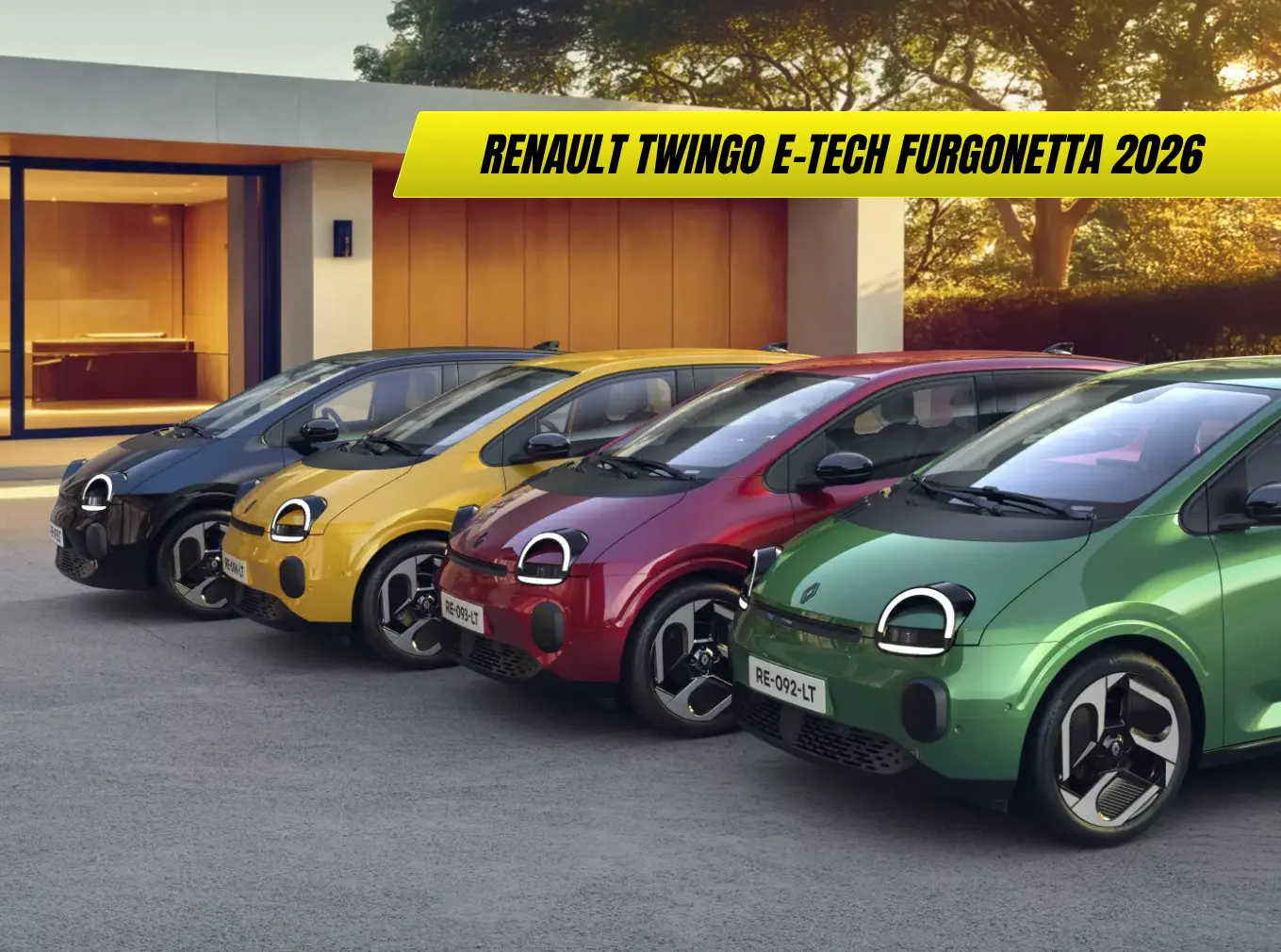
Renault is developing a commercial van version of the Twingo E-Tech electric — provisionally called the Twingo E-Tech Van or Twingo Fourgonnette — targeting small business owners, tradespeople and urban delivery operators who need an affordable, zero-emission urban van with sub-4-metre dimensions.
Renault Twingo E-Tech Van 2026 — a compact electric commercial van based on the Twingo E-Tech electric. Specs, UK launch date and price guide for business buyers.
The Renault Twingo E-Tech electric has been one of the most eagerly anticipated urban EVs of 2026 — a sub-£20,000 (in Europe) city car with a 263 km WLTP range, V2G bidirectional charging and a genuinely clever interior. Now Renault has confirmed that a commercial van variant is in development — a natural evolution of the Twingo E-Tech’s platform that would give small businesses and urban delivery operators access to the same affordable, zero-emission electric drivetrain in a practical panel van body. For UK small business owners managing their vehicle fleet’s tax efficiency and running costs, our UK driving licence points guide and AdBlue warning light guide are valuable resources alongside any van purchase decision.
Renault Twingo E-Tech Van 2026: Key Highlights
- Based on the Twingo E-Tech electric platform — same 60 kW motor and 27.5 kWh LFP battery
- Fourgonnette body style — the traditional French compact panel van format
- Urban delivery focus — sub-4-metre length, ideal for city zero-emission zones
- ULEZ compliant: zero tailpipe emissions — exempt from London ULEZ and all UK Clean Air Zones
- V2L capability retained — allowing tradespeople to power tools directly from the van’s battery
- Estimated range: approximately 200–230 km (124–143 miles) WLTP — realistic urban delivery range
- Payload: estimated 400–500 kg — appropriate for last-mile delivery and tradesperson tools
- UK launch: 2027 — pending final confirmation
- UK price estimate: £20,000–£24,000 — before business tax and government grants
- 100% first-year allowance tax relief available for zero-emission vans in the UK
The Twingo E-Tech Van: From City Car to Urban Workhorse
The Twingo E-Tech’s 3,790 mm length makes it the shortest mainstream car currently on sale in Europe — and that compact footprint is precisely what makes a van variant commercially valuable. A Twingo-based van would be shorter than a Citroën Berlingo or Peugeot Partner by approximately 800 mm, giving it a decisive manoeuvrability advantage in urban environments:
- Fits in standard urban parking bays — including those too short for a full-size Berlingo or Transit Connect
- Navigates narrow residential streets without the width and turning circle issues of larger vans
- Ideally sized for Central London delivery routes, where vehicle size restrictions increasingly apply
- ULEZ exempt: zero-emission classification means no daily ULEZ charge — saving a London-based operator approximately £15/day (£5,475/year) versus a diesel van
The Renault Twingo E-Tech Fourgonnette would follow a concept that Renault has already validated — the Renault 5 E-Tech Van (already in development) proves that the Renault Ampere electric platform can accommodate commercial van variants of passenger car bodies. The Twingo van would occupy a smaller, more affordable niche below the R5 Van.
V2L for Tradespeople: Powering Tools from the Van Battery
One of the most practically compelling aspects of the Twingo E-Tech Van for UK tradespeople is the retention of V2L (Vehicle-to-Load) capability — a feature already confirmed on the passenger Twingo E-Tech.
For a UK electrician, plumber or carpenter, V2L means:
- Power drills, grinders and saws directly from the van’s 27.5 kWh battery — no generator required on site
- 3.6 kW output — sufficient for most hand tools and small power equipment
- Reduces diesel generator use on construction sites — saving fuel costs and eliminating generator noise and emissions in residential areas
This is not a theoretical benefit — Renault, Kia and Hyundai have all confirmed that V2L is one of the most valued features by tradesperson EV van operators in markets where it is available.
UK Business Case: Tax, Grants and Running Costs
For UK small businesses operating under self-assessment or limited company structures, the Twingo E-Tech Van’s financial proposition is attractive:
100% First-Year Allowance: Zero-emission vans qualify for the 100% Annual Investment Allowance in the UK — the full purchase price can be offset against taxable profit in the year of purchase, potentially saving a 20% taxpayer approximately £4,000–£5,000 on a £20,000–£25,000 van.
Fuel cost savings: Charging a 27.5 kWh battery at the average UK overnight rate of approximately 7p/kWh (Octopus Go) costs approximately £1.93 per full charge — covering approximately 124–143 miles. A comparable diesel van would cost approximately £18–£22for the same journey on UK diesel prices.
Road tax: Zero-emission vans are exempt from Vehicle Excise Duty — saving approximately £290/year versus a standard commercial vehicle.
ULEZ and CAZ: Zero tailpipe emissions exempt the van from all current UK Clean Air Zone charges, including London ULEZ (£12.50/day) and Birmingham, Manchester and Bath CAZ charges.
FAQ
What is the Renault Twingo E-Tech Van?
A commercial panel van variant of the Twingo E-Tech electric — provisionally called the Twingo Fourgonnette — targeting small business owners and urban delivery operators who need a sub-4-metre zero-emission urban van.
When is the Twingo E-Tech Van on sale in the UK?
Expected 2027 — subject to final confirmation from Renault.
How much will the Twingo E-Tech Van cost?
Estimated £20,000–£24,000 before the UK government’s 100% First-Year Allowance tax relief for zero-emission vans.
What is the range of the Twingo E-Tech Van?
Approximately 124–143 miles WLTP — reduced from the passenger car’s 163 miles by the higher kerb weight and less aerodynamic body, but sufficient for most urban delivery cycles.
Does the Twingo E-Tech Van have V2L?
Yes — the V2L 3.6 kW output is expected to be retained, allowing tradespeople to power tools directly from the van’s battery on site.
Is it ULEZ compliant?
Yes — zero tailpipe emissions exempt it from London ULEZ (£12.50/day), saving a London-based operator approximately £5,475/year.
Conclusion
The Renault Twingo E-Tech Van is a logical and commercially well-judged extension of the Twingo E-Tech platform — bringing affordable, compact zero-emission urban van capability to a segment where the existing competition (Citroën ë-Berlingo, Peugeot e-Partner) is significantly larger, heavier and more expensive. For UK tradespeople working in ULEZ zones, the combination of zero running costs, V2L tool power, sub-4-metre manoeuvrability and an estimated £20,000–£24,000 price point makes it one of the most practically compelling electric commercial vehicles on the horizon for 2027. From my point of view, this is exactly the product that will persuade the last generation of diesel-van tradespeople to make the electric transition.





