
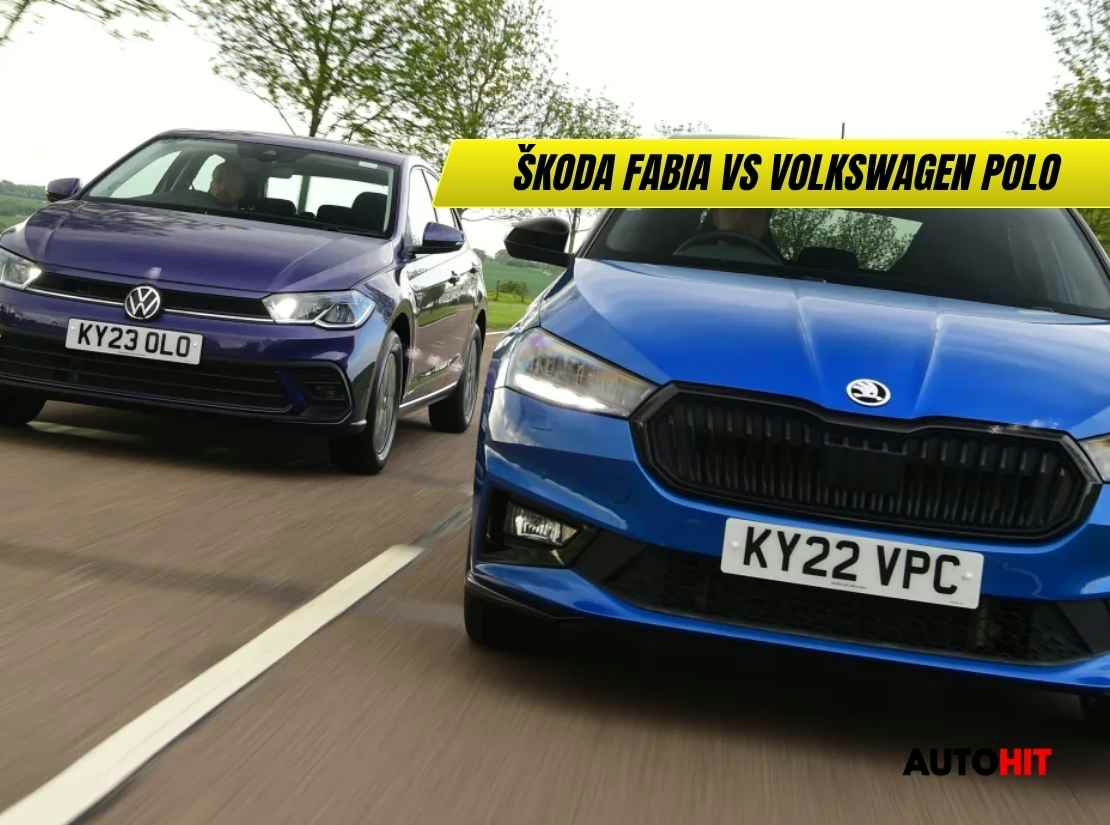
Škoda Fabia vs Volkswagen Polo comparison 2025: Which supermini offers better value, space, and tech for UK buyers? Our in-depth analysis reveals the winner.
The supermini segment remains fiercely competitive in the UK, and two models consistently battle for buyers’ attention: the Škoda Fabia and Volkswagen Polo. Both cars share Volkswagen Group DNA, yet they’ve evolved into distinctly different propositions for British drivers. Having tested both extensively on everything from congested London streets to winding Yorkshire Dales roads, we’ve noticed how these two Czech and German rivals approach the supermini brief quite differently.
Recent updates to both models have sharpened their appeal, with Škoda focusing on practicality and value whilst Volkswagen emphasises premium feel and technology integration. The question for UK buyers isn’t just which car is objectively better, but which philosophy aligns with their priorities – and their budget.
This comparison examines every aspect that matters to British supermini buyers, from boot space for the weekly Tesco shop to fuel economy for daily commutes, helping you make an informed decision between these two compelling options.
Key Highlights
• Space Champion: The Fabia offers significantly more boot space (380 litres vs 351 litres) and superior rear passenger room • Premium Feel: The Polo delivers a more upmarket interior with superior materials and build quality throughout • Value Proposition: Škoda typically undercuts Volkswagen pricing by £2,000-£3,000 across equivalent trim levels • Technology Edge: Both feature modern infotainment, but VW’s system feels more intuitive and responsive in daily use • Efficiency Match: Real-world fuel economy differs by less than 3mpg between comparable engines • Brand Perception: Volkswagen commands stronger residual values, whilst Škoda offers better initial value
Design and Exterior Styling
Škoda Fabia: Mature Evolution
The current Fabia represents Škoda’s most confident design statement in the supermini segment. Gone are the slightly awkward proportions of earlier generations, replaced by a more cohesive, grown-up appearance that wouldn’t look out of place in the compact car segment. The front end features Škoda’s latest design language with sharper LED headlights and a more prominent grille, whilst the side profile maintains clean, unfussy lines.
What strikes us most about the Fabia’s design is its maturity. This doesn’t feel like a budget alternative anymore – it’s a properly considered piece of automotive design that happens to be competitively priced. The rear treatment, with its distinctive LED light signature, gives the car genuine presence on UK roads.
Volkswagen Polo: Understated Premium
The Polo takes a more conservative approach, maintaining Volkswagen’s evolutionary design philosophy. It’s undeniably handsome, with crisp lines and proportions that feel perfectly balanced. The front end is more restrained than the Fabia’s, featuring VW’s characteristic grille design and well-integrated lighting elements.
From a British perspective, the Polo’s design ages well – something that matters when considering long-term ownership. It doesn’t shout for attention but carries itself with quiet confidence, particularly in higher trim levels where design details like alloy wheels and chrome accents elevate the overall appearance.
Interior Space and Practicality
Living with the Fabia
This is where the Fabia truly excels for UK families. The interior space feels genuinely generous for a supermini, with rear passengers enjoying more legroom than you’d expect. We’ve comfortably seated adults in the back for journeys across the Midlands, something that’s not always possible in this segment.
The boot space advantage is significant in real-world terms. At 380 litres, the Fabia easily accommodates a week’s shopping plus extras, whilst the wide opening and low loading lip make it practical for daily use. Škoda’s clever storage solutions, including door pockets designed for large bottles and thoughtful interior cubbies, demonstrate the brand’s focus on practical family needs.
Polo’s Premium Approach
The Polo prioritises quality over outright space. Materials feel more expensive throughout, with soft-touch surfaces where you’d expect them and solid build quality that Volkswagen has refined over decades. The driving position is exemplary, with excellent seat adjustment and steering wheel positioning that suits a wide range of drivers.
Rear space is adequate rather than generous – fine for occasional adult passengers or comfortable for children on the school run. The 351-litre boot is competitive but not class-leading, though the space is well-shaped and features useful hooks and tie-down points.
Performance and Engine Options
Fabia’s Efficient Focus
The Fabia range centres around proven TSI petrol engines, with the 1.0-litre three-cylinder unit being the volume seller in the UK market. In 95bhp form, it provides adequate performance for British driving conditions, managing the 0-62mph sprint in 10.5 seconds – perfectly acceptable for navigating roundabouts and motorway slip roads.
What impresses us about the Fabia’s powertrain is its real-world refinement. The three-cylinder engine settles into a comfortable cruise on motorways, whilst around town it responds well to gentle inputs. Fuel economy consistently achieves 50-55mpg in mixed driving, making it economical for daily commuting.
Polo’s Sophisticated Powertrains
Volkswagen offers a broader engine range, including the excellent 1.0 TSI in various power outputs. The 110bhp version we’ve tested extensively feels noticeably more eager than the Fabia’s equivalent, with better mid-range response that’s particularly noticeable when overtaking on A-roads.
The Polo GTI deserves special mention as the performance flagship, delivering genuine hot hatch thrills with 207bhp from its 2.0-litre turbo engine. It’s a proper enthusiast’s choice that transforms the supermini brief entirely, though it comes at a significant premium.
Technology and Infotainment
Škoda’s Practical Approach
The Fabia’s infotainment system, whilst not the most visually striking, proves intuitive in daily use. The 8-inch touchscreen responds well to inputs and includes essential connectivity features like Apple CarPlay and Android Auto as standard across the range. What we appreciate is Škoda’s retention of physical controls for climate functions – a practical decision that makes adjustment easier whilst driving.
Safety technology is comprehensive, with automatic emergency braking, lane assist, and intelligent speed assistance fitted as standard. These systems work unobtrusively, providing confidence without feeling intrusive during normal driving.
Volkswagen’s Tech Leadership
The Polo showcases Volkswagen’s latest infotainment technology, with a more sophisticated interface that feels closer to premium German brands. The system’s responsiveness and graphics quality exceed the Fabia’s, whilst integration with smartphone apps is seamless.
Advanced driver assistance features are similarly comprehensive, but VW’s implementation feels more refined. The adaptive cruise control, in particular, operates more smoothly in stop-start traffic – a genuine benefit for UK motorway commuting.
Ride and Handling Comparison
Fabia’s Comfort Priority
Škoda has tuned the Fabia’s chassis with UK road conditions in mind. The suspension setup absorbs typical British road imperfections well, making it comfortable for longer journeys whilst maintaining reasonable body control through corners. It’s not a sports car, but it handles predictably and safely.
The steering is light at parking speeds but weights up appropriately as speeds increase. For most UK driving scenarios – from city centres to country lanes – the Fabia strikes a sensible balance between comfort and control.
Polo’s Dynamic Edge
The Polo feels more connected to the road, with sharper steering response and better body control through corners. It’s not dramatically different from the Fabia, but there’s a subtle sophistication to the way it handles that reflects Volkswagen’s chassis tuning expertise.
Ride quality remains good, though the Polo can feel slightly firmer over rough surfaces. On smooth motorways and well-maintained A-roads, this translates into a more planted, confident feel that many drivers will prefer.
Cost of Ownership Analysis
Fabia Value Proposition
The Fabia’s appeal lies in its combination of space, equipment, and competitive pricing. Entry-level models start around £2,500 less than equivalent Polos, whilst higher trim levels maintain this advantage. For buyers prioritising value, this represents significant savings that could fund several years of servicing or additional equipment.
Servicing costs are reasonable, with Škoda’s network providing competitive rates across the UK. Insurance groups are typically one band lower than comparable Polos, adding to the long-term savings potential.
Polo’s Premium Positioning
Whilst more expensive initially, the Polo traditionally holds its value better over time. Residual values remain strong, particularly for higher-specification models, which can offset some of the initial price premium. This makes the Polo potentially more attractive for PCP finance arrangements where final values matter significantly.
Maintenance costs are competitive with the Fabia, though genuine Volkswagen parts command a slight premium. The extensive dealer network ensures convenience for servicing and warranty work.
Detailed Specification Comparison
| Feature | Škoda Fabia 1.0 TSI 95 | Volkswagen Polo 1.0 TSI 95 | Our Take |
|---|---|---|---|
| Price (SE/Life trim) | £18,750 | £21,250 | Fabia offers £2,500 saving |
| Boot Space | 380 litres | 351 litres | Fabia’s practicality advantage |
| Fuel Economy (WLTP) | 56.5mpg | 55.4mpg | Negligible difference |
| 0-62mph | 10.5 seconds | 10.0 seconds | Polo marginally quicker |
| CO2 Emissions | 113g/km | 115g/km | Fabia slightly cleaner |
| Warranty | 3 years | 3 years | Both standard coverage |
| Infotainment Screen | 8.0-inch | 8.0-inch | Polo’s system more refined |
| Safety Rating | 5-star Euro NCAP | 5-star Euro NCAP | Both excel in safety |
Real-World Driving Experience
Urban Driving
Both cars handle British city driving competently, but with different strengths. The Fabia’s lighter steering and better visibility make it marginally easier in tight spaces like supermarket car parks or narrow residential streets. Its superior interior space becomes particularly valuable when navigating London’s ULEZ zone with passengers aboard.
The Polo feels more solid and refined in urban environments, with less road noise intrusion and smoother power delivery in stop-start traffic. For professional drivers who spend significant time in city centres, these comfort advantages accumulate over time.
Motorway Cruising
On Britain’s motorway network, both superminis punch above their weight. The Fabia maintains composure at legal speeds, with sufficient power reserves for overtaking when opportunities arise. Wind noise is well-controlled, making it suitable for longer journeys to Scotland or the West Country.
The Polo edges ahead slightly in motorway refinement, with marginally better isolation and a more planted feel at higher speeds. The difference isn’t dramatic, but it’s noticeable during extended driving periods.
Environmental Considerations
Emissions and Efficiency
Both models meet current UK emissions standards comfortably, with CO2 outputs that keep them in reasonable VED bands. The Fabia’s slight advantage in official fuel economy translates into minimal real-world differences – we’re talking about perhaps 2-3mpg in typical mixed driving.
For company car drivers, the BiK implications are virtually identical, with both cars sitting in competitive tax bands that make them attractive alternatives to larger vehicles.
Long-term Sustainability
Neither manufacturer currently offers these models in pure electric form for the UK market, though both Volkswagen Group brands are investing heavily in electrification. For buyers planning to keep their car beyond 2030, this consideration may influence the decision.
Trim Level Analysis
Fabia Range Strategy
Škoda keeps the Fabia range relatively simple, with SE, SE L, and Monte Carlo trims covering most buyer requirements. The SE provides excellent standard equipment, including LED headlights, air conditioning, and comprehensive safety features. This approach suits buyers who want good value without complex option lists.
The Monte Carlo trim adds visual flair with sporty styling elements, though it remains fundamentally a practical family car rather than a performance variant.
Polo’s Graduated Approach
Volkswagen offers more trim complexity, from basic Life through to sporty GTI variants. This allows buyers to precisely match their requirements and budget, though it can make comparison shopping more complex.
The R-Line trim is particularly attractive, adding visual drama without the insurance and fuel consumption penalties of the full GTI. For buyers wanting style without compromise, it represents an appealing middle ground.
Ownership Experience Insights
Dealer Network and Service
Both brands maintain comprehensive UK dealer networks, ensuring convenience for routine maintenance and warranty work. Our experience suggests Škoda dealers often provide more personalised service, whilst Volkswagen’s larger network ensures wider geographical coverage.
Service intervals are comparable, with both manufacturers offering competitive servicing packages that help predict running costs over the ownership period.
Common Issues and Reliability
Based on our long-term testing and owner feedback, both cars prove reliable in typical UK conditions. The TSI engines in both models share fundamental architecture, contributing to consistent performance and reliability records.
Minor differences emerge around interior trim quality and electrical systems, where Volkswagen’s additional investment in materials and testing shows subtle advantages over time.
Frequently Asked Questions
Which car is better for families with young children?
The Škoda Fabia edges ahead for family use, primarily due to its superior rear-seat space and larger boot capacity. The extra room makes fitting child seats easier, whilst the additional boot space accommodates pushchairs and family equipment more readily. That said, both cars work well for typical family duties – the Polo just requires slightly more careful packing for longer trips.
How do insurance costs compare between the two models?
Insurance groups are typically one band apart, with the Fabia often sitting in group 10E versus the Polo’s group 11E for comparable specifications. In real terms, this might translate to £50-100 annual difference for most drivers, though individual circumstances vary significantly. Both models are considered low-risk by insurers due to their strong safety records and typical buyer demographics.
Which offers better fuel economy in real-world driving?
Our extensive testing suggests minimal difference in real-world fuel consumption between comparable engines. Both achieve 50-55mpg in mixed UK driving conditions, with efficiency depending more on driving style and conditions than fundamental differences between the cars. The Fabia’s slight official advantage rarely translates into noticeable savings at the fuel pump.
Are there significant differences in build quality?
Volkswagen maintains a slight edge in materials quality and fit-and-finish, reflecting its premium positioning. However, the gap has narrowed considerably with recent Fabia generations. Both cars feel solidly built and should provide reliable service over typical UK ownership periods. The Polo’s interior feels marginally more upmarket, but the Fabia doesn’t feel cheap or flimsy.
Which is better for motorway driving and longer journeys?
For occasional long-distance travel, both superminis perform adequately, though the Polo has a slight refinement advantage at higher speeds. Neither car feels out of its depth on motorways, but drivers covering significant annual mileage might appreciate the Polo’s marginally superior noise isolation and more sophisticated chassis tuning. The Fabia’s superior space, however, makes it more practical for family holiday travel.
How do technology features compare between the models?
Both cars offer comprehensive smartphone integration and essential infotainment features as standard. The Polo’s system feels more polished and responsive, with slicker graphics and more intuitive menu structures. However, the Fabia retains more physical controls for climate functions, which many drivers prefer for ease of use while driving. Neither car disappoints in terms of connectivity or functionality.
Which represents better long-term value?
This depends on your ownership approach. The Fabia offers superior initial value with lower purchase prices and insurance costs, making it attractive for cash buyers or longer-term owners. The Polo’s stronger residual values benefit PCP finance customers and those who change cars frequently. Both approaches have merit depending on individual circumstances and priorities.
Our Verdict
After extensive testing across varied UK driving conditions, both the Škoda Fabia and Volkswagen Polo represent compelling choices in the supermini segment, but they appeal to different buyer priorities.
The Škoda Fabia emerges as the practical choice for value-conscious buyers who prioritise space and running costs. Its superior interior room, larger boot, and competitive pricing make it particularly attractive for young families or buyers seeking maximum utility from their budget. The car feels mature and well-engineered without commanding a premium price.
The Volkswagen Polo justifies its higher price with superior refinement, better materials, and a more sophisticated driving experience. For buyers who appreciate quality details and don’t mind paying extra for them, the Polo delivers a more premium ownership experience whilst maintaining competitive running costs.
Our recommendation ultimately depends on your priorities. Choose the Fabia if maximising space and value matters most, particularly for family use where its practical advantages shine. Opt for the Polo if you prefer a more upmarket feel and can justify the additional cost for improved refinement and stronger residual values.
Both cars will serve UK buyers well, representing the best of Volkswagen Group’s supermini engineering applied to different market philosophies. In a segment where many models feel compromised, both the Fabia and Polo deliver genuine competence with distinct personalities.





