
Smart Roadster could return as electric sports car rival to Mazda MX-5. Exclusive details on specifications, UK prospects, and revival timeline from Smart Europe CEO.
Something remarkable is stirring within the corridors of Smart’s European headquarters. Nearly two decades after the original Roadster ceased production, the brand that once championed ultra-compact urban mobility is seriously considering resurrecting one of its most beloved models – this time with pure electric power. Smart Europe CEO Dirk Adelmann recently revealed to Autocar that the company has already envisioned a modern version of the Roadster, with preliminary sketches completed and genuine enthusiasm building for the project.
“We have three great cars and none of them is a Roadster, but why not?” Adelmann said, when asked about the prospect of a comeback. “If we do a Roadster, rest assured it will be very compact – for sure a two-seater.” This isn’t just nostalgic wishful thinking – it represents a potential paradigm shift in how we think about electric sports cars and urban performance.
According to our analysis at AutoHit, the timing for such a revival couldn’t be more perfect. With traditional sports car manufacturers struggling to adapt to electrification while maintaining character and affordability, Smart has an opportunity to redefine the segment entirely. The original Roadster proved that size doesn’t determine excitement – weighing just 800kg and measuring only 3.4 metres long, it delivered genuine sports car thrills through intelligent engineering rather than brute force.
The prospect of an electric successor raises fascinating questions about what constitutes sports car performance in the emission-free era. Could a lightweight, compact electric roadster offer more engaging driving dynamics than heavier, more powerful alternatives? For UK buyers increasingly conscious of urban emission zones and rising fuel costs, the concept holds particular appeal.
Key Highlights: Compact Excellence Reimagined
• CEO confirmation of active consideration – There was one very wild colleague who had the first drawings of a new Roadster,” Adelmann told Autocar, revealing preliminary design work has already begun
• Ultra-compact positioning strategy – The original Roadster measured just 3.4 meters (~11.1 feet) long and the brand could win over enthusiasts if it creates a new EV that is just as tiny
• Electric-only powertrain commitment – Smart is committed to its vision of being an EV-only brand, but that shouldn’t stop it forging ahead with plans for a new sports car
• Platform sharing opportunities – Development tied to new Electric Compact Architecture (ECA) platform being created for next-generation ForTwo
• Emotional leadership backing – Adelmann has an emotional connection to the Roadster as it was his first project at Smart, adding personal motivation to the business case
• Market positioning clarity – A new Roadster could help Smart reclaim its identity as a maker of small, nimble vehicles
The Original Legacy: When Small Was Beautiful
To understand the potential impact of an electric Roadster revival, we must first appreciate what made the original so special. Introduced back in 2003, the tiny, lightweight two-seater was respected for its balanced mid-engined layout and became something of a cult classic before production ended in 2005.
Engineering Excellence in Miniature
The original Smart Roadster represented automotive engineering at its most efficient. Despite being smaller than the latest Hyundai i10, it delivered genuine sports car dynamics through sophisticated packaging and lightweight construction. The basic specifications told an impressive story:
- Length: Just 3,427mm (134.9 inches) – shorter than most modern city cars
- Weight: Under 800kg for the roadster, 815kg for the coupé
- Layout: Rear-mid-engine, rear-wheel drive – proper sports car architecture
- Power: 80hp from a 0.7-litre turbocharged three-cylinder Mercedes engine
Original Smart Roadster vs Modern Competitors:
| Model | Length | Weight | Layout | Power/Weight |
|---|---|---|---|---|
| Smart Roadster (2003) | 3,427mm | 800kg | RMR | 100hp/tonne |
| Mazda MX-5 (2024) | 3,915mm | 1,058kg | FR | 116hp/tonne |
| Caterham Seven (2024) | 3,100mm | 490kg | FR | 265hp/tonne |
| Our Take | Unique combination of practicality and performance in compact package |
Why It Mattered
The Roadster proved several important points that remain relevant today. One noteworthy fan was legendary Formula One car designer Gordon Murray, who used a Roadster as his daily driver – significant endorsement from someone who understands vehicle dynamics better than almost anyone.
Despite its modest power output, the Roadster delivered engaging dynamics through:
- Low centre of gravity: The rear-mounted engine and lightweight construction created exceptional stability
- Precise handling: The short wheelbase and wide track provided immediate response to driver inputs
- Efficient packaging: Maximum interior space within minimal external dimensions
- Urban practicality: Genuinely useable as daily transport despite sports car layout
Electric Renaissance: The Case for Revival
The current automotive landscape creates compelling reasons for Smart to revive the Roadster concept with electric power. Several convergent trends make this timing potentially perfect for such a project.
Market Opportunity Analysis
With the launch of vehicles like the #1, #3, and #5, Smart’s offerings are bigger now than they’ve ever been in the past, notes industry analysis. This evolution away from ultra-compact vehicles has left a gap in Smart’s range that a new Roadster could fill perfectly.
Current electric sports car options fall into two categories: expensive, high-performance machines like the Porsche Taycan, or compromised city cars with sporting pretensions. A compact, purpose-built electric sports car could occupy a unique position between these extremes.
Electrification Advantages
Electric propulsion offers specific advantages for a compact sports car:
- Instant torque delivery: Electric motors provide immediate response from zero rpm
- Low centre of gravity: Battery placement can optimize weight distribution
- Packaging efficiency: No engine bay requirements enable creative design solutions
- Urban compatibility: Zero local emissions enable unrestricted city use
- Simplified maintenance: Fewer moving parts reduce complexity and cost
UK Market Relevance
For British buyers, an electric Roadster holds particular appeal. We asked Smart UK CEO Jason Allbutt about a new Roadster during an exclusive interview with Auto Express. He laughed, but seemed enthusiastic: “We used to have one of those in the family, and [it was] particularly good fun,” he told us.
“For a country that has more rain than probably any other European market, we are lovers of coupés and roadsters. So yes, I could see a possibility for such a car in the UK.”
Technical Feasibility: Making Electric Work
The technical challenges of creating an electric Roadster are significant but solvable with current technology. Smart’s commitment to electric-only propulsion eliminates hybrid complexity while opening up new design possibilities.
Platform Architecture
Development would likely build around the new Electric Compact Architecture (ECA) platform being created for the next-generation ForTwo. However, as we learned earlier this week, Smart will only be able to justify the cost of this new platform and model development if it can find a partner to work with.
This partnership requirement could actually benefit a Roadster project by:
- Sharing development costs: Multiple models utilizing the same platform
- Economies of scale: Higher production volumes reducing per-unit costs
- Technology sharing: Access to advanced electric drivetrain components
- Market expansion: Partner brands accessing Smart’s urban mobility expertise
Weight and Performance Targets
Lightness and compact size would be key, and it’s near-certain to be electric, according to industry analysis. The challenge lies in maintaining the original’s sub-800kg weight while incorporating battery systems and modern safety equipment.
Realistic targets for an electric Roadster might include:
- Target weight: 1,100-1,200kg (significantly heavier than original but light for EVs)
- Battery capacity: 40-50kWh (balancing range with weight)
- Range: 200-250 miles (adequate for intended use)
- Power: 150-200hp (providing strong performance from low weight)
Thermal Management Challenges
Electric sports cars face unique thermal challenges during spirited driving. Battery cooling, motor thermal management, and regenerative braking systems all require careful integration. However, Smart’s experience with the current electric portfolio provides relevant expertise.
Design Philosophy: Form Following Function
Any new Roadster would need to balance heritage references with contemporary functionality. Given the individual look of each of Smart’s current models, it’s impossible to say with any certainty what a next-gen Roadster may look like.
Aesthetic Evolution
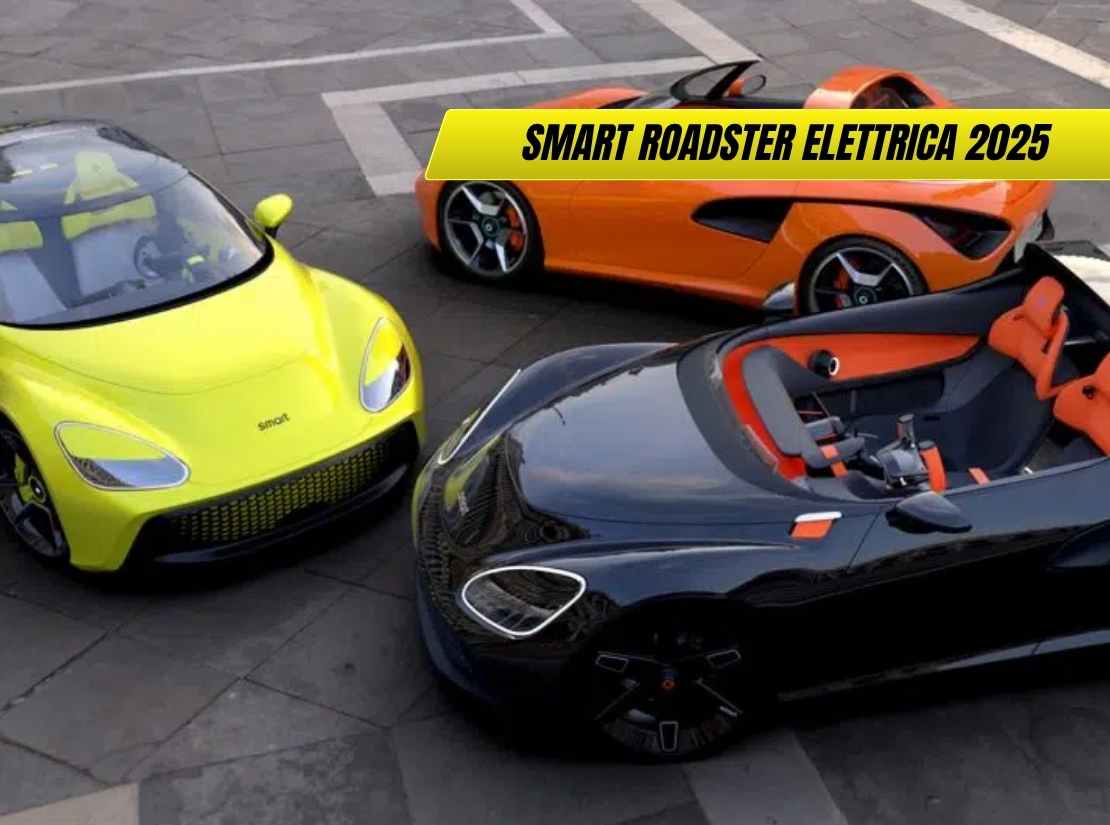
Recent design studies suggest a modern interpretation might draw inspiration from current Smart design language while maintaining the original’s distinctive proportions. We have seen a few unofficial takes on its possible design, and the latest we have encountered came from sugardesign_1 on Instagram. The quoted rendering artist’s virtual model kind of looks like a tiny Mercedes EQ at the front and rear and seems to be a bit bigger than the original.
Key design elements likely to feature:
- Minimal overhangs: Electric packaging enables optimized proportions
- Distinctive lighting: LED technology creating unique visual signatures
- Aerodynamic efficiency: Every surface optimized for range and performance
- Material innovation: Carbon fiber or aluminum reducing weight
- Convertible capability: Maintaining the roadster’s open-air appeal
Interior Innovation
The original Roadster’s interior prioritized driver engagement over luxury. A modern version could advance this philosophy through:
- Digital integration: Smartphone connectivity replacing complex infotainment
- Sustainable materials: Recycled or renewable interior components
- Configurable displays: Digital instruments adapting to driving modes
- Ergonomic optimization: Controls positioned for intuitive operation
Competitive Landscape: Redefining the Sports Car Segment
An electric Smart Roadster would enter a rapidly evolving competitive environment. The next-generation Porsche Boxster and Cayman will also be ditching petrol power, as will the Lotus Emira and the Mazda MX-5, according to industry reports.
Direct Rivals Analysis
Potential Competitors:
- Alpine A110 Electric (2026): Weighs less than 1.5 tonnes with innovative in-wheel motors
- Mazda MX-5 Electric: Likely to maintain traditional proportions but gain weight
- Porsche Boxster EV: Premium positioning with advanced technology
- Lotus Emira successor: Focus on lightweight construction and performance
Differentiation Strategy
Smart’s advantage lies in urban practicality combined with sports car dynamics. While competitors focus on maximum performance or luxury positioning, Smart could target:
- City compatibility: Compact dimensions enabling parking and manoeuvring advantages
- Affordability: Lower pricing through simplified feature sets and shared platforms
- Efficiency: Prioritizing range and charging speed over maximum power
- Accessibility: Making sports car ownership viable for younger buyers
Development Challenges: Making the Business Case
Despite enthusiasm from leadership, significant hurdles remain before any Roadster revival becomes reality. The business case must stack up against Smart’s broader strategic priorities and resource limitations.
Platform Economics
“If you share this platform with partners – we’re still in evaluation – then you can also share the investment costs and the production site, etcetera, and it starts making sense,” Adelmann said. “The last thing we want to do is produce a vehicle where nobody is earning money.”
This platform sharing requirement creates both opportunities and constraints:
Opportunities:
- Cost reduction: Shared development expenses across multiple models
- Volume justification: Higher production numbers supporting investment
- Technology access: Partner expertise in areas Smart lacks
- Market expansion: Multiple brands utilizing the same basic architecture
Constraints:
- Design limitations: Platform compromises affecting optimal packaging
- Timeline dependencies: Partner decisions affecting development schedule
- Brand differentiation: Maintaining Smart’s unique character
- Control issues: Reduced autonomy over technical decisions
Investment Justification
The original Roadster, despite critical acclaim, struggled commercially. Smart produced just over 43,000 units during its three-year production run – respectable for a niche sports car but insufficient to justify dedicated platform investment.
Modern economics could improve the business case through:
- Shared development costs: Platform partners reducing Smart’s investment
- Premium positioning: Electric drivetrain justifying higher pricing
- Longer lifecycle: Electric vehicles requiring less frequent updates
- Global market access: Electric propulsion enabling worldwide sales
Market Timing: Electric Sports Car Evolution
The timing for an electric Roadster revival reflects broader industry transitions toward electrified sports cars. How those other sports cars perform could influence Smart’s decision to make a new Roadster.
Industry Trends
Several established manufacturers are transitioning their sports car lines to electric power, creating market validation for the concept. Most recently, we learned about the new Alpine A110 due to be unveiled in 2026, which its maker says will weigh less than 1.5 tonnes and feature innovative in-wheel motors.
This industry-wide transition suggests electric sports cars are becoming mainstream rather than niche experiments. Smart could benefit from this timing by:
- Reduced buyer resistance: Increasing acceptance of electric sports cars
- Infrastructure maturity: Improved charging networks supporting sports car use
- Technology advancement: Battery and motor technology enabling better performance
- Regulatory compliance: Electric propulsion simplifying emissions requirements
Consumer Readiness
UK market research suggests growing acceptance of electric vehicles across all segments. Smart UK’s confidence in potential demand – “For a country that has more rain than probably any other European market, we are lovers of coupés and roadsters” – indicates market receptiveness.
Production Prospects: Timeline and Feasibility
While official timelines remain unconfirmed, industry analysis suggests any new Roadster would arrive in the latter half of this decade. The rumored EV should be an urban cruiser, and if it gets the green light for assembly, then we might see it before the end of this decade.
Development Timeline
Realistic development phases might include:
- 2025: Platform partner identification and agreement
- 2026-2027: Design finalization and engineering development
- 2028: Prototype testing and regulatory approval
- 2029: Production start and market introduction
This timeline aligns with Smart’s broader electrification strategy and allows time for proper development without rushing compromised solutions to market.
Production Considerations
Manufacturing location could significantly impact pricing and availability. Options might include:
- Existing Smart facilities: Leveraging current production capacity
- Partner manufacturing: Utilizing collaborator’s production capabilities
- Contract manufacturing: Third-party production reducing capital requirements
- European location: Supporting “Made in Europe” positioning for UK market
UK Market Implications: Right Car, Right Time?
For British buyers, an electric Smart Roadster could address several converging trends making traditional sports cars less viable for daily use.
Urban Compatibility
London’s expanding ULEZ and similar schemes in other cities make combustion sports cars increasingly impractical for urban use. An electric Roadster would provide unrestricted access while maintaining the emotional appeal of open-top motoring.
Key UK advantages:
- Emission zone exemption: Zero local emissions enabling city centre access
- Reduced running costs: Lower energy costs compared to premium petrol
- Government incentives: Potential tax advantages for electric vehicles
- Charging infrastructure: Improving network supporting longer journeys
Cultural Fit
Britain’s sports car heritage creates natural affinity for compact, engaging vehicles. The original Roadster found enthusiastic UK buyers despite limited marketing, suggesting genuine market appetite.
The combination of:
- Weather independence: Enclosed cockpit with convertible option
- Parking practicality: Compact dimensions suiting UK urban environment
- Heritage appreciation: British understanding of lightweight sports car philosophy
- Technology adoption: UK market leadership in electric vehicle acceptance
Frequently Asked Questions
When might we actually see a new electric Smart Roadster on UK roads?
Based on Smart Europe CEO statements and typical automotive development timelines, a production version could arrive between 2028-2030. The project depends on finding platform partners to share development costs, which Smart is currently evaluating. However, preliminary design work has already begun, suggesting serious intent rather than just wishful thinking. UK availability would likely coincide with European launch, given Britain’s strong sports car heritage and Smart UK’s expressed enthusiasm for the project.
How would an electric version compare to the original’s driving experience?
Electric propulsion should enhance rather than compromise the original’s character. Instant torque delivery from electric motors could provide more immediate response than the original’s small turbocharged engine, while battery placement low in the chassis should improve the already-excellent centre of gravity. However, weight will inevitably increase from around 800kg to approximately 1,100-1,200kg due to batteries and safety equipment, though this would still be light by modern electric vehicle standards.
What would realistic pricing be compared to other electric sports cars?
Smart’s strategy typically focuses on accessible pricing rather than premium positioning. Expect pricing around £25,000-35,000, significantly less than premium electric sports cars like the Porsche Taycan (£70,000+) but higher than the original Roadster’s £13,500-16,000 range when adjusted for inflation. This would position it as an affordable entry point to electric sports car ownership, potentially competing with high-specification hot hatches rather than traditional sports cars.
Would there be enough range for longer journeys beyond city use?
A realistic 200-250 mile range should accommodate most UK touring requirements, covering trips from London to Wales or Scotland with one charging stop. The target market likely prioritizes urban agility over long-distance touring capability, but Smart would need to ensure adequate range for weekend getaways and holiday trips. Rapid charging capability would be essential for longer journeys, with 80% charging in 30-40 minutes becoming the expected standard.
How practical would it be as a daily driver in British weather?
An electric Roadster could actually improve upon the original’s daily usability. Electric heating provides instant warmth without waiting for engine temperature, while enclosed cockpit design offers weather protection with convertible versatility. The original Roadster proved surprisingly practical for year-round use despite its sports car layout, and electric propulsion should enhance comfort and convenience while maintaining the engaging driving experience.
What would happen to performance compared to modern hot hatches?
While unlikely to match the outright acceleration of 300hp+ hot hatches, an electric Roadster could offer superior handling dynamics through optimized weight distribution and lower centre of gravity. The appeal would lie in engagement and involvement rather than maximum performance – similar to how the original Roadster competed through character rather than power. Instant torque delivery could provide competitive in-gear acceleration despite modest peak power output.
Could this actually happen, or is it just wishful thinking from executives?
Smart Europe CEO Dirk Adelmann’s statements suggest genuine consideration rather than empty speculation. The completion of preliminary sketches and ongoing platform partner evaluation indicate serious business planning beyond wishful thinking. However, success depends on finding suitable partners to share development costs and platform architecture. The project’s viability ultimately hinges on building a convincing business case that satisfies both Smart and potential collaborators.
Conclusion: Small Revolution, Big Implications
Our verdict after examining Smart’s potential Roadster revival is one of qualified optimism tinged with realistic appreciation of the challenges involved. This isn’t just another manufacturer exploring electric sports car options – it represents a fundamentally different approach that could redefine what we expect from emission-free performance vehicles.
The original Smart Roadster proved that engineering intelligence could triumph over raw specifications, delivering genuine sports car thrills through lightweight construction and sophisticated dynamics rather than brute force. An electric successor could advance this philosophy while addressing the practical limitations that restricted the original’s commercial success.
However, significant hurdles remain before any revival becomes reality. The platform sharing requirement creates both opportunities and constraints, while the business case must convince not just Smart but potential partners of the project’s viability. The automotive industry is littered with promising concepts that never reached production due to economic realities.
The Bottom Line: If Smart can overcome the development challenges and find suitable partners, an electric Roadster could occupy a unique position in the sports car market. The combination of urban practicality, electric efficiency, and engaging dynamics addresses multiple trends reshaping automotive preferences, particularly in emission-conscious markets like the UK.
For British buyers, the concept holds particular appeal. Our appreciation for lightweight, characterful sports cars aligns perfectly with Smart’s engineering philosophy, while increasing urban emission restrictions make electric propulsion increasingly essential for city centre access. The cultural fit seems obvious, though commercial success depends on execution details we haven’t yet seen.
The broader implications could prove even more significant. If Smart demonstrates that compact, affordable electric sports cars can succeed commercially, it might encourage other manufacturers to explore similar concepts rather than focusing exclusively on high-power, high-price alternatives. This could democratize electric sports car ownership while proving that electrification enhances rather than compromises driving engagement.
Whether Smart ultimately proceeds with the project remains uncertain, but the serious consideration being given to the concept suggests genuine potential. In an automotive landscape increasingly dominated by large, heavy, complex vehicles, the prospect of a return to simple, lightweight, purposeful transportation feels genuinely revolutionary.
Models we’ve recently tested demonstrate ongoing demand for accessible, practical vehicles, though most focus on utility rather than engagement. A Smart Roadster could bridge this gap, proving that sustainable transportation needn’t sacrifice the emotional connection that makes driving genuinely rewarding.
We’ll be watching developments closely, hoping that Smart’s “very wild colleague” who sketched those first drawings can convince the bean counters that sometimes the most logical business decision is to build something truly irrational and wonderful.





