
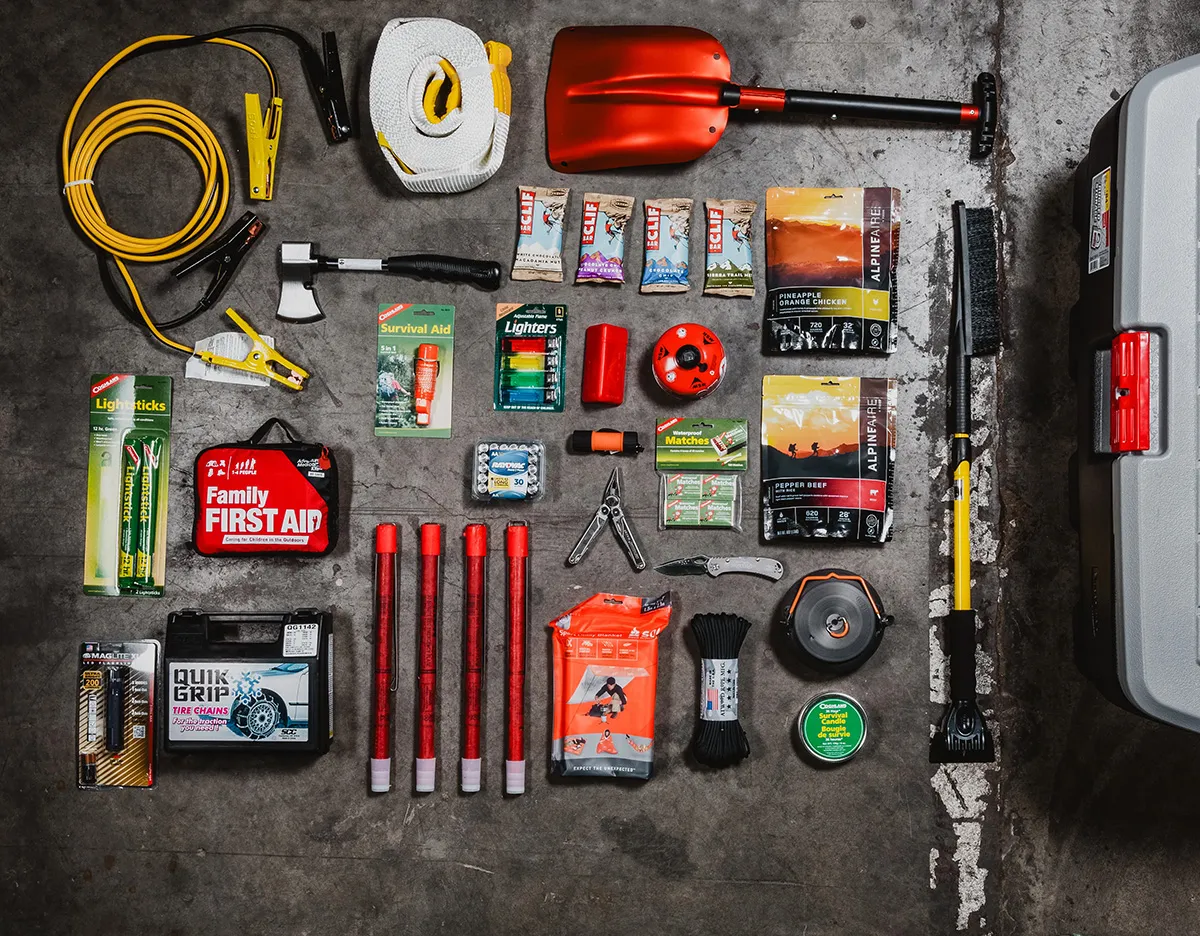
A properly packed emergency kit can make a breakdown, delay or roadside stop much safer and less stressful. For UK drivers, the most useful kit is the one that helps with visibility, warmth, communication and basic self-sufficiency until help arrives.
Key Points
- A good emergency kit should cover safety, visibility, communication and comfort.
- Warning triangle, high-visibility vest and torch are essential items.
- Water, snacks, charger cables and basic first aid items are useful on longer journeys.
- A blanket, coat and sturdy footwear matter if you are stuck in poor weather.
- A tyre inflator, jump leads and simple tools can help with minor roadside issues.
- The kit should be checked regularly so items stay usable.
Why an Emergency Kit Matters
Breakdowns do not always happen near help or in good weather. Even a short wait at the roadside can become uncomfortable or risky if visibility is poor, temperatures drop or phone battery life is limited.
That is why a practical kit is more than just a box of spare items. It gives the driver a way to stay visible, stay warm and stay in contact while the next step is being arranged.
Essential Items
The most important items are a warning triangle, high-visibility vest, torch and phone charger. These help other road users see you, help you see around the car and help you stay in contact with breakdown support.
A first aid kit is also a sensible addition, along with bottled water and some non-perishable snacks. These are simple items, but they become much more useful than they seem when a delay stretches longer than expected.
Seasonal Extras
Spring can still bring cold mornings, heavy rain and damp roadside conditions, so it is worth carrying a coat or blanket as well. A pair of sturdy shoes is useful if you need to walk to get help or stand around the vehicle for a while.
For colder days, jump leads, a tyre inflator and a small set of basic tools can help with minor problems. These items do not guarantee a fix, but they can make a small issue easier to manage safely.
Keeping It Ready
The kit should be checked from time to time so you know the torch works, the charger cable is present and the water or snacks have not expired. A kit that has not been looked at for months can easily end up missing the one thing you need most.
From my experience, the best emergency kit is the one that stays simple, organised and easy to reach. If it is buried under luggage or full of outdated items, it is much less useful when you actually need it.
What is the most important item in a car emergency kit?
The warning triangle, high-visibility vest and torch are the most important because they help with safety and visibility immediately after a breakdown.
Do I really need food and water in the car?
Yes, especially for longer trips or busy roads. Even a short delay can become more stressful if you have no water or snacks.
Is a first aid kit useful in the car?
Absolutely. It is a sensible basic item for minor injuries or waiting situations.
Should I keep jump leads in the car?
Yes, if there is space. They can be helpful if the battery goes flat and someone is available to assist.
Do emergency kits need checking?
Yes. Items can go missing, batteries can fail and food or water can expire, so regular checks are important.
What should I keep for wet or cold weather?
A blanket, coat, sturdy shoes and a torch are especially useful. They help if you have to wait outside the car or move around in bad weather.
Is a tyre inflator better than a spare wheel?
It depends on the car and the type of fault. A tyre inflator is useful for minor issues, but it will not replace a damaged tyre in every case.
Conclusion
A good spring emergency kit is about practical preparation, not overpacking. For UK drivers, the right mix of visibility gear, communication tools, comfort items and a few simple roadside essentials can make an unexpected stop far easier to handle.





