Knowing whether your car has a timing belt, wet belt or timing chain matters when servicing it or buying it used. These components synchronise the crankshaft and camshaft so the engine’s valves open and close at the correct time. If the system fails, the engine may stop and, on some engines, internal damage can result. The correct component and maintenance interval depend on the exact engine, model year and market, so generic mileage advice is not a substitute for the handbook.
What is the difference between a belt and a chain?
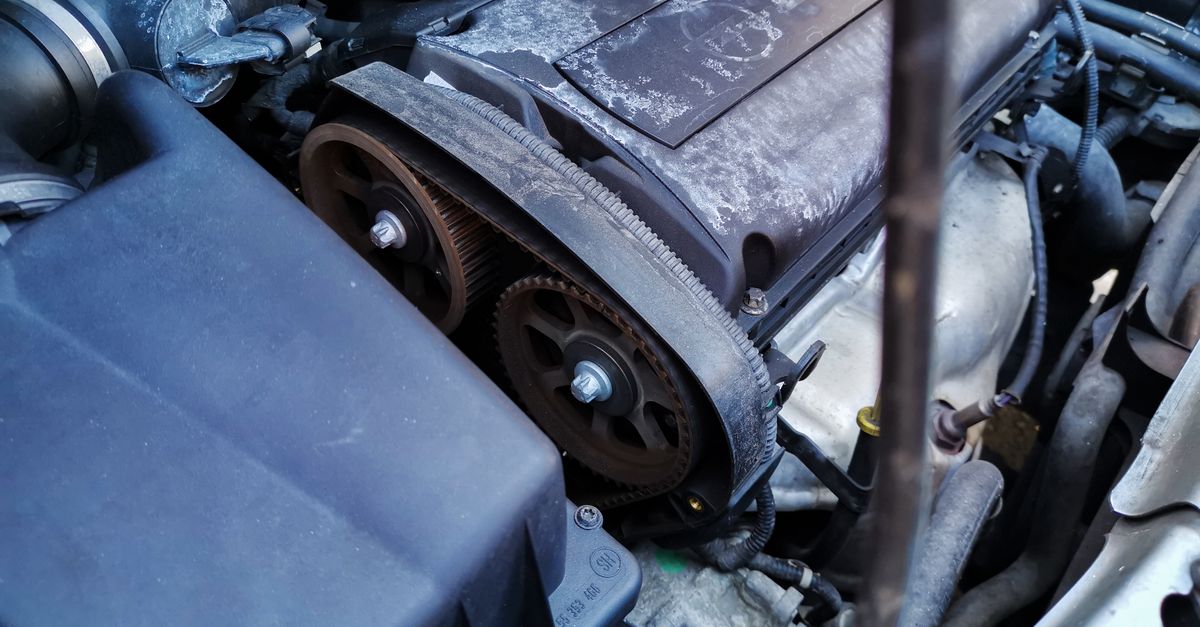
A conventional timing belt, also called a cam belt, is usually a reinforced rubber belt. A timing chain is made of metal and runs inside the engine, where it is lubricated by engine oil. Some engines use a wet belt: this is still a belt, but it is designed to run inside the engine with oil lubrication. The AA’s cam-belt guide and Cars.com’s timing-system comparison explain the basic distinction.
The name alone does not tell you what maintenance your particular car needs. Different engines, and sometimes different versions of the same model, can have different timing arrangements and schedules.
How to find out which system your car has
The most reliable approach is:
- Check the vehicle handbook. Look for references to a timing belt, cam belt, timing chain or wet belt.
- Read the manufacturer’s maintenance schedule. This should identify any inspection or replacement requirement for the specific engine.
- Ask a garage if the paperwork is missing. A qualified garage can usually identify the engine and its timing system using the registration number, VIN or engine code. The WhoCanFixMyCar identification guide sets out these options.
A visual inspection is not enough to establish a belt’s age or remaining service life. Even if a mechanic can inspect part of the belt, its appearance does not prove when it was fitted or whether it is still within the manufacturer’s service interval. That makes invoices and service records more valuable than a seller’s assurance that the belt looks fine.
When does a timing belt need replacing?
Timing-belt replacement intervals are vehicle-specific and can be based on both mileage and age. There is no single UK-wide mileage or number of years that can safely be applied to every car.
Use the schedule for the exact engine rather than relying on advice for a similar-looking model. Technical guidance has also noted that manufacturers have revised intervals for some engines, so an old service record or forum post may not reflect the current recommendation. The TPS timing-belt guidance is a useful reminder to check the applicable engine information.
Age matters even when a car has covered relatively few miles. If the handbook gives both a mileage limit and a time limit, reaching either one should prompt action. If you cannot establish when a belt was last replaced, ask a qualified garage to check the vehicle’s schedule and history rather than guessing from its condition.
Why other parts may be changed at the same time
A belt replacement may involve more than the belt itself. If the timing belt drives the water pump, a garage may recommend replacing the pump, tensioners and idler pulleys during the same job. The labour overlaps, and a later water-pump failure can affect the timing system. The SKF timing-system guidance discusses the relationship between these components.
That does not mean every engine requires exactly the same parts. Ask the garage to specify which components are included and why, using the manufacturer’s procedure for the engine in question.
Does a timing chain last forever?
No. Timing chains generally do not have the same routine replacement schedule as belts, but the chain, guides and tensioner can still wear. A chain is therefore not a reason to ignore the engine’s servicing requirements.
Rattling or other unusual timing-related noise, particularly around starting, should be professionally diagnosed. Noise alone does not prove that the chain is failing, and it should not be used to diagnose the fault at home. A qualified technician can check the chain system and distinguish it from other possible engine noises.
A wet belt should also not be treated as maintenance-free simply because it is lubricated by engine oil. It remains a belt system, so its inspection and replacement requirements must come from the schedule for the specific engine.
What happens if the timing system fails?
A failed timing belt can stop the engine. On an interference engine, the loss of synchronisation may allow pistons and valves to collide, causing serious internal damage. The AA guidance and SKF’s technical material describe the potential consequences.
If you suspect a timing fault, do not rely on a noise or a quick visual check to decide that the car is safe to drive. Arrange a professional assessment, particularly if the engine has stopped, the timing system is overdue or an unusual noise has appeared.
A used-car buyer’s timing-system checklist
Before buying, or soon after taking ownership:
- Confirm whether the exact engine uses a belt, wet belt or chain.
- Find the manufacturer’s age-and-mileage schedule for that engine.
- Look for an invoice or service record showing when belt work was completed and at what mileage.
- If a belt was replaced, ask whether the tensioners, idlers and water pump were included where applicable.
- Treat an undocumented replacement as unverified; visual condition cannot establish the belt’s history.
- If the car has a timing chain, ask a qualified garage to investigate any rattling or starting noise rather than assuming the chain will last indefinitely.
The practical answer is simple: identify the engine first, then follow its manufacturer schedule. If the handbook or history is unavailable, a garage using the registration, VIN or engine code can establish what system the car has and what attention it needs.
Source 1 · Source 2 · Source 3 · Source 4 · Source 5 · Source 6 · Source 7 · Source 8 · Source 9