
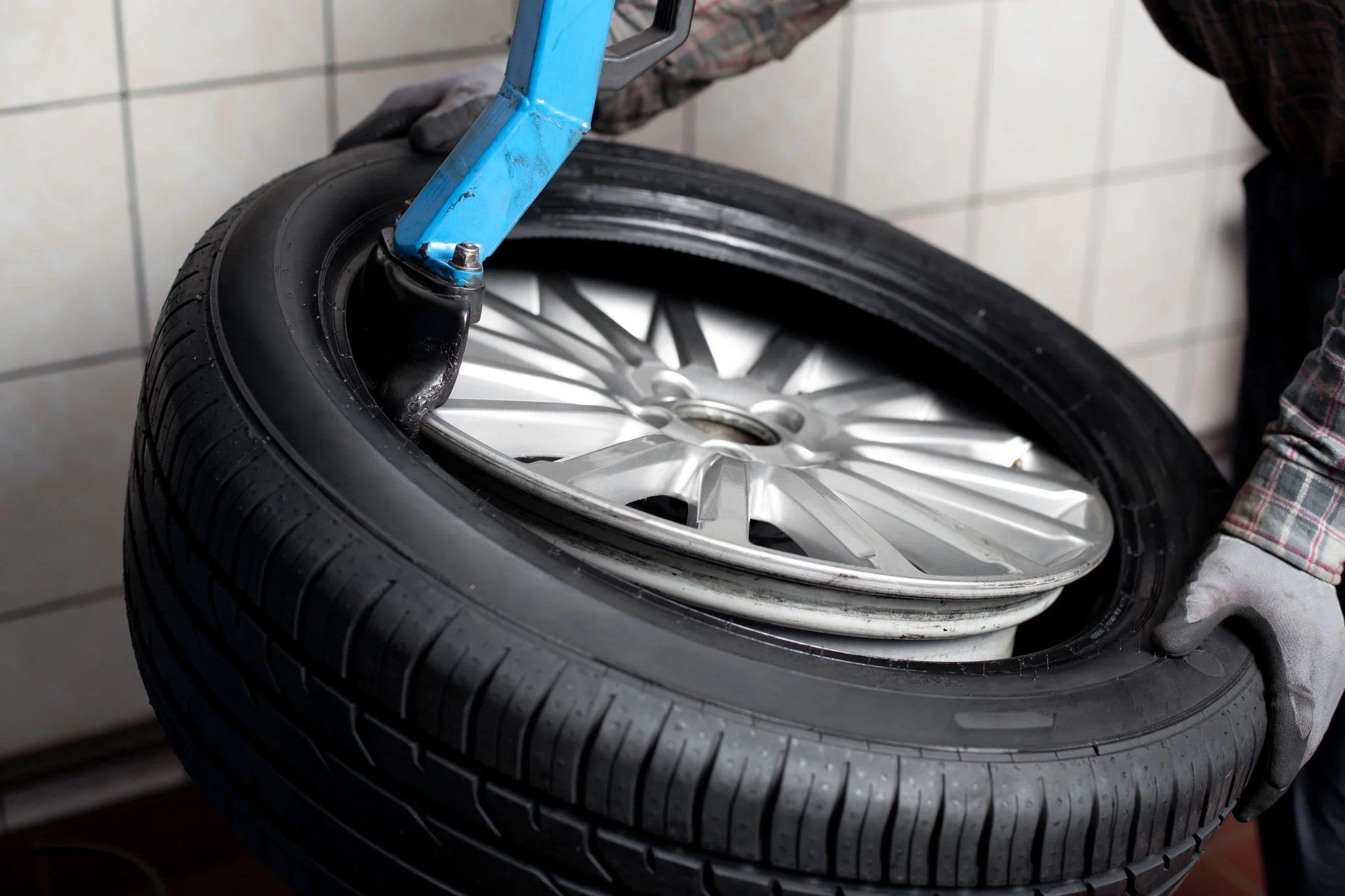
Which axle should new tyres go on, why it makes a difference in real-world emergency situations, and what UK tyre fitting centres should — but do not always — tell you.
The question of which axle to fit new tyres to is one of the most consequential decisions in routine car maintenance — yet it receives almost no attention from most UK drivers and is frequently handled incorrectly by budget tyre fitting centres. The answer has significant implications for vehicle safety in emergency manoeuvres.
Tyre Fitting Order: Key Points
- New or better-condition tyres should always go on the rear axle, regardless of whether the car is front-wheel or rear-wheel drive — this is the universal recommendation from Michelin, Continental, Goodyear, and the British tyre industry body TyreSafe
- The reason is simple: rear tyre failure causes oversteer — a sudden, difficult-to-control spin; front tyre failure causes understeer — a more manageable, predictable response
- A driver can instinctively compensate for a front-end slide by easing off the throttle; rear-end loss of grip in an emergency braking situation can result in a spin that even experienced drivers cannot always recover
- This recommendation applies to all vehicles — front-wheel drive, rear-wheel drive, and all-wheel drive
- When replacing only two tyres, the new pair always goes to the rear — even if the front tyres are showing more wear
- UK law does not specify fitting order — but safety guidelines from every major tyre manufacturer and testing organisation are unambiguous
The Physics Behind the Recommendation
The fundamental safety argument for rear-axle priority becomes clear when you consider what happens to a vehicle when a tyre loses grip suddenly during emergency braking or evasive steering:
Front tyre loses grip (understeer): The car continues broadly forward — it resists turning but does not spin. The driver’s instinct to ease off and steer gently is effective. The vehicle is more likely to hit whatever is ahead but remains broadly stable and the driver retains some control.
Rear tyre loses grip (oversteer/snap rotation): The rear of the car rotates rapidly around the front axle. In a high-speed emergency braking scenario, this can result in a spin in under a second. Countersteering requires rapid, precise response that is beyond most drivers’ instinctive reaction. The outcome is significantly less predictable and more likely to result in a serious collision.
By ensuring the best tyres are always at the rear, you maximise the grip available at the axle where loss of control is most dangerous — even if the front tyres are nominally the driving wheels.
The Front-Wheel-Drive Misconception
The most common objection to rear-axle priority fitting is: “My car is front-wheel drive — surely the front tyres need the most grip?” This confuses two different things: drive grip (traction for acceleration) and emergency handling grip (stability in braking and evasive manoeuvres).
For normal driving, front-wheel-drive cars do place more load on the front tyres — they steer, drive, and brake with the same two tyres. But in an emergency — heavy braking, sudden lane change to avoid an obstacle — the critical variable is what happens when grip is lost. A front tyre losing grip on a front-wheel-drive car produces understeer; a rear tyre losing grip produces a far more dangerous spin.
Testing by Michelin and by independent organisations consistently demonstrates that vehicles fitted with better tyres at the rear are significantly safer in wet emergency manoeuvres than the same vehicle with better tyres at the front — regardless of drive configuration.
When Are You Most Likely to Fit Only Two New Tyres?
Budget constraints mean that many UK drivers replace tyres in pairs rather than sets of four. This is entirely valid — but it makes the fitting order decision important:
Scenario 1: Both front tyres worn, both rear tyres with remaining tread
The correct action is to replace the front pair — but move the existing rear tyres to the front and fit the new tyres to the rear. Yes, this means the front tyres will have less tread than the rears, but the safety benefit of rear-axle best-tyre placement outweighs the minor inconvenience.
Scenario 2: One tyre damaged and replaced as a single
A single replacement tyre should ideally match the specification and brand of its axle partner. The new single should go to the rear axle (matched with the better of the remaining three tyres), and the best of the original set moved to the front.
Scenario 3: Four tyres all worn to similar levels
Replace all four simultaneously — the cleanest outcome for handling balance and safety.
What to Tell Your Tyre Fitter
Not all tyre fitting centres follow best practice on fitting order. When booking a two-tyre replacement, specifically instruct the fitter: “Please fit the new tyres to the rear axle and move the existing rears to the front.” Most reputable fitters will do this automatically; some budget centres default to fitting new tyres where the worn ones came from — which is the opposite of correct.
If a fitter pushes back on this instruction, the TyreSafe and British Tyre Manufacturers Association both publish clear guidance confirming rear-axle priority as the industry standard. It is not a matter of opinion.
For further guidance on tyre safety checks including tread depth, pressure, and age assessment, our car maintenance checklist covers the full routine inspection process.
Does fitting order matter on a rear-wheel-drive car?
Yes — the same principle applies. On a rear-wheel-drive car, the rear tyres handle drive, braking load, and lateral stability simultaneously. Fitting the best tyres to the rear maximises grip at the axle that is doing the most work and where loss of grip is most dangerous.
Should both tyres on an axle always be the same brand?
Yes — mixing tyre brands, types, or significantly different tread depths on the same axle creates handling asymmetry that affects straight-line braking and cornering stability. Both tyres on any axle should be the same brand, model, size, and ideally at similar levels of wear.
Is it illegal to mix tyre types on the same axle?
The Road Vehicles (Construction and Use) Regulations 1986 prohibit mixing radial and cross-ply tyres on the same axle. Mixing brands or tread patterns of the same construction type is not illegal but is inadvisable for the handling reasons above.
What if my front tyres are more worn than my rears — should I move the rears forward?
Yes — if the rear tyres have more remaining tread than the fronts, moving the better rears to the front and fitting new tyres to the rear is the correct procedure. The short-term cosmetic result (more tread at front than rear) is precisely the intended outcome of correct fitting order.
How do I know which end of my car is wearing tyres faster?
On front-wheel-drive cars — the majority of UK vehicles — front tyres typically wear twice as fast as rears due to the combined steering, driving, and braking loads. Rear tyres on front-wheel-drive cars often have significantly more remaining tread than fronts at the point of replacement. This is normal and is the primary reason tyre rotation at 8,000–10,000-mile intervals is recommended.





